Summary
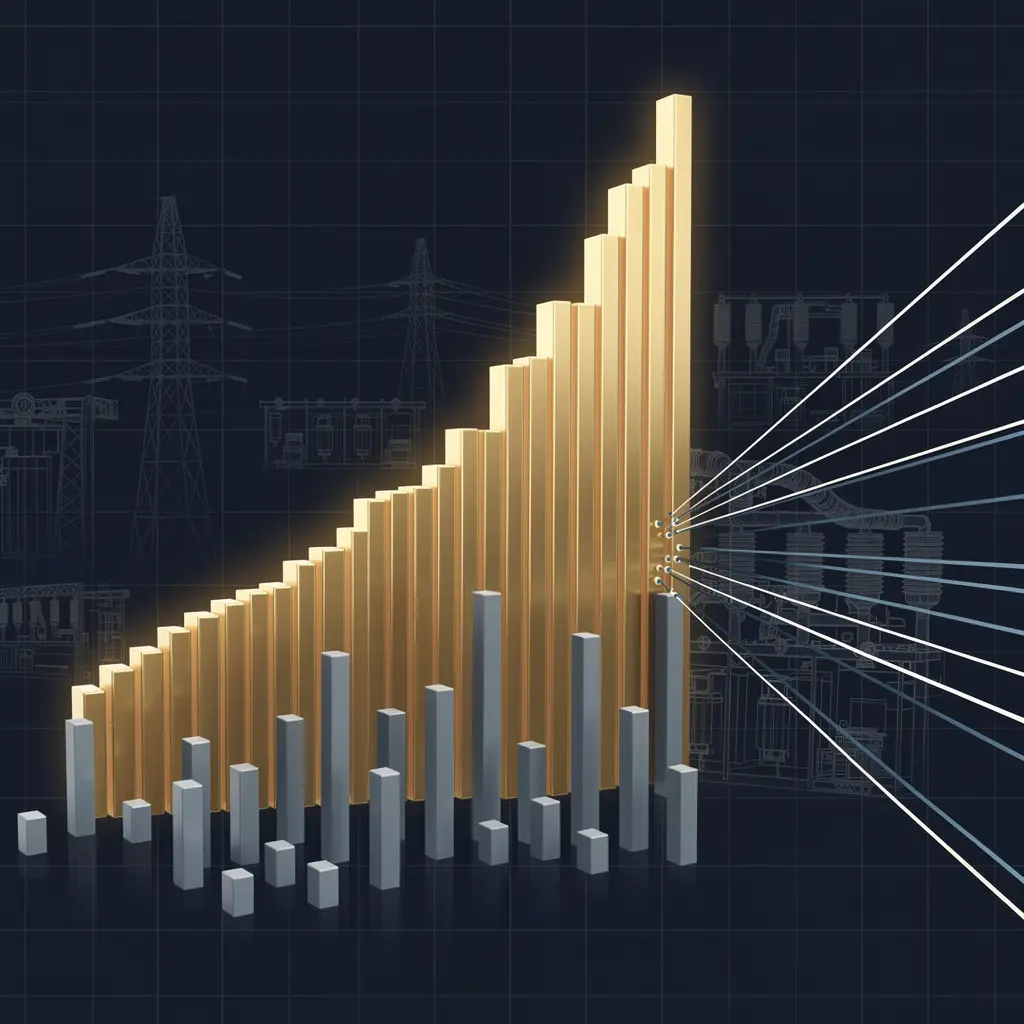
- Gartner forecast worldwide AI spending at $1,478,634M for 2025 in September 2025, then restated the same year to $1,764,947M (May 2026) and again to $1,786,671M (September 2026), a cumulative upward revision of $308,037M while the underlying category taxonomy changed twice, making the restatement impossible to decompose into genuine spend growth versus definitional change (Gartner, 2025-09-17; Gartner, 2026-05-19; Gartner, 2026-09-16).
- The September 2025 forecast counted nine sub-markets, including GenAI Smartphones at $298,189M and AI Services at $282,556M, and explicitly included AI embedded in consumer devices even where buyers do not specifically select AI features — so the headline is partly device value, not buyer AI demand (Gartner; Network World).
- The September 2026 revision puts AI Infrastructure at $1,484,397M — roughly 56 percent of the $2,670,460M 2026 total — and Gartner has stated that more than $52 goes to AI infrastructure for every $1 of GenAI model spending (Gartner; Campus Technology).
- Observable deployment evidence suggests announced capacity converts to delivered capacity at roughly 40–54 percent by 2030: Wood Mackenzie counts 241 GW of disclosed US pipeline with only ~33 percent under active development, Janus Henderson's capacity ledger projects 84.7 GW deliverable from 157.4 GW nameplate, and Sightline Climate derisks only 40.8 GW of 102.3 GW announced (Wood Mackenzie; Janus Henderson; Stack Futures).
- The physical bottleneck is power and supply: ~2,290 GW sits in US interconnection queues with median 55-month completion timelines, 72 percent of surveyed executives call power/grid capacity the top constraint, waits reach seven years, and Nvidia describes cloud GPU capacity as sold out with lead times reported at 36–52 weeks (LBNL; Deloitte; Reuters; Network World).
Gartner's September 2025 release, the first in its rebuilt AI spending series, put 2025 worldwide AI spending at $1,478,634M, up from $987,904M in 2024, with 2026 forecast at $2,022,642M. The nine sub-markets in that taxonomy were AI Services ($282,556M), AI Application Software, AI Infrastructure Software, GenAI Models ($14,200M), AI-optimized Servers, AI-optimized IaaS, AI Processing Semiconductors, AI PCs, and GenAI Smartphones ($298,189M). Two structural features of that release matter for everything that followed. First, the largest line items are consumer-adjacent: GenAI smartphones and AI PCs count the AI content of devices buyers purchase for reasons that may have nothing to do with AI, and Gartner's own methodology notes included such spending even when buyers did not specifically select AI features. Second, the smallest line — GenAI Models at $14.2 billion — is the narrow slice most people intuitively call "AI," while the headline bundles everything downstream of it (Gartner; Network World; Cryptopolitan).
The stated assumptions of that release were continued hyperscaler AI-infrastructure investment, an expanding investor base that included Chinese firms and new AI cloud providers, and venture-capital funding described as "additional tailwinds." These are demand-side assumptions: they describe who keeps spending, not whether the physical substrate to absorb the spending exists on schedule (Network World).
Then the base year itself moved. The May 2026 revision restated 2025 upward to $1,764,947M, forecast 2026 at $2,595,667M (+47 percent) and 2027 at $3,493,358M, and rebuilt the taxonomy into AI Cybersecurity, AI Models, AI Platforms for Data Science and ML, AI Application Development Platforms, AI Data, and AI Infrastructure, with infrastructure exceeding 45 percent of total AI spending (Gartner). Four months later, the September 2026 revision restated 2025 again — to $1,786,671M — forecast 2026 at $2,670,460M (+49.5 percent) and 2027 at $3,637,292M, put AI Infrastructure at $1,484,397M as the largest segment, revised GenAI model growth up from 110 percent to 117 percent, separated cross-functional agents and assistants from AI software, and added consumer agents into the forecast (Gartner).
What Gartner does not publish is a decomposition: how much of the $308 billion cumulative 2025 restatement is definitional reclassification versus actual spending that occurred. Because the taxonomy changed between each revision, the restatement chain cannot be read as a measurement of the same object. Secondary coverage quantifies the revision pattern's direction: roughly $143 billion was added to the 2026 forecast between January and September 2026, with about 83 percent of that increase attributed to infrastructure; infrastructure sits at roughly 56 percent of the 2026 total; and more than $52 is spent on AI infrastructure for every $1 of GenAI model spending (Campus Technology). Separately, Gartner's August 2026 release forecast AI-optimized IaaS spending to grow 96 percent in 2026, and analyst John-David Lovelock described the AI datacenter build-out as "the largest infrastructure project humanity has even undertaken" with infrastructure demand "inelastic to pressures from memory-related pricing increases" (Gartner; Gartner).
These are internally consistent numbers with a consistent story: AI spending is infrastructure-heavy, accelerating, and increasingly about compute rather than software. The question is whether the physical record verifies the assumptions underneath, and here the evidence is asymmetric.
What deployment evidence shows
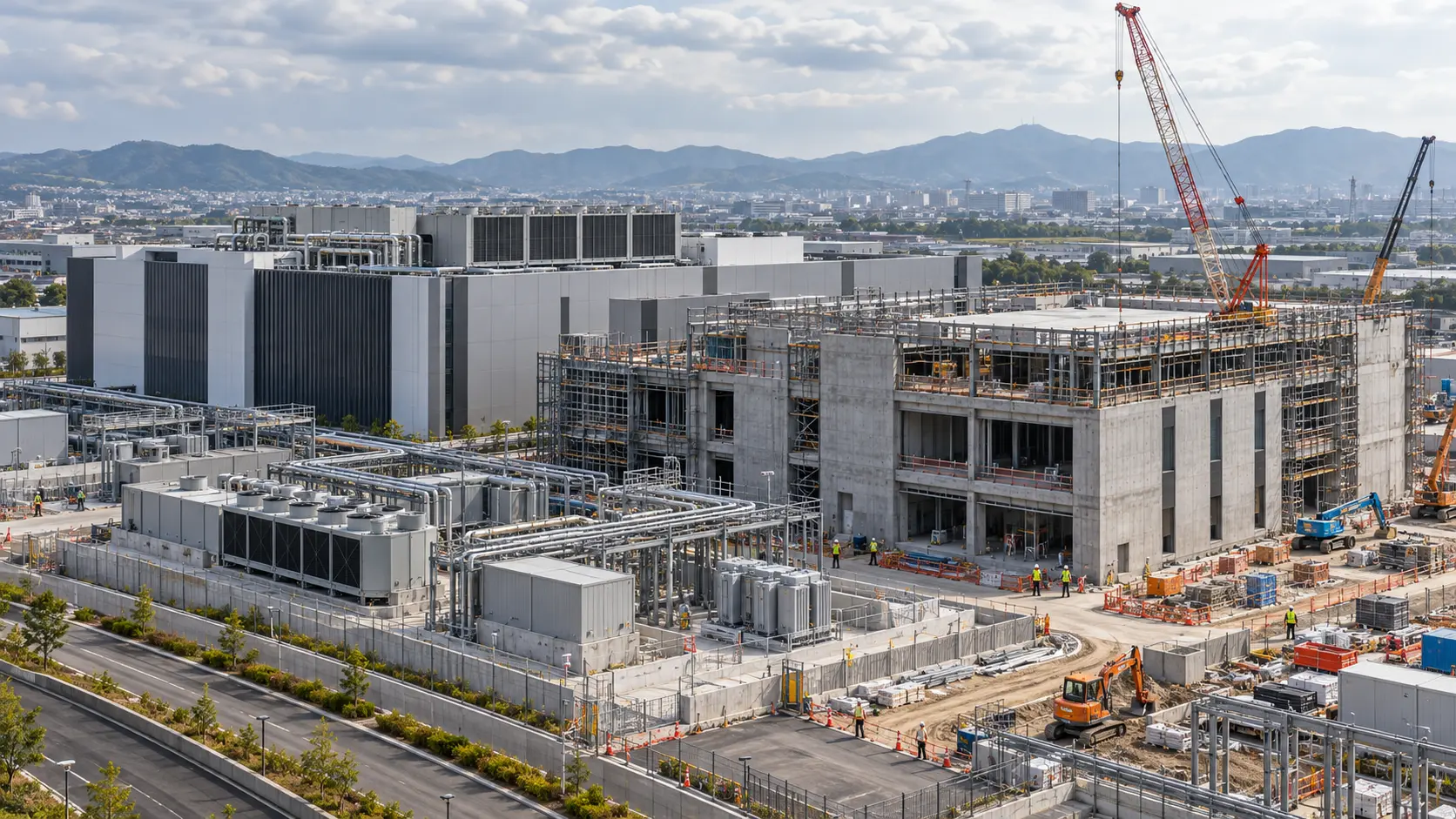
Wood Mackenzie's end-2025 assessment found the disclosed US datacenter project pipeline at 241 GW, up from 93 GW at end-2024, with only about 33 percent under active development. Signed construction and electricity supply agreements reached 183 GW — equivalent to 22 percent of 2025 US peak load, more than regional grids can absorb — with ERCOT and PJM utilities holding 72 percent of large-load commitments. New capacity additions halved quarter-over-quarter: 25 GW added in Q4 2025 against roughly double that in Q3 (Wood Mackenzie).
Independent ledgers converge on a 40–54 percent conversion band. Janus Henderson's bottom-up "capacity ledger" of 259 projects (157.4 GW nameplate) concludes approximately 84.7 GW deliverable by 2030 — about 54 percent — citing multi-year transformer lead times, fuel and water permits, thermal-discharge rules, and electrician and EPC throughput ceilings (Janus Henderson). Sightline Climate's assessment of 710 projects totaling 102.3 GW announced through 2030 finds only 40.8 GW meeting its derisked threshold — roughly 60 percent of announced capacity at material risk of delay or cancellation, with 30–50 percent of 2026-slated projects delayed by power constraints, equipment shortages, and local opposition (Stack Futures). The two methodologies disagree on absolute figures but agree on the pattern: announced capacity is not the same quantity as buildable capacity, and the conversion rate runs below half.
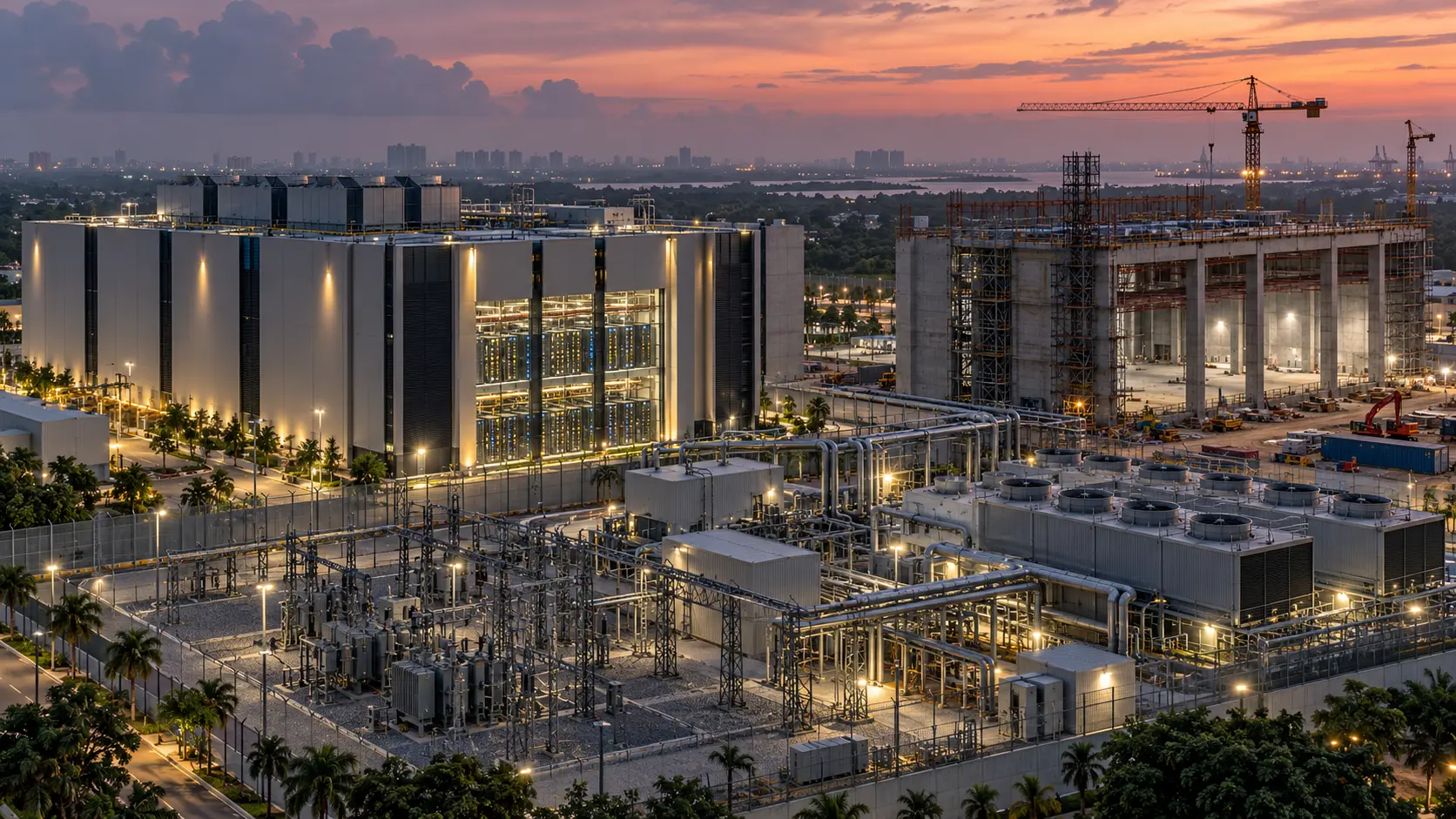
The grid is the binding constraint. Lawrence Berkeley National Laboratory's Queued Up 2025 edition reports ~2,290 GW of generation and storage actively seeking interconnection, with only about 19 percent of projects (13 percent of capacity) that requested interconnection during 2000–2019 reaching commercial operation by end-2024, and the typical 2024 project taking 55 months from request to operation — up from 36 months in 2015 (LBNL). Deloitte's survey of power and datacenter executives found 72 percent calling power and grid capacity very or extremely challenging, grid-connection waits of up to seven years, and gas turbines without contracted equipment unavailable until the 2030s; Deloitte models US AI datacenter power demand growing thirtyfold from 4 GW in 2024 to 123 GW by 2035 (Deloitte). Reuters' survey of thirteen major US utility earnings transcripts found nearly half had received datacenter power requests exceeding their peak demand or existing generation; Oncor in Texas alone reported interconnection requests for an additional 119 GW, nearly four times its peak system use (Reuters).
Chip supply is the second constraint. Nvidia CFO Colette Kress stated that "the clouds are sold out, and our GPU-installed base [...] is fully utilized," while Gartner's own analyst Gaurav Gupta flagged potential shortages not only in leading-edge wafers, advanced packaging, and HBM but in "the unrecognized constraints for smaller components and precision machinery parts for thermal management, liquid cooling, and server racks" (Network World). Blog-level reporting puts datacenter GPU lead times at 36–52 weeks with a backlog of roughly 3.6 million units sold out through mid-2026 — lower-authority evidence, but directionally consistent with Nvidia's own sold-out characterization (Sean Kim).
Finally, the workload mix is shifting toward inference. Gartner's data puts inference at roughly 55 percent of AI-optimized IaaS spending in 2026, rising to 59 percent in 2027 (Campus Technology); Futurum projects inference reaching 71.7 percent of AI platforms infrastructure spend by 2030 (Futurum); and McKinsey's analysis of hyperscaler strategy frames the same shift as the next major workload transition (McKinsey). Inference is spatially distributed and latency-sensitive in ways training is not, which tends to increase the number of sites that must be energized rather than concentrating buildout in a few campuses — compounding the grid constraint rather than relieving it.
Reading the gap
Three observations follow. First, the forecast is a demand-intent metric. Its own sub-market composition — device-embedded AI counted as spending, services and smartphones dominating 2025 — means the headline measures commitments and embedded value across an economy, not compute delivered. That is a legitimate thing to measure, but it is not the thing readers commonly take it to be.
Second, the restatement chain is unresolvable from public data. The same calendar year moved from $1.478T to $1.765T to $1.787T across three releases while the taxonomy changed beneath it. Gartner does not decompose the revisions, so external readers cannot distinguish reclassification from real growth — and the 2026–2027 numbers now in circulation will presumably be restated under future taxonomies in turn.
Third, the assumption least verified by evidence is the one carrying the largest share: infrastructure. If independent ledgers are even roughly right that 40–54 percent of announced capacity converts by 2030, then a portion of the $1.48T in forecast 2026 AI infrastructure spending will be recorded as committed while the compute it purchases waits in queues — transformer lead times, seven-year interconnection waits, sold-out GPUs. The forecast and the deployment record are not contradictory; they measure different points in the same pipeline. The risk is reading the first as if it were the second.
Context bounds the interpretation. Gartner's January 2025 baseline put total 2025 IT spending at $5.62 trillion, with datacenter systems at roughly $405.5 billion; the AI headline is a share of a much larger denominator, and the narrower March 2025 GenAI forecast ($644 billion for 2025, +76.4 percent) is a different scope that is easy to conflate with both the total and the $14.2 billion GenAI Models line (Gartner; Gartner).
What remains genuinely unknown: whether the 2025 restatements were mostly definition or mostly spend; what fraction of booked 2026 infrastructure spending corresponds to compute energized in 2026; and whether inference's rising share changes power-density requirements faster than grid timelines can absorb. Gartner's next revision — the fourth in roughly fifteen months — will answer the first question only if it publishes the decomposition, which it has not so far chosen to do.
Sources
- Deloitte TMT Predictions 2026 (compute power and AI): https://www.deloitte.com/us/en/insights/industry/technology/technology-media-and-telecom-predictions/2026/compute-power-ai.html
- Utility Dive (data center building boom slows despite massive spend): https://www.utilitydive.com/news/data-center-building-boom-slows-despite-massive-spend/815694/
Member Briefing
Deeper Profile Context
Sign in with the right membership level to unlock the full briefing and source notes.
Only for Strategic Circle
Strategic Circle
Open to all readers. Unlock profile briefings after joining and signing in.
Join Strategic CircleOnly for Leadership Alliance
Leadership Alliance
For qualified IP-asset owners and management; sign in to unlock alliance briefings.
Join Leadership Alliance