
FLAG expands subsea network from Mumbai to Middle East is profiled by BTW Media because public-source evidence links it to internet infrastructure, governance, operational dependencies, or market visibility.
FLAG expands subsea network from Mumbai to Middle East is tracked as a internet infrastructure institution within the internet infrastructure ecosystem.
FLAG expands subsea network from Mumbai to Middle East has public-source relevance to network operations, governance, dependency mapping, or market structure.
FLAG expands subsea network from Mumbai to Middle East is tracked as a internet infrastructure institution within the internet infrastructure ecosystem.
Public-source signals support medium-impact monitoring for infrastructure visibility and dependency analysis.
FLAG expands subsea network from Mumbai to Middle East is profiled by BTW Media because public-source evidence links it to internet infrastructure, governance, operational dependencies, or market visibility.
Public-source signals support medium-impact monitoring for infrastructure visibility and dependency analysis.
| 0.90–1.00 | A | High — direct sources |
| 0.75–0.89 | A/B | Strong |
| 0.55–0.74 | B/C | Medium |
| 0.35–0.54 | C/D | Weak–medium |
| 0.10–0.34 | D | Weak signal |
| 0.00–0.09 | D | Internal monitoring |
Mixed-source
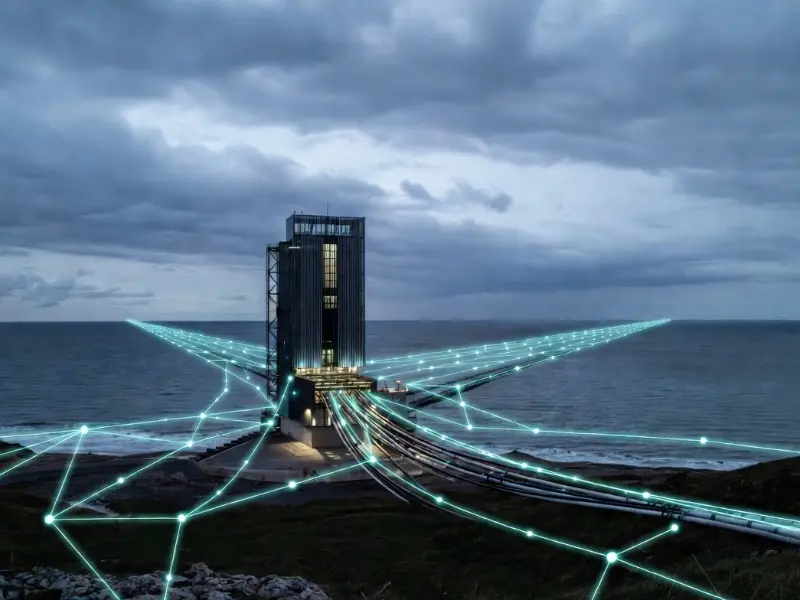
- FLAG’s CEO Carl Grivner outlines the company’s strategy to extend subsea fibre connectivity from South Asia — including Mumbai — through the Middle East and into broader global markets.
- This expansion reflects rising demand for data, cloud and AI-ready infrastructure, and the need for resilient, diverse routes that support digital growth across regions.
What happened
Carl Grivner, CEO of FLAG, the undersea optical cable operator, announced the company’s strategy to expand the international optical network from Mumbai and other major Asian hubs to the Middle East. FLAG (formerly known as Global Cloud Xchange) operates one of the largest private submarine optical cable networks in the world, covering Asia, the Middle East, Europe and other regions.
In public interviews and industry reviews, Grivner stressed the strategic importance of the undersea infrastructure that connects South Asia to the world’s major digital corridors. For example, FLAG’s India Asia Express (India-Asia-Xpress) and India Europe Express (India-Europe-Xpress) systems connect cities such as Mumbai and Chennai with Singapore and other regional hubs, meeting the growing bandwidth requirements brought about by cloud services and digital transformation.
The recent investment includes ensuring the capacity of the new submarine optical cable (such as ECHO optical cable), which will provide a low delay and high-capacity link between Asia and the United States – which highlights the goal of FLAG to build a global optical fiber ring network connecting South Asia, the Middle East and other regions.
Also Read: Logitech unveils Rally AI cameras for hybrid video conferencing
Also Read: Pinterest Trims Workforce by Nearly 15% as It Shifts Strategy to AI
Why it’s important
Submarine optical cable is the backbone of the global Internet, carrying more than 95% of international data traffic. Expanding these networks from Mumbai to the Middle East and other regions is crucial for supporting the explosive growth of applications such as AI, cloud computing and real-time digital services – all these applications need high-capacity, low latency connections.
In addition, with the expansion of the global digital economy, the high elastic seabed connection helps to bridge the gap in access and performance in underserved areas in history, thus enhancing digital sovereignty and economic participation.
FLAG’s strategy, through the use of existing optical cables and the development of new paths, and close communication with regulators and local partners, reflects how undersea operators adapt to the changing digital environment – in this environment, redundancy, diversity and strategic geographical location are equally important as the original capacity.
Core Entity Brief
- Entity: FLAG expands subsea network from Mumbai to Middle East
- Subject Type: Internet infrastructure institution
- Region: Asia Pacific
- Classification: Institution Type
Service Surface / Control Surface
- Public records support monitoring of governance, service, and infrastructure control surfaces.
Governance and Policy Surface
- Public-source signals support medium-impact monitoring for infrastructure visibility and dependency analysis.
- Operational criticality: Medium
- Time horizon: Quarter (30-120d)
Decision Trigger Matrix
- Monitoring focuses on verified service continuity, governance changes, and relationship signals.
Current state favours active tracking due to infrastructure relevance.
Public-source signals support medium-impact monitoring for infrastructure visibility and dependency analysis.
Long-cycle infrastructure decisions likely to remain path-dependent.
Member Unlock
Restricted Profile Intelligence
Login is required to unlock full profile briefings and deep-dive sections.
Only for Strategy Circle
Strategic Circle Access
Open to all readers. Unlock profile briefings after joining and logging in.
Join Strategic CircleOnly for Leadership Alliance
Leadership Alliance Access
For owners and management of IP-holding companies. Login required to unlock.
Join Leadership Alliance


