
Topic
WHOIS/RDAP Accountability
Within the Topic facet, WHOIS/RDAP Accountability topic intelligence connects articles that share a specific subject, signal focus, or monitoring theme. The page gives readers a richer path through related reporting, source evidence, market actors, and infrastructure implications, with enough context to understand why the topic matters across company movements, governance decisions, regional exposure, and operational risk. Readers can compare recurring signals, affected organisations, public evidence, market context, service continuity, procurement, competition, compliance, and strategic planning questions behind the subject instead of stopping at a thin list of matching articles. It explains what the topic covers, which infrastructure actors or policies are involved, what evidence supports the coverage, and why the subject may matter for operators, customers, investors, and policy readers.

CASE FILE
One Validated Mailbox, One Unresolved Holder: Reading NEXGENET's Accountability Surface Directly
APNIC's own whois confirms that the abuse mailbox behind three autonomous systems was validated on 7 July 2026 — but the holder of one of those systems is now written differently by different public mirrors, and the registry of record still cannot be read first-hand.
ICANN
An Advisory Committee, a Line of RDAP Output, and the Quiet Grammar of Registry Authority
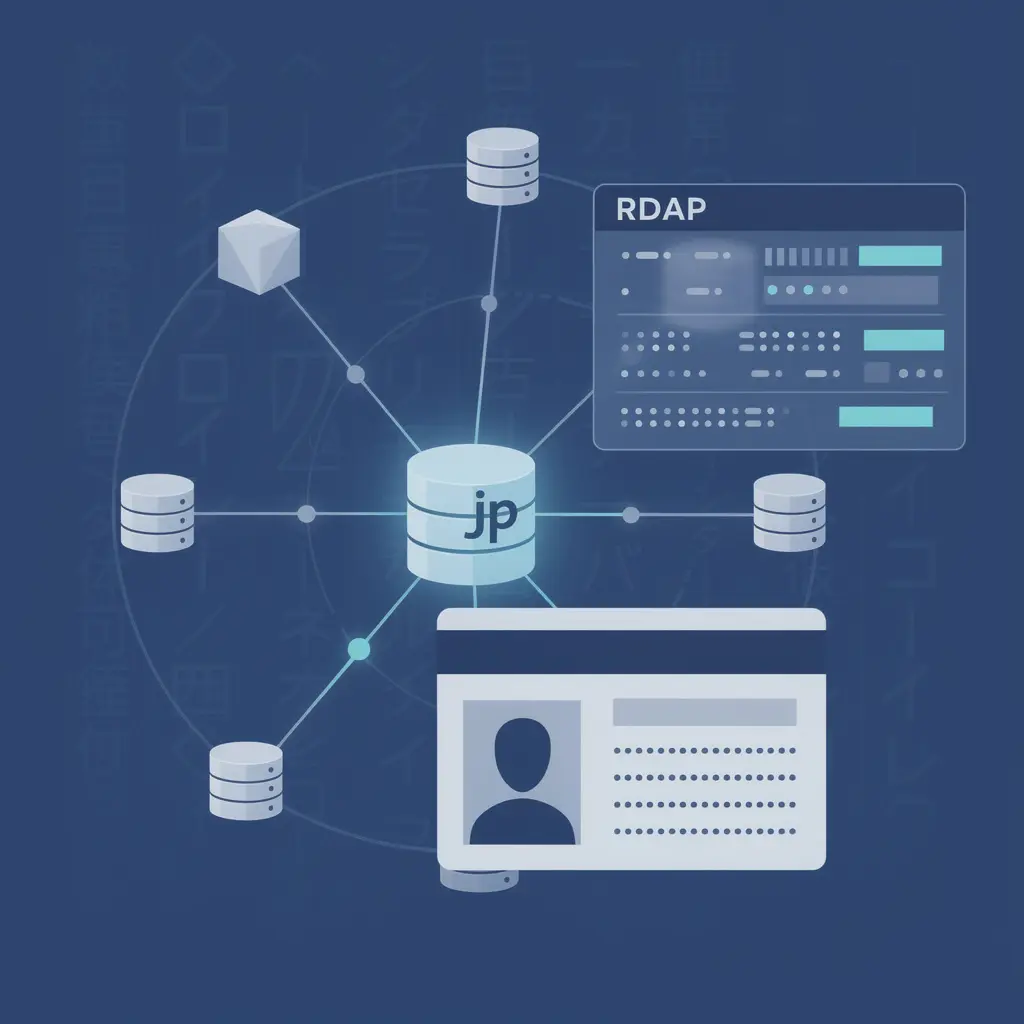
On 7 July 2026, the 80th JP Domain Name Advisory Committee agreed that it is appropriate for JPRS's RDAP service to display the managing designated registrar name in JP domain name query results. The instrument chain behind that one line of output — memorandum, advisory…

Asia-Pacific Cloud Services
The Maintainer Behind Kazakhstan's NovaCloud: Where Registry Control Actually Sits
The Maintainer Behind Kazakhstan's NovaCloud: Where Registry Control Actually Sits intelligence summary explains the development, the public evidence available to readers, the organisations involved, the regional context, market exposure, and the infrastructure consequences that…

Story
The Mailbox That Only Has to Exist: What RIPE's abuse-c Validation Actually Tests
Every network abuse report in the RIPE service region ends up in an operator's mailbox — and the registry's entire enforcement apparatus verifies only that the mailbox can receive mail, never that anyone reads it.

CASE FILE
The Complaint That Never Reaches the Registry: Who Answers When You Report Abuse in the RIPE Region
Every spam wave, phishing kit and botnet C2 eventually produces a human being who clicks "report abuse" and waits. In the RIPE service region, the routing of that report — and the removal, in May 2026, of a paper notification channel from the registry's enforcement procedure…

Story
RIPE-NONAUTH’s 0.006% Query Share and 20% of NRTM Requests Measure Different Things
RIPE NCC has published two statistics about RIPE-NONAUTH that describe different access paths, not one utilization rate. As its Q4 cleanup proposal moves to “Starting,” the distinction matters: neither number identifies dependent operators or proves that removal is safe or…

Asia-Pacific Regional ISP
A Mailbox Held Accountable: NEXGENET's Contact Surface After the July 2026 Validation
Behind three registered autonomous systems at a small Yangon LIR sits one self-referential role entity and one company mailbox. The freshest signal in the public record — an abuse-mailbox validation remark dated 7 July 2026 — says that surface is still maintained. What it does…

Europe and Middle East Cloud Services
Tideo Administration: Who Answers for a Dormant Danish ASN?
Tideo Administration: Who Answers for a Dormant Danish ASN? intelligence summary explains the development, the public evidence available to readers, the organisations involved, the regional context, market exposure, and the infrastructure consequences that may follow. The Europe…

Story
Who Controls Abuse in the RIPE Region? The Measurement Surface and the Remedy Surface
Every malformed abuse report in the RIPE service region eventually arrives at the same question: who is actually responsible for stopping abusive use of internet number resources? The RIPE NCC's own published documents give an unusually precise answer, and it is not the one…

CASE FILE
The Remedy Chain Behind RIPE NCC's Never-Fired Last Resort
The RIPE NCC has spent years documenting that it can close a member and deregister their internet number resources over an invalid abuse contact. What its own published instruments also document — and what no prior coverage has assembled in one place — is what happens next: who…

Story
RIPE ABUSE 2025-2026: The Enforcement Record That Still Never Fires
The RIPE NCC's abuse-contact regime ran at full volume through 2025, and the numbers are now on the record: 2,320 validation investigations, 86,959 validated email addresses, 2,825 assisted registry checks. What the same 2026-dated documents do not show is a single enforcement…

Global Cloud Services
The Control Surface Behind novacloud-admin: Who Actually Holds Administrative Authority
A directory handle that sounds like an administrator invites a simple assumption: one operator stands behind the resources it touches. The public record for 'novacloud-admin' does not support that reading. No role entity, person entity or mailbox carrying that exact handle was…

CASE FILE
When Abuse Contacts Outlive the Company They Name: Inside the Svea Registry Record
The directory entry reads "Svea Eknonomi Abuse Role" — a label that turns out to compress three separate registry stories, one corporate merger, a SEK 45 million sanction, and a set of stale abuse mailboxes pointing at organisations that may no longer be reachable.

IETF
The token is valid. The RDAP query still has no entitlement
RFC 9560 gives RDAP a federated identity and token flow. It does not make authentication proof of purpose, query-level authorization, proportionate disclosure or a useful registration-data outcome.

ICANN
Netpia's Cure Has Two Access Doors That a Payment Cannot Open
ICANN's new notice is formally anchored in unpaid accreditation fees. Its reader-facing significance lies elsewhere too: the public lookup and the route to request nonpublic data need separate evidence that they work.

Story
The Last Resort That Has Not Fired: RIPE NCC's Documented Escalation Ladder and Its Unpublished Enforcement Record
A mailbox can pass every automated check the RIPE NCC runs against it and still never answer a single abuse report. That gap — reachability versus responsiveness — is now well documented. What the registry's own paperwork adds is a second, quieter gap: the escalation ladder that…

Story
APNIC Was 3.0% of One Geofeed Success Sample. That Is Not an Adoption Rate
The smallest bar in an APNIC 62 chart is precise to one decimal place. The footnote does more work than the bar: 200,000 geolocation rows were sampled, publishers were reduced to distinct netnames, and two of the five RIRs were left out. The result is a useful signal about one…

Story
LACNIC’s XARF Guide Counts Seven Required Fields. The Specification Lists Eight
The missing item is `sender`, the field that separates the complainant from the organization transmitting the report. A validator must name the schema it enforced before “valid” can become operational evidence.

Number Resource Society
NovaCloud Admin: one brand, several operators, no single accountable role
A lookup on an administrative-sounding handle assumes a person or one operator stands behind a service. Public records for the NovaCloud name do not support that assumption: the string is reused by unrelated companies in several jurisdictions, while registry accountability…

Story
LACNIC’s WHOIS Shows the Origin ASNs but Not Their Authorization Boundary
LACNIC’s WHOIS Shows the Origin ASNs but Not Their Authorization Boundary intelligence summary explains the development, the public evidence available to readers, the organisations involved, the regional context, market exposure, and the infrastructure consequences that may…