
Topic
Software Lifecycle and Lock-in
Within the Topic facet, Software Lifecycle and Lock-in topic intelligence connects articles that share a specific subject, signal focus, or monitoring theme. The page gives readers a richer path through related reporting, source evidence, market actors, and infrastructure implications, with enough context to understand why the topic matters across company movements, governance decisions, regional exposure, and operational risk. Readers can compare recurring signals, affected organisations, public evidence, market context, service continuity, procurement, competition, compliance, and strategic planning questions behind the subject instead of stopping at a thin list of matching articles. It explains what the topic covers, which infrastructure actors or policies are involved, what evidence supports the coverage, and why the subject may matter for operators, customers, investors, and policy readers.

IETF
A Previous HTTP Upgrade Success Cannot Confirm the Next Protocol Transition
The proxy has seen this transition work a thousand times. It sends an HTTP/1.1 CONNECT request, expects the familiar success, and lets the application’s first bytes follow immediately. On attempt 1,001 the destination is unavailable and the proxy rejects the tunnel. The bytes…
Global Institutional
The Dependency Chain Behind ISC Software
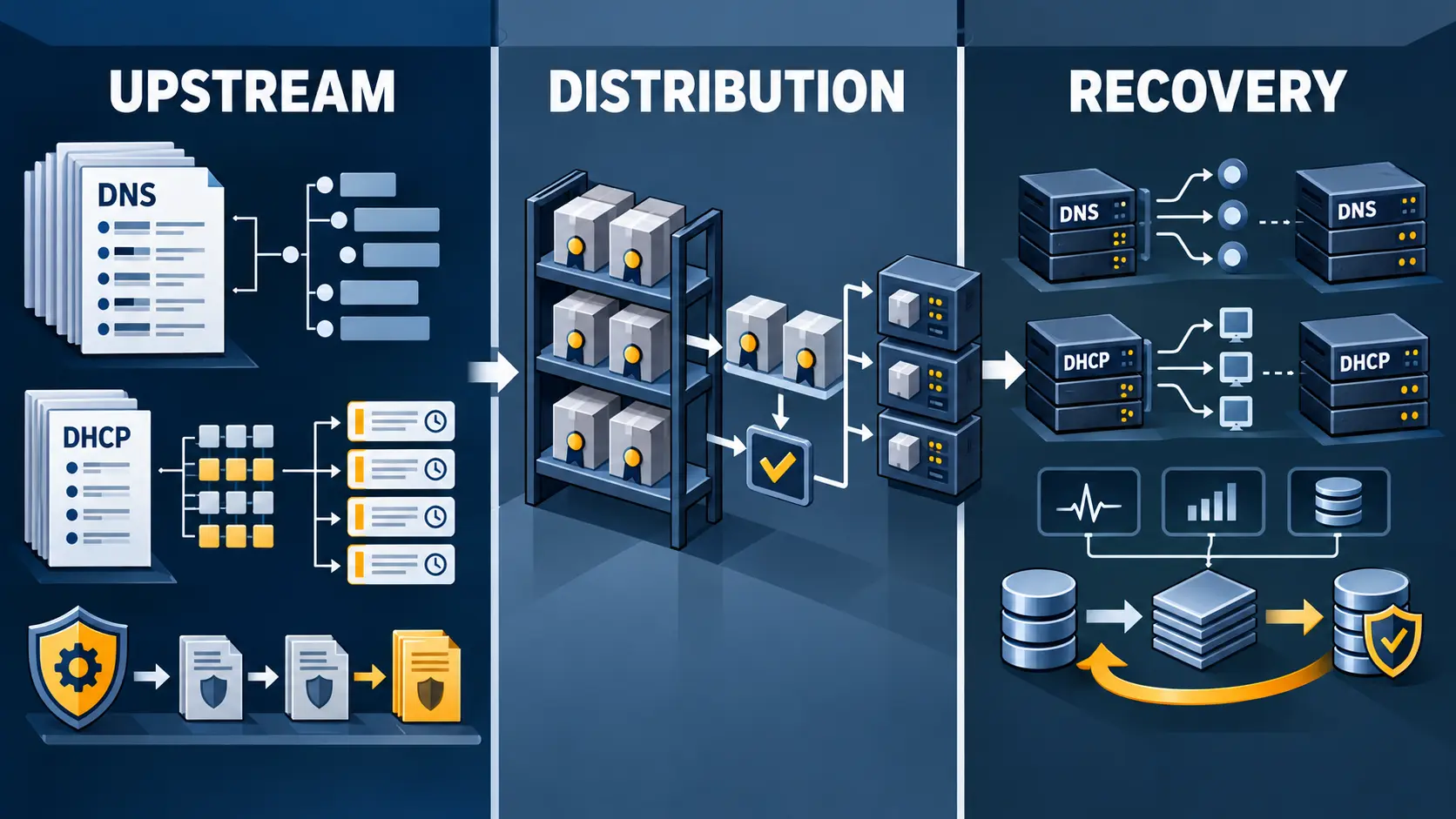
ISC’s BIND and Kea influence network resilience through a chain that runs from upstream release work to distributor packaging and operator-controlled recovery. The public record documents important mechanisms and distribution channels. It does not show how many operators deploy…

Asia-Pacific Cloud Services Trends
Insentra's IGEL pipeline grows; service conversion comes next
More certified resellers give Insentra a wider sales channel in Australia and New Zealand. The harder measure is what prospective endpoint projects become after deployment.

IETF
The Diff Was Classified. The Upgrade Was Not Proven
Revision 09 of the YANG schema-comparison draft can produce a disciplined account of what changed between two schema revisions. Its editorial, backwards-compatible and non-backwards-compatible labels are valuable precisely because they are narrow: they describe the comparison…

Story
RIPE NCC's Admin WebUI Fills Automation Gaps. Retirement Needs an Exception Ledger
The revealing phrase in RIPE NCC’s current registry plan is not “technical debt” but “admin-like capabilities”: the old interface carries operational exceptions that a cleaner replacement could otherwise erase from view.

History
The UDP Table Knew the Port, Not the Conversation: RFC 2013
RFC 2013 gave a network manager two kinds of sight: four odometers for an entire UDP engine and a list of local doors where applications were listening. It could say that a door existed and that traffic totals moved. It could not say who stood outside, which process answered, or…

IETF
The Cursor Knew the Position. It Did Not Know the Moment
YANG list pagination can preserve the exact filter, sort field, locale, direction and continuation token used to reach the next page. That makes the traversal auditable. It does not make nine requests one observation, or an ordered page a frozen dataset.

Story
APNIC Closed Its CentOS Workstream. The Evidence Chain Still Has Four Open Joins
APNIC can point to a genuine finish line: in the second quarter of 2026 it completed a multi-year move away from end-of-life CentOS hosts. Its wider security record is less linear. Tests, findings, classifications and exercises appear in separate reports, but the public evidence…

History
One Packet Became Several Frames, and Several Packets Became One: RFC 1993
RFC 1993 recorded a compression design in which the most intuitive boundary on a serial link—the frame edge—stopped being the boundary that mattered. Its Gandalf FZA stream could gather several original PPP packets into one compressed frame or carry a single original packet…

History
The State Table Was Also a Kill Switch: RFC 2012
In RFC 2012, a manager could inspect a TCP connection in one moment and erase its host-side existence in the next. The same row that reported state also accepted `deleteTCB(12)`, turning a table of observations into a remote intervention surface whose consequences extended well…

IETF
The Stream Was Ordered. The Network Was Not Yet Proven
At the instant a controller receives `<rpc-reply><ok/></rpc-reply>`, the change can feel complete. The bytes arrived in order, the peer was authenticated, and the server returned success. Yet each of those facts belongs to a different evidentiary layer from the question operators…

History
The IP MIB Passed Compliance. IPv6 Was Still Outside the Frame: RFC 2011
A green conformance result can be perfectly accurate and still answer the wrong operational question. RFC 2011 made the surviving MIB-II IP and ICMP entities orderly under SMIv2. Its own IESG Note also warned that the order stopped at a four-octet address. The document is a…

IETF
The Envelope Parsed. The Observation Is Not Yet Proven
`draft-ietf-netconf-notif-envelope-05` gives YANG-Push notifications a header that can travel with the message. That makes correlation easier. It does not collapse identity, continuity, time, provenance and operational truth into one successful parse.

History
The Root Server Became a Stack of Receipts: RFC 2010
RFC 2010 turned confidence in a capable root-server volunteer into inspectable duties—from checksums and clocks to capacity, contacts and outage notices—without deciding who deserved the role.

History
The Message Opened. That Did Not Mean the Evidence Was Complete: RFC 1991
An early PGP message could pass through six visibly successful operations—ASCII decoding, packet parsing, session-key recovery, decryption, decompression and signature verification—without any one of them proving who controlled the key, when the act occurred, whether it was…

CASE FILE
The Two Routes Arrived. Their Bits Still Did Not Belong Together: RFC 9819
An ingress PE can possess the two BGP advertisements required to construct an SRv6 Service SID and still lack permission to treat their bits as one executable instruction. RFC 9819 makes the missing proof visible: identity, argument size, insertion boundary, local acceptance…

Creators
Ivan Pepelnjak and the discipline of verifiable network automation
From Slovenia’s early internet infrastructure to netlab’s multi-vendor labs, Ivan Pepelnjak has consistently advanced an approach built on explicit models, reproducible tests and clearly stated limits. His central contribution is not a single protocol but a durable question: what…

CASE FILE
The Datastore Was Complete. The Control Plane Was Still Unproven: RFC 9826
A clean PCEP management tree can show an entity, its peers, live-looking sessions, notifications and counters in one coherent view. That coherence is a major operational gain. It is also where evidence from a management projection is most easily mistaken for proof of the network…

IETF
The Message Reassembled. The Telemetry May Still Be Incomplete
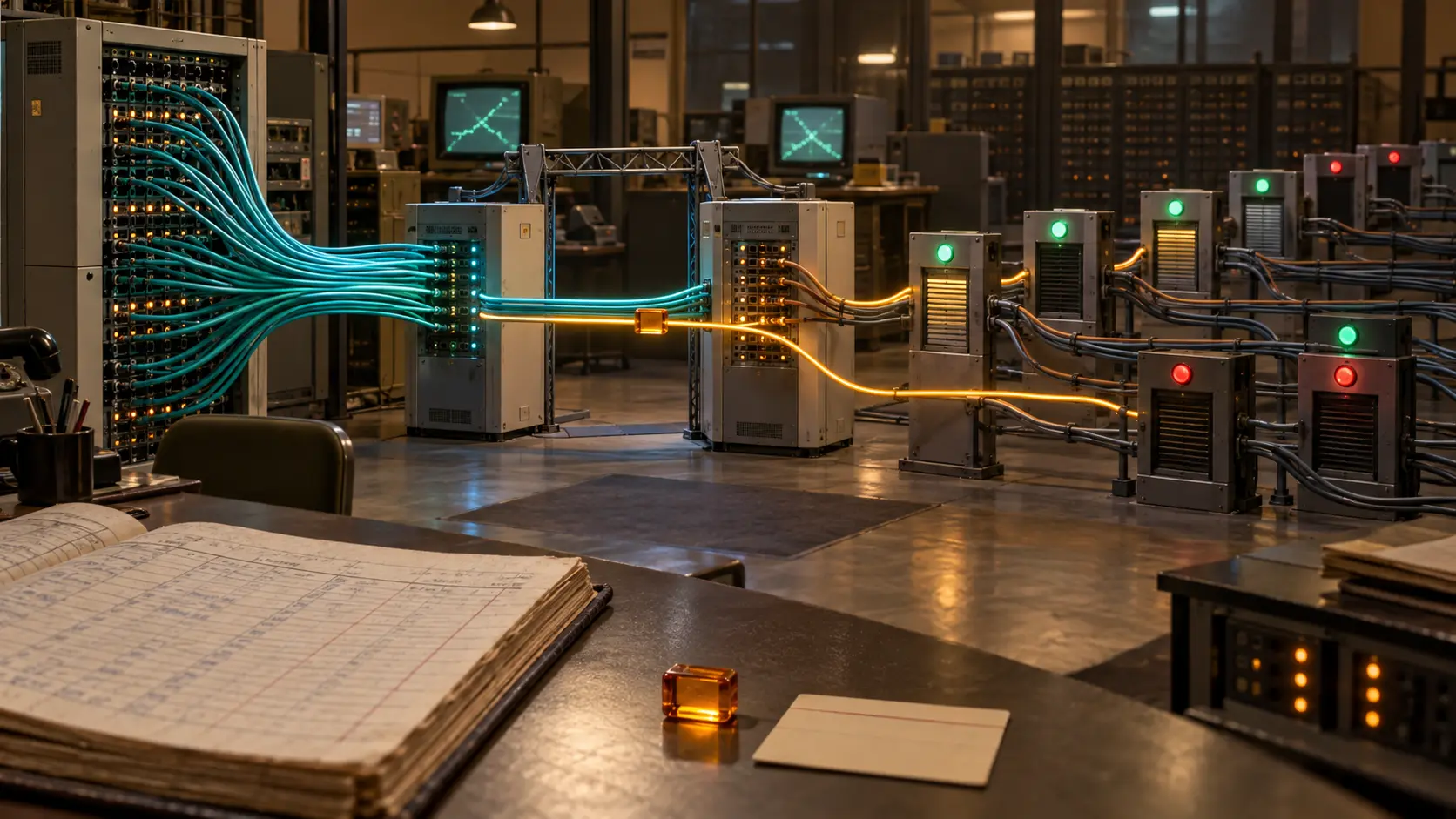
`draft-ietf-netconf-udp-notif-26` makes high-frequency YANG notifications cheaper to move across a controlled network. It also makes an important distinction unavoidable: transport evidence can show what a receiver assembled, but only a wider chain can show what the network…
History
The Address Was Borrowed. The Route Was Never Included: RFC 2008
The Address Was Borrowed. The Route Was Never Included: RFC 2008 intelligence summary explains the development, the public evidence available to readers, the organisations involved, the regional context, market exposure, and the infrastructure consequences that may follow. The…