
Topic
Software Lifecycle and Lock-in
Within the Topic facet, Software Lifecycle and Lock-in topic intelligence connects articles that share a specific subject, signal focus, or monitoring theme. The page gives readers a richer path through related reporting, source evidence, market actors, and infrastructure implications, with enough context to understand why the topic matters across company movements, governance decisions, regional exposure, and operational risk. Readers can compare recurring signals, affected organisations, public evidence, market context, service continuity, procurement, competition, compliance, and strategic planning questions behind the subject instead of stopping at a thin list of matching articles. It explains what the topic covers, which infrastructure actors or policies are involved, what evidence supports the coverage, and why the subject may matter for operators, customers, investors, and policy readers.

History
The 1987 Protocol List Could Classify Standards. Hosts Still Had to Run Them
In May 1987, a short field in a protocol list could say “Required.” That word expressed an Internet-wide expectation for hosts, but it could not install a single line of code. RFC 1011 is revealing because its status labels sit beside implementation comments, dependencies and…

History
How CERN’s Line-Mode Browser Took the Web Beyond the NeXT
The first Web clients did not share one kind of screen. CERN’s NeXT browser/editor offered a graphical workspace; Nicola Pellow’s line-mode browser made the same linked Web readable from terminals that had no windows. Its reach came from a small interface plus the work of…

History
The Database Was Already There: How SLAC Put SPIRES on the Web, 1991
The first server outside Europe did not introduce the Web to physics. It gave an established literature service a new doorway—and showed how a useful application could make a young medium legible to a specialist community.
History
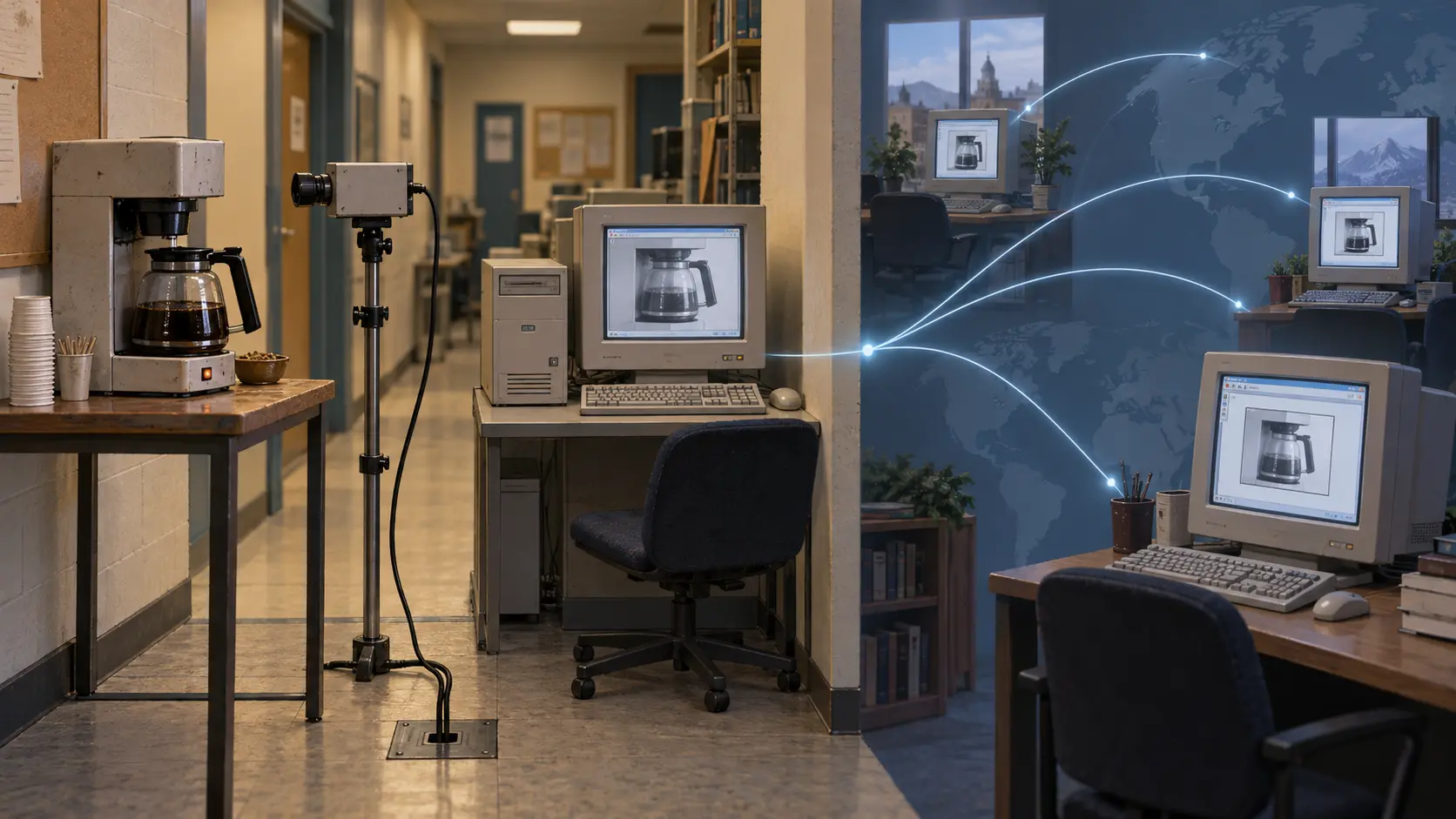
One HTTP Request, One Fresh Image: The Trojan Room Webcam
The Trojan Room camera did not begin as a public broadcast. It began as a way for Cambridge researchers to avoid a wasted walk to a shared coffee pot. In 1993, a change to the server made each new still image retrievable through the Web, so viewers no longer needed the…

Academics
Mark Allman Helped Make TCP Faults Traceable
RFC 2525 turned reports of TCP implementation failures into a reusable diagnostic record: a named symptom, protocol context, packet-trace evidence, detection guidance and a known correction where the cause was understood. Mark Allman was one of nine coauthors; the document does…

Leaders
Brian Kantor and NNTP’s Shared News Store
In 1986, Brian Kantor and Phil Lapsley described a news service in which a small workstation could read selected articles without carrying the whole archive. Their design kept that local reading service distinct from the separate exchanges through which news hosts moved articles…

Leaders
Wesley Eddy Consolidated TCP’s Rules, Not Its Rationale
RFC 9293 gathered decades of TCP requirements into a current normative specification while leaving design explanations and many algorithms in companion documents. That boundary made the common rules easier to locate; it did not prove that deployed implementations behaved alike.

Global Cloud Services Trends
Deno’s Two Exit Clocks Put Cloudflare’s Portability Claim on a Different Schedule
Deno Deploy now has the shorter clock: six months of operation before shutdown. The Deno runtime has the longer one: another year of monthly bug and security releases before Deno ends its own development. JSR is meant to continue, while Cloudflare’s plan to combine celld and…

History
The Index File Was an Exit Plan: ALIWEB’s Web Search Experiment, 1993–94
ALIWEB let each Web server describe selected resources in a small index file, then gathered those files into one searchable database. Its more durable bet was that the descriptions could move to a better system if the central service stopped being useful.

History
RFC 1490 Was Widely Implemented. Its Fragmentation Did Not Interoperate.
By 1998, the successor to RFC 1490 could describe two very different outcomes in the same system: multiprotocol Frame Relay was widely implemented, yet the RFC’s own fragmentation algorithm had no interoperable implementations. The split shows why a standard cannot be judged as…

History
Four Years Before RFC 1459, IRC Was Already Running
In May 1993, the first formal description of Internet Relay Chat arrived with an Experimental label. Its authors were documenting a service they said had been operating for years: a growing server network whose design was already beginning to strain.

Global Cloud Services Trends
Microsoft extends its 5% monthly-payment premium to CSP software
A year-long software commitment can still be paid in smaller monthly amounts. From 1 October, Microsoft’s CSP software price list adds a 5% uplift when partners choose that payment cadence. The change reaches a different product scope from the earlier online-services pricing…

History
Mosaic’s Two Commercial Paths: Spyglass Licensing and Netscape’s Separate Products
In 1994, the University of Illinois routed future commercial licensing of NCSA Mosaic through Spyglass while former NCSA developers built a separate browser company. A year-end agreement separated rights and brands without deciding a claim about copied code.
History
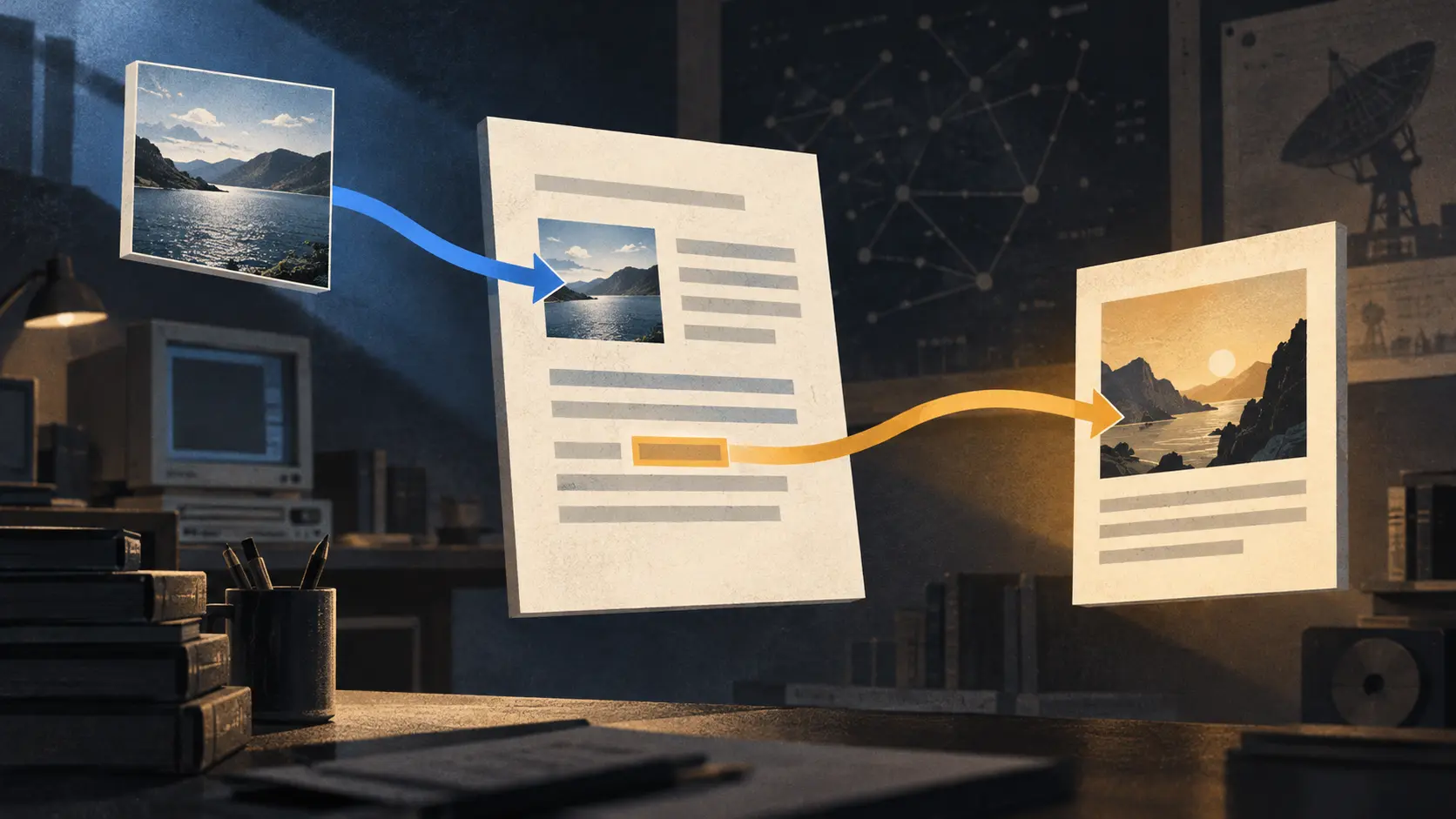
The Image Was Not the Link: Mosaic’s IMG Proposal
Marc Andreessen’s February 1993 proposal gave an image its own place in HTML and its own source address. A separate anchor could still decide where a click went. The small distinction opened a debate about browser support, media formats and what a document should promise when its…

History
The First Valid DATA Chose the Boot Server: RFC 906’s ROM Client
Before a diskless workstation could load its operating system, a small program in ROM had to reach the network and ask for code. RFC 906 proposed a common IP/TFTP path through the different boot methods that manufacturers had built, then left the most consequential local choice…

CASE FILE
PeeringDB’s API v3 Draft Expands Reads Without Rewriting Data-Use Rules
PeeringDB is proposing a read-only interface served from multiple locations. Its draft would make queries easier to cache, but the existing rules still govern bulk storage, redistribution and commercial reuse.

Academics
Eric Allman, Sendmail 8 and the Gap Between Mail Standards and Public Code
When Eric Allman returned to active Sendmail work in 1991, the problem was not simply that the mail program needed another release. His account describes a widening distance between changing SMTP requirements and the versions that operators could inspect, adapt and compile for…

History
The License Covered the Code, Not the Protocol: Gopher’s 1993 Line
On 11 March 1993, the Minnesota Gopher Team opened a newsgroup post by saying it had heard enough “hysteria” and rumor to set out an official position. The phrase that later stuck was simple: commercial users would need a licence. The policy that followed was not. It divided…

CASE FILE
The Root DNS Saw Twice the Traffic. A Resolver Update Was the Clue.
For about a week, queries reaching the DNS root rose from roughly 1.6 million to 3.2 million per second. The traffic was valid, came from recursive-resolver networks, and did not measurably impair root service. The episode shows how a software change far upstream can become a…

IETF
RFC 5416: The 802.11 Binding Has an Era Boundary
RFC 5416 is easy to misread as a promise about every feature a modern Wi-Fi deployment may advertise. It is more precise than that: the CAPWAP binding fixes how an access point and controller exchange IEEE 802.11 information for the 802.11-2007 era. The leadership question is…