
Topic
Network-resource Evidence
Within the Topic facet, Network-resource Evidence topic intelligence connects articles that share a specific subject, signal focus, or monitoring theme. The page gives readers a richer path through related reporting, source evidence, market actors, and infrastructure implications, with enough context to understand why the topic matters across company movements, governance decisions, regional exposure, and operational risk. Readers can compare recurring signals, affected organisations, public evidence, market context, service continuity, procurement, competition, compliance, and strategic planning questions behind the subject instead of stopping at a thin list of matching articles. It explains what the topic covers, which infrastructure actors or policies are involved, what evidence supports the coverage, and why the subject may matter for operators, customers, investors, and policy readers.

IETF
The Router Sent Less. It Had Not Finished Synchronizing.
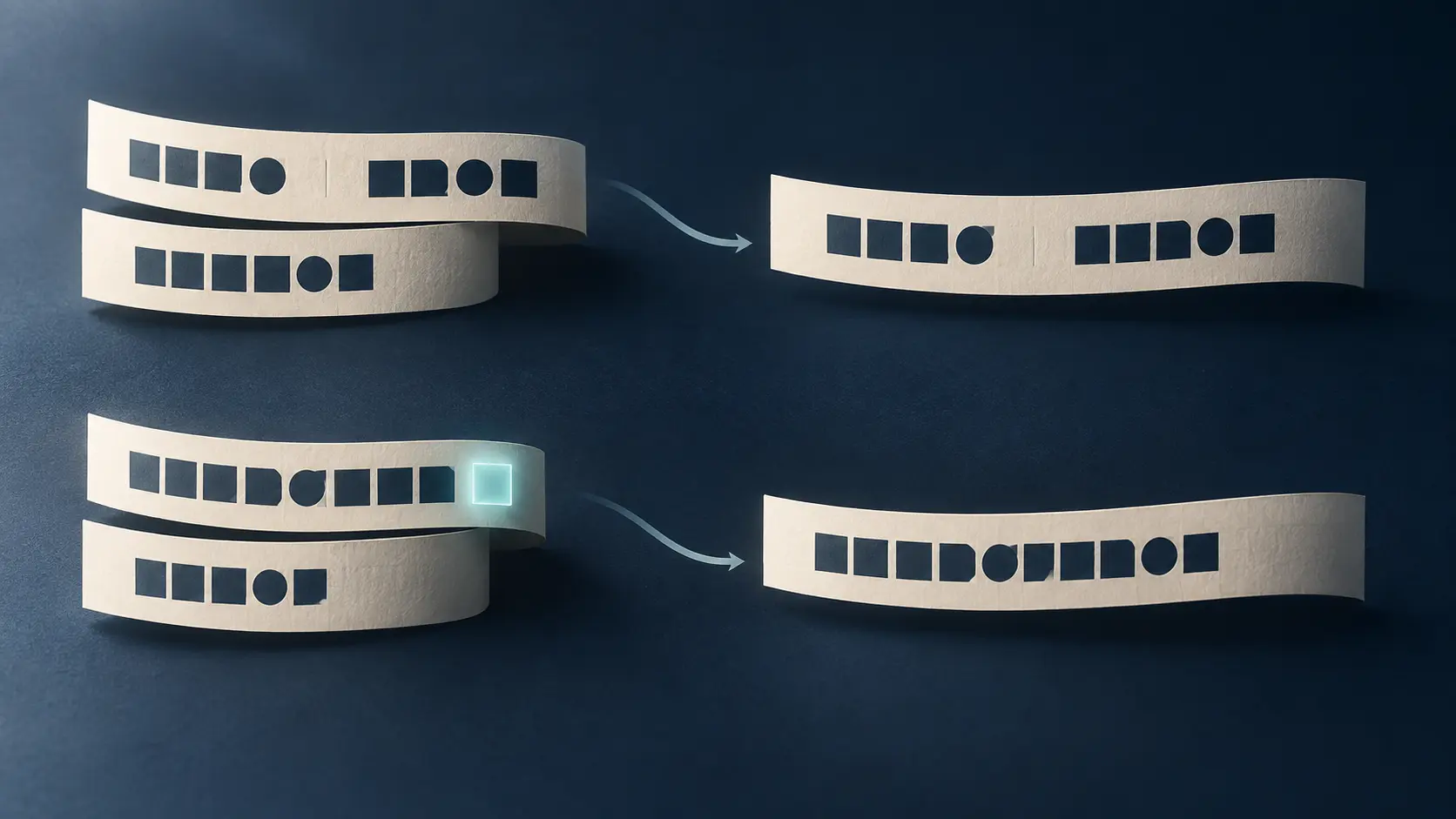
RFC 5243 removes redundant LSA headers from an OSPF neighbor's outbound summary after that neighbor has already disclosed an equal or newer copy. The saved transmission is real. So is the boundary: one cancelled description is not a receipt for database equality, adjacency…

IETF
It Had an RFC Number. It Still Was Not an IETF Standard.
“RFC 5242” looks like a compact credential. Expand the record and the credential changes shape: Informational, humor, 1 April 2008, published at RFC Editor discretion, explicitly not an IETF document, not a standards candidate and not reviewed for deployment fitness. The number…

IETF
The Joke Put a Lease Inside the Standard. The Real Cost Was Semantic Control.
RFC 5241 imagined that the IETF could rent the names of protocol fields to commercial sponsors. The proposal was satire, published on 1 April 2008. Yet its sharpest move was architectural: it did not stop at selling a label. It showed how a temporary contract would have to enlist…

IETF
The Management Table Could Observe the Election. It Could Also Change the Winner.
An operator opens a multicast dashboard to see which Bootstrap Router won. The same RFC 5240 schema can expose that answer, reveal the candidate topology and—through writable rows—change the priorities that decide the next winner. The screen is not only a window. Under the wrong…

IETF
The Proposal Was Confidential. The Protocol Number Still Belonged to a Public Namespace.
A company could once ask for an IP Protocol value while keeping the protocol behind a non-disclosure agreement. RFC 5237 ended that route. The reason was not hostility to private invention. It was that a secret design was asking every future implementer to surrender part of a…

IETF
The Conference Had One Center. It Still Had Several Authorities.
A moderator presses mute. The console reports success. Yet RFC 5239 describes a longer chain: a request is authenticated, policy authorizes it, a shared conference entity changes, a media function enforces the change, and a notification service decides who may see the result.…

IETF
The Handshake Timer Started Before the Packet Left. The Retry Made Congestion Worse.
A DTLS handshake record waits inside DCCP's congestion-controlled queue. The upper layer sees no reply, starts counting too early and adds a retry beside an original that has not yet crossed into IP. RFC 5238 turns that small timing mistake into a governance lesson: a timeout is…

History
The Address Was Already There. DHCPv6 Still Had Work to Do: RFC 3736
An IPv6 host could form an address without asking DHCPv6 for one and still need the network’s DNS or service parameters. RFC 3736 made that second job a small, separate exchange—and its missing refresh clock became the next design problem.

IETF
The Packets Were Out of Order. The Metric Still Did Not Name the Cause.
A reordering histogram can be exact and still be silent about why the path changed. RFC 5236 is most valuable when its Reorder Density and Reorder Buffer-occupancy Density are treated as bounded measurements—complete with thresholds, observation points and sequence rules—rather…

IETF
The Filter Returned Zero. That Did Not Prove the Message Was Clean.
Two messages can arrive at the same RFC 5235 percentage score of zero by opposite routes. One was examined and judged clear. The other was not examined, or the Sieve engine cannot tell whether a check occurred. Portability made their outputs equal. It did not make their evidence…

History
The Logo Could Be Checked. It Could Not Validate the Certificate: RFC 3709
In 2004, RFC 3709 put a visual identity cue inside the X.509 certificate ecosystem while drawing a firm line around what that cue could prove. A fetched logo could be checked against a hash in the certificate; it could help a person recognize an issuer or subject. It could not…

IETF
The Header Decompressed. The Control State Still Needed Its Own Proof.
RFC 5225 draws a line that modern control systems routinely blur. A current output can be valid while the state written for the next output is wrong. ROHCv2 therefore gives a repair packet two checks with different jobs: one validates the reconstructed header; the other validates…

History
The Duplicate Arrived. The Loss Verdict Did Not: RFC 3708
A receiver can report that a segment arrived twice. In 2004, RFC 3708 asked senders to resist turning that one observation into a verdict that an entire recovery window was loss-free.

IETF
The Policy Engine Returned a Result. Enforcement Was Still a Different Event.
RFC 5224 gives Diameter a precise carrier for asking a policy system to process a request and return an answer. The answer is valuable evidence, but it belongs to the decision layer. Installation, activation and observed effect still need witnesses of their own.

IETF
The Network Supplied a LoST Domain. It Had Not Proven an Authority.
RFC 5223 makes a small DHCP option carry a large governance boundary. The access network can give a client one domain name for LoST discovery, but that string is only the beginning of a chain through DNS, U-NAPTR, server security and mapping. A discovery pointer is not an…

IETF
The Network Named a LoST Server. It Had Not Proved Authority.
RFC 5223 gives an access network a precise, useful power: place one fully qualified domain name in DHCP so an endpoint can begin discovering a LoST service. The option is a pointer into the next protocol layer, not a transferable warrant for everything that follows.

IETF
The Map Returned the Right URI. Nobody Had Answered Yet.
RFC 5222 gives emergency-service routing a disciplined answer to a narrow question: for this stated location and service, which contact URI does the mapping system return? The danger begins when that answer is promoted into proof that the location was current, the route remained…

History
An Empty Contact List Was Still a State: RFC 3680
SIP could report more than which devices were registered. RFC 3680 gave an address-of-record a state even when it had no contacts—and made subscribers rebuild that state from ordered changes without mistaking registration for presence or reachability.
History
The Space Was a Signal—Until It Wasn't: RFC 3676
An email line could end with a space that belonged to the sentence, or with a space inserted to mean “continue on the next line.” RFC 3676's `DelSp` parameter tells a receiving client which of those two histories to reconstruct.

IETF
The Certificate Was Valid. The Port Stayed Closed.
EAP-TLS can complete a strong certificate exchange, bind a TLS transcript and derive fresh keys while the access edge still has no authority—or no ability—to deliver the requested network. RFC 5216 is most useful when its cryptographic result is kept inside that boundary.