
Topic
Network-resource Evidence
Within the Topic facet, Network-resource Evidence topic intelligence connects articles that share a specific subject, signal focus, or monitoring theme. The page gives readers a richer path through related reporting, source evidence, market actors, and infrastructure implications, with enough context to understand why the topic matters across company movements, governance decisions, regional exposure, and operational risk. Readers can compare recurring signals, affected organisations, public evidence, market context, service continuity, procurement, competition, compliance, and strategic planning questions behind the subject instead of stopping at a thin list of matching articles. It explains what the topic covers, which infrastructure actors or policies are involved, what evidence supports the coverage, and why the subject may matter for operators, customers, investors, and policy readers.

IETF
The repair window inside an EVPN address conflict
Removing a duplicate endpoint and releasing the network state it disturbed are different parts of recovery. Their separation exposes a decision that a closed incident ticket can easily conceal.

History
Every Line Returned to ASCII So the Middle Could Be Read: RFC 1922
Open a long Chinese message at line twenty. If that visible line depends on an escape sequence hidden nineteen lines above, scrolling has become a decoding hazard. RFC 1922 answered with deliberate repetition: a Chinese line declared the character set it needed and returned to…

IETF
Scott Rose and the Authenticated Data Bit That Was Not End-to-End Proof
The `AD` flag in a DNS response can carry a valuable result: a validating recursive resolver believes the relevant answer and authority data is authentic. It can also be dangerously overread. The flag does not authenticate its own trip to a client, describe every validation…

IETF
The network passed the speed test. Who accepted the waiting?
A managed connection can deliver the expected volume of data while leaving an unresolved choice between delay, retransmission and individual transfer performance. That choice belongs in the service handover, not in an unexplained headline rate.

History
The Second Request Was Deleted. Its Error Had to Wait: RFC 1921
A second printer request arrived before the first had finished. TNVIP did not queue it, number it or let it overtake. The receiver deleted it—and postponed the protocol-violation response until the first request had received its own answer. RFC 1921 used three small, separate…

History
Both Networks Were Correct Until They Met: RFC 1918 and the Price of Local Uniqueness
At 09:00, two enterprise networks can each be orderly. Each has one machine at the same private address, one route toward it and one name that resolves correctly. At 09:01, an interconnection comes up. Nothing inside either machine has changed, yet the address can no longer…

CASE FILE
A DNS Failure Drew 51 Queries. The Cause Was Still Unresolved
APNIC Labs sent several kinds of “no” from an experimental authoritative DNS service. Definitive negatives drew roughly four queries per test. `SERVFAIL` drew 51.73 and silence 83.46. Those are measurements of received traffic—not a verdict on which resolver layer multiplied it.

History
Before Renumbering Had a Procedure, It Had a Field Diary: RFC 1916
Most RFCs are remembered for an answer. RFC 1916 deserves attention because it published a question. In February 1996, the IETF's PIER working group needed practical guidance for changing enterprise IP addresses, but it did not pretend that a standards room already possessed the…

Story
RIPEstat Is Rebuilding Routing History to Enable CSP. The New View Needs a Parity Record
A safer browser should not leave an operator wondering whether a changed graph reflects changed routes or changed presentation. RIPE NCC has a sound reason to replace legacy RIPEstat visualisations. Routing History is precisely where the migration needs a small public receipt…

CASE FILE
The Purge Was Accepted. The Downstream CDN Still Said No
Revision 20 of an IETF working-group draft follows a cache-control request past the reassuring `201 Created` response. In a CDN cascade, a later rejection has to return as data inside another provider’s status resource—and the provider that refused may remain unnamed.

North America Institutional Trends
SPP keeps East grid under Resource Advisory
Southwest Power Pool kept its East Balancing Authority Area under a Resource Advisory through 6 September amid severe heat and potentially higher electricity demand.

North America Institutional Trends
NOAA reroutes GOES data after NWAVE outage
A 2-hour 13-minute NWAVE outage disrupted GOES-18 and GOES-19 data distribution before NOAA rerouted the feed through WCDAS.

History
The Assurance Was Public. The License Form Was Not: RFC 1915
A standard can be open to inspection while a decisive commercial term remains behind the next conversation. In 1996, the IETF published Motorola’s assurance that licences for claimed patents affecting two PPP control protocols would be available on reasonable and…

CASE FILE
The ICMP Error Named a Node. It Did Not Prove Which One
Revision 05 of an IETF draft makes node context harder to omit when an ICMP source address cannot do the diagnostic job alone. It also exposes a less comfortable truth: a more informative error can carry less of the packet that triggered it, and neither piece is authenticated.

IETF
Why a routing delay metric leaves the queue out
A network can need a stable signal for choosing paths and a sensitive signal for judging service. Trouble begins when a low-latency promise quietly treats them as the same measurement.

Story
RIPE NCC Publishes in Eight Languages. English Still Has Final Say
RIPE NCC now advertises information in eight languages and is recruiting community volunteers to translate material about its Information Services. The invitation broadens access, but the Language Centre’s own disclaimer fixes a sharp boundary: translated pages are informational…

CASE FILE
A Holder-Designated RDAP Referral Extends Discovery, Not Registry Authority
A Holder-Designated RDAP Referral Extends Discovery, Not Registry Authority intelligence summary explains the development, the public evidence available to readers, the organisations involved, the regional context, market exposure, and the infrastructure consequences that may…

Story
ARIN Lets You Name a ROA. Its Online Search Still Ignores the Name
ARIN Lets You Name a ROA. Its Online Search Still Ignores the Name intelligence summary explains the development, the public evidence available to readers, the organisations involved, the regional context, market exposure, and the infrastructure consequences that may follow. The…

Story
APNIC’s Definition Page Shows a Draft. Its Official Text Is Still Active
APNIC built one definition document so the same words would not acquire different meanings as they crossed policy files. The document now has a different problem. Its main web page presents version 004 as a draft; its stable official-text address still presents version 003 as…
History
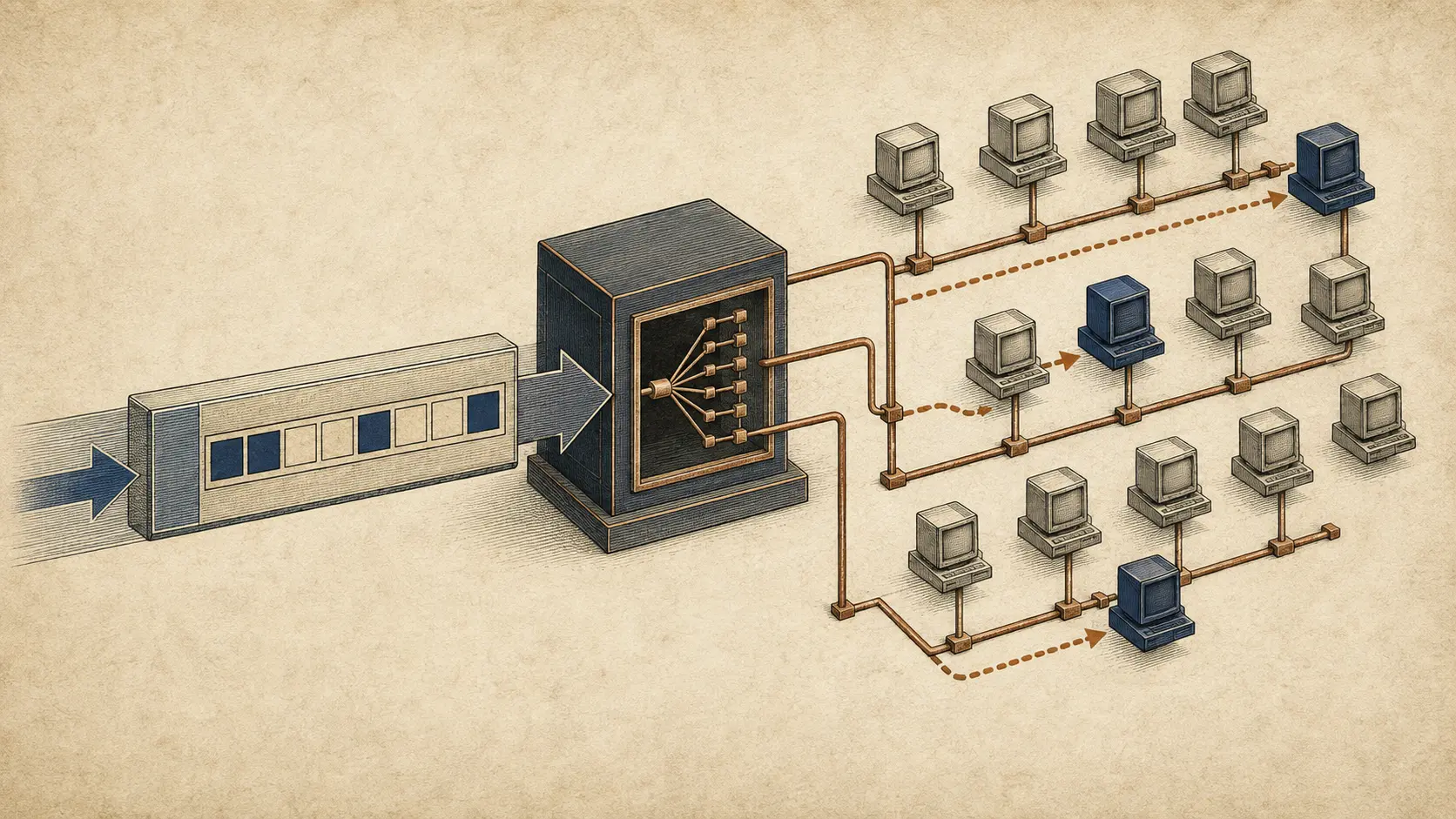
The Broadcast Packet That Carried Its Own Guest List
One UDP datagram approached a remote subnet as a broadcast, yet it carried a private instruction inside its IPv4 header: these hosts may listen; the others must stop. Selective Directed Broadcast Mode tried to make the packet itself serve as a temporary membership list.