
Topic
Network-resource Evidence
Within the Topic facet, Network-resource Evidence topic intelligence connects articles that share a specific subject, signal focus, or monitoring theme. The page gives readers a richer path through related reporting, source evidence, market actors, and infrastructure implications, with enough context to understand why the topic matters across company movements, governance decisions, regional exposure, and operational risk. Readers can compare recurring signals, affected organisations, public evidence, market context, service continuity, procurement, competition, compliance, and strategic planning questions behind the subject instead of stopping at a thin list of matching articles. It explains what the topic covers, which infrastructure actors or policies are involved, what evidence supports the coverage, and why the subject may matter for operators, customers, investors, and policy readers.

History
Stanford Ran 18 IP Subnets Before the Standard, 1984
In October 1984, RFC 917 described subnetting as a proposal. Stanford had already used IP subnets since early 1982, adapting an older Pup network and routing system rather than waiting for a common Internet procedure.

Story
AS48019 and Terra-Telecom LLC: A Registry Record With an Unanswered Question
AS48019 and Terra-Telecom LLC: A Registry Record With an Unanswered Question intelligence summary explains the development, the public evidence available to readers, the organisations involved, the regional context, market exposure, and the infrastructure consequences that may…
History
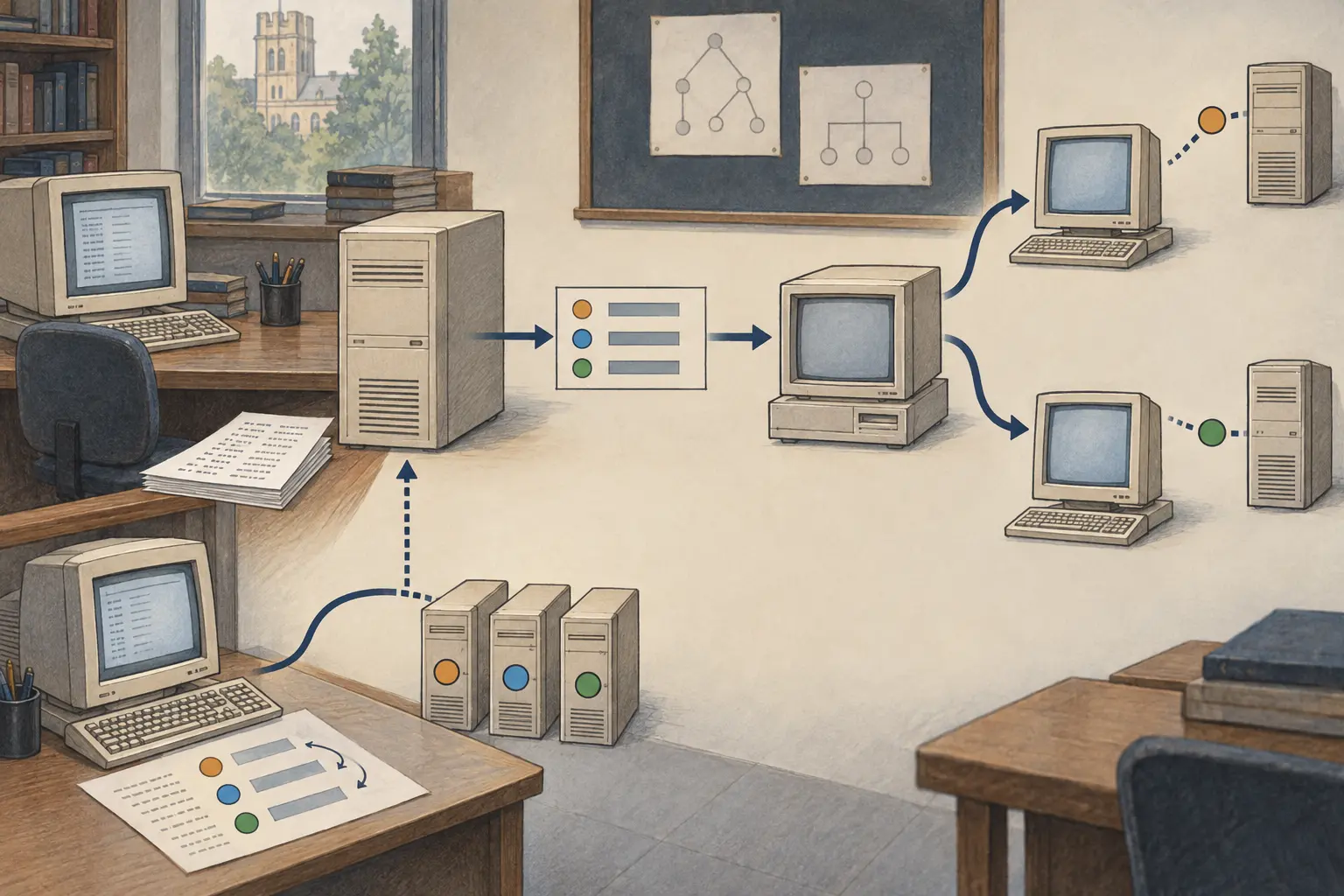
The DNS Answer Had an Order. The Client Kept the Choice: RFC 1794
In 1995, engineers wanted DNS to steer requests toward a less-loaded machine without changing the protocol or breaking the installed base. The compromise could rank addresses before a reply went out. It could not make every resolver or application obey that ranking.

History
Six Sites, One 56 kbps Line: NSFNET Before the T1 Upgrade, 1986–1988
Before NSFNET became shorthand for a national high-speed backbone, it was a deliberately small bridge between six scientific computing sites. Its first 56 kbps links exposed a mismatch: access to supercomputers had been funded, but useful access depended on moving data between…

Europe and Middle East Institutional
RIPE 86: Rotterdam's May 2023 Meeting, Verified on the Record
RIPE 86 — a meeting number that keeps being attached to the wrong months — took place in Rotterdam, the Netherlands, from 22 to 26 May 2023. The dated record behind that number is concrete: a Routing Working Group session that logged 20,000 RPKI certificates under the RIPE NCC…

History
From Fuzzball PING to BSD ping: Mike Muuss’s 1983 Port
A brief exchange between two network researchers joined a laboratory instrument to a small Unix command. Their shared name can obscure how different the two tools were—and what a reply could actually establish.

History
RDAP Could Still Point to WHOIS: The port43 Field, 2021
A registration record could move into RDAP’s structured JSON and still carry the address of a WHOIS server where the same entity might be found. The small `port43` member preserved a service pointer across a protocol transition, while stopping short of a URI, a redirect, or a…

History
When Class C Was Too Large: RFC 1375’s Small-Network Address Proposal, 1992
In 1992, one proposal tried to make an Internet address say more about the size of the network using it. RFC 1375 offered new IPv4 classes for sites that could not use a full Class C block, then sketched regional and device-oriented meanings for some of the same bits. Its…

History
NUNet Routed Nigerian University Mail Through Abuja and Trieste
Nigeria’s university network was designed as a route to full Internet connectivity, but its early operating path was much narrower: campus mail servers called Abuja by modem, and Abuja relayed their messages to ICTP in Trieste.

Global Regional ISP Trends
A 1,500-Byte Majority Hid a Directional PMTU Gap
A study of 76,700 RIPE Atlas path measurements found 1,500 bytes on most observed paths. Its bidirectional subset and MSS comparisons show why that majority is a baseline for investigation, not a universal operating receipt.

Story
LACNIC links an operator’s ASN to the freedom to change providers
LACNIC links an operator’s ASN to the freedom to change providers intelligence summary explains the development, the public evidence available to readers, the organisations involved, the regional context, market exposure, and the infrastructure consequences that may follow. The…
History
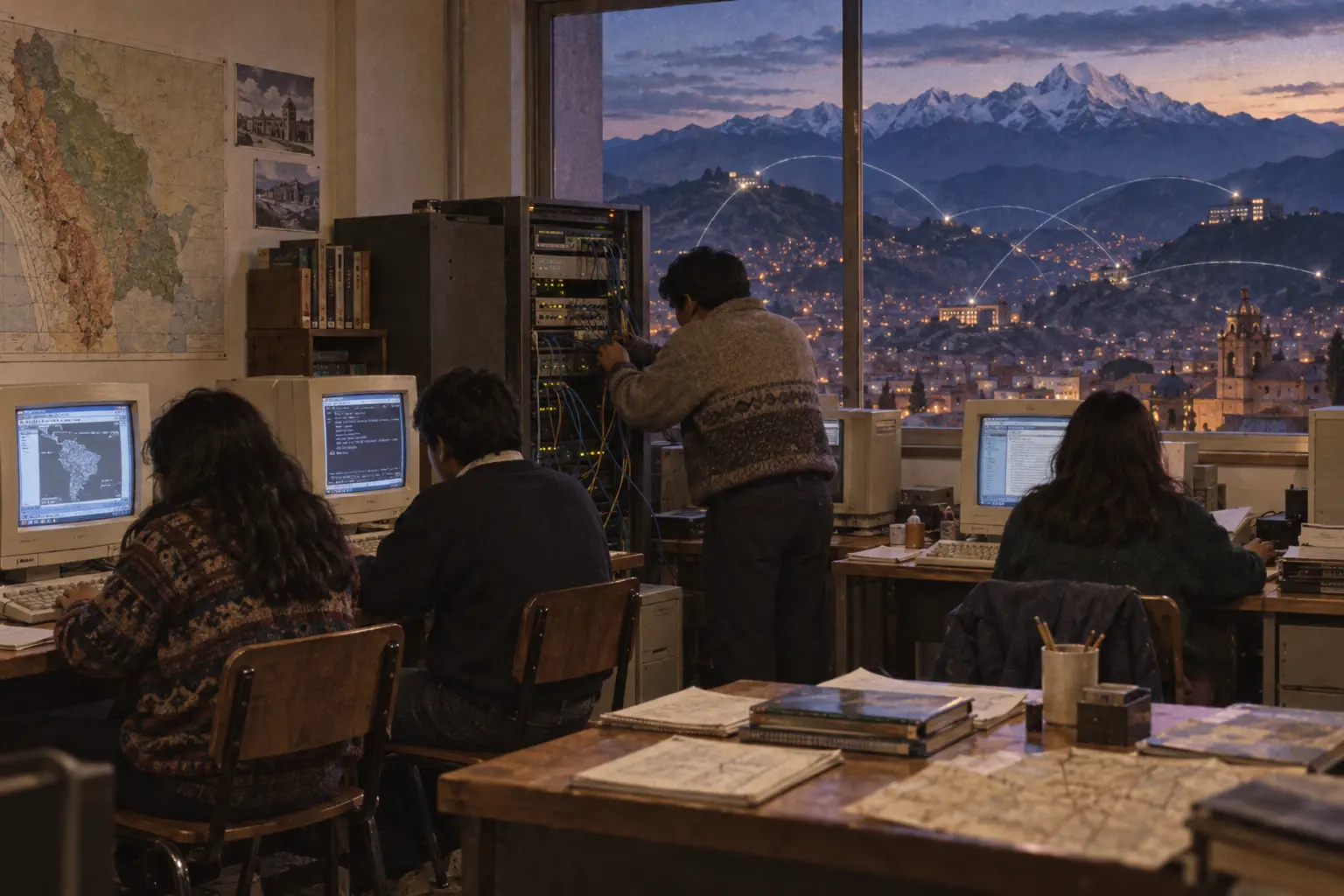
BolNET Reached Every Academic Network University by 1999. Access Remained an Open Question
Bolivia’s early Internet story is often dated to 1989, yet the institutional record describes a project that changed form as it moved from campus research into a national data service. By 1999 the university links were in place; the history that records that milestone also says…

IETF
UDP ECN Depends on the Socket API
An ECN mark can survive every router on a path and still be invisible to the UDP application expected to report it. RFC 10055 documents the operating-system interface between an IP-layer congestion signal and user-space transports such as QUIC.

History
TANet’s No-Transit Boundary: ISP Interconnection Rules, 1996–2006
Taiwan’s education network allowed commercial providers to interconnect on conditions that kept its own backbone and international circuits outside their carriage plans. The surviving versions show how that boundary was reviewed, measured and revised.

History
Ankabut Took Four Years to Become a Network: The UAE’s Research Backbone, 2006–10
Research networks are built in stages. In the UAE, a 2006 university agreement began Ankabut; funding, a carrier contract and campus decisions took until 2010 to turn the proposal into reported connections.

Story
APNIC’s 70% KSK signal does not count the users at risk
APNIC Labs’ sentinel tests and Verisign’s resolver reports both tracked readiness for the 2026 root KSK rollover, but they sampled different populations from different vantage points. Neither percentage is a headcount of people who could lose DNS service.

Leaders
David Huberman’s Role in ARIN’s Thirteen-Site Test for Direct IPv6 Space
A network can be small at every address and still be large in the number of places it must keep connected. David Huberman helped shepherd an ARIN rule that made those places count, while keeping the cost of carrying a larger prefix in view.

Story
Díaz’s provider switch narrows the symptom, not the blocker
In a 14 October LACNIC Blog essay, Telecom Affairs lead César Díaz recounts that vehicle-repair diagrams were missing through one provider and available through another at the same place. That is a provider-dependent result in his account; it does not identify the layer that…

History
Sierra Leone Web Put War News into an Archive, 1996–2002
When conflict reports disappeared in wire-service queues or sat behind subscriber feeds, Sierra Leone Web gave them a different afterlife: dated pages that readers could find again. Its history is less a story of a country coming online than of a small web publication turning…

History
Three Sequence Numbers Brought Down ARPANET: The 1980 Routing Update Loop
A fault in a single switching neighborhood left the ARPANET’s control messages repeating three six-bit sequence numbers—8, 40 and 44. Their ordering rule made each one look newer than another, and a routing process consumed the buffers needed to keep links alive.