
Time Horizon
Year 120d Plus
Within the Time Horizon facet, Year 120d Plus time-horizon intelligence organises articles by the period over which a signal is expected to matter. The page helps readers distinguish immediate operational changes from longer-cycle governance, investment, standards, and infrastructure shifts that may unfold across quarters or years. It connects timing assumptions with public evidence, related actors, market context, customer exposure, policy pressure, and infrastructure planning so readers can judge whether a development is urgent, strategic, or still waiting on confirming evidence. The page also explains how time horizon changes the meaning of a signal, which organisations may be exposed, and which infrastructure decisions require short-term action or long-cycle monitoring.

Global Cloud Services Trends
Kaleris Gained 25 EDI Links, Not One Repair Ledger
Newport Systems gives Kaleris an installed transport network between equipment owners and repair providers. The harder asset is common meaning for every estimate, authorisation, exception and invoice.

Global Datacenter Trends
Flex Has a $4.4bn Bridge for a $4.4bn Deal, Not SpinCo’s Final Balance Sheet
The acquisition price, the temporary funding ceiling and the planned separation sit on three different clocks. Investors still need the permanent financing and allocation record that connects them.
North America Datacenter Trends
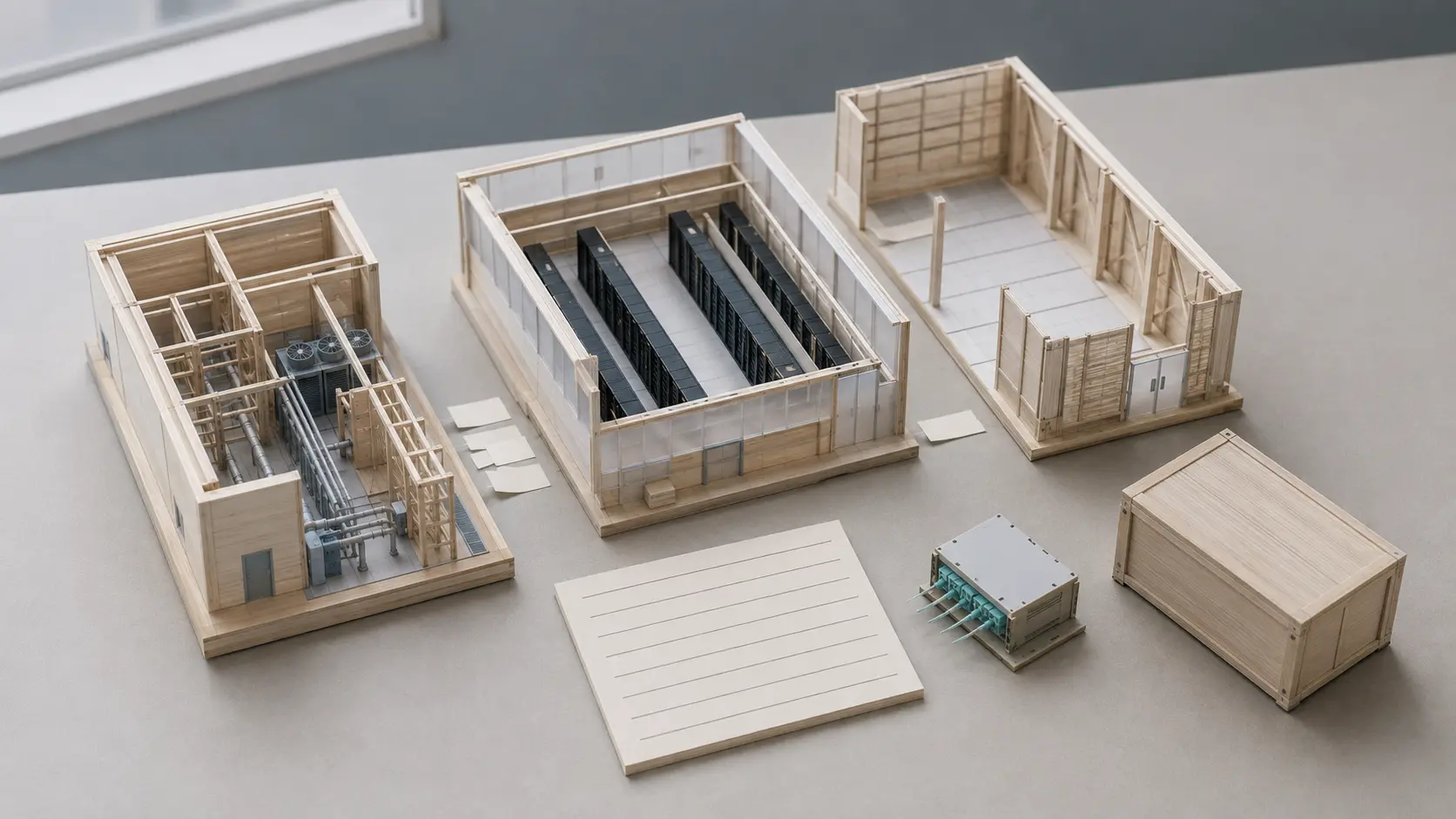
A 54-MW turnkey promise still needs an acceptance sequence
Northampton and Provident have formed a joint venture for a North Dallas data centre targeted for late 2027. The commercial test is how utility, fit-out, network and customer obligations turn a site figure into accepted computing capacity.

History
The Packet That Had to Answer Back: TCP's Challenge ACK Repair
TCP once treated a reset that landed anywhere inside the receive window as sufficiently believable to tear down a connection. RFC 5961 replaced that destructive shortcut with a narrower rule: exact sequence alignment could act immediately; merely plausible input had to survive a…

History
The ACK That Could Not Say Which Packet Arrived: Karn's Retransmission Ambiguity Rule
The same sequence range crossed the network twice. The acknowledgment that returned proved the bytes had arrived, but not which transmission had earned the reply. Karn's rule turned that uncertainty into a discipline: delivery evidence could advance while the round-trip estimator…

History
The Packet That Waited for Its Predecessor: Nagle's Small-Segment Rule
A one-byte write did not need a universal delay timer. It needed a rule about whether the connection already had data in flight. Nagle's answer made acknowledgment state—not the wall clock—the gate for another short TCP segment.

History
The Probe That Could Not Declare an Idle Peer Dead: TCP Keep-Alives
An idle TCP connection can be quiet without being broken. Keep-alive probing was designed to ask whether the peer's transport state could still answer, while denying any single unanswered probe the authority to declare that state dead.

History
The Acknowledgment That Waited for a Second Segment: TCP Delayed ACKs
TCP does not always answer one received data segment with one immediate acknowledgment. The receiver may wait briefly, but that silence is governed by a second-segment threshold, a timer, and exceptions that preserve loss evidence.

History
The Window That Refused to Open One Byte at a Time: TCP Silly Window Syndrome Avoidance
A TCP receiver can have room for more data without advertising that room immediately. That deliberate silence prevents a small permission from becoming a self-repeating stream of small packets.

History
The Window That Closed Without Ending the Connection: TCP Persist
When a TCP receiver says it has no room left, the sender stops sending ordinary data. The harder question is how either side escapes that pause if the one message announcing new room never arrives.
History
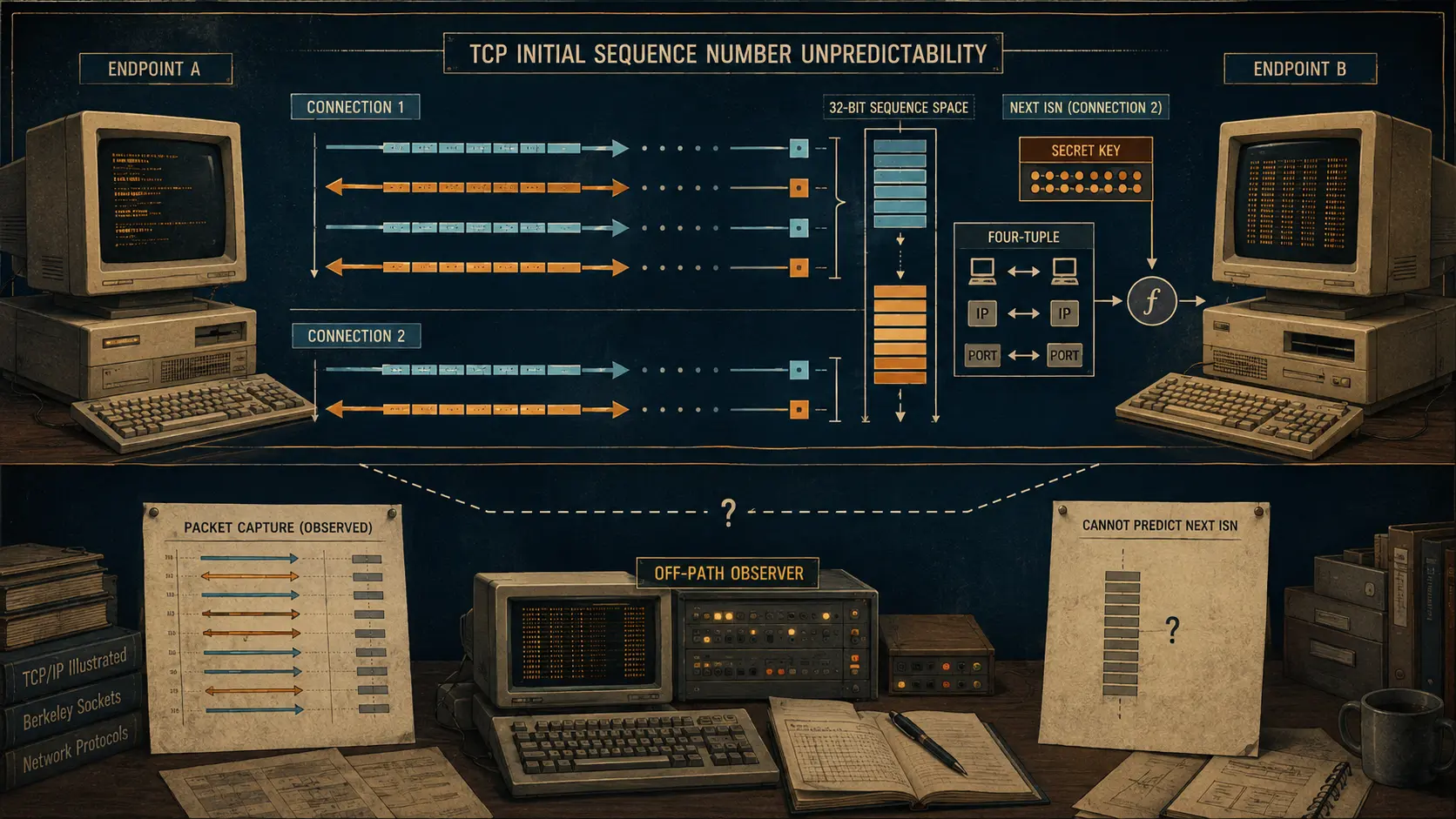
The Number Made Harder for an Off-Path Attacker to Predict: TCP Initial Sequence Numbers
A TCP connection begins by exchanging numbers. The security change was not to hide that exchange, but to stop one visible number from revealing the next connection's starting point.

History
The Chain That Made a Public Key Believable: PEM Certificate Management
A public key does not identify its owner by itself. RFC 1422 addressed that gap for Privacy Enhanced Mail by specifying certificates, certification authorities, validation paths, and revocation information—the institutional machinery needed before a relying party could treat a…

History
The Pointer That Was Never Out of Band: TCP Urgent Data
TCP urgent data is a small control surface with a long history. The URG flag makes a 16-bit urgent pointer meaningful, but RFC 793 described the boundary it marks in two contradictory ways. That ambiguity crossed from the specification into implementations and application APIs.

Asia-Pacific Datacenter Trends
DayOne’s 1.5-GW power study is not a supply commitment
The developer and TNB GenCo are examining on-site generation for Selangor. That option sits alongside a separate renewable-energy procurement programme, with different units, obligations and unanswered questions.

Europe and Middle East National Telecom Trends
Telefónica’s RedCap meter test goes beyond the radio link
A German trial connected a prototype gateway to the metering operator’s back office over 700 MHz. The next commercial question is whether the complete chain can be supported across years of field use.

Europe and Middle East Regional ISP Trends
OXG’s new funding partner cannot order a fibre customer
Societe Generale S.A. has agreed to buy half of Vodafone’s German fibre venture. The deal addresses the supply of capital; turning installed connections into paid usage is a separate task.

North America Datacenter Trends
Gradiant’s Texas water deal puts the treatment plant on the critical path
A new data-centre contract combines drinking-water supply and wastewater treatment. Its zero-surface-discharge design leaves a separate question: how much water the campus will need.

North America Cloud Services Trends
HiddenLayer’s $100m Round Puts Agent Controls to the Test
The AI-security company is expanding protection inside coding workflows. Buyers still need to establish which actions each host platform lets a security tool stop.

North America Cloud Services Trends
Data443’s Voting Sunset Leaves a Conversion Right Behind
The proposed Four Leaf combination puts a time limit on enhanced votes. It does not make the preferred shares disappear, or turn each remaining preferred share into one ordinary vote.

Global Cloud Services Trends
Genesys Expands Agent Choice. Flow Design Sets the AI Meter.
The company's larger AI ecosystem gives contact centres more options. Its native billing examples show why an unused capability can still affect the interaction's charging tier.