
Time Horizon
Multi-year
Within the Time Horizon facet, Multi-year time-horizon intelligence organises articles by the period over which a signal is expected to matter. The page helps readers distinguish immediate operational changes from longer-cycle governance, investment, standards, and infrastructure shifts that may unfold across quarters or years. It connects timing assumptions with public evidence, related actors, market context, customer exposure, policy pressure, and infrastructure planning so readers can judge whether a development is urgent, strategic, or still waiting on confirming evidence. The page also explains how time horizon changes the meaning of a signal, which organisations may be exposed, and which infrastructure decisions require short-term action or long-cycle monitoring.
CASE FILE
The Child Has Spoken. Who Makes the DS Record Real?
A child zone can publish a perfectly signed request for its next DNSSEC trust state and still be rightfully refused. CDS/CDNSKEY automation works only when signal, acceptance, parent publication and validator observation remain separate facts.

History
Philip F. Smith and the Routing Report That Could Observe, Not Command
A daily BGP report begun in 1999 made routing behaviour public at a moment when registry records and operator claims could not show what the network was actually announcing. Philip F. Smith’s long-running instrument matters because it also exposes its own limits: a selected path…

History
The Link the Origin Asked to Remove: Why HTTP 410 Was Not 404
Two dead-looking links can lead to the same empty browser view while making very different claims. HTTP 404 leaves the reason and duration unresolved. HTTP 410 lets an origin say that access ended deliberately, is likely to stay ended, and should change how the rest of the Web…

History
The Message That Expired at Only One End
A sender could stop pursuing a message whose usefulness had run out. It could not make the receiver infer that decision from silence, or recall a copy already on its way. SCTP’s partial-reliability extension made abandonment a shared procedure without disguising it as delivery.

Global Cloud Services Trends
Commvault’s $424m SaaS ARR Has Not Retired Its 96% License Margin
Commvault now sells two different economic machines under one subscription label. In the June quarter, hosted recovery grew fastest, but term software still produced more revenue and carried a gross margin about 25 percentage points higher. The transition is real; the destination…
CASE FILE
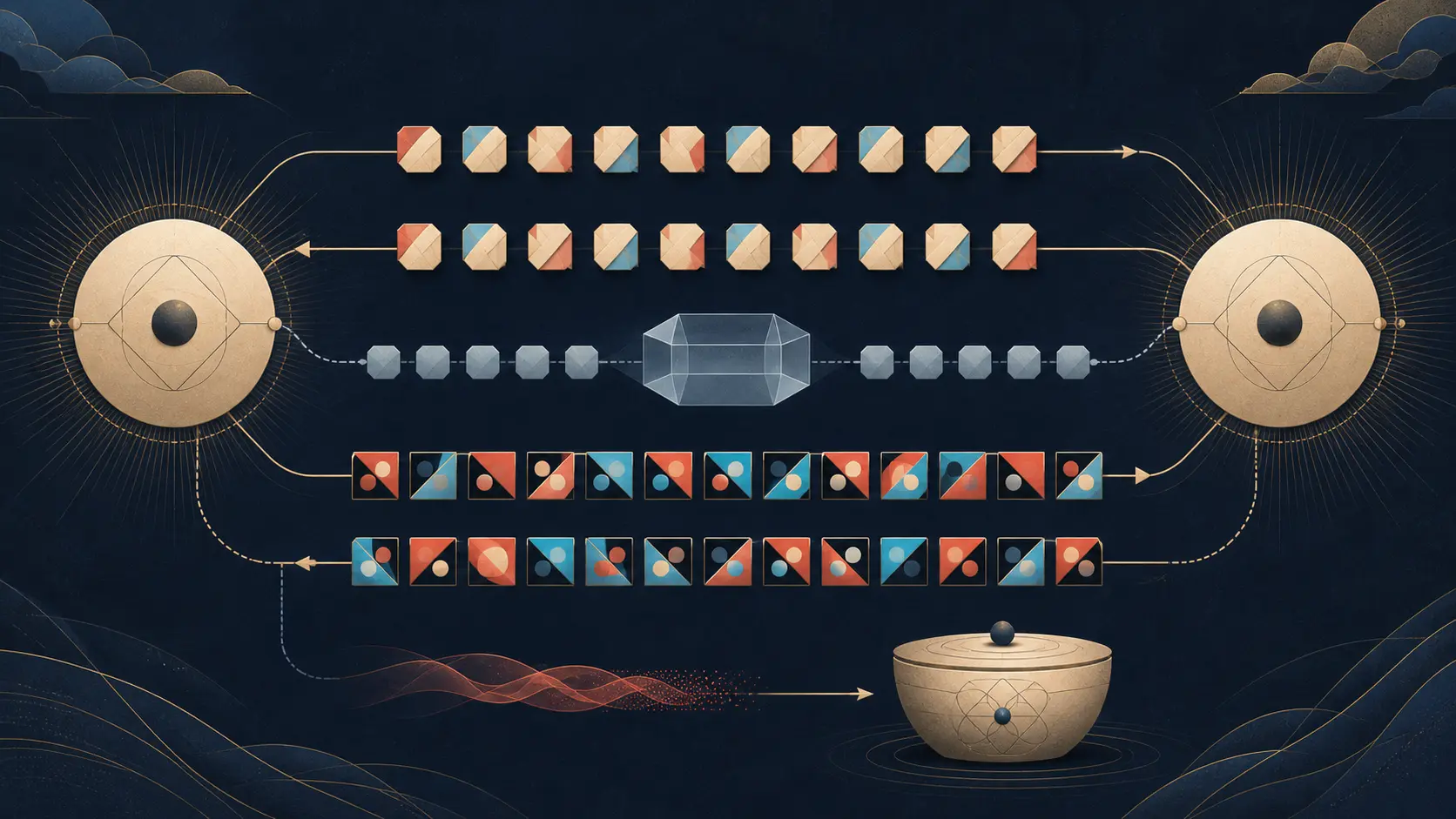
Who Owns the Renewal Clock? ACME ARI and the Last Mile of Certificate Replacement
A certification authority can spread renewal work across a day, yet a fleet can still compress that day into one frantic minute. ACME Renewal Information supplies a window; the client, deployment system and live service decide whether that window becomes a safe replacement.
History
The Name That Spent Its Capital Letters: How DNS Turned Case into a Reply Challenge
DNS was built to recognize a name regardless of how its ASCII letters were capitalized. Two decades later, engineers noticed that the discarded distinction could still make a forged reply harder: the name could mean the same thing to the server while carrying a pattern only the…
CASE FILE
The Reply Said Success. No Client Had Changed: DHCPv6 Reconfigure and the Authority of a Trigger
A relay can report that configuration changed, a server can answer `Success`, and an authenticated packet can reach a client without any of those events proving that the client now runs different addresses, prefixes or service parameters. DHCPv6 Reconfigure is useful precisely…

History
The Packet That Had to Go Home Before Going On
A mobile computer could carry its address to another network, but not necessarily the right to emit that address from there. Mobile IPv4's reverse tunnel sent an outgoing packet home before letting it continue to its correspondent. The detour was less an admission that the…

History
The New Key That Inherited Its Past: What TLS KeyUpdate Could Rotate
A protected connection may last far longer than the key that first carried its traffic. TLS 1.3 gave that connection a way to move forward without renegotiating who its peers were—but the new secret remained a descendant of the old one, with a sharply bounded security promise.

History
The Alert EOF Could Not Replace: How TLS Made One Direction's End Explicit
A receiver can authenticate every byte it saw and still not know whether more bytes were meant to arrive. TLS solved that narrower problem by putting the ending inside the protected conversation, then learned that the two directions should not be forced to end together.

History
The Report That Had to Wait for the Crowd
An RTCP report timer reaches its appointment, and the source still does not send. The report is ready. The correct next action may still be to send nothing. In the control protocol accompanying real-time media, an appointment made with an incomplete picture of the group is not an…
CASE FILE
The User Matched Twice. The Packet Was Valid: RADIUS CoA and the Authority to Change a Live Session
A correctly protected control request reaches an access router and asks for a new traffic filter. The subscriber name matches two live sessions. Cryptography has answered who sent the packet on this hop. It has not answered which connection may be changed.

North America Cloud Services Trends
Two AWS Rent Clocks Sit Beneath Cipher’s US$793m NOI Average
Cipher Digital can put US$11.4bn of contracted revenue and US$793mn of average annualised net operating income on one slide. Cash will still arrive one data hall at a time. Black Pearl has begun earning its first AWS rent; Stingray is targeting two starts in 2027. Between those…

History
The Record the Receiver Could Not Hold: How TLS Made Size a Local Claim
A small endpoint may be able to stream encrypted output while lacking the memory to authenticate an equally large record arriving from its peer. TLS eventually learned that the two directions do not have to pretend they are the same machine.

History
The Checksum That Had to Ask in the Old Language
A TCP endpoint could propose a different checksum without making an old peer fail. The old peer would ignore the unfamiliar option, answer normally, and thereby withhold the matching signal the experiment required. The fallback that made RFC 1146 safe to deploy also made…

North America Cloud Services Trends
TeraWulf Exchanged Abernathy’s 25-Year Upside for Three Instalments
The simple arithmetic is an US$80mn spread between TeraWulf’s US$450mn investment and approximately US$530mn of sale consideration. The useful arithmetic is harder. The buyer pays on three dates through April 2027, while TeraWulf gives up every share of a 168MW project with a…

History
The Flight TLS Sent Before the Server Finished: How False Start Borrowed One Round Trip
TLS False Start let a client release freshly encrypted application data after sending its own Finished but before verifying the server's. It saved a wait by moving data across an unfinished proof boundary—not by removing the proof, resuming an old session or sending plaintext.

IETF
Ross Callon and the UDP Port That Was Entropy, Not a Session
A familiar UDP header can make an MPLS tunnel look more conversational than it is. Ross Callon’s shared work on RFC 7510 shows why the source port is a path-distribution signal, while identity, admission, label meaning and congestion responsibility remain elsewhere.
CASE FILE
The Packet Was Authentic. The Clock Was Still Wrong: NTS and the Authority of a Time Measurement
Two time servers answer the same machine. Both replies pass Network Time Security checks. Their offsets are 800 milliseconds apart. The cryptography has done its job, yet the operator's hardest question remains unanswered: which measurement, if either, may steer the clock?