
Summary
- CityFibre’s £800m accordion is financing capacity for an M&A pipeline, not a disclosed allocation to particular targets or proof that acquired assets can service debt.
- A useful roll-up record follows each acquired cohort from authority and draw through integration, wholesale availability, connected customers, contribution, remaining capital needs and covenant headroom.
- CityFibre’s Lit Fibre and Connexin disclosures show why premises passed, Ready For Service premises and commercial contribution must remain separate states.
The most arresting number in CityFibre’s July 2025 financing announcement was not the £500m of new equity or the £960m expansion of committed debt. It was the additional £800m accordion facility described as support for the company’s mergers-and-acquisitions pipeline. The number creates a tempting shortcut: treat available facility capacity as a roll-up budget, attach a premises figure to every target, and infer that consolidation has already been financed.
That shortcut skips the transaction. An accordion expands the amount that may become available under a financing arrangement. CityFibre’s public announcement did not disclose the loan agreement, pricing, security, draw conditions, acquisition-eligibility tests, covenants, amortisation, remedies or a deal-by-deal allocation. It also said the agreement remained subject to final legal approval at the time. The later Q3 update said the financing had concluded, but still did not convert the £800m into a public schedule of approved acquisitions or cohort cash flows.
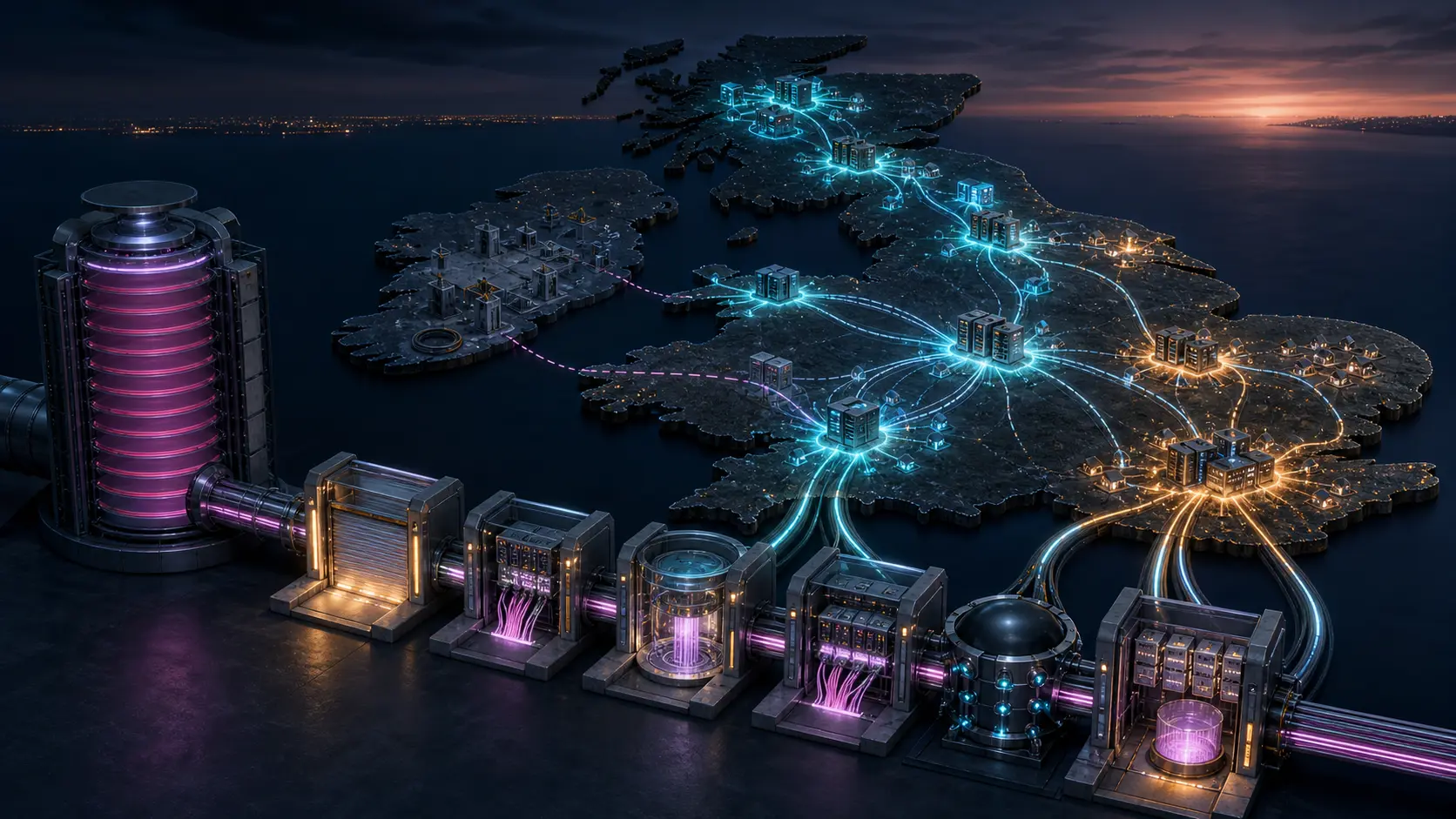
The better unit of analysis is an acquired-network cohort. One row should begin with the specific assets and obligations being acquired, not the consolidator’s total footprint. It should preserve at least seven different states: authority and committed draw; the acquired unit; technical and operational integration; wholesale activation; customer conversion; economic contribution; and debt service with covenant headroom.
Exceptions belong on the same row because incomplete builds, subsidy obligations, incompatible assets and delayed take-up are not footnotes to an acquisition—they are the mechanisms by which acquisition value can fail to become cash.
Lit Fibre illustrates why the states cannot be collapsed. In March 2024, CityFibre said the share-based transaction would add up to 300,000 premises: more than 200,000 already passed and as many as 100,000 in planned rollout. Lit was serving more than 9,000 retail customers. CityFibre also said integration would have to span passive and active infrastructure plus operational-support systems before internet service providers could receive the same products, pricing and service experience across the acquired footprint.
Those details described a starting inventory and a required conversion, not a finished wholesale asset. CityFibre’s February 2025 update then supplied a later state: the transaction had completed in May 2024, added 280,000 Ready For Service premises and more than 10,000 retail customers, and was integrated into the wholesale platform in less than nine months. The company said the retail ISP had been sold to its co-founders and that the network footprint was available to ISP customers with the full product portfolio by year-end.
That progression matters. Announced premises were not yet accepted RFS premises. Retail customers were not automatically wholesale customers. Compatible XGS-PON architecture reduced one integration problem but did not disclose the integration bill. The source establishes the sale to the co-founders, not any further ownership history. Even the later completed-integration statement did not identify the Lit cohort’s revenue, direct service cost, maintenance, working capital, contribution margin, allocated debt or cash available for interest and amortisation.
Connexin begins from a different inventory. CityFibre’s March 2025 announcement covered built assets passing more than 80,000 premises, work in progress for 20,000 and options for further extension. It also took on a Project Gigabit contract for more than 34,000 hard-to-reach premises, with a stated route to more non-subsidised build. The company described total expansion potential of up to 185,000 premises and expected integration of the XGS-PON network to complete later in 2025.
Potential, work in progress and a subsidised delivery obligation are economically different from an accepted active footprint. The public statement did not disclose the consideration, acquired liabilities, final delivered premises, incremental integration cost, cohort take-up or financing allocation. An integration forecast is therefore a monitored commitment, not an integration result.
Company-wide operating metrics cannot close those missing cohort fields. CityFibre’s Q3 2025 update reported £43m of quarterly revenue, £7.6m of adjusted EBITDA, an annualised revenue run rate of £172m and an annualised adjusted EBITDA run rate of £30m. It also said the network passed more than 4.6m premises. These figures give important evidence of the consolidator’s overall direction. They do not isolate acquired-network revenue, integration cash outflow, maintenance capital, working-capital use, interest coverage or covenant headroom. Adjusted EBITDA is not cash available for debt service.
The distinction changes how an acquisition programme should be read. Facility capacity establishes a possible source of funds. Closing establishes ownership. Integration acceptance establishes that the network can operate inside the buyer’s platform. RFS status establishes technical and product availability. Connected customers and churn establish commercial use. Contribution after direct cost and remaining capital expenditure establishes whether the cohort improves the cash equation. Only then can the debt record show what was drawn, what remains payable and how much stress headroom remains.
The public evidence supports the sequence, but not the missing economics. CityFibre’s statements establish what it announced about financing, assets, integration and aggregate performance. They do not disclose the full facility contract or prove acquisition-level free cash flow. Any claim that the entire accordion is an immediately drawable acquisition budget—or that premises alone repay it—would go beyond the sources.
Sources
Member Briefing
Deeper Profile Context
Sign in with the right membership level to unlock the full briefing and source notes.
Only for Strategic Circle
Strategic Circle
Open to all readers. Unlock profile briefings after joining and signing in.
Join Strategic CircleOnly for Leadership Alliance
Leadership Alliance
For qualified IP-asset owners and management; sign in to unlock alliance briefings.
Join Leadership Alliance