
Profile
Research
Research profile intelligence connects person, company, institution, and other entity coverage for readers comparing the subjects behind BTW.MEDIA reporting. The page helps compare public profiles, related events, evidence packs, role changes, operating footprints, governance exposure, organisational links, and market relevance while keeping organisation and people records distinct from ordinary news chronology. Readers can understand the subject behind the headline, the evidence supporting that profile, and the infrastructure or market relationships that make the profile relevant. They can see who or what the profile represents, which public sources support it, how it connects to companies, markets, governance bodies, or events, and what changes may deserve continued attention as the subject evolves.

IETF
Sally Floyd and the Test That Throughput Alone Could Not Pass
A faster flow can be a worse network result. Sally Floyd’s work on congestion-control evaluation shows why a headline rate must be tested against delay, loss, fairness, instability, difficult paths and the traffic it displaces before an algorithm earns a wider deployment.
Global National Telecom
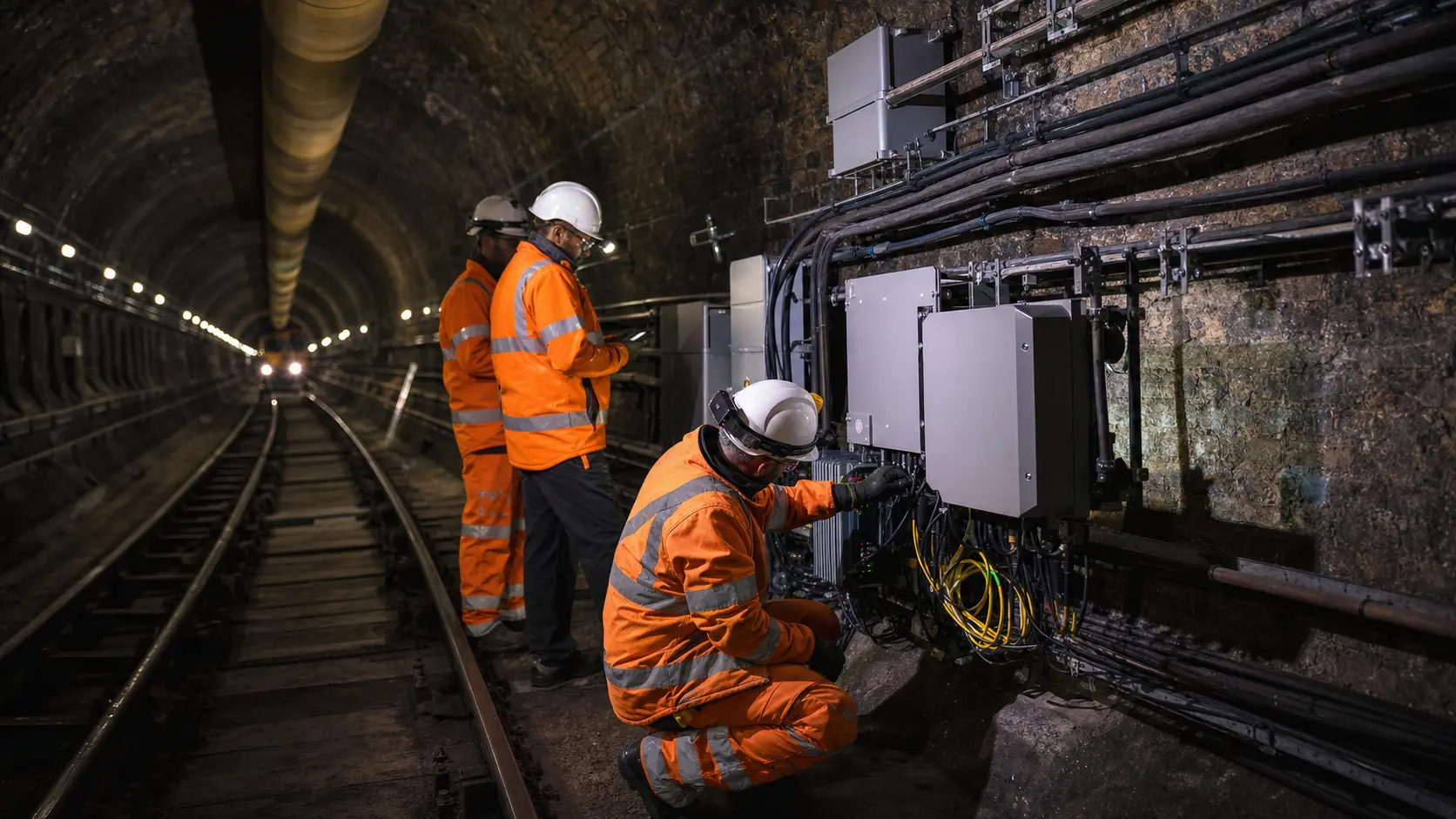
Boldyn's £1bn Tube network must earn its 20-year lock-in
Four mobile operators can share one radio and fibre layer beneath London instead of attempting four separate builds. That is sensible engineering. It is also a twenty-year concentration of operating power, financed before the network produces mature cash. Boldyn has to prove that…

CASE FILE
The coalition that spoke for operators: who authorized TCCM at WSIS+20?
TCCM placed registry and infrastructure operators inside the WSIS+20 consultation record with unusual persistence. The record shows who spoke, which organizations endorsed two important submissions and where the final United Nations text matched the coalition’s requests. It does…

CASE FILE
The Internet Saw One AS. Operations Had Twelve: BGP Confederations and the Authority of a Hidden Topology
The public route never changed. External peers still saw AS 64500, the sessions remained Established and the prefix stayed visible in collectors. Inside the network, however, one router had crossed from Member-AS 65021 to 65031 while its neighbor still believed the old boundary.…

CASE FILE
The Router Could Not Read the Attribute, So It Forwarded It: BGP's Partial Bit and the Authority of Ignorance
This technical explainer opens with a constructed operating scenario, not a reported incident. The transit router does exactly what the protocol asks: it receives a route carrying an optional transitive attribute it does not understand, preserves the opaque bytes, sets Partial…

Europe and Middle East Datacenter Trends
Britain proposes putting up to £712,500 per MW behind a data-centre queue place
Ofgem's proposed commitment fee would turn a cheap grid reservation into a financed option. That is useful discipline, but the security is not a certificate of viability: investors still need to prove that a customer, electrical equipment, finance and an energisation path can…

CASE FILE
The Prefix Was IPv4; the Way There Was IPv6: RFC 8950 and the Authority of a Cross-Family Next Hop
In an illustrative migration scenario, the maintenance report says the IPv6-underlay change succeeded. Every BGP session is Established, capability 5 appears in both OPEN messages, and the IPv4 prefixes remain visible. Yet one rack cannot reach an IPv4 customer. The route exists…

IETF
Jeff Tantsura and the Intent That Was Not Yet an Outcome
The system has accepted a clear instruction: keep a protected network path available. It translates the goal, changes lower-level settings and returns success. Hours later, the protection has disappeared after another change, while the accepted intent remains exactly where it…

CASE FILE
The Next Key Was Announced but Not Delivered: TCP-AO and the Authority of a Key Epoch
In an illustrative rollover scenario at 02:07, the dashboard turns green. Both BGP routers show key 42 in their key chains, and one captured TCP segment carries `RNextKeyID=42`. The operator concludes that the rollover has completed and deletes key 17. Seconds later, TCP…
History
The Stability Rule That Punished Recovery: Route Flap Damping
A mechanism built to protect 1990s routers from repeated BGP updates learned to remember change without understanding its cause. The result was an unusual distribution of power: a prefix holder could repair a route, while distant networks continued to treat the recovery as…

CASE FILE
The Packet Arrived with No Distance to Spare: BGP GTSM and the Authority of Proximity
In an illustrative maintenance scenario at 02:13, one direction of a multihop BGP session moves onto a longer path. The peer still emits every TCP segment with TTL 255. The receiver, configured to admit two routed hops, now sees 252 instead of 253 and discards the traffic before…

CASE FILE
The Filter That Crossed the Session but Not the Boundary: BGP ORF and the Authority to Ask for Less
Consider an illustrative customer changing its inbound prefix-list from a full table to a narrow feed. Its router immediately looks cleaner: unwanted routes disappear from the local RIB. Yet the provider may still be generating and transmitting every one of them, only to have the…

IETF
Linda Dunbar and the Directory That Must Not Invent a Neighbour
A virtual machine moves between racks, but an edge switch still holds yesterday's answer: the address is reachable through the old location. The reply can be perfectly formatted, delivered by an authenticated channel and still send traffic to the wrong place. Linda Dunbar's…

CASE FILE
The Session Was Established and Carried No Routes: RFC 8212 and the Authority of Explicit Policy
The following replacement-edge maintenance scenario is illustrative, not a reported incident. The new edge shows `Established`; KEEPALIVEs advance and the peer has been stable for twenty minutes, yet the IPv4 table is empty and nothing has been advertised. The transport is…

CASE FILE
The Session Fell Silent but Left a Reason: BGP Shutdown Communication and the Authority to Explain a Closure
The peering drops at the scheduled minute. This time the receiver does not see only `Cease`. The terminal NOTIFICATION also carries a compact ticket reference, a reason and an expected maintenance interval. That text can remove hours of ambiguity. It can also be forged, exposed…

CASE FILE
Both Connections Reached OPEN; Only One Could Remain: BGP Collision Detection and the Authority of a Stable Identifier
Both routers dial at once. Two TCP connections complete between the same pair of addresses, and each carries a valid BGP OPEN. Neither transport is broken. Yet one configured peering cannot keep two competing finite-state machines and two versions of its session history. BGP…

CASE FILE
The Peer Kept Sending but Stopped Receiving: BGP SendHoldTimer and the Authority to End a One-Way Session
The neighbour is still sending KEEPALIVEs, so the BGP dashboard remains green. Yet its TCP receive window has collapsed to zero and none of the local withdrawals can leave the socket. The session is established, inbound liveness is real, and the route information held by the…

CASE FILE
The Route Was Accepted So Packets Would Die: BGP BLACKHOLE and the Authority to Destroy Reachability
A blackhole announcement is a rare routing message whose success is measured by non-delivery. That inversion can save a network during a DDoS attack, but only if the right to sacrifice one destination is narrower, more observable and more reversible than the emergency that…

CASE FILE
The Session Could Carry It; the Next One Could Not: BGP Extended Messages and the Authority of a Shared Size Budget
A BGP speaker accepts a 12-kilobyte UPDATE, selects the route and prepares to propagate it. The next neighbour accepts only the old 4,096-octet envelope. Nothing is malformed, the policy still prefers the path and the prefix is valid—yet the complete announcement cannot cross the…

IETF
Hannes Gredler and the OSPF Link That Had to Drain Both Ways
An operator makes one end of a circuit prohibitively expensive, watches routes leave, and calls the link drained. Yet packets can still enter from the neighbour because OSPF does not advertise one indivisible circuit: each router originates its own directional state. Hannes…