
Profile
Briefing
Briefing profile intelligence connects person, company, institution, and other entity coverage for readers comparing the subjects behind BTW.MEDIA reporting. The page helps compare public profiles, related events, evidence packs, role changes, operating footprints, governance exposure, organisational links, and market relevance while keeping organisation and people records distinct from ordinary news chronology. Readers can understand the subject behind the headline, the evidence supporting that profile, and the infrastructure or market relationships that make the profile relevant. They can see who or what the profile represents, which public sources support it, how it connects to companies, markets, governance bodies, or events, and what changes may deserve continued attention as the subject evolves.

Global Datacenter Trends
GE Vernova data-centre orders top $5bn
GE Vernova booked more than $5bn of data-centre orders in its Electrification business during the first half of 2026, already more than double its 2025 total.

North America Datacenter Trends
Pennsylvania ties data-centre permits to local approval
Pennsylvania has tightened its data-centre approval process by linking state permitting, tax treatment and project support to new infrastructure and community requirements.
Asia-Pacific Datacenter Trends
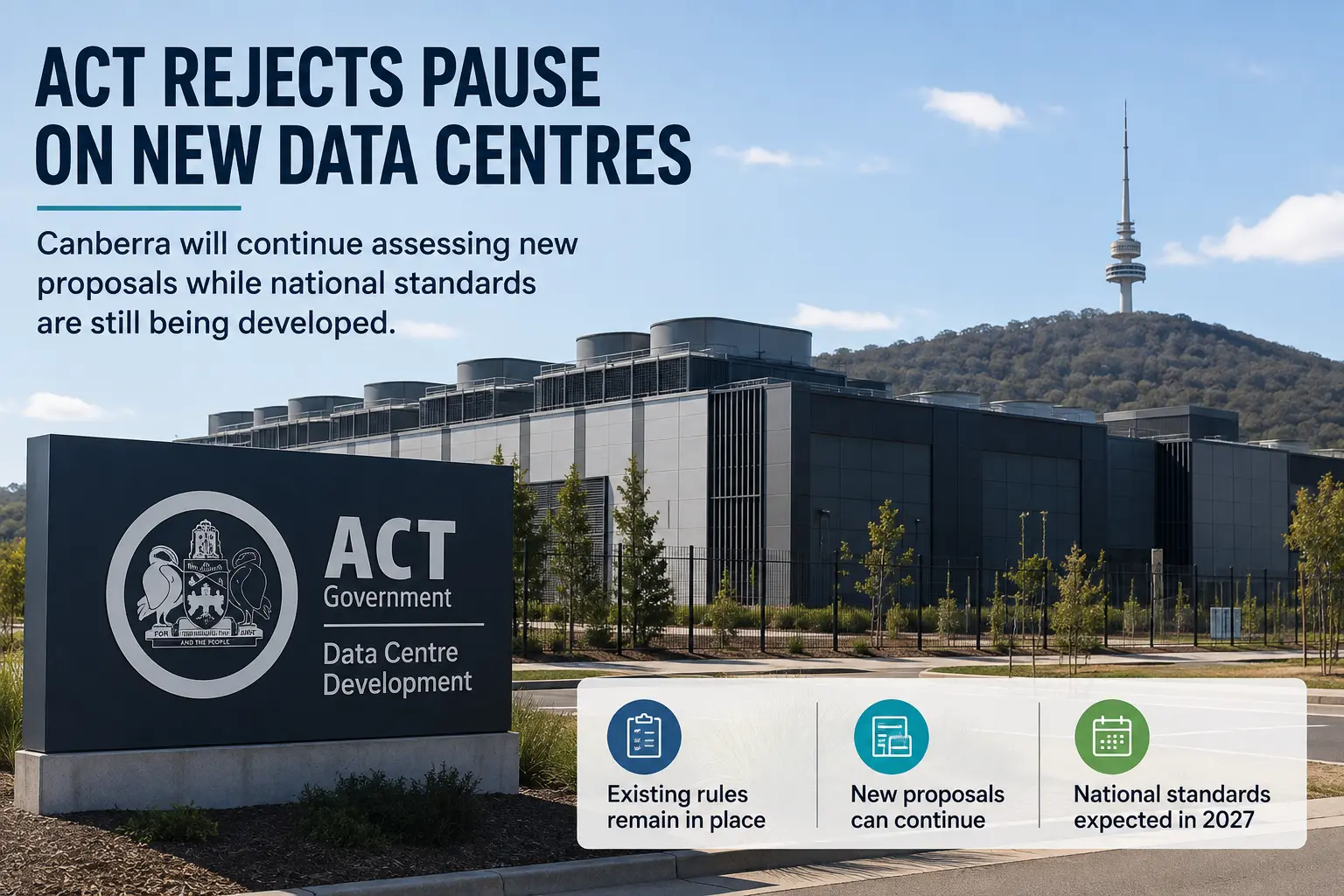
ACT rejects pause on new data centres
Canberra will continue assessing new data-centre proposals under its existing planning system while Australia develops national standards for large facilities.

North America Datacenter Trends
Smith responds to Alberta data-centre backlash
The Alberta premier has responded after tense town halls over AI data centres, while promised setback rules for large projects have yet to be published.

Europe and Middle East National Telecom Trends
Proximus fibre lines reach 820,000 in Belgium
Proximus added 44,000 active fibre lines in the second quarter as its Belgian fibre footprint reached 2.75 million homes and businesses.

Story
The Seller’s Last Login: Why a LACNIC Deal Can Close Before Its Addresses Move
A buyer can acquire the shares, the routers and the customer contracts at midnight and still wake up without a completed registry handover. In a LACNIC transaction, the costly interval is the registry gap between legal control of the company and verified control of the number…

NPNOG
Government support without government mandate: where npNOG meets Nepal’s state
The npNOG-11 running order gave public officials distinct ceremonial, strategic, security and panel roles, while npNOG and its programme chairs retained the conference frame. That contact may be practically useful, but proximity to the state is not a transfer of state authority.

Story
APNIC's corporate-group rule turns affiliation into an electoral boundary
Before an APNIC nominee reaches the ballot, an organizational chart may already decide whether that candidacy counts as an independent choice or as a second seat for one corporate interest.

Story
AFRINIC’s mnt-routes Attribute Grants Database Update Authority, Not Control of Live Traffic
AFRINIC lets an address-space holder delegate the maintenance of related route records through one precise registry attribute. That permission can shape what other networks accept, but it is still several operational decisions away from moving a packet.

Story
The Prefix in the Credit File: What a LACNIC Lender Can Actually Recover
An IPv4 block can look valuable on a market screen and still fail a lender’s recovery test. In the LACNIC region, collateral value depends on a chain that joins company authority, applicable secured-transactions law, transfer eligibility, registry recognition and uninterrupted…

NPNOG
First come, seats available: the rule behind access to npNOG workshops
npNOG’s first event named a simple rule for scarce workshop places: register early. Later pages keep the scarcity but leave the queue itself out of view.

Global Cloud Services Trends
A Certificate Transparency Receipt Is Not Browser Acceptance Until the Log Set Is Reconciled
A certificate authority can return a certificate carrying several valid log receipts and still leave an operator with a failed browser handshake. Certificate Transparency becomes operational evidence only when the receipt is reconciled with the policy and log set used by the…

Story
Three LACNIC Numbers an IPv4 Accounting Memo Must Not Collapse
An IPv4 transfer can produce a private price, a registry-processing charge and a recurring membership invoice. They may arrive in the same transaction folder, but each number proves something different.

Story
AFRINIC's quarantine-floor objection crossed the Last Call boundary
A predictable Last Call cutoff and operational flexibility can both protect registry continuity. But AFRINIC's public record leaves a narrower control question unresolved: who owns a late objection when proposed discretion can shorten recovered IPv4 quarantine without a binding…

Global Regional ISP Trends
IPv4-as-a-Service Makes Translation State an Operating Contract
An IPv6-only access line can look perfectly healthy while one old application, one literal IPv4 address or one changed resolver loses the IPv4 Internet. IPv4-as-a-Service saves scarce addresses by moving compatibility into a chain of synthesis and translation; it also moves the…

Story
A Valid Abuse Mailbox Is Not Enough. APNIC Wants a Working Handoff
A mailbox can answer a validation message and still fail the incident report that matters. APNIC’s prop-171 would make the upstream holder responsible for a working path to the downstream party able to act, but the proposal has not yet said how that path will be proved.

Europe and Middle East Regional ISP
Gigaclear’s Wi-Fi guarantee stops at the broadband contract
A room-level speed promise sounds like protection for the whole broadband purchase. Gigaclear’s current terms draw a narrower boundary: a failed Smart WiFi test can release the mesh add-on and produce one month’s broadband credit, while the underlying broadband service continues…

Story
RIPE's Country Field Names a Code Without Proving Where an Address Is Used
A registry can preserve a perfectly valid country code while leaving its geographic subject unresolved. The distinction matters whenever `country: NL` is copied into security, compliance, market or infrastructure decisions as though it located every address in the range.

Story
APNIC’s SIG rulebook is turning bottom-up governance into a due-process test
A rule written for quiet mailing lists now sits at the centre of a larger question: whether APNIC’s community institutions can renew leadership and close inactive forums without weakening the procedural legitimacy on which bottom-up governance depends.

Story
LACNIC Turns IPv4 Value Into a Chain of Proof
An IPv4 block may attract a price, but a board cannot rely on that value until authority, eligibility and the registry change can survive diligence.