
Profile
Analysis
Analysis profile intelligence connects person, company, institution, and other entity coverage for readers comparing the subjects behind BTW.MEDIA reporting. The page helps compare public profiles, related events, evidence packs, role changes, operating footprints, governance exposure, organisational links, and market relevance while keeping organisation and people records distinct from ordinary news chronology. Readers can understand the subject behind the headline, the evidence supporting that profile, and the infrastructure or market relationships that make the profile relevant. They can see who or what the profile represents, which public sources support it, how it connects to companies, markets, governance bodies, or events, and what changes may deserve continued attention as the subject evolves.

Global Institutional
containerd: the runtime daemon most container users never see
Kubernetes, Docker and managed cloud platforms make containers look like applications, pods and services. Beneath those interfaces, containerd moves images, prepares filesystems, preserves runtime state and supervises processes. Its value comes from being deliberately incomplete…

Global Institutional
DMTF: The Standards That Control Servers Below the Operating System
A server can be powered off, inspected, updated or reconfigured even when its operating system is unavailable. DMTF defines much of the language used for that privileged management plane, from Redfish APIs and MCTP transport to PLDM commands, SPDM identity and SMBIOS inventory.…

History
The Sum That Had Two Zeros: How the Internet Checksum Bounded Error, Not Trust
The Internet checksum made damaged packets easier to reject by making a deliberately small claim. Its strangest corner case—two representations of zero—shows why even cheap evidence must preserve an exact boundary.

History
The Report the Sender Could Not Trust: Why TCP SACK Remained Advice
A TCP sender may keep a byte range in memory even after the receiver has explicitly reported it. That apparent distrust is the safeguard at the centre of selective acknowledgment: a precise observation can guide recovery without becoming a final receipt or a command.
History
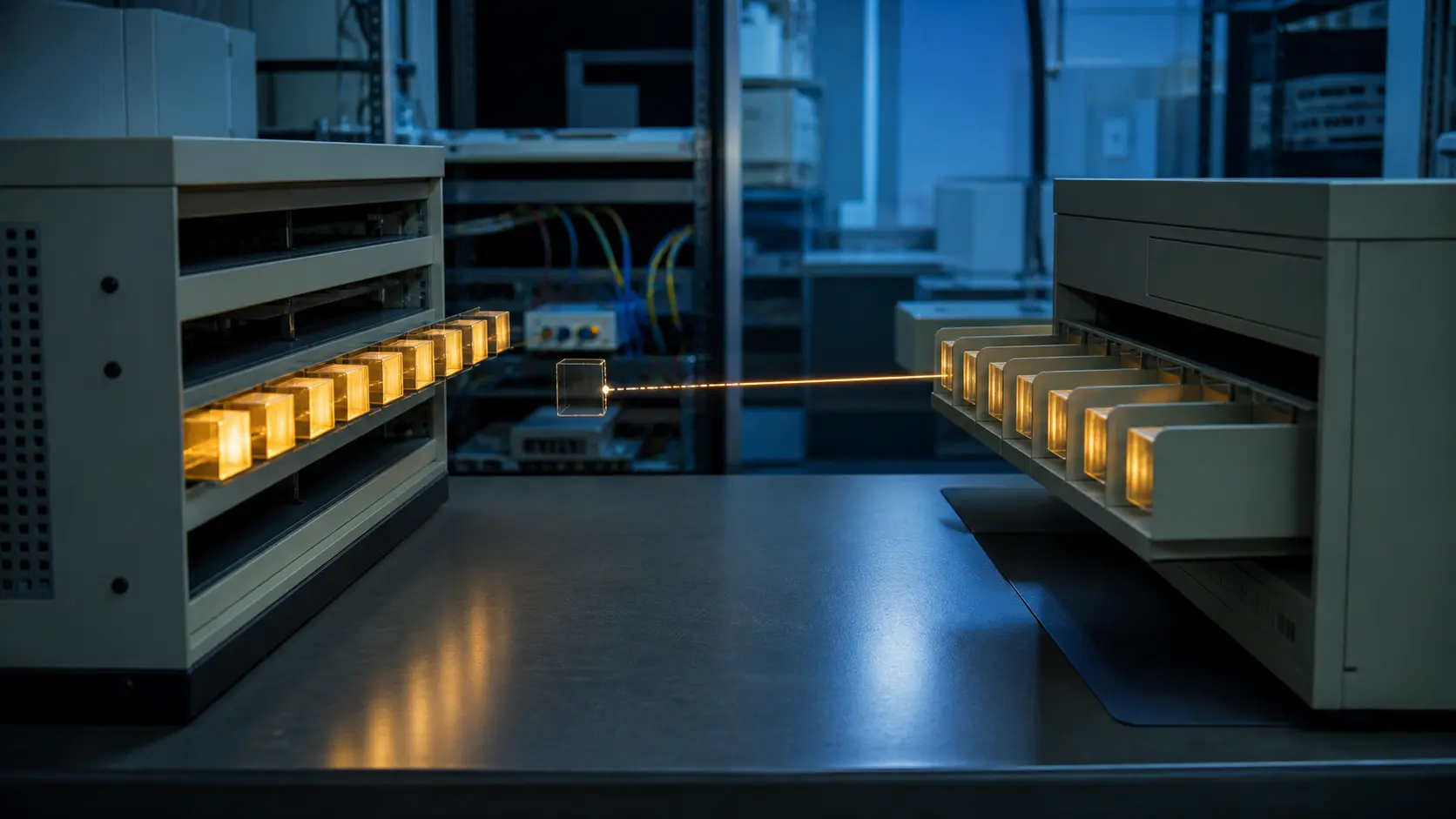
The Acknowledgment That Learned to Point: How TCP SACK Made Loss Visible
TCP's original acknowledgment could certify an unbroken prefix of a byte stream, but it could not describe the islands waiting beyond the first gap. Selective acknowledgment added a small map of those islands while leaving the sender—not the receiver—in charge of repair.

History
The Router That Pointed Sideways: How ICMP Redirect Stayed Local
ICMP Redirect let a gateway reveal a better local next hop without becoming a routing authority. Its power ended at the host that had just used it.

History
The Number That Became Newer After Zero: How DNS Ordered Versions Without a Clock
At the edge of a 32-bit counter, DNS asks operators to accept an apparent impossibility: zero may be newer than 4,294,967,295. That rule let independent name servers agree on version order without sharing a clock, but only inside a deliberately bounded window.

History
The Zone That Knocked: How DNS NOTIFY and IXFR Cut Staleness
DNS once made every secondary wait before learning its authority was stale. In 1996, NOTIFY delivered the knock and IXFR carried only the edit.
History
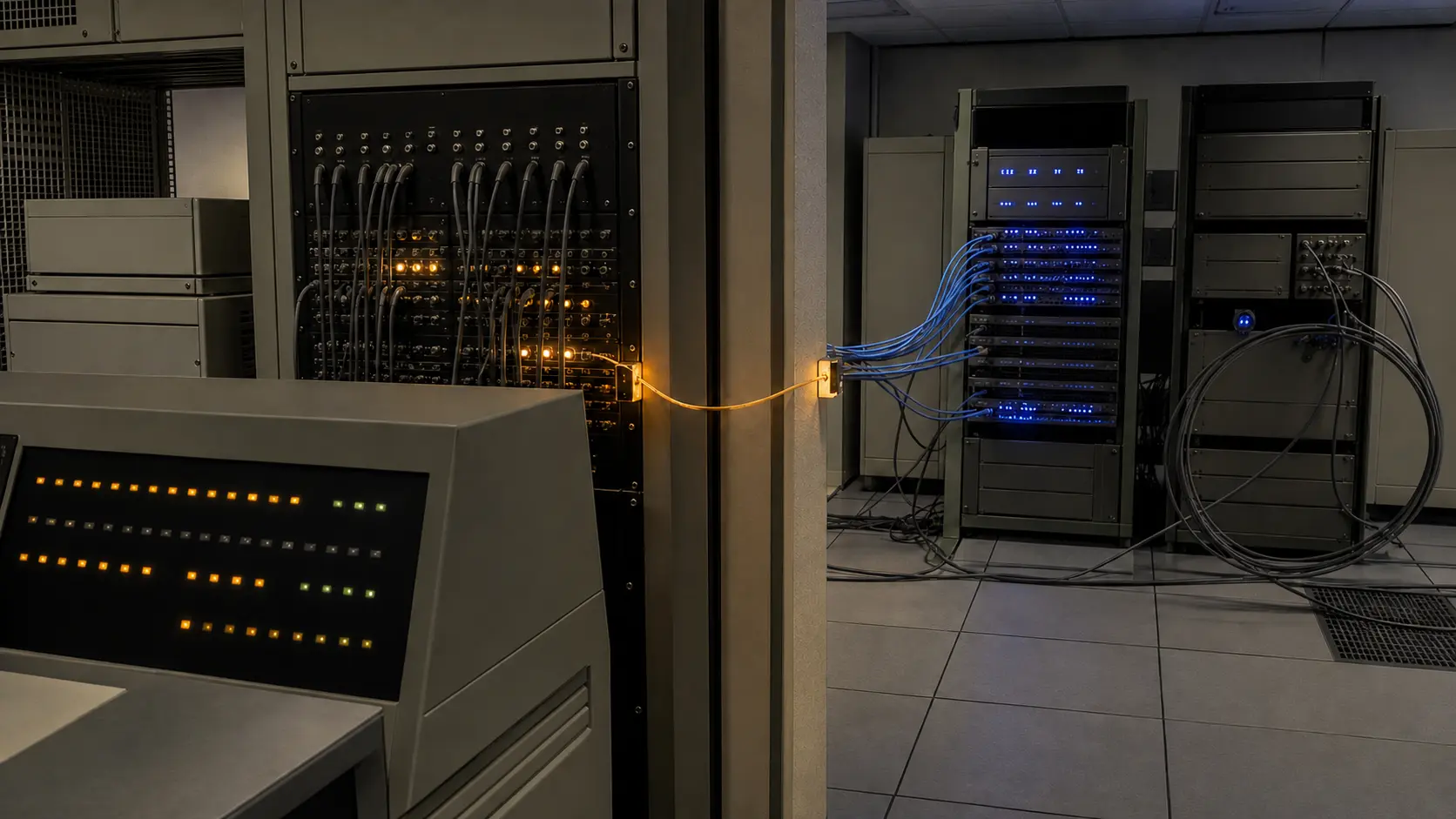
The Address You Needed DNS to Find: How Glue Broke the Delegation Loop
A DNS referral can name the server that knows the answer and still leave a resolver unable to reach it. Glue was the small, deliberately non-authoritative exception that let the resolver cross that gap without giving the parent zone control over the child's facts.
History
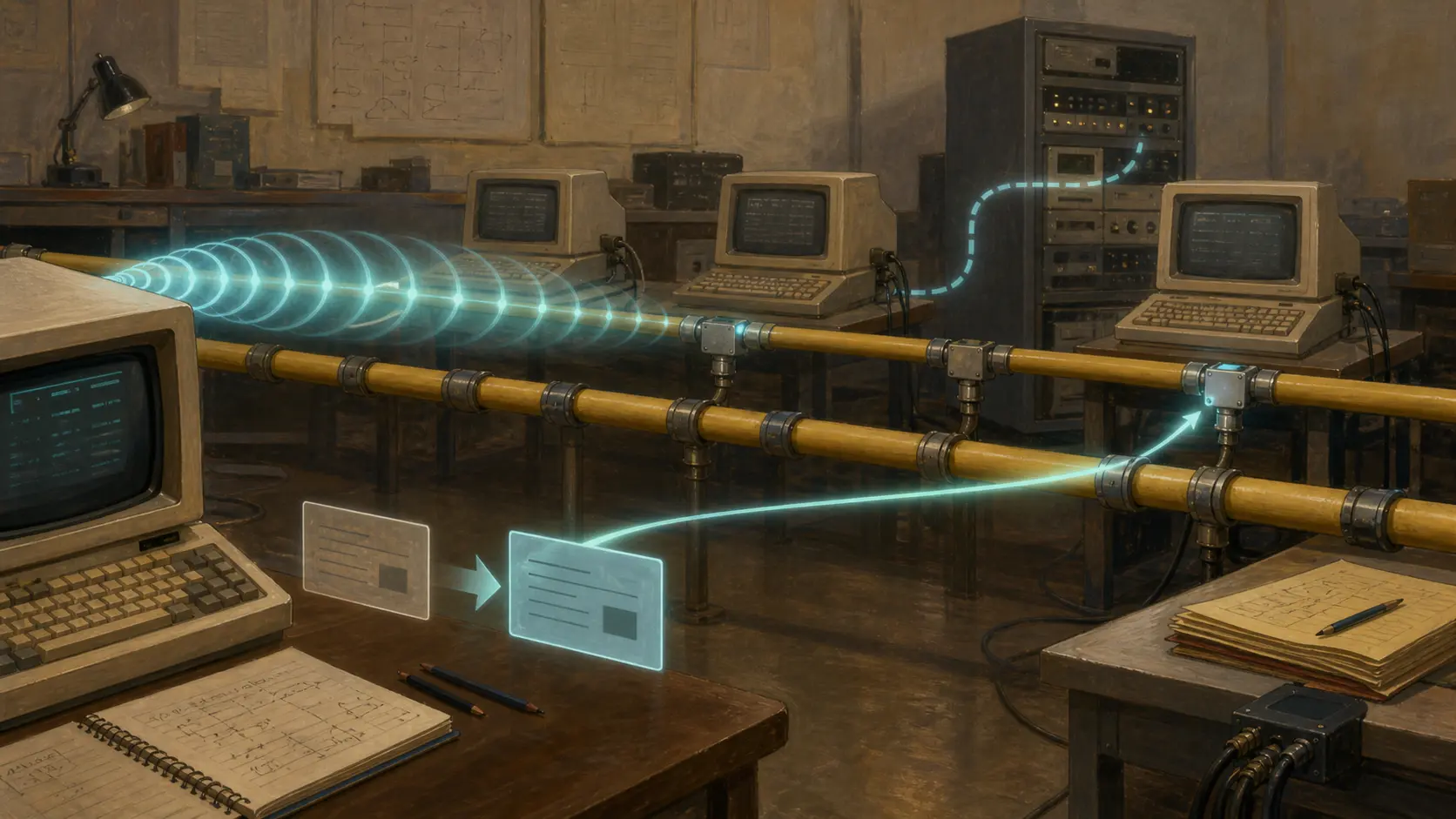
The Address That Asked the Wire: How ARP Made Local Reachability Revisable
Routing can choose the next IP address without knowing how to put a frame on the local cable. ARP filled that last gap with a public question, a private answer, and a memory designed to be corrected.

History
The Connection That Had to Prove It Was New: Why TCP Needed a Three-Way Handshake
A packet can arrive at the right address, carry a plausible number and still belong to a conversation that has already died. TCP's familiar opening exchange was designed around that ambiguity: before accepting a new connection, both endpoints must show that they have seen each…

History
The Packet That Had to Learn Its Size: How Path MTU Discovery Moved Fragmentation to the Edge
A packet may cross a path whose narrowest link is invisible to its sender. The Internet spent four decades changing who should discover that limit, who should report it and who should decide what size to send next.

History
Two Kinds of Nothing: How DNS Learned to Separate NXDOMAIN from NODATA
An empty DNS answer can conceal two opposite realities: the requested name may be absent altogether, or it may be alive and carrying every record except the one requested. The Internet had to make that difference portable, cacheable and temporary before saving queries could stop…

History
The Error That Learned to Expire: How DNS Cached What Did Not Exist
The expensive DNS question is not always the one with a large answer. It may be the miss that thousands of resolvers repeat because nothing can be stored. Negative caching gave absence a scope, evidence and an expiry time—then forced operators to accept that a newly created name…

History
The Mail Address That Outlived Its Server: How MX Records Separated Identity from Delivery
An email address looks like a destination. In the early Internet, it often was: a mailer could take the domain after `@`, open SMTP to the machine with that name and hope the mailbox lived there. In January 1986, RFC 974 described why that assumption had stopped scaling—and how…

History
The Clock Built from Disagreement: How NTP Made Internet Time Without Trusting One Server
In 1989, an Internet-wide experiment found clocks wrong by minutes, hours and, in a few cases, weeks. The problem was not a shortage of machines willing to state the time. It was deciding which statements deserved to move a local clock when packets, oscillators and operators…

History
The Map Made from Expired Packets: How Traceroute Turned Failure into Internet Evidence
In December 1988, Van Jacobson was not trying to draw the Internet. He was trying to find out where his packets had gone. The tool he assembled at Lawrence Berkeley Laboratory made the network answer indirectly: send a packet designed to expire, listen for the complaint, then let…

History
The Day the Old Protocol Lost Its Network: The 1983 TCP/IP Cutover and the Limits of Technical Authority
On 1 January 1983, an ARPANET host that still depended on NCP faced a new fact: the network beneath it could stop servicing the old protocol. The famous cutover mattered not because a memo became universal law, but because a disclosed rule reached an execution boundary whose…
History
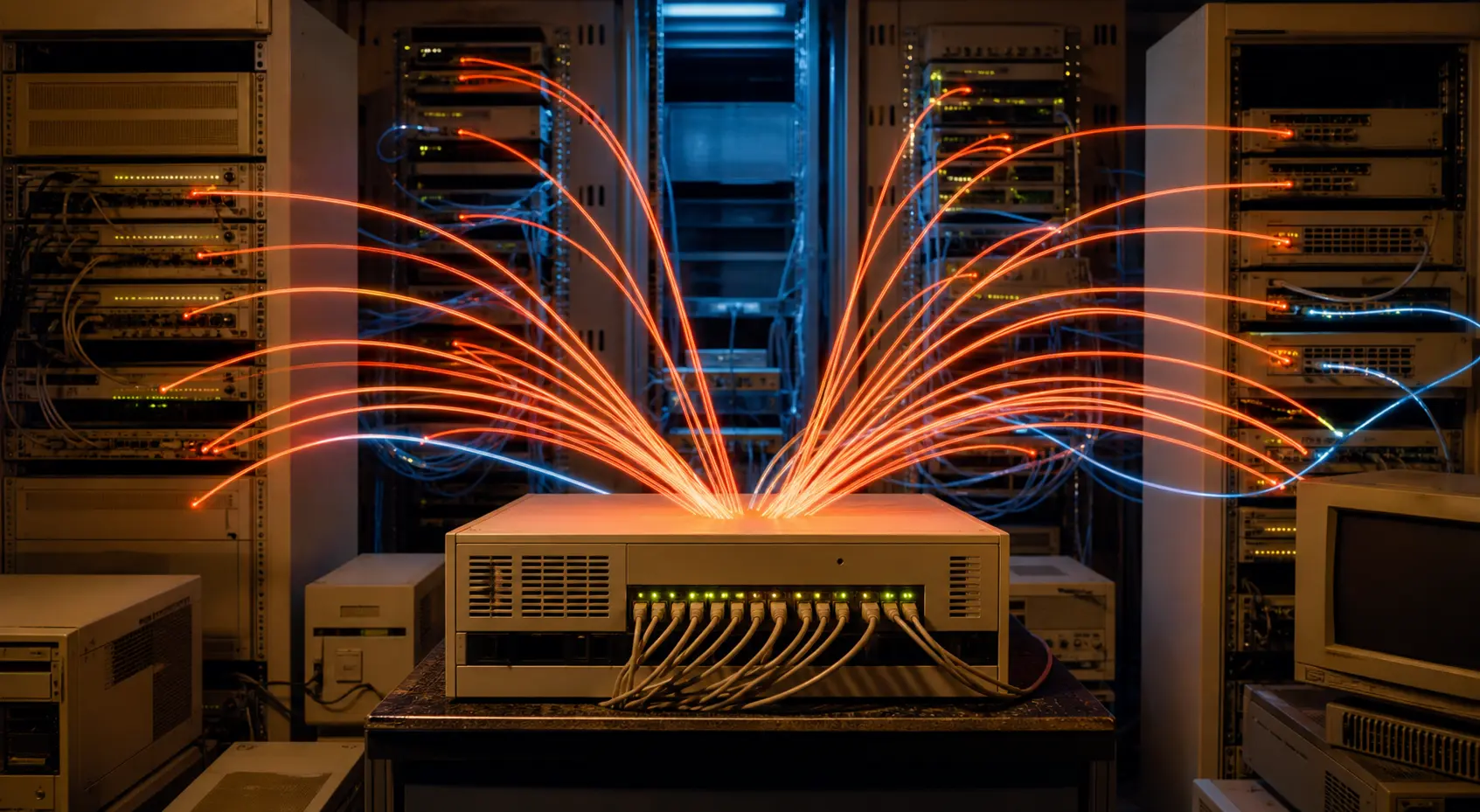
When One Router Announced Everyone’s Network: AS7007 and the Failure of Unchecked Trust
When One Router Announced Everyone’s Network: AS7007 and the Failure of Unchecked Trust intelligence summary explains the development, the public evidence available to readers, the organisations involved, the regional context, market exposure, and the infrastructure consequences…

History
When the First Network Became Replaceable: ARPANET’s Retirement and the Internet That Continued
ARPANET did not take the Internet with it when it was retired in 1990. That was not because the pioneering network had become unimportant. It was because its most important function—making unlike networks communicate—had already escaped the machinery and institution that first…