
Content Type
Research
Within the Content Type facet, Research intelligence gathers BTW.MEDIA articles that share the same editorial format, helping readers compare briefings, profiles, risk notes, market analysis, and event coverage without mixing different kinds of evidence. The page explains how this content type frames internet infrastructure events, company movements, governance decisions, operational signals, and public evidence across the site. Readers can compare which actors or infrastructure systems appear most often, how source quality changes interpretation, and whether the material is a durable profile, a time-sensitive event, a strategic market signal, or a governance development. The result is a useful search page for operators, investors, customers, analysts, and policy stakeholders who need to understand the consequence, timing, and evidence behind similar article formats.
Global Institutional
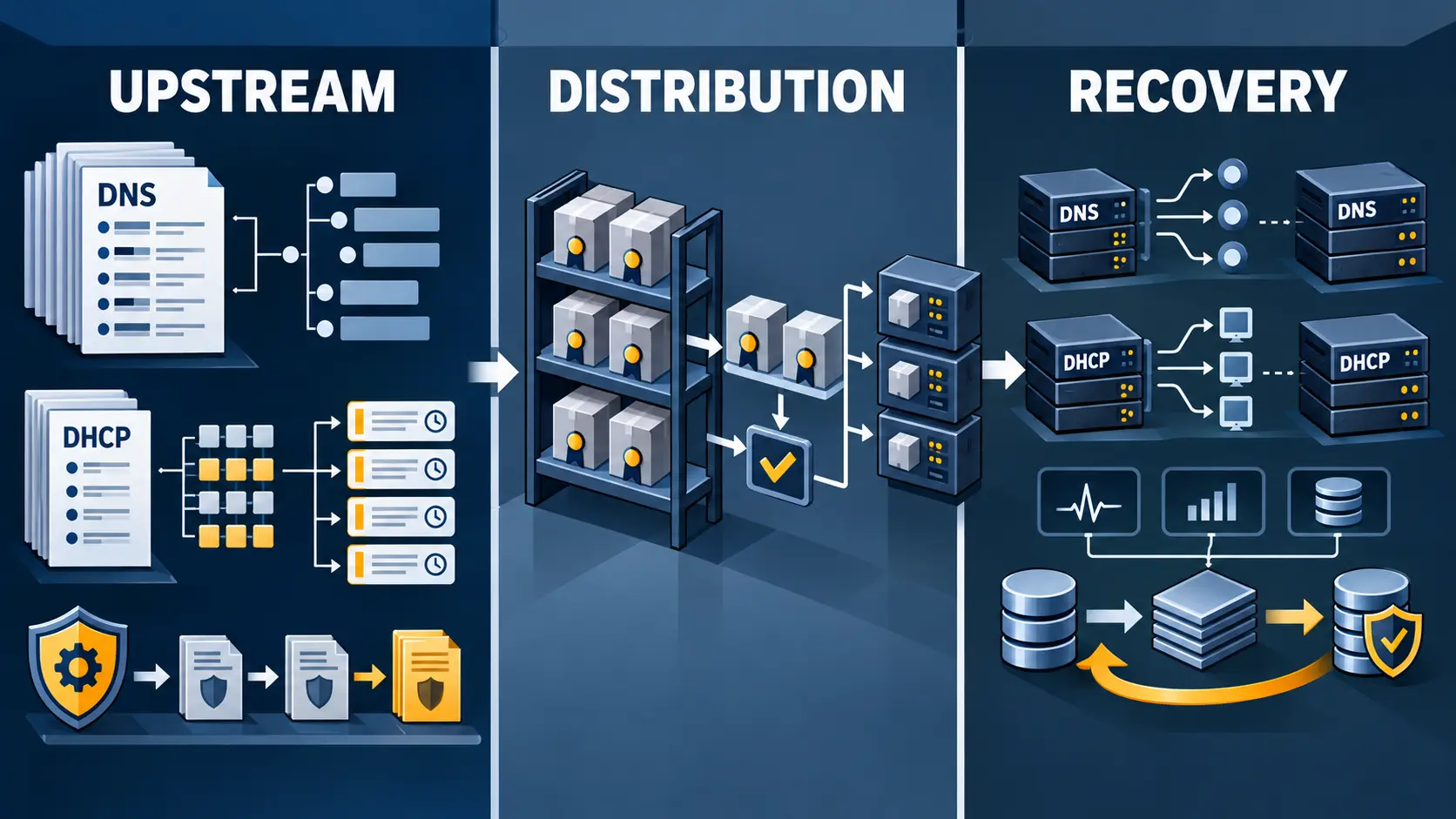
The Dependency Chain Behind ISC Software
ISC’s BIND and Kea influence network resilience through a chain that runs from upstream release work to distributor packaging and operator-controlled recovery. The public record documents important mechanisms and distribution channels. It does not show how many operators deploy…

Global Regional ISP
INFINITYWIFI: Three Different Meanings of Network Control
INFINITYWIFI: Three Different Meanings of Network Control intelligence summary explains the development, the public evidence available to readers, the organisations involved, the regional context, market exposure, and the infrastructure consequences that may follow. The Global…

ICANN
ICANN’s Authority Is a Chain, Not a Crown
ICANN can influence the global domain-name system without being a government. Its practical authority is assembled across several instruments: a California nonprofit charter, corporate bylaws, multistakeholder policy procedures, contracts with registries and registrars, technical…
Global Institutional
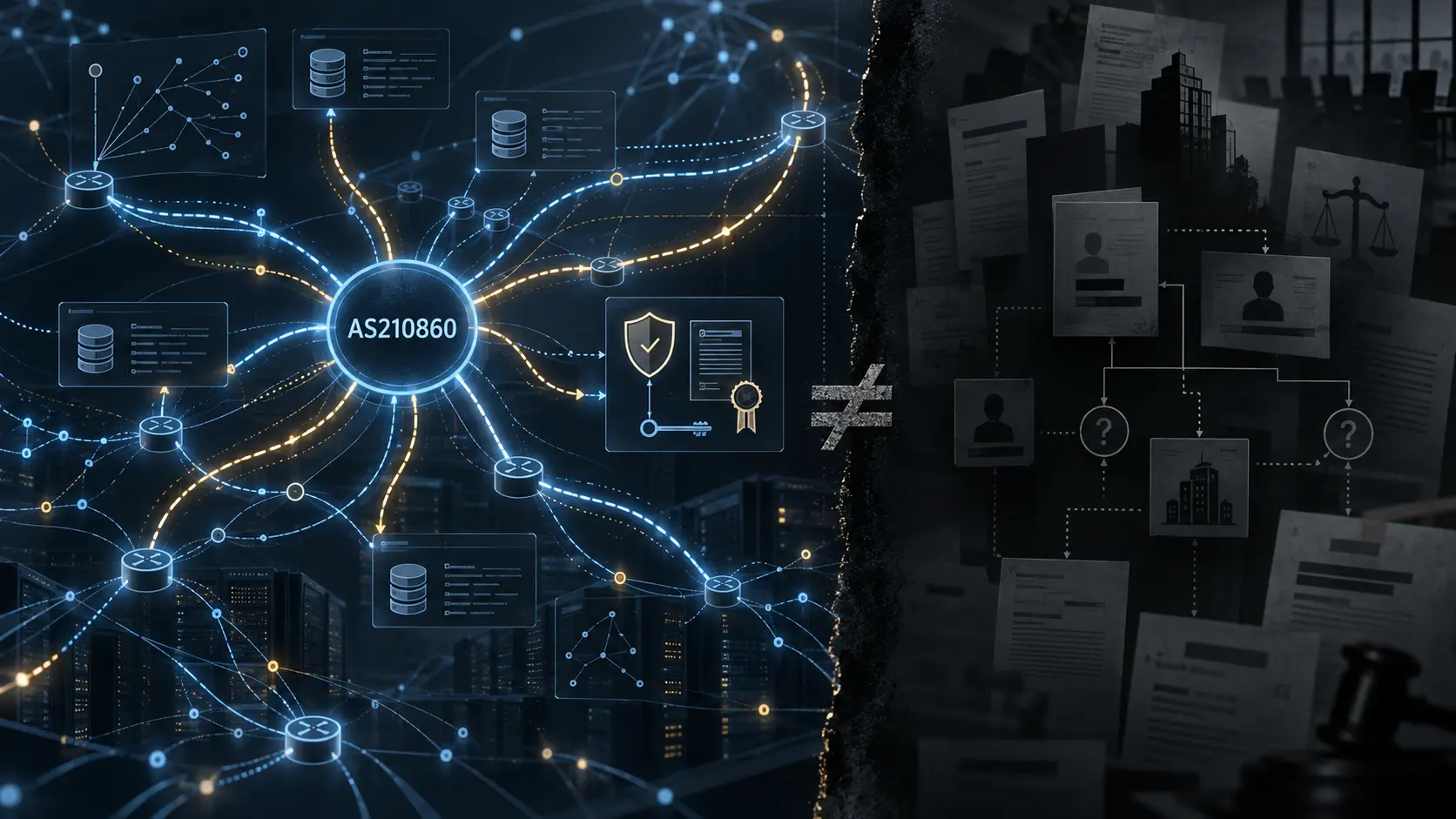
DFINFRA and AS210860: The Control Chain Is Defined, but Not Yet Proven
DFINFRA and AS210860: The Control Chain Is Defined, but Not Yet Proven intelligence summary explains the development, the public evidence available to readers, the organisations involved, the regional context, market exposure, and the infrastructure consequences that may follow.…

IETF
A Valid YANG Schedule Is Not Evidence That Its Action Is Still Authorized
At 02:00, a controller executes the seventh occurrence of a maintenance schedule created six months earlier. The recurrence is enabled, its version is current, the clock is trusted and no scheduling conflict is reported. Yet the team that approved the action has been reorganized…

IETF
Shumon Huque and the Extension Pin That Promised Evidence, Not DANE Forever
A service can promise to keep answering a security question without promising that tomorrow’s answer will match today’s. That is the subtle bargain inside RFC 9102. The TLS DNSSEC Chain extension can pin a server’s obligation to deliver verifiable DNSSEC evidence, yet still…

Europe and Middle East Regional ISP Trends
Poyraz Hosting’s AS210574: What the Public Record Still Cannot Establish
Poyraz Hosting’s AS210574: What the Public Record Still Cannot Establish intelligence summary explains the development, the public evidence available to readers, the organisations involved, the regional context, market exposure, and the infrastructure consequences that may…

ICANN
ICANN’s Authority Is Contractual Before It Is Public
ICANN can influence the global identifier system without being a government and without possessing unilateral control over every technical action that follows its decisions. Its authority is assembled from several instruments: corporate bylaws, operational agreements, registry…

IETF
The Diff Was Classified. The Upgrade Was Not Proven
Revision 09 of the YANG schema-comparison draft can produce a disciplined account of what changed between two schema revisions. Its editorial, backwards-compatible and non-backwards-compatible labels are valuable precisely because they are narrow: they describe the comparison…
Global Institutional
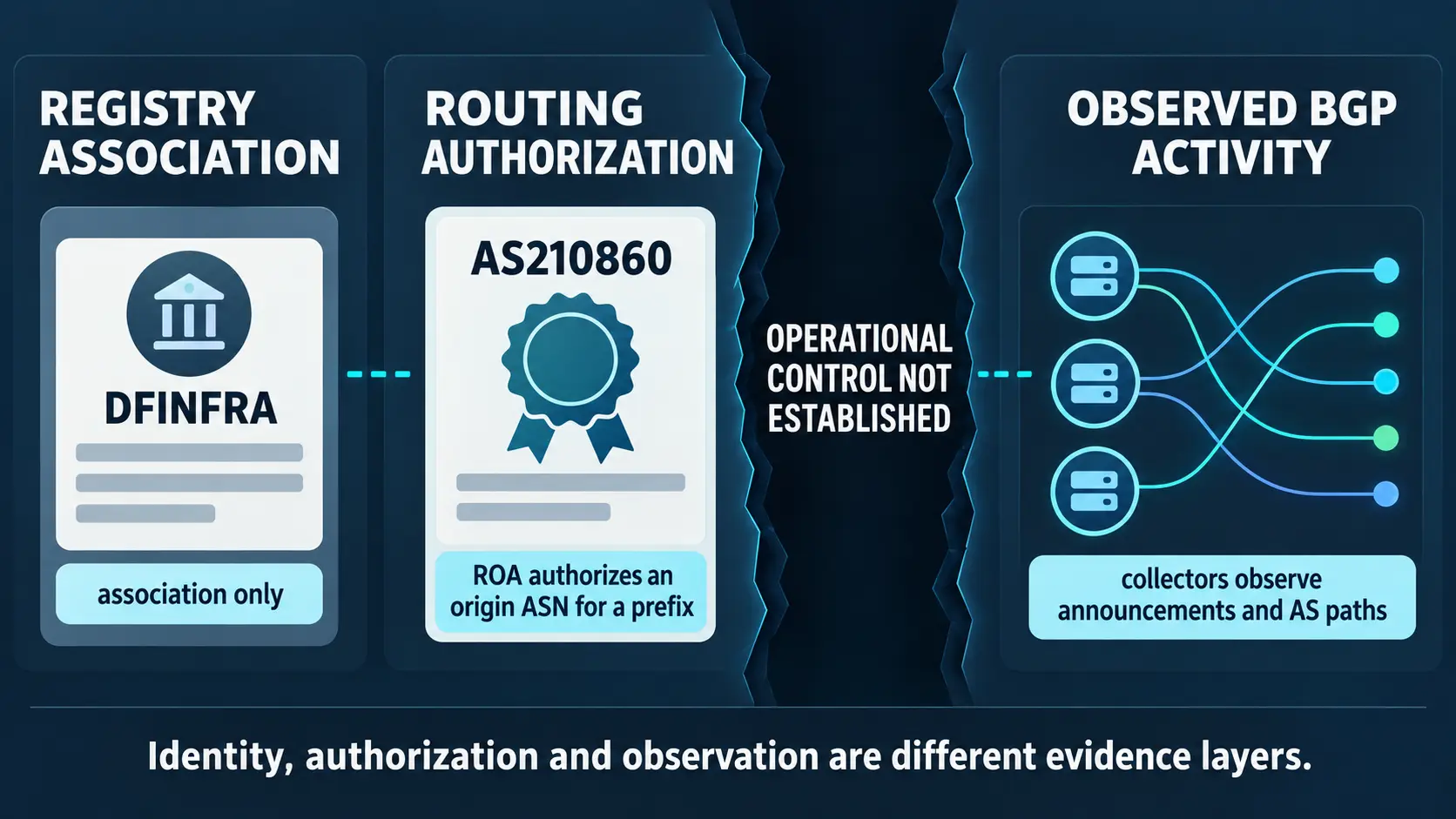
DFINFRA and AS210860: The Control Chain Is Still Unproven
DFINFRA and AS210860: The Control Chain Is Still Unproven intelligence summary explains the development, the public evidence available to readers, the organisations involved, the regional context, market exposure, and the infrastructure consequences that may follow. The Global…

IETF
A YANG Service Model Can Match While Its Lifecycle Semantics Diverge
At 18:00, a time-bounded network service reaches the end written in its order. The BSS marks it complete. The orchestrator begins decommissioning. One controller still calls the connection active, another has already removed a segment, and the assurance system reports a healthy…

Europe and Middle East Regional ISP
Vorboss’s network control is visible in routing, not yet proven across the physical chain
A systems-led investigation of what Vorboss demonstrably controls in London connectivity—and where public evidence still ends before fibre, facilities and recovery mechanisms.

IETF
Tim Bruijnzeels and the RPKI Overclaim That No Longer Invalidated the Whole Subtree
A certificate can be wrong in one place without being worthless everywhere. That proposition sounds modest, yet it changed the failure geometry of the Resource Public Key Infrastructure. In RFC 8360, Tim Bruijnzeels and five co-authors replaced one all-or-nothing consequence with…

CASE FILE
When a BIND Fix Is Not Yet a Repair
A resolver vulnerability becomes an institutional accountability test when the patch is available but the evidence of recovery is not. ISC’s public record establishes how two BIND failures can turn hostile DNS input into an availability risk—and identifies a remediation…

IETF
A Company-Certs Endpoint Cannot Prove Who Approved a Trust-Anchor Rollover
At 10:00, an application retrieves two valid private-CA chains from its company’s well-known HTTPS endpoint. The older chain still works; the newer chain has the later `valid_from`, so the client selects it exactly as the draft describes. TLS validation passed, the JSON parsed…

Leaders
Noor Helmi’s Control Surface—and the Missing Transfer Record
A closer look at what can be attributed to IX Telecom’s co-founder and CEO, and what the public record still cannot show about capability surviving beyond the individual.

IETF
The Cursor Knew the Position. It Did Not Know the Moment
YANG list pagination can preserve the exact filter, sort field, locale, direction and continuation token used to reach the next page. That makes the traversal auditable. It does not make nine requests one observation, or an ordered page a frozen dataset.

IETF
Michael Tüxen and the Zero SCTP Checksum That Still Needed Error Detection
Zero usually looks like absence. In RFC 9653, a zero in SCTP's checksum field means something narrower: one endpoint may omit the correct CRC32c only after its peer has named an acceptable alternative error-detection method for that association. Michael Tüxen's work on the…

IETF
A Workload Credential Can Outlive the Attestation Decision Behind It
At 09:00 a workload proves that it is running in Germany and receives an eight-hour credential. At 09:05 the orchestrator moves it to France. The credential still verifies, the key is still under the workload’s control, and the unchanged service still accepts it. Yet one fact…

IETF
Mark Handley and the SDP Version You Cannot Compare Across Origins
A controller receives two session descriptions. One places version 391 in its `o=` line, the other 402. A dashboard sorts the larger number to the top and calls it latest. The arithmetic is flawless and the conclusion can still be wrong: the two descriptions carry different…