
Content Type
Research
Within the Content Type facet, Research intelligence gathers BTW.MEDIA articles that share the same editorial format, helping readers compare briefings, profiles, risk notes, market analysis, and event coverage without mixing different kinds of evidence. The page explains how this content type frames internet infrastructure events, company movements, governance decisions, operational signals, and public evidence across the site. Readers can compare which actors or infrastructure systems appear most often, how source quality changes interpretation, and whether the material is a durable profile, a time-sensitive event, a strategic market signal, or a governance development. The result is a useful search page for operators, investors, customers, analysts, and policy stakeholders who need to understand the consequence, timing, and evidence behind similar article formats.

History
Jean Armour Polly and the Internet Connection That Still Needed a Librarian
In 1992, “going online” at a public library did not begin with a browser. It began with a desk computer, communications software, a modem, a telephone line — and somebody who could turn that fragile stack into a public service.

IETF
The Router Remembered a Listener. The Receiver Saw Nothing: RFC 9777
MLDv2 gives an IPv6 router a disciplined account of multicast interest on one attached link. The danger begins when that local, aging account is promoted into proof that an authorized application still wants the traffic—or that the traffic arrived.

IETF
A P2MP Tree Is Not an Audience Mandate
The operations screen is green. A ping addressed to a particular point-to-multipoint tree instance has returned from every expected leaf. The controller has built the efficient branches, the labels agree, and the old instance is ready to be removed. None of those facts answers…

History
Nancy Hafkin and the Network Before the Connection
Long before an always-on Internet line became ordinary across Africa, Nancy Hafkin’s programmes had to solve a harder problem: how to make information, institutions and people form a network when the connection itself was intermittent.

IETF
A Standards Action Can Authorize a Field. It Cannot Certify the Firewall: RFC 9778
RFC 9778 gives new IGMP values a high-visibility approval path. It also exposes a harder operational truth: a legitimate Type, Code, or extension flag can still be unknown to the security device deciding whether the packet is declined, inspected, or forwarded.

IETF
A Saved Congestion Window Is Not Reusable Capacity
A server remembers that yesterday’s connection moved quickly. A new connection arrives at the same address, so the server is tempted to start where the old one finished. The memory is useful, but the capacity is gone: another flow may occupy the bottleneck, anycast may have…

Number Resource Society
AS211513: What the public record can—and cannot—establish about EBL
AS211513: What the public record can—and cannot—establish about EBL intelligence summary explains the development, the public evidence available to readers, the organisations involved, the regional context, market exposure, and the infrastructure consequences that may follow. The…

Global Institutional
ISC’s Five Control Surfaces: What the Public Record Can—and Cannot—Prove
Internet Systems Consortium, Inc. appears across some of the Internet’s most consequential technical systems: BIND and Kea software, an F-root role, Internet-number registry records, observed routing and RPKI authorization. Those appearances are important, but they do not…

ICANN
Anne-Marie Eklund Löwinder and the Key That Could Not Sign the Root
The physical key in Anne-Marie Eklund Löwinder’s custody helped open one compartment in a carefully divided ceremony. Its significance lay not in the power it gave her, but in the power the surrounding system withheld from everyone acting alone.

History
RFC 2022: The Roster Named the Receivers, but the Packet Still Needed a Circuit
RFC 2022 did not turn an IP multicast group into one ATM connection. It split the problem in two: MARS reported the endpoints believed to be listening, while each sender still had to build and repair the one-way circuit that might reach them. The roster was actionable control…

IETF
The Reply Came Back. It Did Not Prove the Path Was Measured: RFC 9779
RFC 9779 gives operators a standards-track way to measure loss and delay on SR-MPLS links and policies. Its most important operational lesson is less comfortable: a valid response can arrive by a route different from the traffic direction under examination. Protocol success, path…
Global Cloud Services
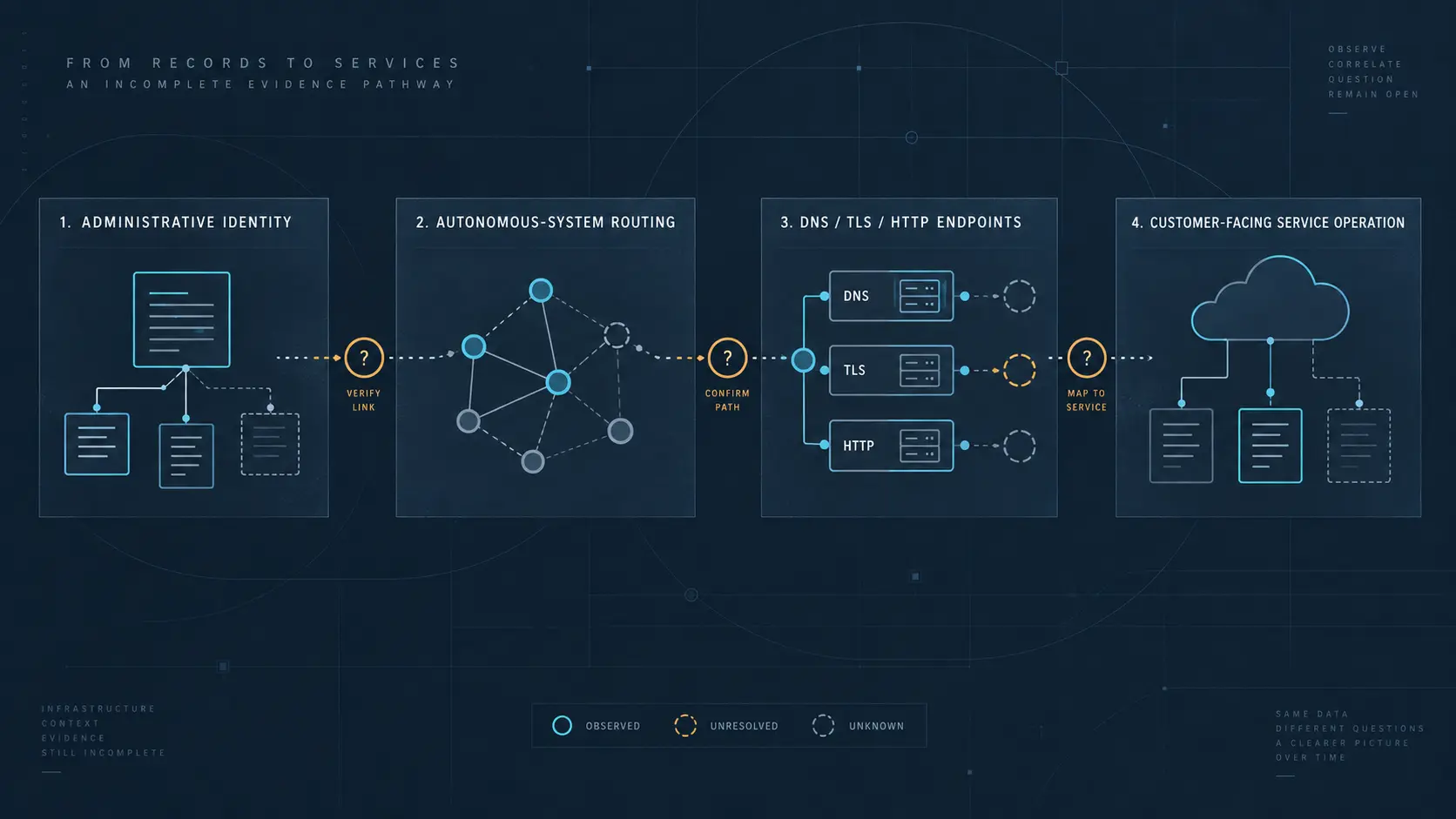
AlmazCloud’s AS210328: The Operating Chain Still Has to Be Demonstrated
AlmazCloud’s AS210328: The Operating Chain Still Has to Be Demonstrated intelligence summary explains the development, the public evidence available to readers, the organisations involved, the regional context, market exposure, and the infrastructure consequences that may follow.…

IETF
DSCP 45 Is a Behavioural Claim, Not a Low-Latency Entitlement
A packet carrying DSCP 45 can cross one router untouched, enter a shallow queue at the next, and be pushed into a classic queue at the bottleneck after that. The mark has not changed, but its meaning has passed through three different decisions. RFC 9956 makes the first…

Global Regional ISP
ROYA’s AS210837: The Evidence Chain Between Network Identity and Operation
ROYA’s AS210837: The Evidence Chain Between Network Identity and Operation intelligence summary explains the development, the public evidence available to readers, the organisations involved, the regional context, market exposure, and the infrastructure consequences that may…
ICANN
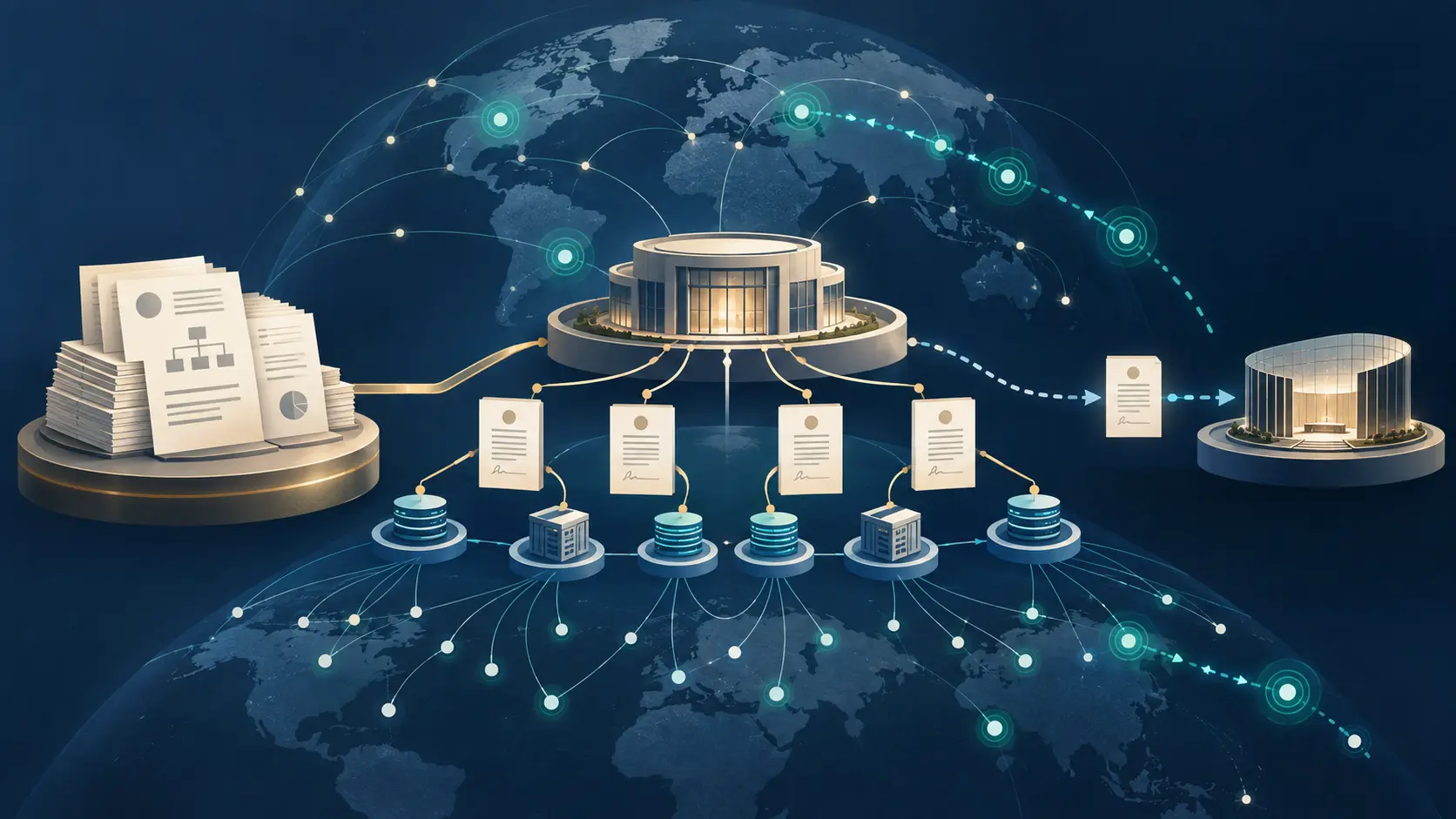
Where ICANN's Authority Becomes Operational Control
ICANN is often described as a coordinator of Internet identifiers. That description is accurate but incomplete. Its practical authority is assembled across several instruments: corporate purpose, Bylaws, registry agreements, registrar accreditation contracts, compliance…

IETF
A Hybrid Signature Is Only as Hybrid as the Verifier That Accepts It
Imagine one signed procurement record arriving at two desks. The first verifier checks both component signatures and refuses to speak until both results are known. The second, kept alive for compatibility, checks the traditional component and ignores the other. The bytes are…

Global Cloud Services
AlmazCloud’s AS210328: The Operating Chain Still Has to Be Demonstrated
AlmazCloud’s AS210328: The Operating Chain Still Has to Be Demonstrated intelligence summary explains the development, the public evidence available to readers, the organisations involved, the regional context, market exposure, and the infrastructure consequences that may follow.…

History
Steve Crocker and the Note That Stayed Provisional Long Enough to Build a Network
RFC 1 did not arrive after the network had proved itself. Steve Crocker dated it 7 April 1969, months before the first ARPANET node began service, and filled it with Host Software questions that still needed other sites to answer. Its authority lay not in pretending the design…

North America Cloud Services
Motorola Cloud Services Networking is visible in the routing table—but who controls the service behind it?
Motorola Cloud Services Networking is visible in the routing table—but who controls the service behind it? intelligence summary explains the development, the public evidence available to readers, the organisations involved, the regional context, market exposure, and the…

Global Institutional
ISC-AGP1 and the Authority Chain Behind Internet Systems Consortium’s Network Identity
ISC-AGP1 and the Authority Chain Behind Internet Systems Consortium’s Network Identity intelligence summary explains the development, the public evidence available to readers, the organisations involved, the regional context, market exposure, and the infrastructure consequences…