
Content Type
Long Form
Within the Content Type facet, Long Form intelligence gathers BTW.MEDIA articles that share the same editorial format, helping readers compare briefings, profiles, risk notes, market analysis, and event coverage without mixing different kinds of evidence. The page explains how this content type frames internet infrastructure events, company movements, governance decisions, operational signals, and public evidence across the site. Readers can compare which actors or infrastructure systems appear most often, how source quality changes interpretation, and whether the material is a durable profile, a time-sensitive event, a strategic market signal, or a governance development. The result is a useful search page for operators, investors, customers, analysts, and policy stakeholders who need to understand the consequence, timing, and evidence behind similar article formats.

CASE FILE
The ILC Has Put Erga Omnes on Its Agenda. The Doctrine Is Still Open.
The International Law Commission has opened a formal workstream on obligations owed to the international community as a whole. Its agenda decision starts expert work; it does not settle the law. The difference is a governance question in its own right.

Asia-Pacific Institutional Trends
KQC’s $80 million pre-money depends on deployments still to be proved
Korea Quantum Computing’s proposed SPAC deal would finance a transition from customer projects and proofs of concept to products used repeatedly in production. Its Qubiteer demo is a start, not evidence that the transition is complete; the transaction’s cash is also conditional…

CASE FILE
Three Parties, Ninety-Five Signatures: The Cybercrime Convention Runs on Two Clocks
The UN Treaty Collection lists 95 signatories and three parties to the new Convention against Cybercrime. Those figures describe different legal states. The treaty’s entry-into-force clock waits for deposited instruments, while a separate UN process is already preparing the rules…

North America Institutional Trends
Beam’s ScoutDI deal opens a U.S. route, not a defence order
Beam Global has signed a purchase agreement that could give it an industrial-inspection drone business and a route to manufacture for the U.S. market. The agreement also exposes the gap between a strategic platform story and an operating result: closing still has conditions…

CASE FILE
Five ITU Management Posts Get Written Questions. Other Races Use Different Records.
PP-26’s candidate page brings executive candidates, Radio Regulations Board candidates and Council Member State candidatures into one navigable space. But the records are not interchangeable: optional campaign material sits beside required dossiers, and the later standardized…

North America Institutional Trends
GE HealthCare buys PET’s last mile, not proof for FAPI-74
GE HealthCare’s $945 million agreement for SOFIE Biosciences adds a dense U.S. production network and U.S. rights to a Phase 3 tracer. The economic test is whether a time-sensitive, multi-client supply chain can keep serving other drug owners while becoming a reliable extension…

ICANN
The Notification System Is Done. The IGO Acronym Moratorium Is Not.
ICANN’s latest advice register records a permanent notification system for intergovernmental organizations as complete. The same register still places the curative-rights work that stands between interim protection and release in implementation. One completed safeguard is not a…

North America Datacenter Trends
Duke's tariff prices data-centre connections, not every grid cost
North Carolina’s proposed large-load tariff would make a new data-centre customer fund dedicated facilities, secure network upgrades and accept a minimum demand bill. The harder question—who ultimately pays for shared grid expansion—remains for later regulatory work.

Global Cloud Services Trends
Google can price the cloud move faster; it has not proved the move pays
Google Cloud Modernize brings assessment, code analysis and migration tools into one portfolio. That may shorten the path to a business case, but a projected TCO is not a post-migration bill, and a mapped dependency is not an accepted workload.

Global Datacenter Trends
Marvell’s US$80bn midpoint still has to convert into sales
Marvell’s October Investor Day makes its FY31 ambition more concrete: a US$70–90bn revenue range and an illustrative business-level bridge whose midpoints add to about US$80bn. The arithmetic is clear; the distance from design wins to recognized sales is not yet a…

Global Institutional Trends
Skyworks’ $500m synergy clock has started; product upside is still unpriced
The October 5 close turned Skyworks and Qorvo’s merger thesis into an operating test. Management has put a number and a time window on cost savings, but its last public account of product upside was still exploratory. The difference matters: a larger portfolio is not yet a…

North America Cloud Services Trends
Boost Run’s $525.6m contract has an acceptance clock
Boost Run has signed a five-year AI-compute agreement with a reported total contract value of $525.6 million. The first infrastructure is not expected to enter customer acceptance until early Q2 2027, leaving a material gap between a signed commitment and an operating service.

Global Datacenter Trends
Samsung’s $1bn Helix commitment is capital, not an order book
The number is large enough to sound like demand. It is not yet a disclosed schedule of purchases. Samsung has committed US$1bn to Helix Digital Infrastructure, the KKR-backed platform assembled to invest in data centres, power and connectivity. That is a meaningful addition to…

Global Institutional Trends
The PMSC Draft Has Not Chosen Its Legal Form
The Human Rights Council has renewed the negotiation of an international framework for private military and security companies, but it has not decided whether that framework should bind States as a treaty or remain non-binding. The revised fifth draft was built to keep both…

Global Institutional Trends
Ratification Can Fund the Commission, Not the Awards
The new Ukraine claims commission is moving through a threshold designed to make an adjudicator operational. That threshold is not a compensation fund. The distinction between recording a claim, deciding what is owed and finding money to pay it will determine whether an expanding…

North America Regional ISP Trends
FreeU has a $55 price; the value of each ad remains undisclosed
U-wifi presents FreeU as a way to earn internet credits by watching ads, but its public offer still starts at $55 a month. The business case turns on what an ad actually earns, what reaches a customer’s bill, and what remains after wireless access and service costs—not on the…
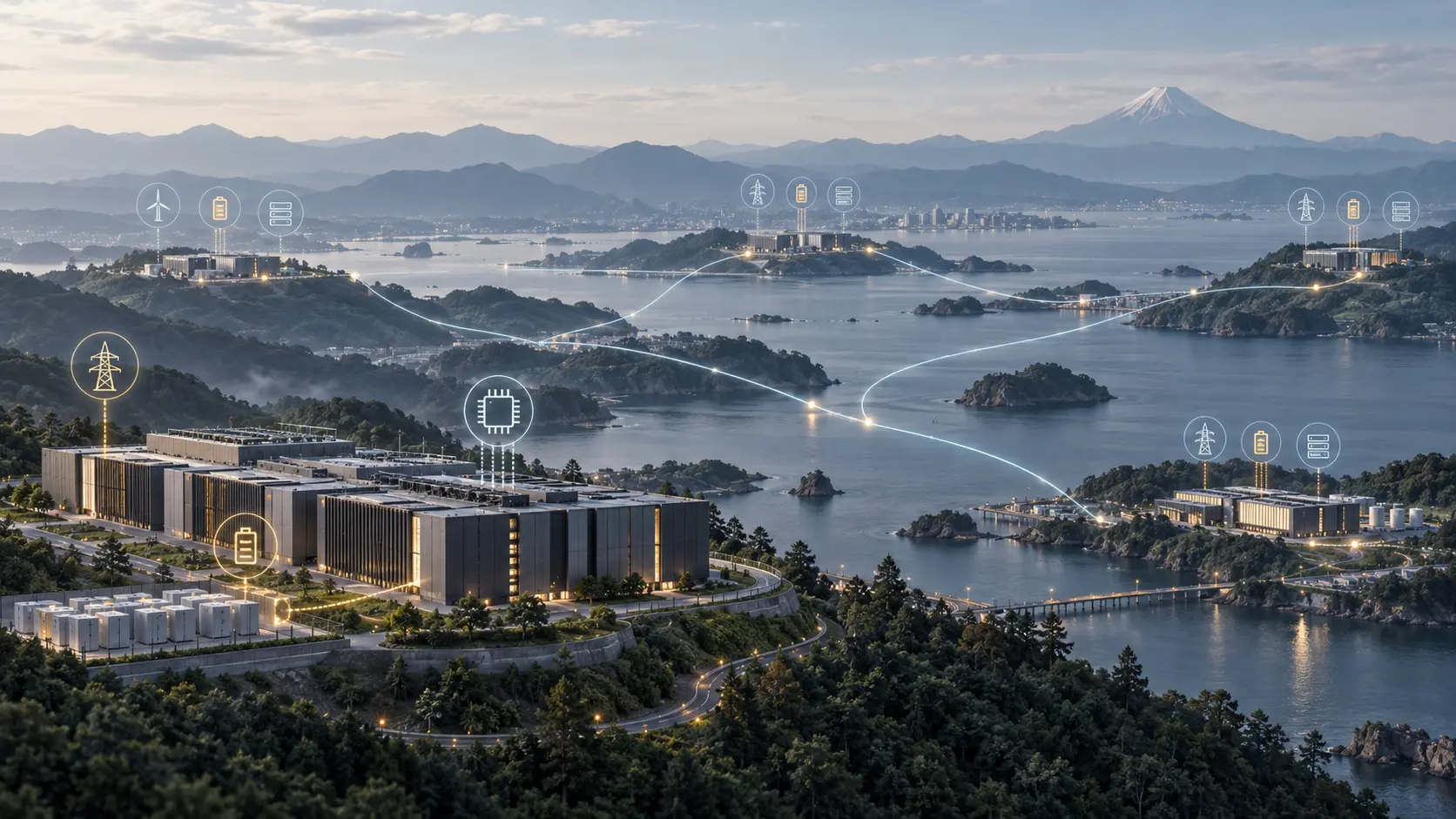
Asia-Pacific Datacenter Trends
Japan’s virtual hyperscaler still has to become a service
A 12-organization Japanese trial is trying to place AI workloads against data-centre, network and power conditions. Its commercial test is whether those signals can become a customer promise, with measurable value and a clear party accountable when a job fails.

Global Institutional Trends
A Passport for Tax Data: Why Security Is Becoming a Continuing Condition of Exchange
Automatic tax-information exchange is often described as a treaty success: one authority sends, another receives, and cooperation makes offshore assets harder to hide. The less visible bargain is that a receiving jurisdiction must keep the data confidential and use it only as the…

North America Datacenter Trends
A data-centre alliance cannot make its own guardrails binding
The American Infrastructure Alliance wants projects to pay their way and protect water, workers and host communities. Its September launch is a policy campaign—not yet a rulebook. The economics will turn on what gets measured, who verifies it and which public body can enforce it.

Asia-Pacific Datacenter Trends
CoreWeave’s 240 MW India plan is a delivery clock, not compute yet
CoreWeave’s planned Taloja campus is large enough to matter to India’s data-centre market. But 240 MW is a development target, not a measure of energized, cooled, accelerator-equipped or billable compute.