
Content Type
Briefing
Within the Content Type facet, Briefing intelligence gathers BTW.MEDIA articles that share the same editorial format, helping readers compare briefings, profiles, risk notes, market analysis, and event coverage without mixing different kinds of evidence. The page explains how this content type frames internet infrastructure events, company movements, governance decisions, operational signals, and public evidence across the site. Readers can compare which actors or infrastructure systems appear most often, how source quality changes interpretation, and whether the material is a durable profile, a time-sensitive event, a strategic market signal, or a governance development. The result is a useful search page for operators, investors, customers, analysts, and policy stakeholders who need to understand the consequence, timing, and evidence behind similar article formats.

North America Institutional Trends
ARIN’s new policy channels need a traceable route into decisions
ARIN is widening how people can enter policy conversations. Its October update shows that the harder design question now sits downstream: how will feedback from a survey, a small group or a virtual session become visible in the public record that governs number-resource policy?

CASE FILE
NIST’s O-RAN report leaves RIC app permissions to operators
NIST’s final RIC security report maps the protocols used to authenticate and authorize O-RAN applications, but it does not set the granularity of their OAuth2 permissions. That decision—and the failure boundary of any central policy service—remains with the deploying…

Europe and Middle East National Telecom Trends
Ofcom’s FTTx table still leaves part of the UK market uncounted
Ofcom reports 29.474 million fixed-broadband connections for Q2 2026, while warning that its “Other (inc. FTTx)” figures probably miss some altnet full-fibre providers. That caveat matters more than any inferred market-share change.

Asia-Pacific National Telecom Trends
BharatNet’s service-ready map leaves the repair question open
The CAG counted 2.19 lakh Gram Panchayats as service-ready by November 2025. Only about one-third were operational. Fibre faults, a 17-day average restoration time and unused wholesale capacity show why commissioning and working service need separate owners and measures.

History
Three Sequence Numbers Brought Down ARPANET: The 1980 Routing Update Loop
A fault in a single switching neighborhood left the ARPANET’s control messages repeating three six-bit sequence numbers—8, 40 and 44. Their ordering rule made each one look newer than another, and a routing process consumed the buffers needed to keep links alive.

Asia-Pacific National Telecom Trends
Australia extended wholesale broadband access to 2030. Apartment choice remains the test
The ACCC has secured another four years of regulated Layer 2 access on non-NBN fixed-line networks. Its harder question is still ahead: whether a building owner can bundle the connection so completely that a resident never sees a choice of retailer.

Global Institutional Trends
The IXP Is Still There; the Local Interconnection Ecosystem Is the Test
Internet Society’s revised policy brief moves the question from whether an exchange exists to whether local participation can endure. Its own caveats point to a harder scorecard than traffic totals.

Europe and Middle East Institutional Trends
The PRA’s shared-services deadline has passed; UK ring-fencing has two tracks
The Prudential Regulation Authority’s consultation on removing three ring-fencing service rules closed on 14 October. The proposal would move the continuity test away from some provider-specific restrictions and toward broader resilience and resolution controls, while a separate…

North America Datacenter Trends
Fermi’s AMD Credit Support Begins After Construction
Fermi says its new AMD credit-support agreement will help project financing. The same disclosure places AMD’s obligations after construction is complete and rent begins on final delivery, leaving the build-period funding bridge outside the terms the company has made public.

Asia-Pacific National Telecom Trends
Australia’s Mobile Sharing Debate Turns on Two Different Rights
Australia’s regulator is examining two ways one mobile provider might rely on another’s network. The distinction is not technical hair-splitting: each proposal changes a different relationship, and neither can be read from a tower count alone.

History
Lynx Was More Than a Web Browser: Its 1992 Links Reached Into Campus Systems
In 1992, Lynx could take a reader from a campus information menu into a library login or a live events database. That small jump reveals a broader early-Internet idea: a link could be a doorway into software and services already running elsewhere.

North America Institutional Trends
SEC’s custody proposal makes adviser self-custody a quarterly test
The SEC would let investment advisers hold certain client crypto assets themselves when no qualified custodian is available to maintain them. The proposed exception follows each asset, adds independent control testing and gives regulated-fund boards a separate oversight decision.

Europe and Middle East National Telecom Trends
The Northern Ireland Mast Proposal Turns on Who Gets Told
Northern Ireland’s proposed route for new mobile masts would narrow the council’s formal review to siting and appearance. A question added to the consultation asks whether councils should also notify neighbours. The distinction matters: the draft already gives some people notice…
CASE FILE
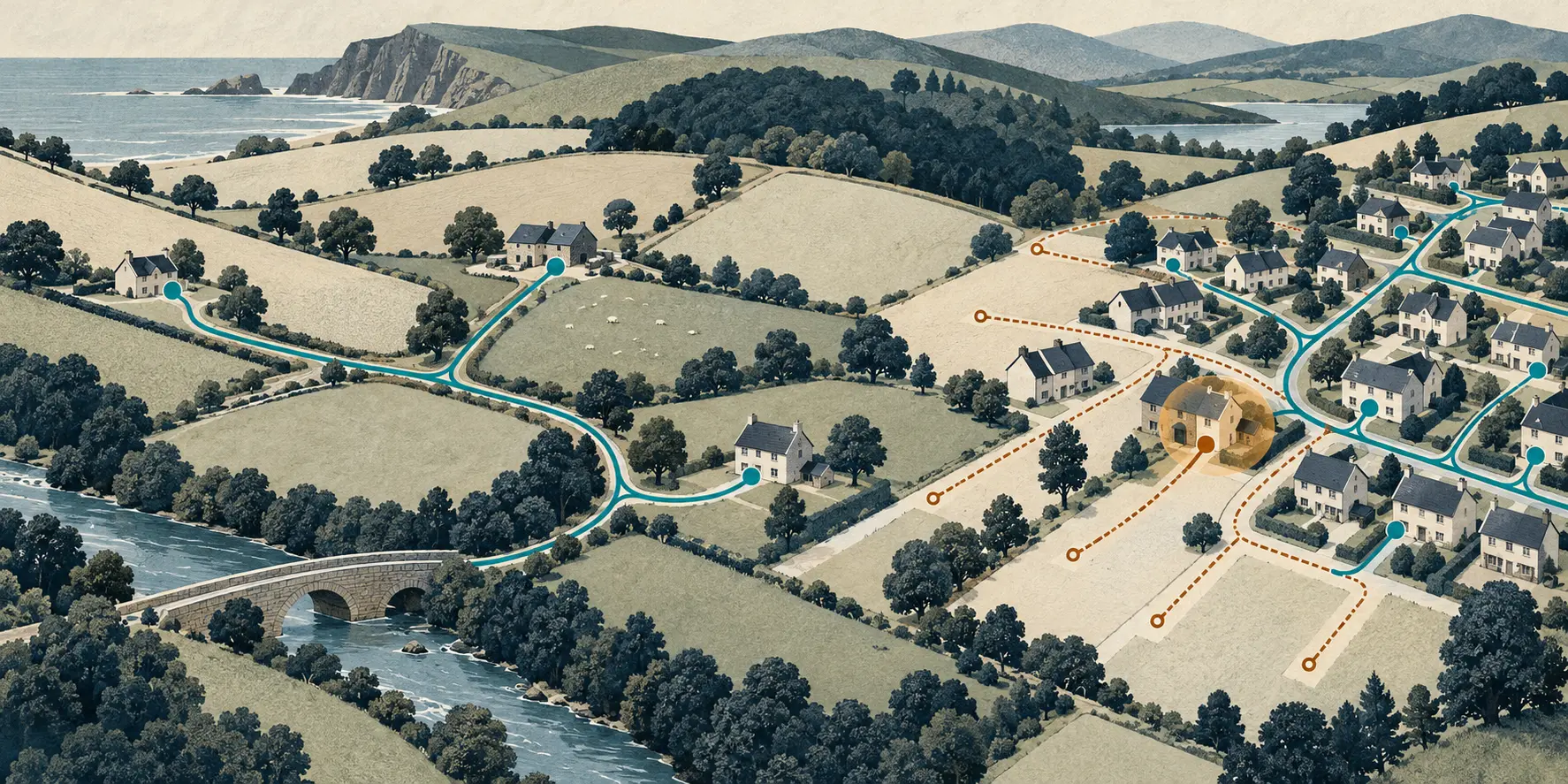
Under Review Is Not a Broadband Connection
The September 2026 National Rolling Open Market Review maps providers’ current and planned broadband coverage at individual UK addresses. Its classifications help decide where public subsidy may go, but a supplier claim, a credible build plan, a funded intervention and a usable…

Europe and Middle East Institutional Trends
Ofgem’s new self-build route stops at the shared grid
Ofgem paired a new statutory consultation with the rejection of an older code proposal. Customers may gain control of the connection they build, while shared reinforcement that can set the energisation date remains with the wider system.

Global Datacenter Trends
Siemens pairs investment with an exclusive route into AI data centres
Siemens is buying a strategic position in Skeleton Technologies and the exclusive right to sell its products to data-centre customers. The commercial test is whether that channel can turn fast power buffering into verified customer economics.

CASE FILE
When the Prefix Returned, the Service Was Still Missing
A February outage at Cloudflare exposed a distinction that network contracts often compress into one word: “available”. A BGP advertisement can return before the service attached to that address does. For customers using Bring Your Own IP, ownership of the prefix was not enough…

Europe and Middle East Datacenter Trends
Iver’s 222.98 MWth backup fleet is not 223 MW of data-centre power
A permit application puts a precise number on emergency fuel-burning equipment at Amazon’s proposed Iver site. The number describes heat entering engines under standby conditions; it does not measure electricity for servers or what the grid can deliver.

Global Institutional Trends
The FSB will formalise its policy process after review finds design can hinder implementation
A new review by the Financial Stability Board says national law, market structure and political capacity remain the main reasons international reforms are applied unevenly. It also finds that the way the FSB designs and presents recommendations can add avoidable difficulty. The…

Europe and Middle East Institutional Trends
Europe’s fibre target meets a 2026 funding cliff
Europe can report near-universal 5G signal coverage while fibre still reaches only three quarters of homes. The harder question is whether national plans connect that remaining build to money, places and accountable delivery after a large share of planned public funding is due to…