
Content Type
Analysis
Within the Content Type facet, Analysis intelligence gathers BTW.MEDIA articles that share the same editorial format, helping readers compare briefings, profiles, risk notes, market analysis, and event coverage without mixing different kinds of evidence. The page explains how this content type frames internet infrastructure events, company movements, governance decisions, operational signals, and public evidence across the site. Readers can compare which actors or infrastructure systems appear most often, how source quality changes interpretation, and whether the material is a durable profile, a time-sensitive event, a strategic market signal, or a governance development. The result is a useful search page for operators, investors, customers, analysts, and policy stakeholders who need to understand the consequence, timing, and evidence behind similar article formats.

Story
LACNIC’s PAI Client Documents Java 8. Its Latest JAR Requires Java 17
The public instructions offer a familiar promise: Java 8 or later. The latest downloadable library makes a different, equally precise statement in its own bytes. Every class in the observed 1.5.1 JAR is version 61—the class-file level for Java 17. The code and the documentation…

Story
ARIN Plans ROA Impact Warnings for the Web, Not the API
ARIN is building a warning for the moment before a Route Origin Authorization changes what observed routes look like. The warning belongs to its web interface. The registry’s programmatic writer is still expected to assemble the same evidence elsewhere. That is not a difference…

Story
APNIC’s RDAP Blocked About 10% of Requests for Not Looking Like Browsers
For 18 hours in January, a machine-readable registry protocol lost requests because the software introducing itself at the edge did not resemble a common browser. APNIC’s own incident notice supplies the number and the cause. The harder question is what evidence should stand…

Story
AFRINIC’s WHOIS Dump Still Carries 1,345 Deprecated Authentication Labels
AFRINIC’s public database can show that an old authentication label remains attached to a maintainer. It cannot show whether the deployed update service would honour that method, reject it, or allow it only long enough to replace it. The difference between those states is where a…

Story
LACNIC’s IRR turns route filters into a derived registry view
A route filter can look like a policy decision even when several of its inputs were generated from other registry systems. LACNIC’s Internet Routing Registry makes that provenance part of the operating question.

Story
LACNIC Geofeeds makes IP location a maintained claim, not a registry fact
An address holder’s legal domicile is not necessarily where its packets meet users. LACNIC Geofeeds creates a public path for member administrators to state where address blocks are actually used—and makes maintenance part of the claim.

Story
LACNIC’s RDAP shift turns registry data into an automation contract
Registry data stops being merely a lookup result when production systems depend on it. LACNIC’s account of RDAP shows why the transition from port 43 WHOIS is an operational redesign, not a cosmetic protocol swap.

Story
RIPE Database Now Composes Unicode. The Text Chain Needs a Normalisation Receipt
One visible name can arrive as two different code-point sequences. RIPE Database release 1.123 deliberately makes those sequences converge before the value passes through its remaining UTF-8 controls. That is good interoperability. It is also the moment when an evidentiary chain…

Story
The root KSK rollover makes resolver readiness the real continuity test
A DNS service can be healthy while users behind a stale validating resolver see failure. That is the operational paradox of a root key-signing-key rollover: the cryptography changes centrally, but continuity is decided across distributed resolver fleets.

Story
LACNIC’s reverse-DNS anycast turns registry continuity into a distributed control
Reverse DNS is easy to overlook until it stops answering. LACNIC’s use of anycast for delegated reverse zones shows why registry continuity is not a single-server property, but an operating discipline built from placement, routing, synchronization and observation.

Story
LACNIC’s measurement commons turns regional latency into operating evidence
A latency chart is not a verdict on a country’s Internet. It becomes useful when operators can see the probes, time window and comparison behind it—and when the result leads to a question that can be tested again.

Story
LACNIC’s RPKI controls make route origin authority operable
LACNIC’s RPKI controls make route origin authority operable intelligence summary explains the development, the public evidence available to readers, the organisations involved, the regional context, market exposure, and the infrastructure consequences that may follow. The Story…

Story
LACNIC’s IPv6 allocation rules make scale plannable
**BTW analysis:** IPv6 offers a vast address space, but abundance alone does not tell a network operator what it may request, how need will be assessed, or what obligations follow an allocation. In Latin America and the Caribbean, those practical questions meet LACNIC’s published…

Story
LACNIC’s 2025 Path Study Does Not Date Its Measurements
A year in a report title tells readers when an edition belongs on the shelf. It does not tell a network operator when the packets behind its charts crossed the wire. LACNIC’s regional path study offers a useful view of routes and latency, but leaves that second clock unstated.

History
The RFC Published a Straw Poll. It Did Not Create a Constituency: RFC 1501
Two electronic addresses at the end of a two-page RFC offered individual OS/2 users a way to be counted. They were doors into a proposed organisation, not proof that the people behind those doors had already become members, chosen representatives or moved IBM.

History
The Gateway Kept the Message. It Could Not Preserve Every Meaning: RFC 1496
RFC 1496 gave an X.400(84)–MIME gateway an admirably stubborn rule: convert what it can, encapsulate what it cannot, and never discard an entire message merely because one body part is unfamiliar. That discipline protected the carrier. It did not make every heading survive, every…

Story
ARIN’s IRR Objects Keep the Channel That Created Them
An IRR object migrated from ARIN’s email service can be deleted in ARIN Online but not edited there. The asymmetry is defensible as a record of provenance. The trouble begins when the web remedy—delete and recreate—changes that provenance without a visible continuity receipt.

History
The Table Moved the Service. It Did Not Rename It: RFC 1498
A 1993 RFC recovered an older lesson: a table can change where a service runs while its name survives. Reaching it still requires separate evidence for the node, attachment point and path—and none of those bindings alone proves identity, authority or delivery.

History
The Code Was Available. The Original Specification Was Not: RFC 1492
The original TACACS specification existed, and the author of RFC 1492 could not obtain it because of copyright issues. What reached the public record in July 1993 was therefore an Informational reconstruction, constrained by running code and candid about the possibility that the…
History
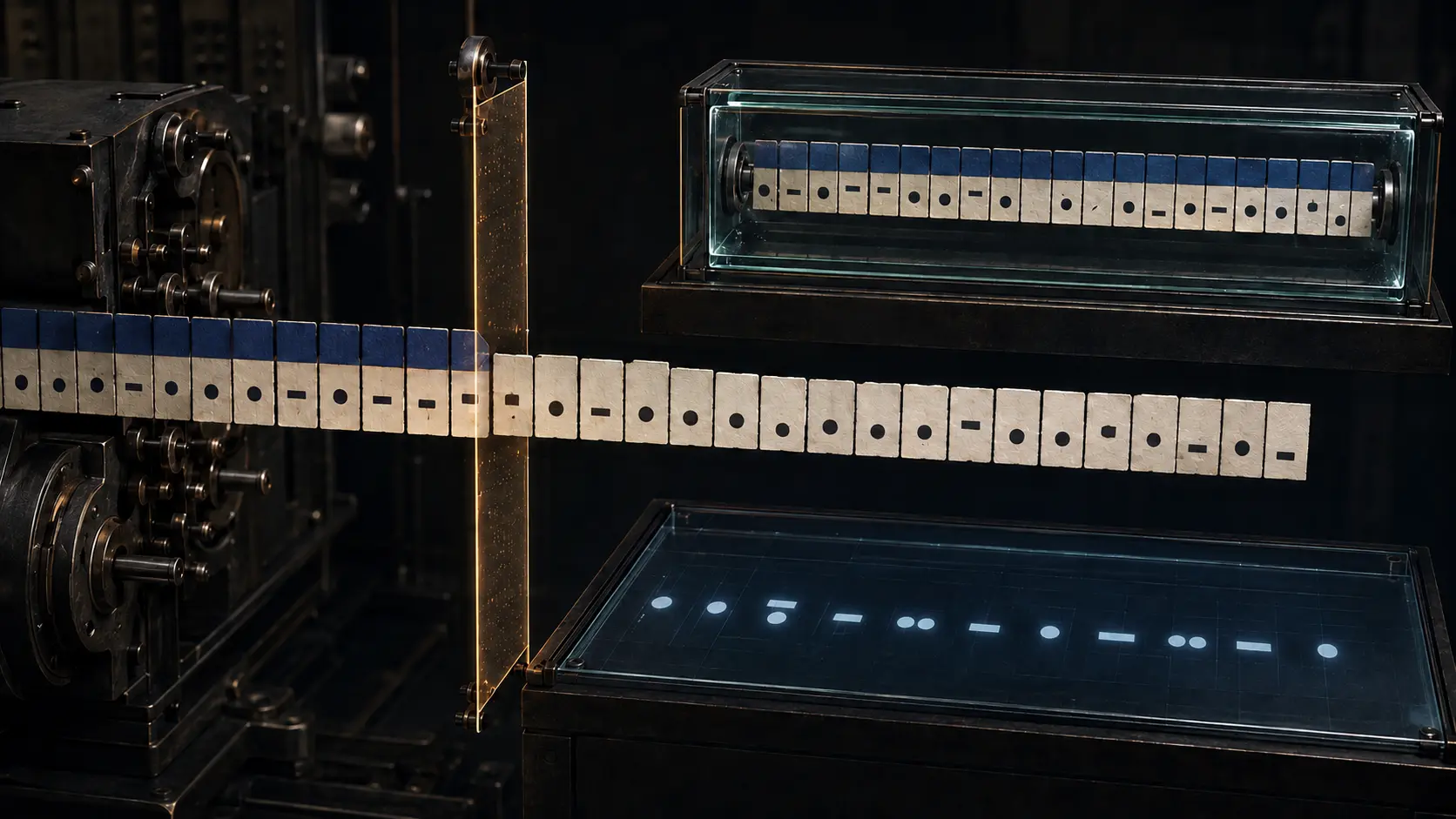
The Damaged Text Became Readable Latin. It Did Not Become the Russian Original: RFC 1489
When the eighth bit disappeared from a KOI8-R message, Russian letters could fall into a strange, case-reversed Latin shadow. A reader might still guess the words. That humane failure mode did not restore the erased bits, certify the charset or turn recognition into proof of the…