
Summary
- Expansion Programs International is the exact current directory company object. ARIN records active AS11321 under EXPANSION-PROGRAMS, names Expansion Programs International as registrant and names Thunderstone Software LLC in a technical role.
- At the bounded observation time, RIPEstat showed AS11321 as not announced, with no originated prefixes or observed neighbours. That external view does not prove abandonment, an outage, misconduct or the absence of private connectivity.
- Thunderstone's public documentation describes Texis, Vortex, Webinator, search appliances and several deployment forms. Those are capability records, not proof of a particular customer architecture, reliability level or production result.
- Supervision, integration, maintenance and exception handling remain recurring costs across registry contacts, route intent, crawlers, indexes, locks, replication, TLS, scheduling, capacity and lifecycle change.
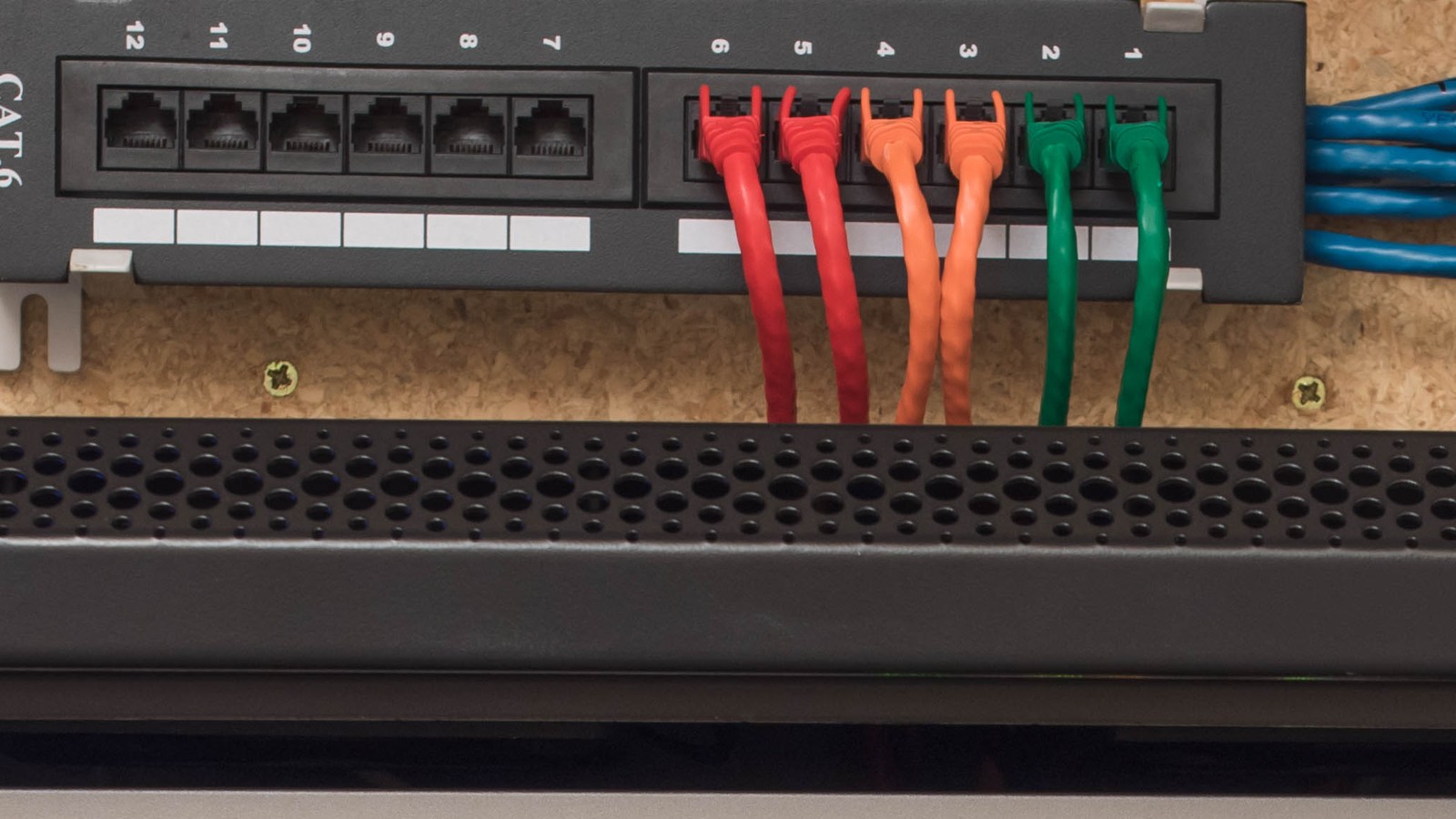
Image note: The accompanying Creative Commons photograph shows a generic CAT.6 patch panel and Ethernet cabling. It provides network-control context only. It does not depict Expansion Programs International, Thunderstone, AS11321, a Thunderstone product, a company facility, a customer deployment, private topology, an incident, measured reliability or a production outcome.
Expansion Programs International has an unusually durable public technical identity. The American Registry for Internet Numbers records active AS11321 under the name EXPANSION-PROGRAMS and identifies Expansion Programs International as its registrant.[1][2] The registration dates to 1998. The same record names Thunderstone Software LLC in a technical role, while Thunderstone's public company and product pages describe a long-running search-software business based around Texis, Vortex, Webinator and search appliances.[3][11][12][13]
Those facts are connected, but they are not interchangeable. The registry establishes who is named against a number resource and which public roles are attached to it. The Thunderstone pages establish what the vendor says its products can do. Neither establishes a current private network architecture, a legal merger between the named organisations, an active route, a customer deployment, an availability result or a performance result.
The routing observation adds another boundary. At the recorded query time on July 28, 2026, RIPEstat described AS11321 as not announced. Its announced-prefix response returned no originated prefixes, its routing-status view showed no IPv4 or IPv6 collector visibility, and its neighbour view returned no observed BGP neighbours.[4][5][6][7] That is a meaningful external observation. It is not proof that the ASN was abandoned, that a customer service failed, that no private connectivity existed or that the registration lacked a valid purpose.
Historical route data and registry projections add context but still do not reveal operator intent.[8][9]
This gap between a durable registry row and absent public route visibility is the central control surface. A registry is a ledger: it preserves unique number assignments, named entities, public contacts and administrative history. Packets follow running configuration. If an ASN remains registered while no route is visible to the selected collectors, the correct response is not to invent an incident narrative. It is to ask whether the observed state matches declared intent, whether contacts are current, whether retention or retirement is documented and whether every dependent control has an accountable owner.
Thunderstone's product documentation makes the case broader than routing. Enterprise search is often sold as an appliance or software capability, but operating it creates recurring work. Crawlers must be scoped. Connectors and file systems must be reachable. Indexes must be maintained. Locks must be diagnosed. Replication queues must be monitored. TLS trust and client-certificate behavior must be configured. Scheduled jobs must be paced. Backups and recovery procedures must be tested. Capacity and licensing choices must be revisited as content and query patterns change.[18][20][21][22][23][24][25]
The public evidence therefore supports a disciplined research question: what does it cost to keep a long-lived registry identity and an enterprise-search control stack operationally coherent when the registry, routing system, software, data sources and support relationships evolve at different speeds?
The answer is not a single price or benchmark. It is the continuing cost of supervision, integration, maintenance and exception handling. More precisely, the operating model carries supervision cost, integration cost, maintenance cost and exception-handling cost. Those costs exist even when the software works exactly as designed. They rise when records and running state diverge, when product packaging hides underlying dependencies or when an organisation mistakes a capability statement for proof of reliability.
The featured photograph shows a generic CAT.6 patch panel and Ethernet cables. It does not show Expansion Programs International, Thunderstone, AS11321, a company facility or a customer system. It is visual context for a network-control surface, not evidence about this company's infrastructure.
The exact registry and company identities
ARIN's direct RDAP response is the strongest public starting point for AS11321. It records the handle AS11321, the name EXPANSION-PROGRAMS, active status, a 1998 registration event and a 2018 last-changed event.[1] The registrant entity, EPI-9, is named Expansion Programs International and carries its own public registration history.[2] These are concrete registry facts. They establish a relationship between a durable number resource and a named organisation.
The record also contains role relationships. One technical role is a Thunderstone Software LLC group identified by handle ZT102-ARIN.[1][3] At the query time, the ARIN response included a remark saying ARIN had attempted to validate that public point of contact but had not received a response since January 20, 2026. That remark should be interpreted narrowly. It is evidence of a public contact-validation issue, not proof that the address is unusable, that no one operates the ASN, that Thunderstone is inactive or that a service is insecure.
Another public role belongs to an individual contact. This report does not reproduce personal contact details because the analytical value lies in role continuity, not in republishing phone numbers or email addresses. Durable resources should not depend on a reader knowing a person's private context. The relevant question is whether role-owned channels, escalation authority and account recovery remain current.
Thunderstone's company page describes Thunderstone Software LLC as a developer and marketer of search, management and filtering software.[11] The site gives a current product narrative, a support path and a company identity. That makes the technical-role link in ARIN intelligible, but it does not prove that Expansion Programs International and Thunderstone Software LLC are the same legal entity. The public record supports an operational relationship; it does not resolve ownership, corporate structure or every historical name.
This is exactly why identifier discipline matters. Four labels appear in the evidence: Expansion Programs International, EPI-9, EXPANSION-PROGRAMS and Thunderstone Software LLC. The first is the registrant organisation label. The second is its ARIN handle. The third is the ASN name. The fourth is a technical role and the name used on current product pages. A reliable asset map would preserve all four and state what each means.
Collapsing the labels would create false confidence. Treating them as unrelated would lose a public operational link. The safer model records the relationship as bounded: AS11321 is registered to Expansion Programs International; ARIN names Thunderstone Software LLC in a technical role; Thunderstone publishes product and operations documentation under its own name. Any stronger legal or architectural claim needs evidence beyond these sources.
The IANA AS-number registry provides the wider allocation context.[10] It explains the global numbering system and the regional assignment block around AS11321. IANA does not identify the operator behind this specific resource; ARIN does that at the regional registry layer. This division of responsibility illustrates a useful principle. Number-resource governance is distributed across ledgers and operators. No single page is a complete description of running service.
AS11321: active registration versus observed routing
The public route observation is precise and time-bounded. RIPEstat's AS overview returned the holder text EXPANSION-PROGRAMS - Expansion Programs International and marked the resource as not announced at its July 28, 2026 query time.[4] The announced-prefix response covered a selected period from July 14 through July 28 and returned an empty prefix list.[5] The routing-status response showed zero observed IPv4 prefixes, zero IPv4 addresses, zero observed IPv6 prefixes and zero visibility from the listed RIS peers at that instant.[6] The neighbour response returned no observed neighbours.[7]
These results say what the collector system saw. They do not say why. An ASN may remain registered while intentionally dormant. It may be retained for future use, migration, contractual continuity or recovery. Routes may be visible through paths not represented by the selected collectors. Private BGP sessions, internal routing and provider-specific arrangements do not have to appear in a public RIS view. An operator may also be in the middle of a planned withdrawal or a longer retirement.
The opposite possibilities also remain open. A route may be absent unexpectedly because of configuration error, upstream filtering, authentication failure, policy change, maintenance or an incomplete migration. Public observation cannot distinguish those causes. It can only expose a discrepancy between a potential control-plane identity and observed global routing state.
RIPEstat's routing-history response is useful because it can show whether route visibility changed over time.[8] History still needs caution. Collector coverage changes. Individual peers join and leave. A historical interval can demonstrate that a route was observed, but it cannot establish commercial relationships, user reachability, incident severity or root cause. A gap is a question for operators, not a verdict.
The RIPEstat WHOIS projection repeats registry information derived from ARIN.[9] It is a useful cross-check, not an independent ownership authority. If the projection and direct ARIN response differ, operators should determine which data is authoritative and whether replication lag or normalization explains the difference.
For monitoring, the right control is a declared-intent comparison. The owner should state whether AS11321 is expected to announce routes, which prefixes and origins are approved, which external observations are expected and what time window defines an exception. Monitoring should then compare actual collector visibility with that declared state. Without the intent record, an empty route view can create either a false alarm or a missed retirement problem.
Contact state belongs in the same comparison. An active registry row with an unvalidated technical point of contact is not automatically wrong. It does mean that resource continuity cannot be inferred from the registration status alone. The control should confirm current role ownership, secure account access, a secondary escalation path and an approved reason for retaining the resource.
If the intended state is dormant, the runbook should say so. It should define what observations would be unexpected, how the resource is protected from unauthorized use, how contacts are tested and how reactivation would be approved. If the intended state is active, the absence of public route visibility needs a technical investigation using additional vantage points and private telemetry. If the intended state is retirement, the plan must cover more than withdrawing routes.
A registry is a ledger, not proof of live service
The AS11321 case makes the difference between recordkeeping and running code visible. The registry supplies uniqueness, assignment history, public roles and a durable handle. Those properties matter even when no route is visible. They allow counterparties to identify the resource, find an authority and determine which regional registry maintains the record.
The registry does not execute BGP policy. It does not create a session, announce a prefix, validate a route, answer a search request or restore a database. Those outcomes depend on configured systems, credentials, suppliers, operating procedures and people with authority to act. Treating active registration as proof of active service confuses administrative capability with operational state.
Running-code primacy does not make the ledger optional. A route without accurate registration and contact metadata is harder to investigate, secure, transfer or retire. Running configuration can also be wrong. A collector observation does not become legitimate merely because packets follow it. The goal is agreement among three layers: the registry record, declared operator intent and externally observable execution.
This three-layer model prevents overclaiming. The registry can establish that AS11321 is assigned to a named entity. RIPEstat can establish that its collectors did not see an announcement at a given time. Neither proves an outage. Together they establish a control question: is the observed absence intentional, documented and owned?
The same reasoning applies to the Thunderstone software surface. A manual can establish that a repair utility, replication function or TLS setting exists. It cannot establish that a particular customer enabled it, configured it safely or met a recovery target. Documentation is a capability ledger. Production behavior remains a running-system question.
The Thunderstone product stack
Thunderstone presents a related family of search products rather than one uniform deployment model. Its product pages distinguish Texis, Webinator, Search Appliance, Parametric Search Appliance, virtual-machine and hosted or cloud-oriented choices.[12][13][14][16] The comparison matters because each form assigns operational work differently.
Texis is described as the core database and search-engine technology. A Thunderstone FAQ explains that Vortex, also called Texis Web Script, is an application-development and scripting layer bundled with Texis. Webinator is positioned as a prebuilt application using those components, while Search Appliance packages the stack into an appliance form.[19] This relationship supports architectural analysis without revealing any customer's actual deployment.
The vendor describes Search Appliance as an all-in-one combination of hardware, software and support.[18] It describes virtual-machine and hardware configurations, data-source access, file-system indexing and connectors on its enterprise-search page.[14] These are system capabilities. They identify possible interfaces and ownership boundaries. They are not independent tests of query throughput, connector correctness, administrative effort or total cost.
Packaging changes the operating model. A physical appliance adds hardware lifecycle, rack, power, environmental, warranty and replacement concerns. A virtual image moves hardware responsibility to the customer's virtualization and storage platform while preserving guest operating-system, capacity and application dependencies. A hosted option moves more infrastructure work toward the provider, but data access, identity, connector behavior, search relevance and recovery acceptance still need customer supervision.
Webinator creates a different balance. It offers a prebuilt crawler and search surface but exposes profile settings, walks, logs, access controls and maintenance tasks. Texis gives more database and application flexibility, which also creates more schema, query, index and change responsibility. Vortex adds scripted data-fetch and application behavior, including HTTPS controls. Flexibility increases the number of decisions an operator can make, not the probability that every decision is correct.
The product-comparison page is helpful because it exposes these differences in the vendor's own taxonomy.[16] It remains commercial material. Statements such as easy implementation, low total cost or high performance should not be converted into measured outcomes without a workload, test method, version, data set, concurrency profile and independent results.
The complete Vortex and Texis reference manuals provide a wider account of scripting, network-fetch, database, indexing, security, diagnostic and recovery controls.[27][28] They are useful capability references, but their breadth does not establish which functions are licensed, enabled or operated in a particular environment.
Thunderstone's milestones page presents a long vendor chronology and names historical deployments and performance claims.[26] That history establishes product longevity and the vendor's own account of evolution. It does not establish that an old benchmark applies to a current version, that a named historical customer still uses the product or that a current buyer will reproduce an earlier result.
The operationally useful conclusion is narrower. The stack has multiple forms, multiple data-ingestion paths and explicit administrative surfaces. A buyer must decide who owns each layer and how evidence will be collected. The product page can begin that map. It cannot complete it.
Capability, reliability and customer outcome are different claims
Enterprise-search research becomes unreliable when three evidence categories are mixed.
System capability describes what the product exposes. Texis provides database and full-text search functions. Vortex provides scripting and network-fetch behavior. Webinator provides a crawling and profile-management application. Search Appliance packages hardware, software and support. Documentation exposes index maintenance, lock monitoring, replication, scheduling and TLS controls.[18][19][20][21][22][23][24][25] These are concrete, documentable capabilities.
Operational reliability asks whether those capabilities behave consistently under a defined workload and operating regime. Reliability depends on content change rate, file formats, connectors, network paths, query mix, index strategy, memory, storage, scheduler behavior, lock contention, replication lag, maintenance windows and operator response. The public sources do not provide a controlled reliability study for Expansion Programs International or a current customer deployment.
Customer production outcome asks whether a deployment improved discovery, reduced support cost, met a recovery objective or delivered a business result. That requires customer-specific evidence: baseline, measurement period, workload, implementation scope, exclusions and result. Vendor histories and product pages may name customers or describe benefits, but they do not support manufacturing a result for an unnamed deployment.
These categories should remain separate in both procurement and incident review. A capability may exist but be disabled. A feature may be configured correctly yet fail under an untested workload. A reliable search service may still disappoint users because relevance, permissions or content coverage are wrong. A positive customer result in one environment may not transfer to another.
The same separation applies to AS11321. Registration is a capability to maintain a globally unique routing identity. Collector visibility is one signal of running route state. Neither proves a customer-facing application outcome. Absence of visibility is not a customer outage. Continuous visibility would not be an application availability guarantee.
Deployment and integration ownership
The largest hidden cost in enterprise search is often not the search algorithm. It is the integration boundary around the corpus.
Thunderstone says its enterprise-search offering can work with databases, document systems, file servers and many file types.[14] Each connection introduces authorization, reachability, format, change-detection and error-handling questions. A crawler may reach a public page but fail behind an authenticated area. A database connector may return records while omitting fields needed for permissions. A file share may be indexed successfully until a mount, credential or naming convention changes.
The Webinator documentation exposes the operator-facing shape of this work through profiles, walks, logging, access controls, backup and repair functions.[20] Documentation can describe controls, but the operator still has to translate business requirements into crawl rules. That includes allowed domains, exclusions, robots behavior, authentication, depth, refresh cadence, duplicate handling, content limits and the treatment of errors.
Permission fidelity is especially important. Search can make information easier to find, which means an indexing mistake can widen exposure. A connector needs to preserve the relevant authorization model or enforce a safe replacement. Public and private indexes may need separation. Credential rotation must not silently convert a full crawl into a partial one.
Content freshness introduces another integration tradeoff. Frequent crawls can reduce delay but add network, source-system and indexing load. Batch updates can be efficient but create a window in which search results lag reality. The maintenance documentation distinguishes sporadic changes from batch changes when discussing index updates.[21] That is a useful design clue, not a universal schedule.
Product form changes the owner but not the existence of the task. Appliance packaging may reduce installation work, yet someone must supply network access, data-source credentials, collection policy, monitoring and acceptance tests. A virtual deployment shifts more infrastructure ownership to the customer. Hosted service can move patching and hardware work, but data connectors, relevance, authorization and incident coordination remain shared.
Integration also creates lifecycle coupling. A database upgrade can change a driver. A file server migration can change paths. A new document type can expose parser limits. A certificate renewal can break HTTPS crawling. A content-management redesign can invalidate selectors or duplicate rules. Each change requires an owner who understands both the source system and the search platform.
The vendor's acquisition paths include direct, partner, government and cloud channels.[17] A purchase channel does not define the support boundary. Contracts should state who owns installation, upgrades, connectors, data migration, incident response, replacement hardware, cloud access and recovery evidence. Without that map, every exception becomes a negotiation during an outage.
Index, lock and repair economics
Thunderstone's maintenance documentation is unusually explicit about operator work. It names chkind for maintaining Metamorph indexes, ltest for observing database lock state, rmlocks for stale-lock or deadlock situations and kdbfchk for checking and repairing database files.[21] The existence of these tools is valuable. It also demonstrates that the product has state that can lag, contend or become damaged.
Index maintenance is a timing problem. The documentation says sporadic changes can be handled by keeping an index current, while batch changes may be better followed by a forced update.[21] That choice balances freshness, write load and operational predictability. A schedule that works for one corpus may be wasteful or disruptive for another.
Lock monitoring exposes concurrency cost. ltest can show a process holding locks for a long time or significant lock contention. The documented responses include restructuring the application, reducing other load or using more capable hardware.[21] None is automatic. Restructuring carries engineering and regression cost. Load reduction can delay other work. Hardware adds procurement and capacity-planning cost.
rmlocks addresses situations where programs exit without cleanup or a deadlock occurs. The documentation says Texis can resolve most such situations but that manual use can sometimes be required.[21] This is a clear exception path. A runbook should define the evidence required before intervention, the authority to act, the effect on active work and the checks after the locks are cleared.
kdbfchk can verify table integrity and recover from some file-corruption events.[21] The word "some" matters. A repair utility is not a guarantee of complete recovery. Operators need backups, restore tests, incident evidence and a decision rule for when repair is safer than restoring a known-good copy.
Search and optimization settings add performance and consistency tradeoffs.[25] The documentation describes memory caches, in-memory versus disk sorting, join ordering, read-lock behavior and index-build locking. Increasing cache size can hurt when it is unnecessary. Keeping more rows in memory can improve speed until memory pressure makes the system unstable. Continuous read locking can speed an index build while delaying writes.
The ignorenewlist option illustrates a particularly important boundary. The documentation says ignoring the unoptimized portion of a frequently updated index can reduce processing overhead in batch-oriented workflows, but updated records may not be found until optimization completes.[25] That is not simply a performance switch. It changes the freshness behavior users observe.
Search semantics can also depend on configuration. Settings for comparison behavior, wildcard treatment and query optimization influence results.[25] A change intended to improve speed can alter which records are returned or when updates become visible. Reliability testing therefore needs both latency and correctness checks.
These maintenance surfaces generate four costs. Supervision cost comes from monitoring freshness, locks, disk and job state. Integration cost comes from fitting maintenance to data-change patterns. Maintenance cost comes from updates, optimization, repair and capacity work. Exception cost comes from diagnosing a stale index, blocked writer or damaged file without making the situation worse.
Replication, backup and recovery boundaries
Thunderstone's replication documentation distinguishes product editions and operational actions. It states that replication is supported in the full Texis product, not Webinator-only.[22] That boundary matters because a design that assumes replication from a lower product tier may never have had the capability.
The replication-status page groups queued work by host and profile and exposes the next queued items.[22] A queue is evidence of work in progress, not evidence that data has arrived, been indexed or is searchable. Monitoring should track queue age, error state, destination acceptance and content freshness at the target.
The documentation separates sending profile settings from sending profile data.[22] Settings can create or update a target profile. Data transfer can seed an established target with existing content. That distinction creates a recovery sequence: configuration, target identity, base data, queued changes, validation and cutover. Skipping a step can produce a target that exists but is incomplete.
Replication is also not the same as backup. A damaged or incorrectly changed record can be replicated. Credentials and configuration mistakes can affect both sides. A recovery plan needs an independent copy, retention policy, restore procedure and evidence that restored content is internally consistent.
The Webinator manual provides a wider operations context around profile management, logging, backup and repair.[20] A good exercise should test more than starting a secondary system. It should verify the expected collections, permissions, index freshness, search behavior, scheduled jobs, certificates and operator access.
Recovery time depends on data volume, change rate, index build requirements, available bandwidth and the order in which services are restored. The public documentation does not establish a recovery-time objective. A buyer must measure the actual environment.
AS11321 adds a separate continuity layer. If a search service depends on public network identity, recovery may require authority over registry accounts, routing configuration and provider escalation as well as application data. The public evidence does not say that Thunderstone products use AS11321. The analytical point is that durable network and application identities require coordinated recovery ownership when they intersect.
TLS, access control and scheduler exception paths
Vortex documents extensive SSL and HTTPS controls for network fetch and submit operations.[23] The available settings cover trust roots, client certificates, protocol behavior, verification and diagnostic choices. A control that can be configured is not evidence that it is enabled safely in a deployment.
Trust-store management is a lifecycle task. Certificate authorities change, private roots expire, endpoints rotate certificates and intermediate chains can be misconfigured. A crawler that stops verifying names may restore connectivity while weakening security. A crawler that rejects a legitimate new chain may silently stop collecting protected content. The runbook must distinguish availability pressure from authorization to weaken verification.
Client certificates create another ownership boundary. The search system may need a certificate and private key to reach a protected source. Operators must control issuance, storage, rotation, revocation and deployment. A certificate renewal should be tested before expiry, including the full crawl path rather than only a command-line handshake.
The scheduler documentation shows that job execution has its own network and concurrency surface.[24] It recommends local listening defaults, describes service controls and includes security cautions about exposing the schedule listener outside the machine. This is a documented control boundary, not proof of a current configuration.
The scheduler also defines an initial delay and a delay between job starts.[24] These settings are intended to reduce boot-time races and a "thundering herd" of simultaneous jobs. They make reliability an explicit pacing choice. Too little delay can overload the system after restart. Too much delay can extend content staleness or recovery time.
Scheduler failure behavior requires attention. A monitor may continue after a schedule server startup failure unless configured otherwise.[24] That creates a plausible partial-service condition: the host is running, but scheduled work is not. Monitoring must therefore check job execution and freshness, not just process existence.
TLS settings for scheduler communications include protocol, certificate, key and verification choices.[24] Defaults and version support change over time. An upgrade can remove weak protocol support, expose an expired certificate or change an inherited behavior. Compatibility testing should cover both application fetches and administrative channels.
Access control is not limited to transport security. Crawler scope, source-system permissions, search-result filtering, administrative roles and repair authority all contribute. A technically successful crawl can still be a security failure if it indexes material for the wrong audience. A search result can be correct in content and wrong in authorization.
Lifecycle, upgrades and lock-in
Thunderstone's Investment Protection Program describes perpetual software licensing and a policy under which current maintenance customers can apply prior investment toward capacity or product upgrades.[15] Those are commercial terms presented by the vendor. They may change the timing of license expense. They do not remove lifecycle cost.
A perpetual license allows continued use under its terms, but the surrounding environment does not remain fixed. Operating systems, browsers, databases, certificates, file formats, hypervisors, cloud services and security requirements change. Support and maintenance determine whether compatibility fixes and newer versions are available. Hardware reaches replacement age even when software rights continue.
Capacity upgrades also have technical consequences. More documents can increase crawl duration, index size, optimization time, memory use, replication backlog and recovery time. More query traffic can expose lock, cache and storage bottlenecks. A license or appliance upgrade should be accompanied by a revised performance and recovery test.
Product choice creates different forms of lock-in. A custom Texis or Vortex application can embed proprietary APIs and scripting. Search Appliance can embed configuration and operational habits tied to the packaged system. Webinator profiles can accumulate crawl rules and exceptions. A hosted deployment can depend on provider interfaces and data-egress procedures.
Lock-in is not automatically harmful. Stable tools and accumulated expertise can reduce risk. The relevant control is reversibility. Operators should know how to export source data, configuration, metadata and logs; how to reproduce permissions; how to measure result parity; and what must be rebuilt during migration.
The product milestones demonstrate a long evolution of formats and capabilities.[26] Longevity can support continuity, but it also increases the chance that older assumptions survive in configuration. Version-specific behavior should be documented. Historical performance statements should not be reused as current acceptance criteria.
Failure-mode register
The following failure modes are grounded in the public control surfaces but are not claims that an incident occurred at Expansion Programs International, Thunderstone or any customer.
1. Registry-to-running-state mismatch
AS11321 can remain active in ARIN while no route is observed by RIPEstat.[1][4] The failure is not the mismatch alone. It is the absence of a declared-intent record explaining whether the state is dormant, active, migrating or retiring.
2. Unvalidated technical contact
A public technical role may carry an ARIN validation remark.[1][3] The contact may still work, but relying on it without testing creates escalation risk. Verification should include a role-owned backup and secure account recovery.
3. Unsupported abandonment inference
An empty announced-prefix result can be misreported as proof that the resource or company is abandoned.[5] The correction is to preserve the time window and collector boundary and seek operator intent.
4. Hidden private-connectivity assumption
No observed neighbour can be mistaken for no connectivity.[7] Private sessions and non-observed paths may exist. Public BGP data cannot establish the full network.
5. Unexpected route appearance
If AS11321 appears in public routing after a dormant period, the event may be planned activation, migration, stale policy or unauthorized use. Responders need an approved prefix and origin inventory before classifying it.
6. Registry projection lag
A derived WHOIS view can differ from direct ARIN data.[9] Automation should identify the authority and tolerate documented replication delay instead of overwriting the authoritative record.
7. Product-tier replication assumption
A recovery design may assume profile replication on a Webinator-only deployment even though the documentation reserves that capability for full Texis.[22] Edition checks belong in architecture and recovery reviews.
8. Replication queue backlog
Queued work may grow while the destination remains stale.[22] Monitoring should measure age, errors and target acceptance rather than treating a nonempty queue as progress.
9. Settings-data divergence
Profile settings can reach a target without the full profile data, or data can be sent to a target with incorrect settings.[22] Recovery validation must check both.
10. Corruption replication
Replication can copy an unwanted change or damaged state. An independent backup and restore test are required to recover from logical corruption.
11. Index freshness lag
Batch content changes may not become searchable until a forced index update.[21] Operators need a freshness objective and a way to detect missing updates.
12. Long-held lock
A process can hold database locks long enough to delay other work.[21] Investigation should identify the owner and workload before clearing anything.
13. Stale-lock intervention error
An operator may run a lock-removal utility without understanding active work. Even when the tool protects in-use locks, the surrounding incident procedure must verify application and database state afterward.[21]
14. Incomplete file repair
kdbfchk can recover from some corruption events, not every event.[21] A successful command is not enough; table integrity and application behavior must be checked.
15. Optimization-induced write delay
Continuous read locking during an index build can improve throughput while delaying updates.[25] The maintenance window must reflect the selected tradeoff.
16. Fresh-record search omission
Ignoring an unoptimized new list can reduce query overhead while making updated records temporarily unfindable.[25] Users need a documented freshness boundary.
17. Memory tuning regression
Larger caches or in-memory sort limits can consume resources without improving performance.[25] Tuning requires workload evidence and rollback criteria.
18. Query-semantics drift
Comparison, wildcard or optimization settings can change matching behavior.[25] Regression tests should check relevance and record inclusion, not only latency.
19. Crawler credential expiry
A source-system password, token or client certificate can expire. Public pages may continue indexing while protected collections silently become stale.
20. TLS verification bypass
An urgent connectivity fix can disable verification or trust an overly broad authority.[23] Exceptions need approval, expiry and a secure remediation.
21. Certificate-chain change
A source endpoint can rotate to a chain the crawler does not trust.[23] Pre-expiry testing and trust-store ownership reduce surprise.
22. Scheduler listener exposure
A scheduler address can be bound beyond the intended local interface despite documentation caution.[24] Exposure review should include protocol and authentication settings.
23. Boot-time job race
Scheduled work can start before dependencies are ready. The documented initial delay is a control, but its value must match the actual service sequence.[24]
24. Thundering-herd restart
Many jobs can start together after downtime and overload CPU, storage or source systems.[24] Job spacing and recovery priorities should be tested.
25. Partial scheduler failure
The monitor process can continue while scheduling fails under some settings.[24] Health checks must observe completed jobs and content freshness.
26. Permission widening
A crawler or index can expose content outside its intended audience. Connector success is not authorization success. Test identities should verify both allowed and denied results.
27. Unsupported performance claim
Vendor throughput or scale statements can be repeated without the original workload, version or test conditions.[13][14] A buyer needs an environment-specific benchmark.
28. Unsupported customer outcome
Product history can be converted into a claim that a current deployment saved money or improved availability.[26] No such result is established by the public evidence reviewed here.
29. Perpetual-license complacency
A perpetual right to use software can be mistaken for permanent compatibility or support.[15] Lifecycle planning still needs versions, maintenance status and migration options.
30. Capacity-upgrade recovery gap
An upgrade can increase data and query capacity without revising backup, replication and restore assumptions. Recovery tests should scale with the new state.
31. Product-form ownership gap
Hardware, VM, hosted and custom-software forms assign responsibilities differently.[13][16] An incident can stall when contracts do not identify the owner for the failing layer.
32. ASN retirement residue
If AS11321 is ever retired, route withdrawal alone would leave registry contacts, account access, monitoring, security metadata and external references. Retirement must close each dependency.
What a buyer or operator must verify
The public record provides a strong starting checklist, but it cannot answer the private questions.
First, verify identity and intent. Confirm that Expansion Programs International remains the correct registrant label or document the authorised successor relationship. Confirm why AS11321 remains active, whether it is expected to announce routes, who controls registry access and how public contacts are tested. Record aliases and role boundaries rather than erasing historical names.
Second, verify the current network observation from more than one vantage point. Compare ARIN, routing collectors, intended prefix policy, provider telemetry and private session state. Do not equate collector absence with an outage or collector presence with application health.
Third, inventory the exact Thunderstone product and version. Distinguish Texis, Vortex, Webinator, appliance, VM and hosted components. Record which edition supports replication, which operating system and database dependencies exist and who owns each layer.
Fourth, map every data source and permission boundary. Record connection method, credential owner, certificate lifecycle, crawl frequency, exclusion rules, parser limits, change detection and denied-access tests. Measure collection completeness and freshness separately from query response time.
Fifth, test index and database maintenance. Define acceptable freshness lag, lock thresholds, index-optimization windows, disk and memory limits, repair authority and restore criteria. Capture before-and-after evidence for any intervention.
Sixth, test continuity as a sequence. Validate settings, base data, queued changes, index state, permissions, scheduled jobs, TLS trust and user-facing results at the recovery target. A running process is not a recovered search service.
Seventh, test exception paths. Expire a test credential, interrupt a crawl, create controlled scheduler congestion, simulate a replication backlog and verify that alerts reach an owner. Do not create unsafe conditions in a live environment.
Eighth, define lifecycle exit. Record how to export data and configuration, reproduce permissions, migrate indexes or rebuild them, retire certificates, close registry dependencies and preserve audit history. Perpetual licensing should be treated as one input to that plan, not as the plan itself.
Finally, require claim-level evidence. Capability claims should point to current documentation and version. Reliability claims should identify workload and measurement method. Customer outcome claims should identify baseline, implementation scope, period and exclusions. When evidence is missing, say so.
Conclusion
Expansion Programs International's AS11321 is a useful study in operational continuity because its registry identity remains active while the selected public routing views show no announcement. ARIN names Expansion Programs International as registrant and Thunderstone Software LLC in a technical role.[1][2][3] RIPEstat supplies a bounded external observation, not an explanation.[4][5][6][7]
Thunderstone's public pages and manuals reveal a second durable control surface: enterprise-search software whose capabilities depend on crawling, indexing, locks, replication, TLS, scheduling, capacity and operator judgment.[12][18][20][21][22][23][24][25] Those controls can support reliable service. Their existence does not prove reliability or a customer result.
The most defensible reading is practical. Registries preserve unique records and relationships. Running configuration determines whether routes, crawls and scheduled work actually execute. External observation provides a reality check. Operators have to reconcile all three and retain evidence for exceptions.
That work creates recurring cost. Supervision detects divergence. Integration assigns ownership across products and data sources. Maintenance keeps indexes, locks, certificates, capacity and versions within bounds. Exception handling restores service without turning a partial symptom into an unsupported story.
AS11321 should therefore be evaluated neither as a dead number nor as proof of a live service. It is a registered technical identity whose current purpose and operating state require accountable, time-bounded verification. The same standard applies to the search stack: document what the system can do, measure what it actually does and avoid claiming outcomes the evidence cannot support.
Sources
Member Briefing
Deeper Profile Context
Sign in with the right membership level to unlock the full briefing and source notes.
Only for Strategic Circle
Strategic Circle
Open to all readers. Unlock profile briefings after joining and signing in.
Join Strategic CircleOnly for Leadership Alliance
Leadership Alliance
For qualified IP-asset owners and management; sign in to unlock alliance briefings.
Join Leadership Alliance