
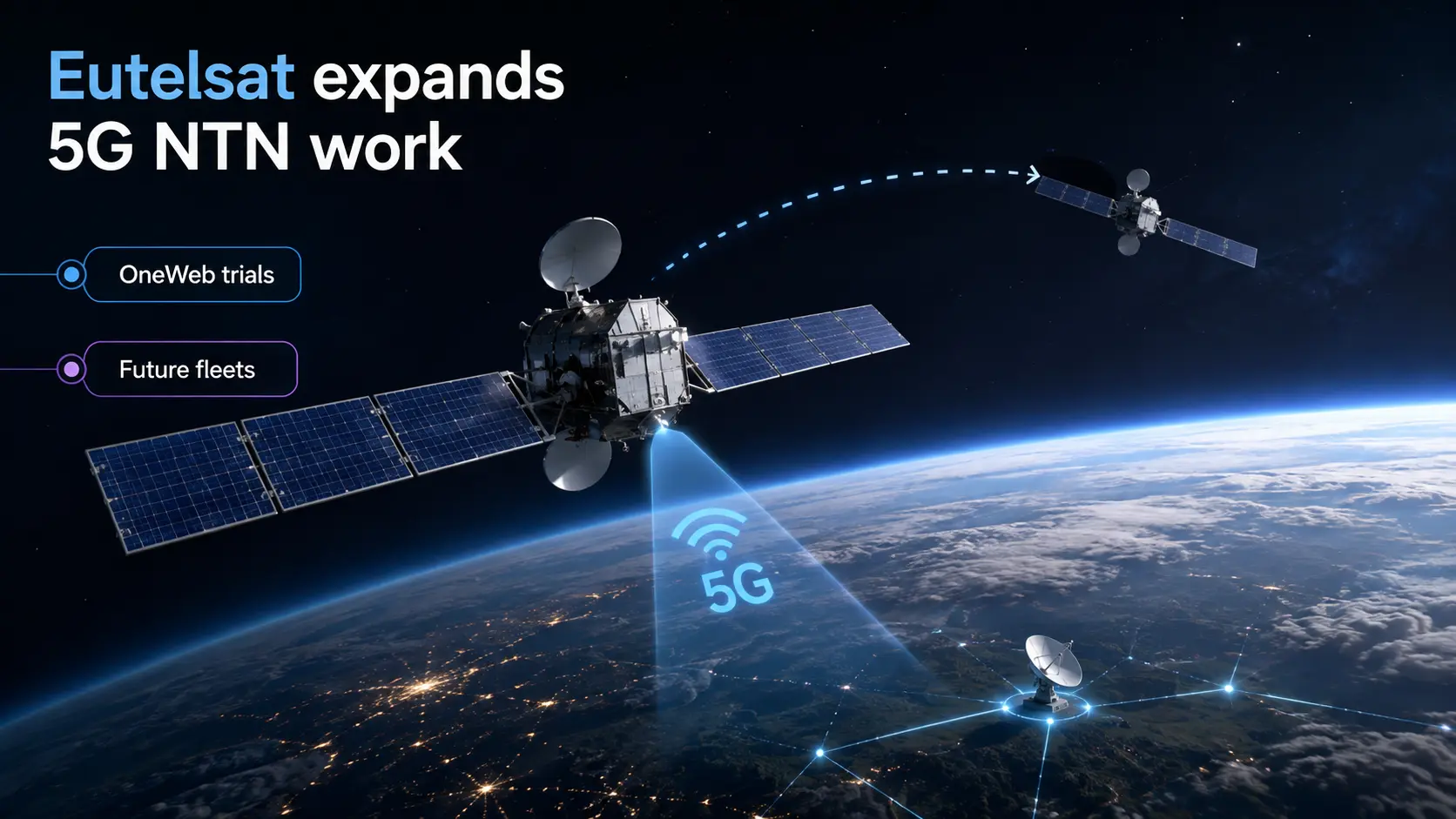
- Eutelsat has tested 5G satellite connectivity on its live OneWeb network, including moving an active connection between LEO satellites
- The first 100 of 440 new OneWeb satellites will be designed to integrate with 5G networks, while IRIS² is also expected to use 5G NTN
The fact
Eutelsat has completed two tests of 5G non-terrestrial network technology, or NTN, which uses satellites to extend mobile connectivity beyond terrestrial networks. In February 2025, Eutelsat, MediaTek and Airbus connected a 5G terminal to a mobile network through a OneWeb satellite using 3GPP Release 17 technology. A later test with partners including the European Space Agency used newer Release 19 technology to transfer an active 5G connection from one LEO satellite to another as they moved across the sky.
Eutelsat is also replenishing the OneWeb constellation with 440 satellites ordered from Airbus, with deliveries due to begin at the end of 2026. Airbus said the first 100 will include technology designed to integrate the satellite network with 5G systems on the ground and will use an architecture compatible with Europe’s planned IRIS² system. Eutelsat has said 5G NTN will also be a key feature of IRIS². Separately, a July filing with the US Federal Communications Commission outlines a proposed 528-satellite system called Eutelsat Next, although Eutelsat has not announced a deployment timetable.
The assessment
Eutelsat has shown that a 5G device can connect through its OneWeb satellites and that the connection can be transferred between satellites as they move. The harder task is making this work reliably in commercial networks, where terminals, gateways, and terrestrial mobile systems all need to operate together. The new OneWeb satellites provide the first opportunity to build more of that capability into the network itself, while IRIS² is still a later programme and Eutelsat Next remains a proposal.
Using common 3GPP standards could make satellite connectivity easier for mobile operators to incorporate into their existing 5G networks. Operators would still need compatible equipment and proven commercial services, so the trials do not yet show that integration can work at scale. For BTW readers, the next test is whether Eutelsat can turn successful demonstrations into services that mobile operators can deploy and manage as part of their existing networks.
What to watch
Watch the first deliveries of Eutelsat’s new OneWeb satellites from the end of 2026 and whether their 5G capabilities move into commercial service. New operator trials involving production terminals and gateways would provide stronger evidence that the technology is moving beyond demonstrations. For Eutelsat Next, regulatory progress and a firm procurement or launch plan would show whether the proposed 528-satellite system is becoming a committed programme.