Summary
- CoreWeave said on 27 October that most of its planned 22.5 MW of IT capacity at Copenhagen's DEN01 is online. Seven new network points in the Middle East and Asia Pacific start later in Q4 2026, with a full loop targeted for mid-2027.
- Its separate India plan puts the first phase of a 240 MW campus in mid-2028. Three Indonesian facilities carry 360 MW of contracted IT power and are expected online in 2028. Those are different commitment statuses, with a shared delivery year.
The cable can arrive before the machine
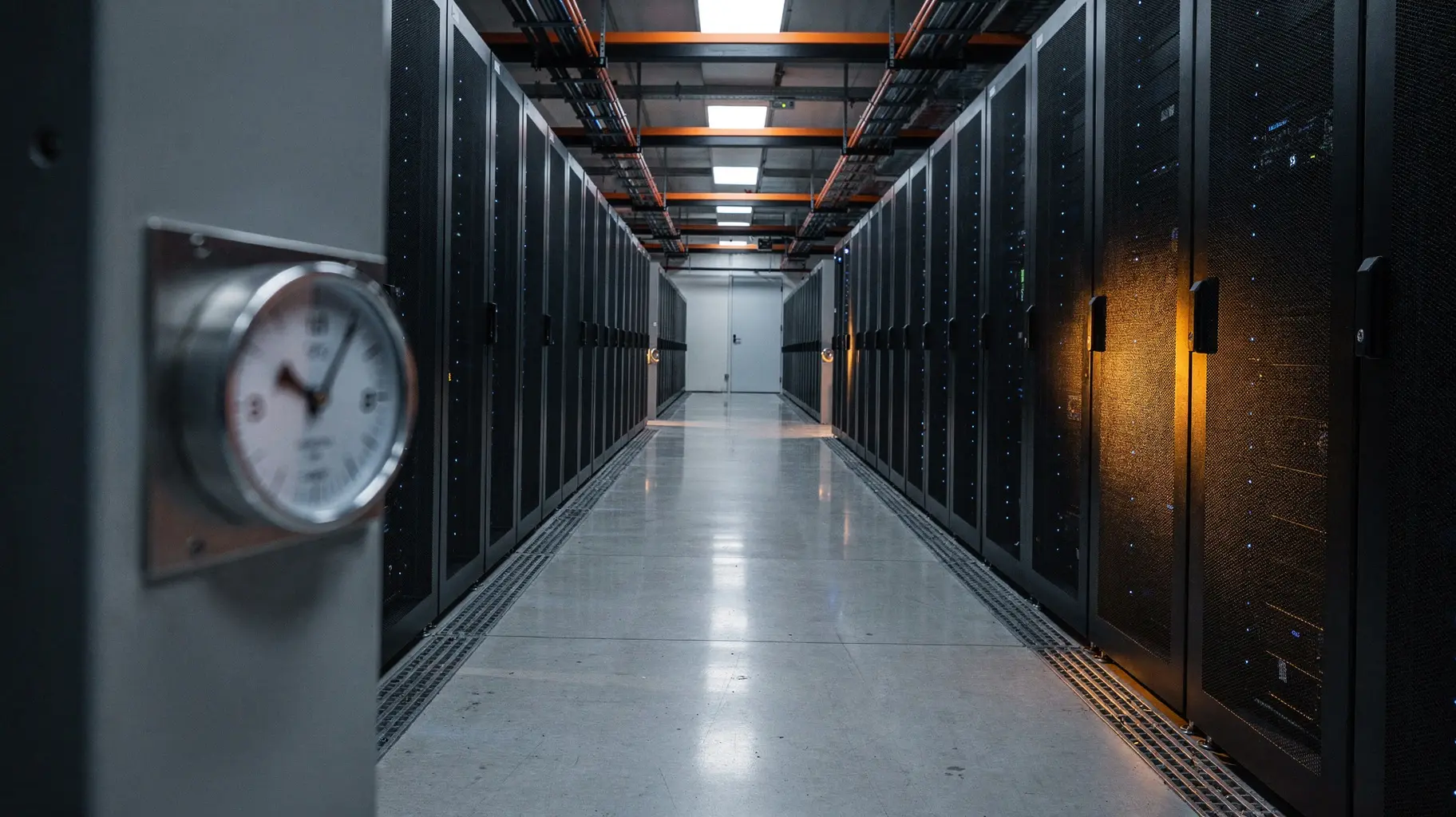
CoreWeave compressed three calendars into one global expansion announcement. The 27 October issuer release says the majority of a planned 22.5 MW of IT capacity is already online at atNorth's DEN01 in Copenhagen. This is an operating deployment, although the release leaves the exact online megawatts unstated. At the same time, the company proposes new network points of presence in the United Arab Emirates, India, Indonesia, Singapore, Australia, South Korea and Japan. They begin later this quarter and are meant to form a full loop by mid-2027.
The compute calendar across the same region sits further out. In India, CoreWeave plans three 80 MW buildings at Taloja, with the first phase expected available in mid-2028. It will be the sole tenant. In Indonesia, it has announced three facilities totaling 360 MW of contracted IT power, expected online in 2028. The arithmetic is 600 MW across the two country announcements; the words around those megawatts matter. India is a planned deployment and Indonesia is described as contracted IT power. Neither announcement says that those halls are serving customers today.
A point of presence provides a network handoff. It can move traffic toward capacity elsewhere; it is not a substitute for local racks, cooling and power. CoreWeave's network account places its existing backbone across North America and Europe. The new access points are intended to extend it into four continents. The issuer specifies multiple 400 Gbps connections at each point, hardware MACsec encryption and redundant paths. Those are design commitments, not a measurement of traffic sold or transported on the future loop.
This sequence changes what a dot on the provider's map can mean. Copenhagen has live IT capacity. The Asian and Middle Eastern network dots have a 2026–27 deployment window. Two large Asian compute programmes carry 2028 dates. A customer seeking access to the existing estate may gain a shorter path before CoreWeave can offer the planned local GPU capacity. CoreWeave has not published per-point traffic, network expenditure or a date when each planned point starts carrying paying customers; those receipts would show whether the early network is earning its keep.
The market can count the seven promised handoffs now. It should keep a second calendar for the buildings and a third for usable, billable compute. A port can be switched on in 2027. A 2028 GPU hall cannot be booked into 2027 supply by drawing a line to it.
Sources
Member Briefing
Deeper Profile Context
Sign in with the right membership level to unlock the full briefing and source notes.
Only for Strategic Circle
Strategic Circle
Open to all readers. Unlock profile briefings after joining and signing in.
Join Strategic CircleOnly for Leadership Alliance
Leadership Alliance
For qualified IP-asset owners and management; sign in to unlock alliance briefings.
Join Leadership Alliance