- Some people feel facial recognition violates privacy, especially when private companies may use it to track customers to learn their movements and buying patterns.
- Integrating computer vision devices has broad prospects, but it also presents a significant challenge in terms of data privacy and security.
Computer vision, in simple terms, is a sector of AI that trains computers to interpret and make sense of the visual world. Technically, it empowers computers to ‘see’ and ‘understand’ digital images & videos from the real world, the same way human vision does. This understanding goes beyond processing raw pixel data to extract patterns and features. However, it’s essential to note, while computer vision mimics human capabilities, the processing, and results may differ due to various factors such as lighting, perspective, and quality of the image or video.
Challenges in data privacy and security
Integrating computer vision devices has broad prospects, but it also presents a significant challenge in terms of data privacy and security. Since these technologies revolve around acquiring and processing vast volumes of data, it’s undoubtedly going to catch attention regarding how this data is stored, shared, and used. Data breaches and unauthorised access to data raise serious privacy concerns, and this challenge becomes more pronounced with the increasing prevalence of cameras and IoT devices. Additionally, the scope of rules and regulations regarding data privacy varies globally, further complicating the scenario. Adequate encryption techniques, use of edge computing, and development of comprehensive legal frameworks are some elements essential to tackling these data privacy and security challenges.
Also read: What is machine learning and computer vision?
Also read: What is computer vision in deep learning?
Computational and storage challenges
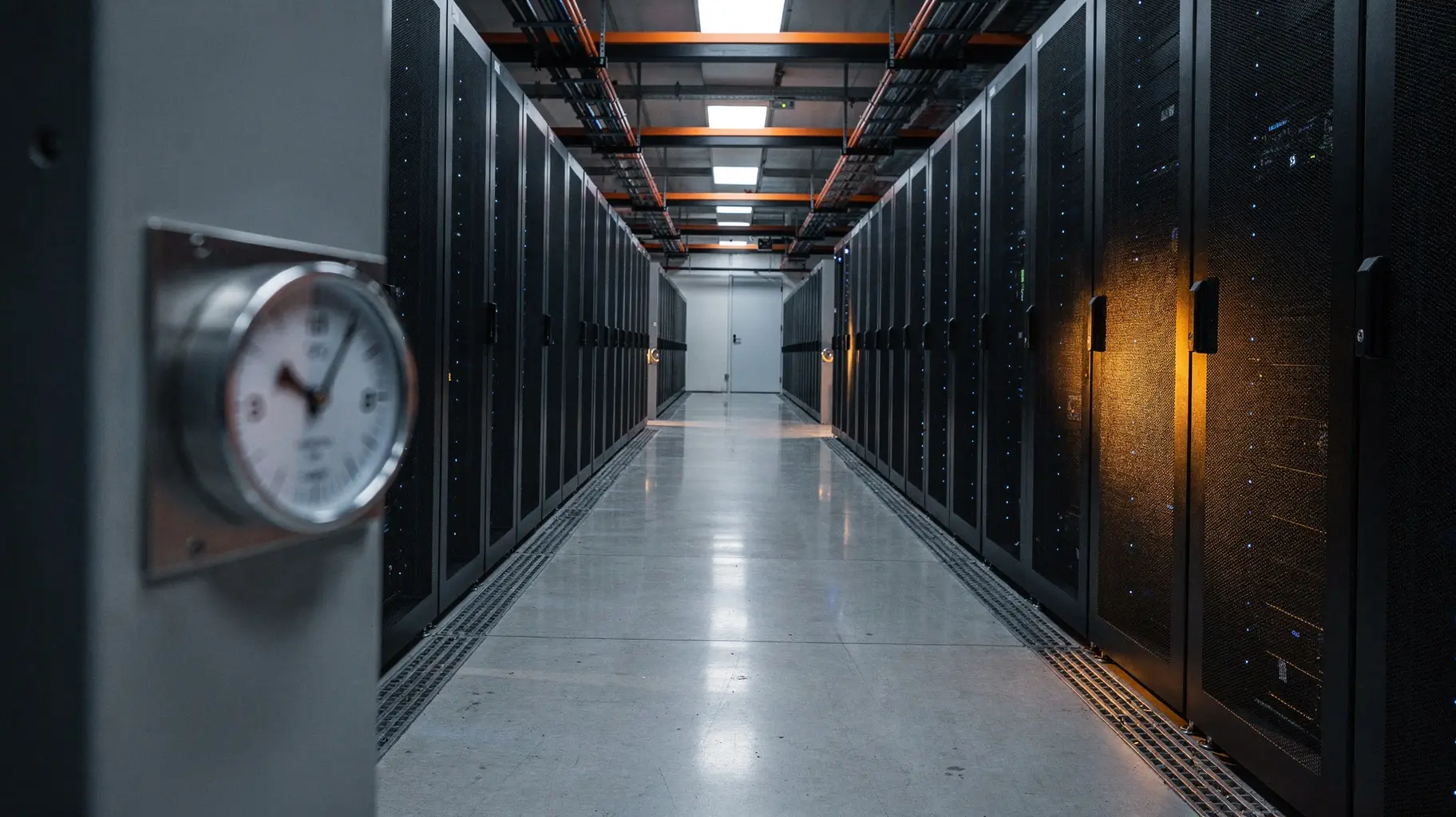
Integrating computer vision isn’t a meager task. It demands a substantial computational and storage infrastructure that can process and analyse the bulk data produced by IoT devices. With video streams captured in high resolution for effective computer vision, the data size increases significantly, thus requiring substantial storage space. Moreover, performing real-time analytics needs solid computational power. Due to these requirements, it becomes challenging to accomplish processing at the edge (near the source of data).
As a result, developers often need to shift processing to the cloud, and this could introduce latency, impacting real-time decision making. Hence, balancing the computational and storage needs with real-time processing requirements is a key challenge in integrating computer vision in IoT scenarios.
Challenges in adopting AI-based learning tools
The integration of computer vision does not come without its fair share of challenges, particularly in adopting AI-based learning tools. AI is a complex field of study and its integration with IoT in the realm of computer vision necessitates advanced knowledge, skill set and resources. For startup companies and those new to the world of IoT and computer vision, the learning curve may be steep. Further, as machine learning models evolve, businesses must adapt and update their systems regularly, which can prove to be a hard task if they lack the expertise or financial backing.
The high cost of AI-tools and the talent it takes to use them effectively is often a major deterrent that creates a barrier to entry, which can limit the widespread application of such innovative technology combinations.