
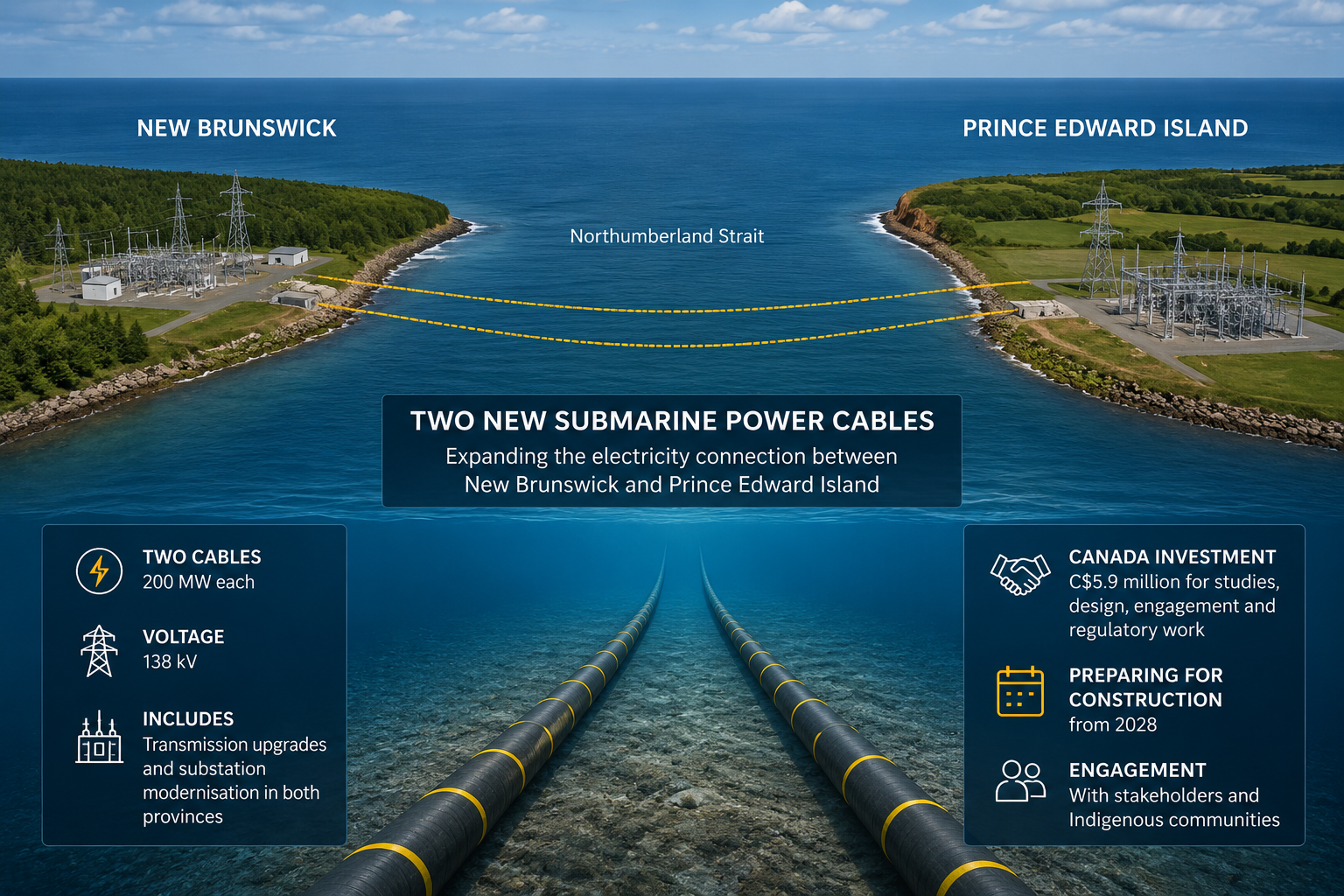
•The C$5.9m covers engineering studies, marine surveys, environmental assessments and preliminary design, with construction targeted from 2028
•The project includes two planned 200 MW submarine cables, alongside transmission and substation upgrades in both provinces
The fact
The Canadian government has committed C$5.9 million to advance the planned electricity link between Prince Edward Island and New Brunswick. PEI Energy Corporation will use the funding for engineering studies, marine surveys, environmental assessments and early design work for the cable route, transmission lines and substations. It will also support regulatory work and engagement with stakeholders and Indigenous communities. The aim is to prepare the project for possible construction from 2028.
The proposal includes two 200 MW, 138 kV submarine power cables, together with transmission upgrades and substation modernisation in both provinces. Prince Edward Island imports about 85% of its electricity from New Brunswick through existing submarine links. The island's average electrical load is below 300 MW, while peak demand reached 393 MW during a cold spell in February 2023. The full project cost, final route and construction financing have not been disclosed.
The assessment
The proposed cables would add 400 MW of transfer capacity between New Brunswick and Prince Edward Island, roughly matching the island's current peak demand. But PEI Energy Corporation must design the connection as part of a wider transmission system, not as two standalone cables.
That means the cable route, substations and land-based transmission upgrades in both provinces must be planned and approved together. The federal funding covers the studies needed to define that work, but turning it into a buildable project will require construction financing, regulatory approvals and coordinated procurement across two provinces.
For BTW readers, the project's value depends on whether both provinces can build the supporting grid infrastructure needed to use the additional capacity. The next development stage will establish what must be constructed onshore before the new cables can carry power.
What to watch
Watch for the proposed cable route, environmental and regulatory filings, and a full cost estimate. A construction funding plan and procurement timetable will show whether the project remains on course for work to begin by 2028.