
Summary
- ARIN records AS33374 with the network name BSI and Brock Solutions Inc as registrant. That is an identity and accountability record, not evidence of product traffic, network performance, system reliability, or customer outcomes.
- Brock's public materials describe real-time industrial automation, airport baggage software, integration, monitoring, and support. Their production value depends on supervision, interface control, maintenance, exception handling, cybersecurity, and tested recovery, none of which can be inferred from a capability list alone.
ARIN's registration for AS33374 uses the network name BSI and identifies Brock Solutions Inc. as the registrant. That registry link provides a useful accountability anchor, but it does not answer the questions that matter most when software is connected to baggage conveyors, industrial controllers, operational databases, or live transport processes. It does not show whether a product is reliable, whether an integration is maintainable, or whether an operator can recover quickly when a dependency fails.
Those questions require a different kind of company analysis, one that separates what a supplier says its systems can do from what customers must supervise, integrate, secure, maintain, and repair in production.
Brock Solutions describes itself as an engineering and professional services company focused on real-time systems for industrial, manufacturing, transportation, and logistics organizations. Its public materials span automation engineering, programmable controllers, human-machine interfaces, supervisory control and data acquisition, manufacturing execution, airport baggage software, system monitoring, cybersecurity, commissioning, and long-term support. That breadth is important. It means the relevant product is rarely a single application installed on an isolated server.
The operating system, in the practical rather than trademark sense, is the entire chain of controllers, interfaces, messages, databases, screens, procedures, people, and fallback paths that has to keep physical work moving.
This article examines Brock through that production reality. The objective is not to rank its software or infer the performance of a customer system that is not public. It is to ask what its documented scope reveals about the economics of real-time control. In airport and factory environments, feature capability is only the beginning. Reliability depends on integration boundaries. Customer results depend on operating discipline. Automation can remove repetitive work while creating new work in monitoring, exception handling, data stewardship, security, testing, and recovery.
The most useful company research therefore follows those costs instead of treating a product list as proof of an outcome.
The identity behind BSI
The starting point is a narrow but important fact. The ARIN record for AS33374 names the autonomous system BSI and identifies Brock Solutions Inc. as its registrant. The related ARIN entity record provides the organization name and a current technical-contact structure. This is useful because number-resource records are accountability ledgers. They help a reader distinguish the registered organization from a product brand, an unrelated company with a similar acronym, or an unsupported assumption made from a search result.
The same record also shows the limit of registry evidence. An autonomous-system registration does not establish how much traffic the network carries, whether it carries product traffic, whether it is central to customer deployments, or how resilient any service is. It does not prove uptime, routing quality, security maturity, or disaster-recovery capability. Treating it as if it did would confuse a record of responsibility with a measure of performance. The responsible approach is to use AS33374 to resolve identity and then move to the company's own technical scope, public standards, and clearly labeled analysis.
That distinction matters for company coverage because short names such as BSI can be ambiguous. ARIN connects this network identity to Brock Solutions, while Brock's corporate site describes a company working in industrial automation and real-time operational systems. The two surfaces are consistent enough to establish the subject, but they should not be collapsed into a larger claim. There is no basis here to say that Brock's airport products run across AS33374, that customer systems depend on that ASN, or that the registry record demonstrates a commercial network service. The article remains about Brock as the company behind the BSI network identity, not about an imagined network architecture.
This is also why accurate public records have practical value even when they reveal little about a product. A current registrant, technical contact, and organization handle make escalation and attribution less ambiguous. In any operational environment, ambiguity has a cost. It slows incident routing, complicates vendor management, and encourages teams to fill gaps with assumptions. The registry cannot make a control system reliable, but it contributes to the basic reality layer in which the right organization can be identified and contacted. That is a modest role, and it is more credible when kept modest.
A company built around real-time systems
Brock's overview of its work places industrial automation, engineering software, airport systems, manufacturing systems, panel fabrication, sustainment, and support under one company. The common thread is not a particular interface or programming language. It is the need to coordinate software with physical operations where delay, stale information, or a failed handoff can change what people and machines do next. A conventional business application can often tolerate a slow report or a delayed batch. A baggage sortation system or production line has less freedom because the physical process keeps advancing.
The company's automation engineering page lists PLC programming, HMI and SCADA work, site commissioning, factory acceptance testing, control-cabinet work, historian and analytics functions, network architecture design, cybersecurity, line control, and support. These are different disciplines, and that difference is central to reliability. A PLC may execute deterministic logic close to a machine. An HMI may help an operator understand state. A historian may preserve time-series information. A network may transport commands and observations. A higher-level application may reconcile work across systems. Each layer has a different failure pattern and a different owner.
The value proposition of an integrator is partly its ability to make those layers behave as one operational system. That is harder than connecting endpoints. A useful integration must preserve meaning, timing, sequence, and authority. If one system says a bag was scanned while another says it was never accepted, the problem is not solved by proving that a message crossed a network. The systems need a shared interpretation of the event and a procedure for disagreement. If a manufacturing cell reports that a step completed after the work order was canceled, the integration needs rules for ordering, reconciliation, and operator intervention.
Brock's public scope therefore suggests two products at once. One is the visible software or control solution. The other is the engineering method used to fit that solution into an environment with existing machines, interfaces, data, constraints, and operating habits. Customers may buy both, even when procurement documents describe only the first. The second product is where much of the implementation risk sits. It includes discovery, interface definition, commissioning, training, acceptance, change control, documentation, and the uncomfortable work of deciding what happens when the normal path fails.
This dual character also complicates comparisons. A feature checklist can compare whether two systems offer monitoring, dashboards, alerts, message routing, or reconciliation. It cannot easily compare how much customer-specific integration is required, how exceptions are surfaced, how well operators can diagnose a fault, or how costly an upgrade will be five years later. Those questions depend on architecture and implementation choices. They also depend on what the customer already owns.
The same product can be straightforward in a clean environment and expensive in one with undocumented interfaces, obsolete controllers, inconsistent identifiers, or fragmented support contracts.
Where control layers meet enterprise software
A Brock technical paper on system layers separates enterprise planning, manufacturing operations or execution, and plant control. The categories are familiar, but the boundary decisions remain consequential. Enterprise systems manage planning, transactions, and business coordination. Manufacturing operations systems manage work in progress, instructions, production context, genealogy, and performance. Control systems execute logic against physical devices and processes. A reliable architecture has to move necessary information between these layers without making every layer depend on the timing assumptions of every other one.
The attraction of vertical integration is clear. Operators and managers want a consistent view from production planning to machine status. They want to know whether work was completed, why it stopped, which material was used, and what should happen next. Airport teams want a comparable view across baggage acceptance, security screening, sortation, transfer, loading, and arrival. Integration can turn isolated events into an operational narrative. It can reduce manual transcription, expose bottlenecks, and make exceptions visible earlier.
The risk is equally clear. Each new dependency expands the failure surface. A control process that once depended only on local logic may become dependent on a network, a broker, a database, a directory service, a certificate, a time source, or a cloud-connected monitoring layer. That does not make integration a mistake. It means the architecture has to decide which functions may fail together and which must remain locally safe. The most important design question is often not how to connect two systems, but what each system should do when the other one is unavailable, late, duplicated, or contradictory.
Brock's operations and enterprise management material describes SmartSuite Enterprise as a consolidated operational view and SmartConnect as a message broker that interprets, manipulates, and routes messages among systems. Those are product capability statements. They indicate the intended role of the software, not a guarantee of reliability in every deployment. A broker can reduce point-to-point complexity, but it also becomes a concentration point for mappings, rules, monitoring, and ownership. If it is central, its configuration and recovery procedures become part of the customer's operational core.
A message broker also illustrates why integration maintenance is continuous. Interfaces evolve. Vendors add fields. Airports change processes. Manufacturing lines are retooled. Security policies alter authentication and network paths. A mapping that worked at commissioning can become incomplete after one endpoint changes. The resulting failure may not be a clean outage. Messages may still arrive while losing a field, using an old code, or applying a default that changes operational meaning.
Silent degradation is often harder to manage than complete failure because the system appears healthy until an exception reaches a person or physical process.
This is where running-code evidence matters more than architecture diagrams. A diagram can show that system A sends an event to system B. It cannot show whether retries create duplicates, whether clocks are synchronized, whether a partial update is safe, whether old events are rejected, or whether an operator can see a backlog building. Those properties emerge from implementation, configuration, data, and operational observation. A credible reliability program measures them, tests them, and assigns an owner to them.
Product capability is not production reliability
Brock's public product documents describe substantial capability. The SmartSuite datasheet presents modules for baggage sortation, screening, passenger verification, cargo, tracking, and operational management. The SmartSuite Enterprise datasheet describes a real-time passenger and baggage management system that centralizes information from multiple systems. The SmartSort datasheet describes controls for baggage handling and sortation.
These documents help establish what the company offers. They do not, by themselves, establish how a particular airport performs after deployment. Vendor documents may include scale statements, customer quotations, or outcome figures. Those are useful signals about intended value and claimed experience, but they remain vendor-reported unless an independent source verifies the measurement method, baseline, operating period, and customer context. A research article should not convert marketing evidence into an independent benchmark by repeating it without qualification.
Capability asks whether a function exists. Reliability asks whether it works predictably when the environment is noisy. An alerting function can exist while producing too many false positives for operators to trust it. A dashboard can exist while relying on stale data. A tracking function can exist while identifiers fail at an interline handoff. A reconciliation function can exist while requiring a large manual queue during irregular operations. A system can perform well during a demonstration and still be expensive to operate at scale because exceptions accumulate at the edges.
Customer production results add a third category. They ask whether the system improved an outcome that the customer values, such as fewer mishandled bags, faster recovery, reduced downtime, improved throughput, better traceability, or lower maintenance effort. Those outcomes are affected by more than software. Hardware condition, scanning discipline, process design, staffing, training, partner behavior, network quality, and local governance all matter. Even a genuine improvement cannot automatically be attributed to one product without understanding the broader change.
The distinction is especially important in real-time operations because a system may relocate work rather than remove it. Centralized monitoring can reduce time spent walking to equipment while increasing the need to maintain tags, thresholds, dashboards, and escalation rules. Automated routing can reduce routine decisions while making rare exceptions more complex. A message broker can eliminate many custom connections while concentrating schema management in one team. A digital workflow can improve traceability while requiring more disciplined data entry at each handoff. These are not arguments against automation.
They are the costs that determine whether automation remains valuable after launch.
The integration bill
The first major cost is discovery. Before a new system can control or observe an existing process, engineers need to know what equipment exists, which interfaces are authoritative, how identifiers are assigned, what timing constraints apply, and who owns each dependency. Documentation is often incomplete. Equipment may have been modified without a corresponding update to diagrams. Operators may rely on workarounds that are not visible in formal procedures. A realistic project budget includes time to uncover that reality rather than assuming the environment matches a clean specification.
The second cost is interface definition. Two systems can use the same word for different states or different words for the same state. A baggage message may represent acceptance, screening, transfer, loading, or arrival, each with different custody implications. A factory event may represent command issued, operation started, operation completed, quality accepted, or material consumed. Reliable integration requires explicit semantics, sequence rules, error handling, and reconciliation behavior. Otherwise, the interface transports ambiguity at machine speed.
The third cost is testing. Brock lists factory acceptance testing and site commissioning among its automation capabilities. Those activities matter because a control system has to be tested against more than the expected path. Engineers need to examine loss of communication, delayed messages, duplicate events, incorrect identifiers, device faults, partial restarts, power interruption, failover, and recovery from stale state. Testing must also protect safety and production. A test that is harmless in a simulator may be unacceptable on a live conveyor or process line.
The fourth cost is change ownership. Every production system changes, even when its core application is stable. Certificates expire. Operating systems and databases need maintenance. Security controls evolve. A customer adds a conveyor, scanner, machine, terminal, route, product, or partner. Upstream and downstream vendors change their interfaces. Someone has to decide which changes require regression testing, who can approve them, and how to reverse them if the result is unsafe or disruptive. Without clear ownership, small changes can accumulate into an architecture that nobody fully understands.
The fifth cost is observability. A real-time system needs more than server availability. Teams need to see message age, queue depth, interface errors, controller state, data freshness, clock drift, failed scans, retry behavior, and manual-exception volume. The right signals depend on the process. An application can be technically online while the operational result is wrong. Observability must therefore connect technical health to process health. It should help a team answer not only "Is the service running?" but also "Is the physical operation receiving accurate and timely decisions?"
The sixth cost is exception handling. Automation is usually designed around frequent, well-understood cases. Operations become expensive at the tail: unreadable labels, damaged equipment, unusual routing, canceled work, late data, inaccessible devices, conflicting records, or a partner that does not follow the expected sequence. If the system cannot explain an exception, a person has to reconstruct it. That work may require several screens, phone calls, physical checks, and judgment. The customer pays for the exception path whether or not it appears in the original feature list.
The seventh cost is knowledge retention. Commissioning teams learn why a mapping exists, why a timeout has a particular value, and why a fallback behaves in an apparently unusual way. If that knowledge remains only with individuals, later maintenance becomes risky. Good documentation records assumptions, dependencies, test cases, recovery steps, and the reason behind non-obvious choices. It must also remain current. Documentation that describes a system from three upgrades ago can be more dangerous than no documentation because it creates false confidence.
Airport baggage systems as an operational test
Airport baggage handling provides a demanding environment for evaluating the gap between features and outcomes. IATA's baggage tracking guidance explains that Resolution 753 requires tracking at core points in the baggage journey and depends on infrastructure operated across airlines, airports, and handling partners. A bag moves through custody changes, physical conveyors, screening, sortation, loading, transfer, and arrival. The information path has to keep pace with the physical path.
That synchronization creates several kinds of risk. A bag may move while an event is delayed. A scanner may read a label incorrectly. A message may reach one system but not another. A transfer may cross organizational boundaries with inconsistent identifiers. A screening result may arrive after a routing decision. An operator may need to divert a bag manually. The technology has to support the normal flow and preserve enough context to reconstruct the abnormal one.
Brock's SmartSuite materials describe tracking, sortation, passenger, cargo, and enterprise-visibility functions. Its public description of SmartConnect emphasizes cross-system message handling. The US Department of Homeland Security SAFETY Act registry lists a current approval for an automated in-line explosive detection baggage screening control and software package supplied by Brock entities. That government record is meaningful evidence of the described technology and approval scope. It is not a universal endorsement of every Brock product or deployment, and it should not be interpreted that way.
The operational lesson is broader than one supplier. Airport technology must coordinate safety, security, flow, customer service, and accountability. A system can optimize one measure while harming another. Holding a bag for additional checks may protect security while increasing connection risk. Aggressive routing may improve throughput while reducing the time available to investigate uncertain data. Centralizing decisions may improve consistency while increasing dependence on shared services. The architecture needs explicit priorities and safe behavior when those priorities conflict.
Irregular operations expose the design. Weather, missed connections, aircraft changes, equipment failures, and security events can rapidly increase the number of exceptions. A system designed only for average volume may overwhelm operators when the exception queue spikes. The relevant reliability question is not simply whether the application remains online. It is whether the system helps people understand and resolve the new state without creating additional confusion.
This is also where customer outcome claims require care. A reduction in mishandled bags can reflect better tracking software, improved scanning compliance, process redesign, equipment renewal, staff training, schedule changes, or a different traffic mix. A faster transfer can be real without being attributable to a single module. Vendor materials can show how a product is intended to contribute, but a defensible production result requires a baseline, a time period, a measurement definition, and clarity about other changes. Without that context, precise percentages can create more certainty than the evidence supports.
Operational supervision remains essential. A baggage system needs people who understand the process and can recognize when the digital representation diverges from the physical world. They need authority to intervene, tools to trace events, and procedures for restoring consistency. Automation may reduce routine manual coordination, but it increases the value of skilled intervention when a rare case breaks assumptions across several systems. The best interface is not necessarily the one that hides complexity. It is the one that exposes the right complexity at the moment an operator can act on it.
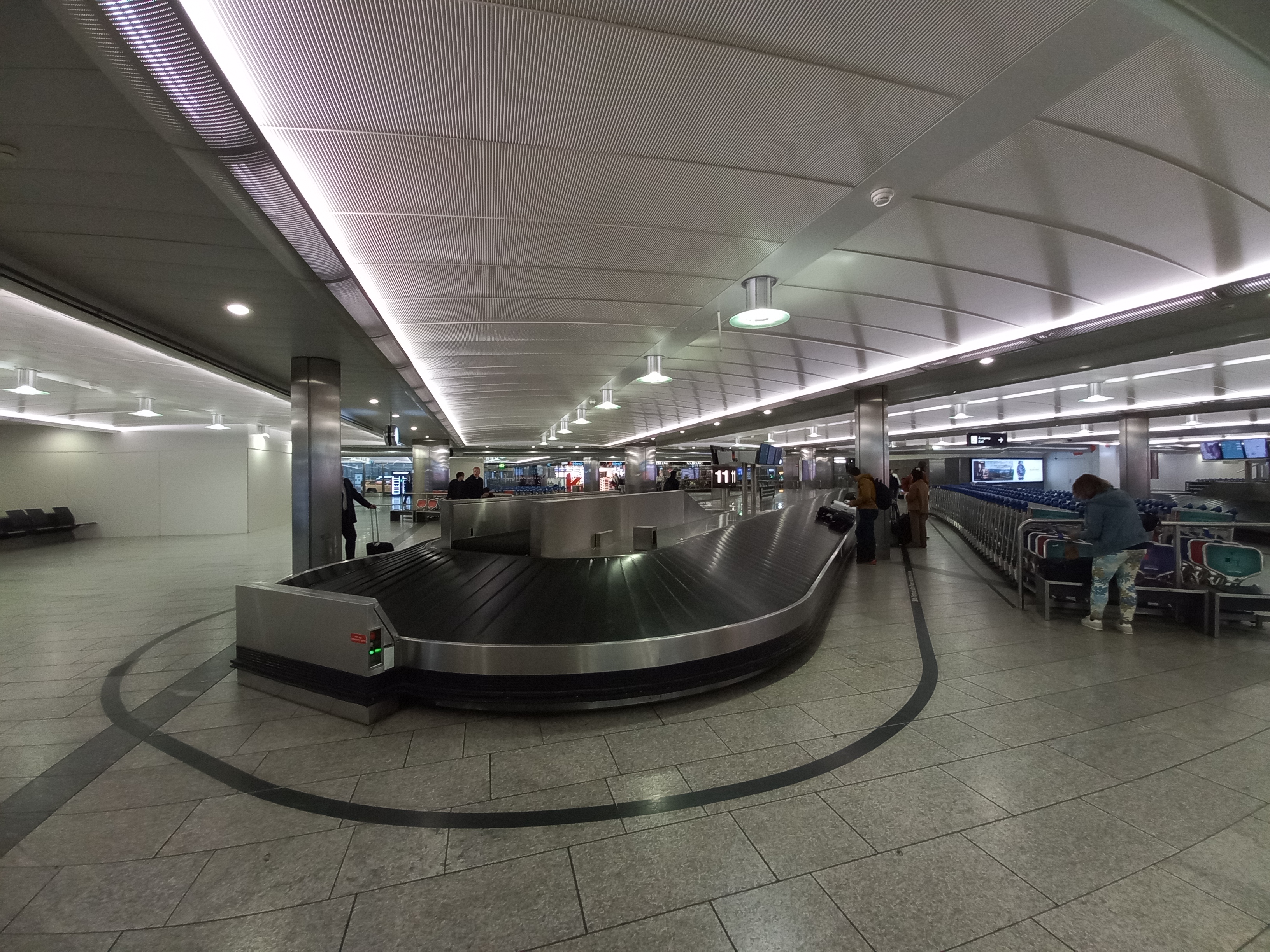
The featured image for this article shows a baggage carousel at Zurich Airport as general operating context. It does not depict a Brock Solutions deployment or identify Zurich Airport as a Brock customer. That boundary is worth stating because infrastructure photographs can easily imply a commercial relationship that the public evidence does not establish. Visual relevance should not be purchased by weakening factual identity.
Factory and operational-technology constraints
Manufacturing and other operational-technology environments impose similar discipline. NIST Special Publication 800-82 Revision 3 emphasizes that OT security has to account for performance, reliability, and safety requirements. That principle changes how teams evaluate updates and controls. A security measure that is routine in enterprise IT may need different timing, testing, or fallback behavior when it affects a physical process.
Control systems often have long service lives. Machines may remain productive for decades while the computers, networks, and software around them age more quickly. This creates mixed generations of technology. A modern analytics platform may depend on an old protocol. A current operating system may communicate with a controller that cannot be patched without a shutdown. A security team may want stronger segmentation while operations needs remote diagnostic access. The solution is rarely a single product setting. It is a managed architecture with compensating controls, tested recovery, and explicit risk ownership.
Determinism also matters. Enterprise applications are commonly optimized for throughput and flexibility. Control systems may care more about predictable timing and safe state. Adding a dependency can change that timing. If a controller waits for a remote response that was previously local, network delay becomes part of process behavior. If a dashboard is fed from asynchronous events, it may show a valid but slightly older state. Engineers need to define which delays are acceptable, which data is advisory, and which decisions must remain local.
Cybersecurity introduces another set of operating costs. Asset inventory, access control, logging, vulnerability management, segmentation, backup, and incident response all require maintenance. A control environment may include vendor accounts, service laptops, remote connections, shared credentials, or legacy devices. Improving security can reduce risk, but it also consumes engineering and operating time. The relevant question is not whether security is necessary. It is whether the organization can sustain the controls without creating fragile workarounds that undermine both safety and security.
Brock lists cybersecurity and network architecture among its automation services. That indicates capability, not a documented assessment of any customer environment. Buyers should ask how those services are integrated with control engineering. Who owns the security design? How are remote connections approved and monitored? Which components can be patched during normal maintenance? How are unsupported devices isolated? What evidence shows that backups can restore the actual operational system, including configurations, dependencies, and licenses rather than only data files?
Factory acceptance testing and commissioning can reduce risk, but they cannot reproduce every production condition. Live volume, environmental noise, operator behavior, equipment wear, and upstream changes create states that a test environment may miss. A mature program treats commissioning as the beginning of reliability measurement, not the end. It watches the system under real load, records exceptions, and uses that evidence to refine thresholds, procedures, interfaces, and training.
Sustainment is part of the product
Brock's high-tech operations material and support page make sustainment visible in the public offer. This is significant because real-time systems accumulate operational debt. Components age, vendors change, data volumes grow, and original assumptions become less accurate. A system that was reliable at launch can become difficult to support if maintenance is deferred or ownership becomes fragmented.
Sustainment begins with monitoring, but it cannot end there. Alerts need review and tuning. Repeated exceptions need root-cause analysis. Capacity needs to be compared with changing demand. Recovery procedures need rehearsal. Spare components, licenses, credentials, and configuration backups need control. Documentation and training need updates. A dashboard may reveal a degrading condition, but an organization still needs time, authority, and budget to correct it.
Technology obsolescence is particularly expensive in integrated environments. Replacing one component may change protocols, timing, security requirements, or data structures. A new database version can affect a connector. A new controller can require different engineering tools. A modern identity service can break an old application that assumes local accounts. The replacement project therefore includes dependency discovery and regression testing, not just procurement. Organizations that delay the work may preserve short-term stability while increasing the size of the eventual change.
Support ownership has to cross organizational boundaries. A customer may own equipment and operating procedures. An integrator may own application configuration. A product vendor may own core software. A network team may own connectivity. A security team may own access controls. When an incident crosses those boundaries, each party can see a healthy component while the overall process remains broken. Effective support requires a shared incident model, clear escalation, and access to evidence that follows the transaction or physical item across systems.
The economics of support are easy to underestimate because much of the work is preventative. A team that tests recovery, reviews logs, maintains certificates, and updates documentation may appear less productive than one building new features. Yet the absence of visible incidents can be the result of that work. Buyers should therefore compare lifecycle operating models, not only implementation prices. A lower initial cost can be offset by weak observability, unclear ownership, expensive upgrades, or heavy manual reconciliation.
Brock's public support presence shows that sustainment is part of its commercial scope. Public pages do not reveal response performance, customer staffing, incident history, or the quality of a particular support engagement. Those remain questions for due diligence. The useful conclusion is narrower: a supplier working across control, integration, and operational software has to be evaluated as a long-term operating partner, because the delivered system will keep changing after commissioning.
Failure modes and exception economics
No public source reviewed for this article establishes that Brock caused a specific failure described below. These are failure classes that follow from the documented system types and from established OT and baggage-operation constraints. Recording them is important because a company profile that lists only capabilities cannot explain the work customers may face when those capabilities meet production variability.
Interface drift. One endpoint changes a field, code, sequence, or validation rule while another continues using the old contract. Messages may fail immediately, but they may also be accepted with incomplete meaning. The cost includes diagnosis, mapping changes, regression testing, coordination across vendors, and reconciliation of records created during the inconsistent period. Prevention requires contract ownership, version visibility, and representative tests.
Stale operational data. A dashboard or decision service remains available while its source has stopped updating. If freshness is not visible, operators may act on an old state. The technical service can report green while the process is wrong. Controls should therefore monitor age and sequence, not only connectivity. Recovery must also decide whether delayed events should be replayed, discarded, or reviewed manually.
Duplicate or out-of-order events. Retries improve delivery probability but can create duplicate actions if consumers are not idempotent. Distributed systems can also deliver events in a different order from the physical process. A bag might appear to arrive before a transfer event is processed. A work order might appear complete before material consumption is recorded. Systems need stable identifiers, ordering rules, and reconciliation logic. Operators need a way to see and correct disputed state.
Control-layer regression. A software or configuration change behaves correctly in a test but differently under live timing, equipment condition, or volume. The failure may be intermittent and difficult to reproduce. Rollback must account for controller programs, HMI configuration, database changes, interface mappings, and state created after deployment. A nominal rollback button is not enough if the earlier version cannot interpret new data or if physical work has already progressed.
Message-broker concentration. Central routing and transformation can simplify integration, but a broker can become a high-impact dependency. Failure may come from infrastructure, configuration, queue growth, certificate expiration, or a bad rule. The organization needs redundancy where appropriate, but it also needs operational controls: change review, rule testing, queue observability, back-pressure behavior, replay limits, and a clear procedure for partial recovery.
Monitoring blind spots. Technical metrics do not always show process failure. CPU, memory, and network checks can be normal while scans are missing or messages are semantically invalid. Process metrics can also hide technical fragility until volume rises. A balanced monitoring design connects infrastructure, application, interface, data-quality, and operational signals. It assigns thresholds based on actionability rather than collecting every available metric.
Manual exception overload. Automation can produce a manageable queue during normal operations and an unmanageable one during disruption. If every uncertain case is routed to a person without prioritization or context, the system has moved the bottleneck rather than removed it. Exception design should expose reason, history, recommended action, urgency, and ownership. It should also measure how much manual work automation creates, not only how many routine cases it handles automatically.
Cybersecurity and availability conflict. A security control can interrupt an old dependency, while an emergency workaround can weaken security. Examples include certificate changes, account lockouts, network segmentation, remote-access restrictions, or endpoint protection on time-sensitive systems. The answer is not to exempt OT from security. It is to test controls against operational requirements, define safe emergency access, monitor its use, and remove temporary exceptions after the event.
Unsupported component risk. An old operating system, controller, driver, or engineering tool may remain essential because replacement would interrupt production. Over time, expertise and spare parts become scarce. The organization needs a documented plan: isolation, backup, spares, vendor options, migration sequence, test environment, and a decision point at which continued operation becomes more expensive than replacement. Waiting until failure removes most of those choices.
Recovery that restores data but not operation. Backups may exist without proving that a complete system can be rebuilt. A real recovery can require application binaries, licenses, certificates, service accounts, controller logic, device configuration, network rules, interface mappings, and a known order of restart. It also requires validation that the physical process and digital state agree. Recovery exercises should measure the entire path to safe operation, not only whether a file can be restored.
Identity and ownership ambiguity. A failure crosses several components, and each team assumes another party owns the next action. Registry records, contracts, support matrices, and architecture documentation all help, but they need to agree. The BSI and Brock identity link is a small example of why naming matters. In a live incident, clear names, current contacts, and explicit responsibility reduce coordination delay. They do not solve the technical problem, but they help the right people start solving it sooner.
These failure modes share a pattern. The cost of a system is not concentrated in its normal path. It accumulates at boundaries, during change, and in recovery. A product can make the normal path faster while leaving the organization exposed if those areas are weak. Serious evaluation therefore asks how the supplier and customer will observe, own, test, and repair the system over time.
Questions operators and buyers should ask
The first questions should establish identity and scope. Which Brock legal entity is contracting? Which products, custom components, and third-party dependencies are included? What role, if any, does the BSI/AS33374 network identity play in the delivered service? Which parts are standard product, which are configuration, and which are customer-specific engineering? Precise answers make later ownership and upgrade decisions easier.
The next questions should examine architecture. Which functions must remain available locally if an enterprise service, broker, database, or network path fails? Which data is authoritative at each stage? How are duplicate, late, or conflicting events handled? What timing assumptions are built into the design? Which dependencies are shared across sites or operational areas? A diagram should be supported by failure behavior, not treated as proof by itself.
Buyers should ask how integration is governed. Are interface contracts versioned? Who approves mappings and transformations? What representative test data exists? Can changes be tested against realistic volume and exceptions? How are third-party upgrades detected? Is there a record of why non-obvious rules exist? Integration governance often determines whether a system becomes easier or harder to maintain after the original project team leaves.
Observability deserves a separate review. What signals show data freshness, queue growth, failed scans, message rejection, controller state, and manual exception volume? Can operators trace one bag, work item, or event across systems? Are alerts tied to actions and owners? How does the system distinguish a complete outage from partial semantic degradation? Can monitoring continue during a primary-system failure, or does it disappear with the component it is supposed to observe?
Security questions should be connected to operations. How are remote connections controlled? How are service accounts, certificates, and privileged tools managed? Which components cannot be patched on a standard schedule, and what compensating controls protect them? How are emergency changes recorded and reviewed? Does the recovery plan include security configuration and identity dependencies? NIST's OT guidance is useful because it treats reliability and safety constraints as part of the security problem rather than an excuse to ignore it.
Support questions should be measurable. Who receives the first call? Which evidence must the customer collect? Which components can Brock diagnose remotely? What happens when the fault appears to sit between vendors? What response and restoration commitments are contractual? How are recurring exceptions turned into engineering work instead of remaining permanent manual tasks? Public support phone numbers show an access path, but a buyer needs a complete operating model.
Outcome questions should require definitions. If a proposal promises fewer mishandled bags, less downtime, higher throughput, or lower labor cost, what is the baseline? Which period will be measured? What other process or equipment changes are planned? Who validates the result? How are adverse effects, such as more complex exceptions or increased maintenance effort, included? A balanced business case counts both removed work and newly created supervision.
Finally, buyers should ask about exit and change. Can the customer export configuration and operational history? Are interfaces documented well enough for another team to support them? What happens if a product, component, or partner is discontinued? How is a major upgrade rehearsed? Which changes require production shutdown? Long-term control depends partly on avoiding a system that can only be understood or repaired by the people who first built it.
The practical conclusion
The public record supports a clear but bounded picture. AS33374 provides a current BSI network-identity link to Brock Solutions Inc. Brock's own materials show a company operating across industrial automation, real-time software, airport baggage systems, control engineering, integration, monitoring, and sustainment. Government and industry sources provide external context for baggage screening, tracking obligations, and OT security constraints. None of those sources alone proves customer production performance.
The stronger conclusion comes from the shape of the work. Real-time control systems create value when they make physical operations more visible, coordinated, and recoverable. They create risk when interfaces, data, timing, ownership, security, and recovery are treated as secondary details. The buyer's cost is therefore larger than the license or project fee. It includes discovery, integration, testing, supervision, exception handling, maintenance, documentation, cybersecurity, and the capacity to recover from a state nobody intended.
Brock's documented mix of products and engineering services places it directly inside that reality. The company should be judged neither by a feature checklist nor by an assumption that complexity guarantees expertise. It should be judged by evidence at each layer: accurate identity, explicit architecture, controlled interfaces, observable behavior, tested failure handling, maintainable change, and customer outcomes measured with credible baselines. That standard is demanding because the operating environment is demanding.
Automation does not eliminate operations. It changes what operations must know and where operations must intervene. In airports and factories, the most expensive failures often occur between systems that are individually working as designed. A supplier that can reduce those boundary failures, expose them early, and make recovery repeatable can create durable value. A customer that does not budget for those disciplines may discover that automation has moved hidden work into a more technical and less visible form. The difference is not marketing language.
It is the behavior of the running system and the organization responsible for keeping it true.
Public sources
- BTW Media BSI company directory
- ARIN RDAP for AS33374
- ARIN RDAP for the Brock Solutions entity
- Brock Solutions
- Brock Solutions: What We Do
- Brock Solutions: Automation Engineering
- Brock Solutions: Operations and Enterprise Management
- Brock Solutions: High Tech Operations
- Brock Solutions: Support
- Brock Solutions: Performance Monitoring and Analytics
- Brock Solutions: What Goes Where white paper
- Brock Solutions: SmartSuite datasheet
- Brock Solutions: SmartSuite Enterprise datasheet
- Brock Solutions: SmartSort datasheet
- US Department of Homeland Security SAFETY Act public registry
- NIST SP 800-82 Rev. 3
- IATA baggage tracking and Resolution 753
Image: Wikimedia Commons, Zuerich airport-Baggage handling system-01ASD, by Asurnipal, CC BY-SA 4.0. The photograph provides generic airport baggage-operations context only. It does not depict a Brock Solutions deployment, product, customer, capacity, reliability result, or commercial relationship.
Member Briefing
Deeper Profile Context
Sign in with the right membership level to unlock the full briefing and source notes.
Only for Strategic Circle
Strategic Circle
Open to all readers. Unlock profile briefings after joining and signing in.
Join Strategic CircleOnly for Leadership Alliance
Leadership Alliance
For qualified IP-asset owners and management; sign in to unlock alliance briefings.
Join Leadership Alliance