Summary
- AWS charges $0.008 per public IPv4 address per hour for an Amazon-provided contiguous block. It starts when the block is provisioned, charges every address in the block and rounds a partial hour up to a full hour. Addresses drawn from the block incur no second ordinary in-use or idle public IPv4 charge.
- Ordinary AWS public IPv4 addresses cost $0.005 each per hour, whether used or idle, with one-second billing and a 60-second minimum. A default-size /28 contiguous block has 16 addresses. The premium buys adjacent addresses for simpler allowlists; the bill follows the reserved range, not the number already put to work.
The range is the product
An operator wants a short allowlist. Sixteen scattered addresses can turn a firewall rule into a maintenance chore; one continuous range is easier to hand to partners and security teams. AWS offers that convenience through IPAM: provision an Amazon-owned contiguous public IPv4 block to a pool, then allocate sequential Elastic IPs from it. The bill starts at the first step. It does not wait for each address to become useful.
AWS's own price example is blunt. A /29 contains eight addresses. Four Elastic IPs from it are attached to EC2 instances and two sit idle, yet all eight are billed at $0.008 an hour. AWS expressly says the same addresses do not pick up the separate $0.005 charge for ordinary in-use or idle public IPv4. The whole-block bill is the bill. Counting the six created Elastic IPs and forgetting the other two understates it; adding the ordinary charge again overstates it.
The default IPAM quota permits a /28 Amazon-provided contiguous public IPv4 block, or 16 addresses. AWS lists /28 through /30 as acceptable sizes; a larger block needs a quota increase through Support. At list price, a provisioned /28 costs 16 × $0.008, or $0.128 for each full billable hour. Thirty uninterrupted days make $92.16. That is illustration arithmetic, not anyone's observed invoice. A /30 has four addresses and AWS's own 30-day example totals $23.04. Even if only two addresses from that /30 are allocated as Elastic IPs, four addresses remain on the block meter.
The ordinary public IPv4 meter has a different rhythm. AWS lists $0.005 per in-use or idle address per hour, measured in one-second increments with a 60-second minimum. Sixteen ordinary addresses held for the same full 30 days would total $57.60 at that address rate. The contiguous rate is 60% higher per address, and a partial hour is charged as a full hour. The comparison puts a price on adjacency; it does not make sixteen unrelated addresses a substitute for a contiguous allowlist.
AWS's tutorial says a block shared across accounts requires integration with AWS Organizations and AWS RAM. That is a separate architecture choice from the address price. A team buying one range for several accounts should decide who owns the pool and who must maintain the partner allowlists before provisioning the block.
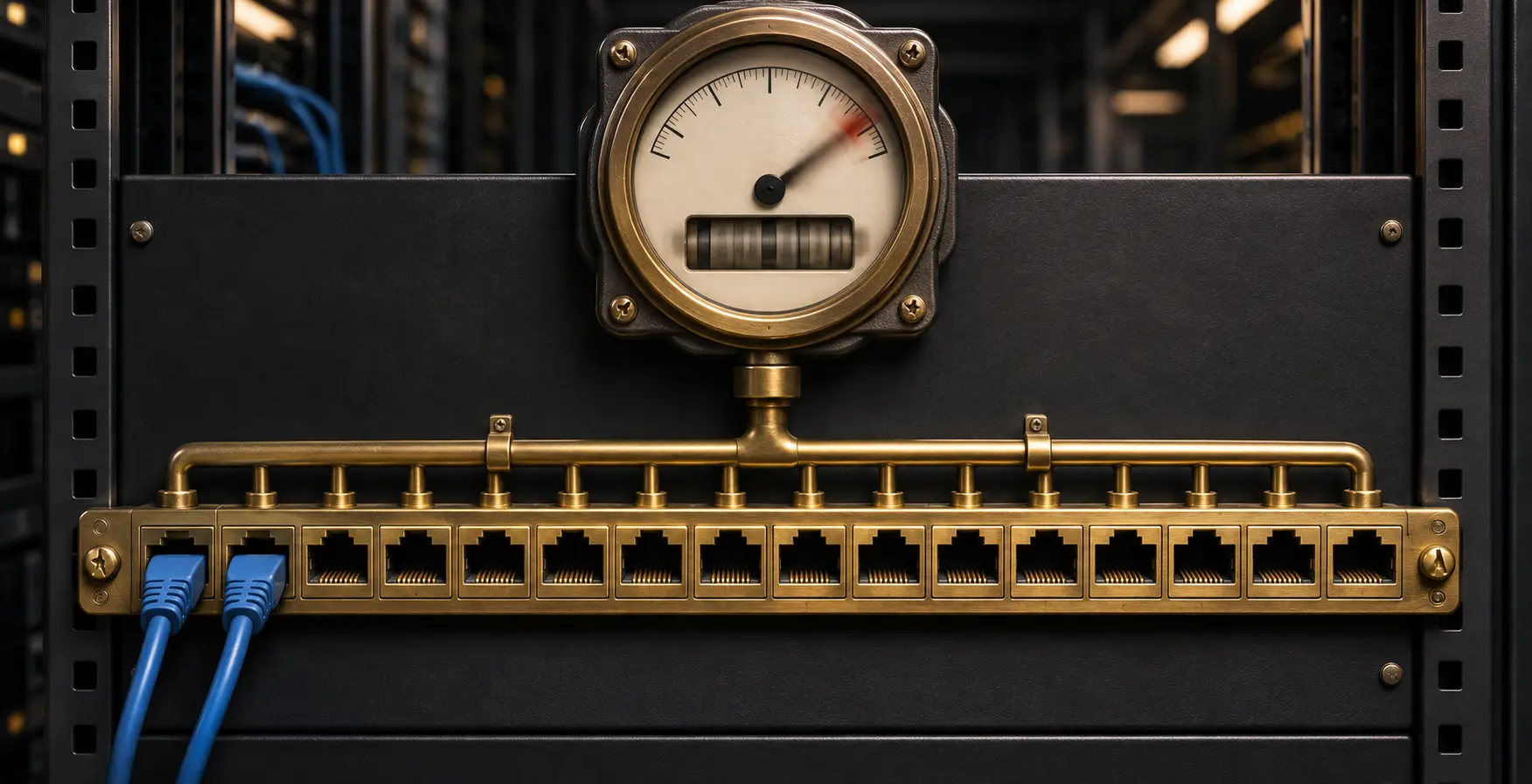
No customer's block size, allocation pattern or partner rules are public in these sources. The decision turns on a local count: which addresses truly need to appear as one range, how long that range must remain provisioned and who will maintain the allowlists. The expensive empty sockets are not a billing glitch. They are the reservation the customer bought.
Sources
Member Briefing
Deeper Profile Context
Sign in with the right membership level to unlock the full briefing and source notes.
Only for Strategic Circle
Strategic Circle
Open to all readers. Unlock profile briefings after joining and signing in.
Join Strategic CircleOnly for Leadership Alliance
Leadership Alliance
For qualified IP-asset owners and management; sign in to unlock alliance briefings.
Join Leadership Alliance