
- AI infrastructure refers to the underlying framework, technologies, and resources that enable the development, deployment, and operation of AI systems and applications. It serves as the backbone of any AI platform, providing the foundation for machine learning algorithms to process vast amounts of data and generate insights or predictions.
- AI infrastructure encompasses the hardware, software, and networking elements that empower organisations to effectively develop, deploy, and manage AI projects.
- While traditional IT infrastructure focuses on general-purpose computing needs for business operations, AI infrastructure is specifically tailored to handle the high computational demands and vast data processing requirements of AI algorithms.
AI infrastructure plays a crucial role in supporting the entire lifecycle of AI applications, from data collection and preprocessing to model training, deployment, and ongoing management.
What is AI infrastructure?
AI, or artificial intelligence, refers to the development of computer systems that can perform tasks that typically require human intelligence. These tasks include learning, reasoning, problem-solving, perception, and language understanding. AI technologies encompass machine learning (ML), natural language processing, computer vision, robotics, and other areas.
AI infrastructure refers to the underlying framework, technologies, and resources that enable the development, deployment, and operation of AI systems and applications. AI infrastructure encompasses the hardware, software, and networking elements that empower organisations to effectively develop, deploy, and manage AI projects.
The advancement of AI has been significant over the past few decades, driven by innovations in algorithms, computing power, and data availability, evolving from basic rule-based systems to sophisticated machine learning algorithms capable of learning from vast amounts of data. While AI infrastructure serves as the backbone of any AI platform, providing the foundation for machine learning algorithms to process vast amounts of data and generate insights or predictions.
A strong AI infrastructure is crucial for organisations to efficiently implement AI. The infrastructure supplies the essential resources for the development and deployment of AI initiatives, allowing organisations to harness the power of machine learning and big data to obtain insights and make data-driven decisions.
Also read: Microsoft commits to building cloud and AI infrastructure in Thailand
Components of AI infrastructure
AI infrastructure is the backbone of numerous AI and ML applications, providing the necessary computational power and resources to process often vast datasets. This infrastructure is a blend of hardware and software systems that function together and are optimised for AI tasks.
Hardware components
These hardware components are designed to handle the intensive computational tasks required by AI algorithms, especially deep learning models.
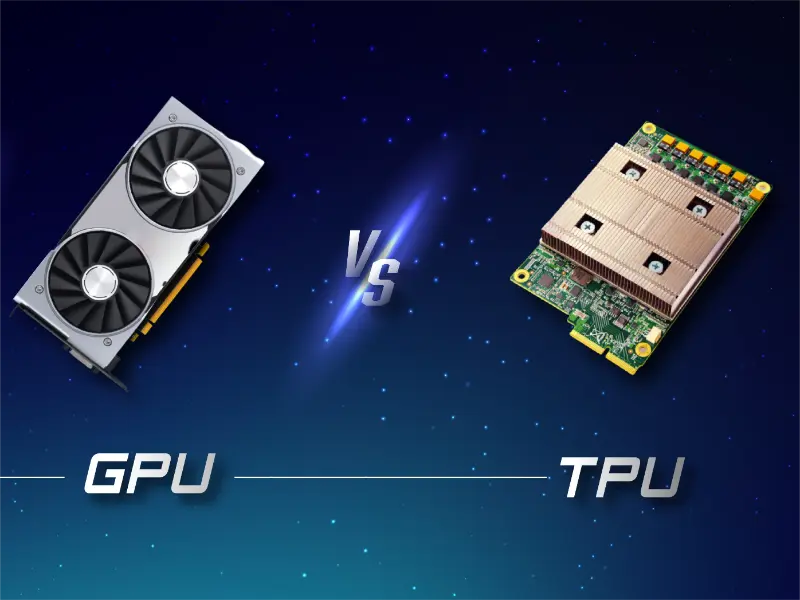
Graphics processing unit (GPU) servers
GPUs are at the heart of AI infrastructure, offering parallel processing capabilities that are ideal for the matrix and vector computations prevalent in AI workloads. GPU servers integrate GPUs within a server framework to train and run AI models due to their ability to handle multiple operations simultaneously. The use of GPU servers represents a crucial investment in AI infrastructure, combining the computational might of GPUs with the versatility and scalability of server environments to tackle the demands of AI workloads.
Tensor processing units (TPUs)
Developed specifically for machine learning tasks, TPUs are custom-designed by companies such as Google to accelerate tensor computations. They provide high throughput and low latency for AI computations, making them particularly effective for deep learning applications.
High-performance computing (HPC) systems
HPC systems are crucial for handling the immense computational demands of large-scale AI applications. They consist of powerful servers and clusters that can process large quantities of data quickly, essential for complex AI models and simulations.
AI accelerators
These are specialised hardware designed to efficiently process AI workloads. These accelerators, which include FPGAs (Field-Programmable Gate Arrays) and ASICs (Application-Specific Integrated Circuits), offer alternative solutions for speeding up AI computations. AI accelerators play a crucial role in diversifying the AI hardware ecosystem and offering more tailored options for different AI applications.
Software components
AI software components provide the necessary tools and libraries for building and training AI models. These frameworks offer APIs for data manipulation, model building, training, and inference.
Machine learning frameworks
These tools – for example, TensorFlow, PyTorch, or Keras – offer developers pre-built libraries and functions to create and train AI models. ML frameworks simplify the process of implementing complex algorithms and neural networks.
Data processing libraries
Libraries such as Pandas, NumPy, and SciPy are used for handling and processing large datasets, an integral part of AI model training and inference.
Scalable storage solutions
Efficient approaches to data storage and retrieval are critical for AI infrastructure. Cloud storage, data lakes, and distributed file systems are among the technologies that help to ensure large volumes of data are accessible and manageable for AI applications.
Networking infrastructure
High-speed and reliable networking infrastructure is crucial for AI systems, especially in distributed computing environments. This includes networking hardware like switches, routers, and interconnect technologies such as InfiniBand or Ethernet.
Also read: How to manage a network’s infrastructure?
The difference between traditional IT infra and AI infra
Unlike traditional IT infrastructure, the cornerstone of AI infrastructure lies in its ability to process and analyse large volumes of data efficiently, thereby enabling faster and more accurate decision-making, which is specifically tailored to handle the high computational demands and vast data processing requirements of AI algorithms.
While traditional IT infrastructure focuses on general-purpose computing needs for business operations, AI infrastructure is specialised to meet the unique requirements of artificial intelligence and machine learning workloads, including specialised hardware, software frameworks, data management, and networking capabilities.
AI infrastructure encompasses several critical considerations that organisations must address to effectively harness the power of artificial intelligence. One key factor is optimising AI workflows, which involves streamlining processes like data preprocessing, model training, and deployment to achieve accurate results efficiently. This optimisation not only reduces time-to-insight but also enhances overall productivity by ensuring swift model iteration and deployment.
Additionally, security and compliance are paramount in AI infrastructure due to the sensitive nature of AI applications and data. Robust security measures, including encryption and access controls, are necessary to protect data privacy and ensure compliance with regulations.
Integration with existing IT systems is also crucial for seamless operations, enabling organisations to leverage existing data and systems effectively. Lastly, future-proofing AI infrastructure involves investing in adaptable systems and staying informed about emerging trends to remain competitive and innovative in the rapidly evolving AI landscape.