Summary
- The Army-hosted test establishes a working Amazon Leo data link with a reported peak download above 400 Mbps.
- Amazon says mobile scenarios and integration with Army tactical networks are future tests; no procurement or fielding is announced.
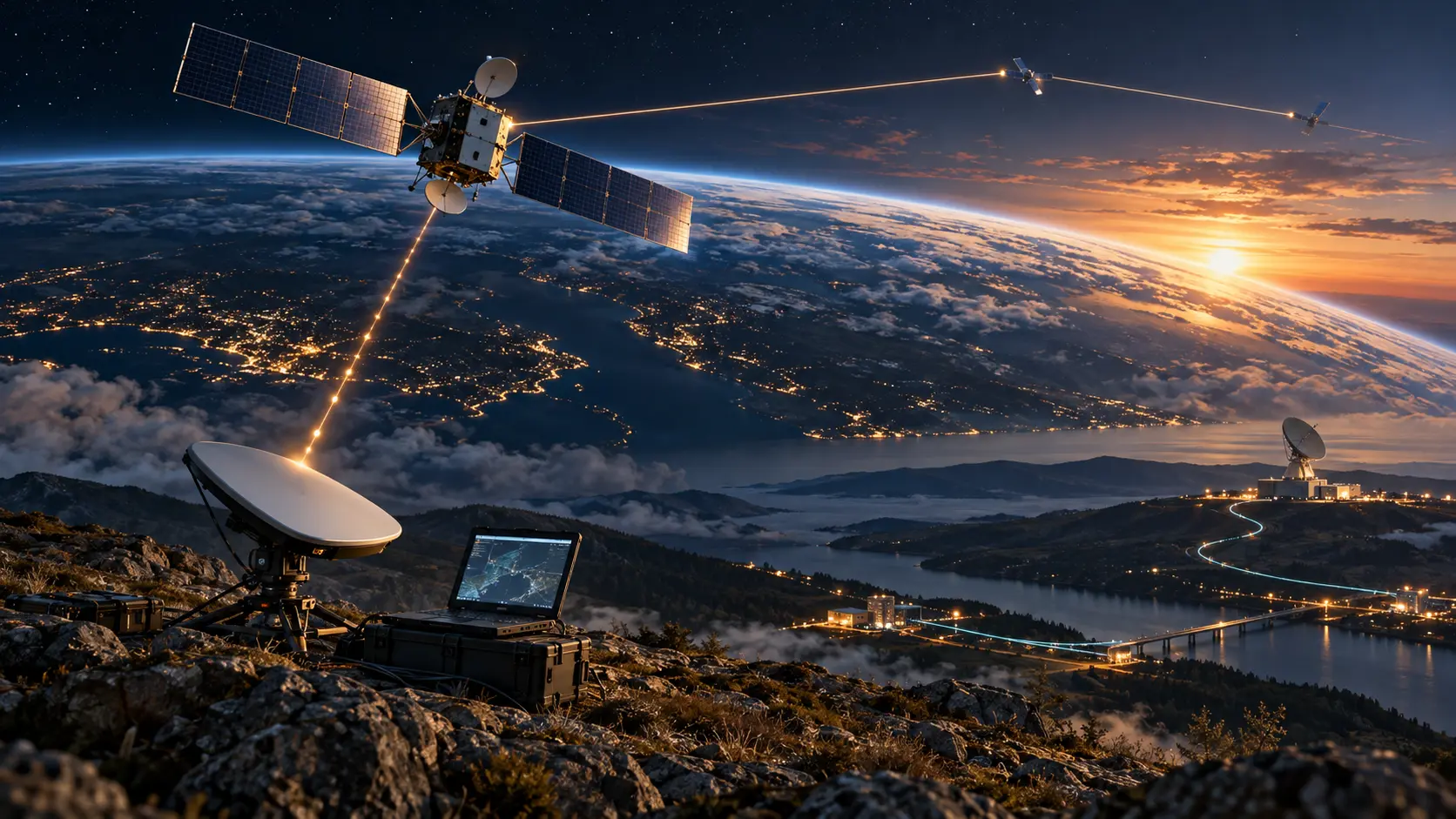
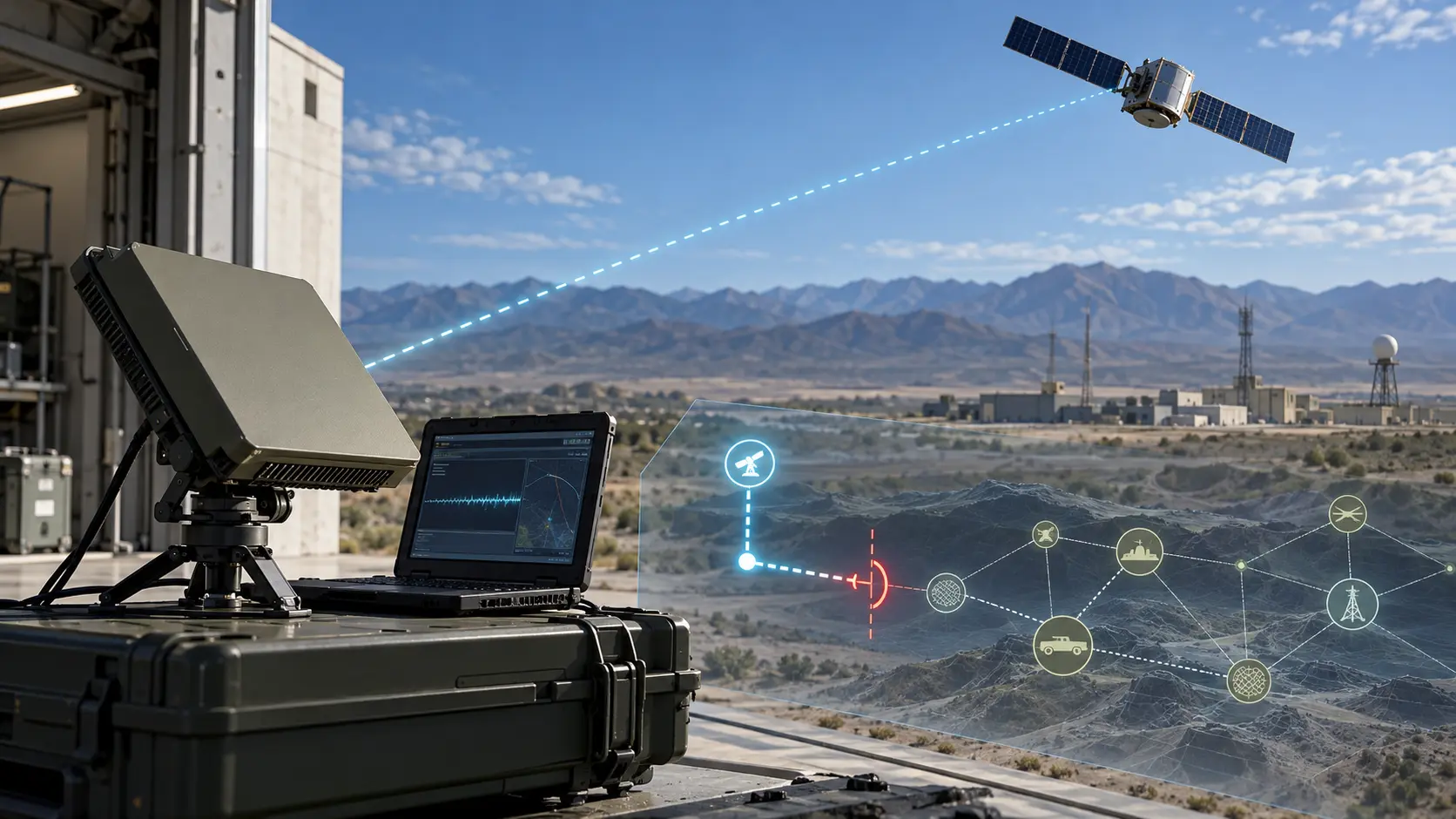
The U.S. Army’s DEVCOM C5ISR Center hosted the demonstration at Aberdeen Proving Ground, Maryland, Amazon said on 13 October. More than 30 Army representatives attended. The setup paired a Leo Pro phased-array antenna with a laptop; as Amazon Leo satellites passed overhead, the laptop sent and received data. Amazon reported peak download speeds above 400 Mbps.
That is a useful result with a narrow boundary. It shows that the demonstrated terminal could establish a data connection through Amazon Leo during the event. The figure is a peak reported by the company, not an independently published measurement, an average across a test period or a service-level commitment. Amazon did not state the test duration, number of runs, upload rate, latency, packet loss or how the equipment performed while moving.
Those omissions matter because the Army’s next question is not simply whether a satellite link can move data. A tactical capability must work with the systems and operating practices already used by units. Amazon says higher-speed connections, mobile scenarios and integration with existing Army tactical networks are planned for later tests. The company’s own description therefore places the Aberdeen event at an initial demonstration stage; it does not say that Leo has been integrated, procured or fielded by the Army.
C5ISR is an Army research and integration organization, not a purchasing decision in itself. The Center’s public profile describes work across command systems, sensors, space communications and terrestrial communications. Army reporting from 2020 also shows that C5ISR had been experimenting with commercial LEO, MEO and GEO satellite systems to assess potential tactical-network resilience. That history provides context for why the Center hosts such tests, but it does not establish that the 2026 demonstration was part of a named procurement program or passed an Army qualification standard.
The public evidence for this specific event is unusually concentrated: Amazon’s press-center release supplies the setup, attendance, peak-speed figure and proposed next steps. The Army’s role as host is clear, but the announcement does not include a separate Army test report, acceptance criteria or an evaluation from soldiers using the equipment in the field. Amazon also markets Leo for government and mission-critical connectivity; those product descriptions are not evidence that this test assessed security certification, classified-data handling, resistance to interference or operational availability.
The next public milestone should be judged by what changes in the test, not by another headline speed. Evidence of mobility should identify the terminal configuration and movement conditions. Interoperability should show how traffic enters and leaves existing Army networks, and what applications were exercised. Repeated results should report more than a peak: availability over time, latency distribution, loss and recovery behavior would make performance assessable. Security and procurement claims would need their own documentation.
Commercial satellite capacity can offer another route to connectivity where terrestrial access is limited. Its military value, however, depends on a chain that extends beyond the satellite pass: terminal power and placement, usable service at the point of need, network integration, support, security requirements and continuity when a link is interrupted. The October demonstration is one step in testing that chain. The evidence announced so far confirms a working connection and a future test agenda, not an operational Army capability.
- Amazon, “U.S. Army C5ISR completes successful demo of Amazon Leo satellite network,” 13 October 2026: https://press.aboutamazon.com/2026/10/u-s-army-c5isr-completes-successful-demo-of-amazon-leo-satellite-network
- U.S. Army DEVCOM C5ISR Center profile: https://devcom.army.mil/centerslabs/c5isr/
- U.S. Army, “Army field experiments to incorporate commercial satellite constellations,” 2020: https://www.army.mil/article/236205/army_field_experiments_to_incorporate_commercial_satellite_constellations
- Amazon Leo for Government: https://leo.amazon.com/government/
- Heng Lu, Note 69, “The Stability Fallacy” — editorial lens on service continuity, not evidence about this demonstration: https://heng.lu/the-stability-fallacy-in-the-rir-argument/
Member Briefing
Deeper Profile Context
Sign in with the right membership level to unlock the full briefing and source notes.
Only for Strategic Circle
Strategic Circle
Open to all readers. Unlock profile briefings after joining and signing in.
Join Strategic CircleOnly for Leadership Alliance
Leadership Alliance
For qualified IP-asset owners and management; sign in to unlock alliance briefings.
Join Leadership Alliance