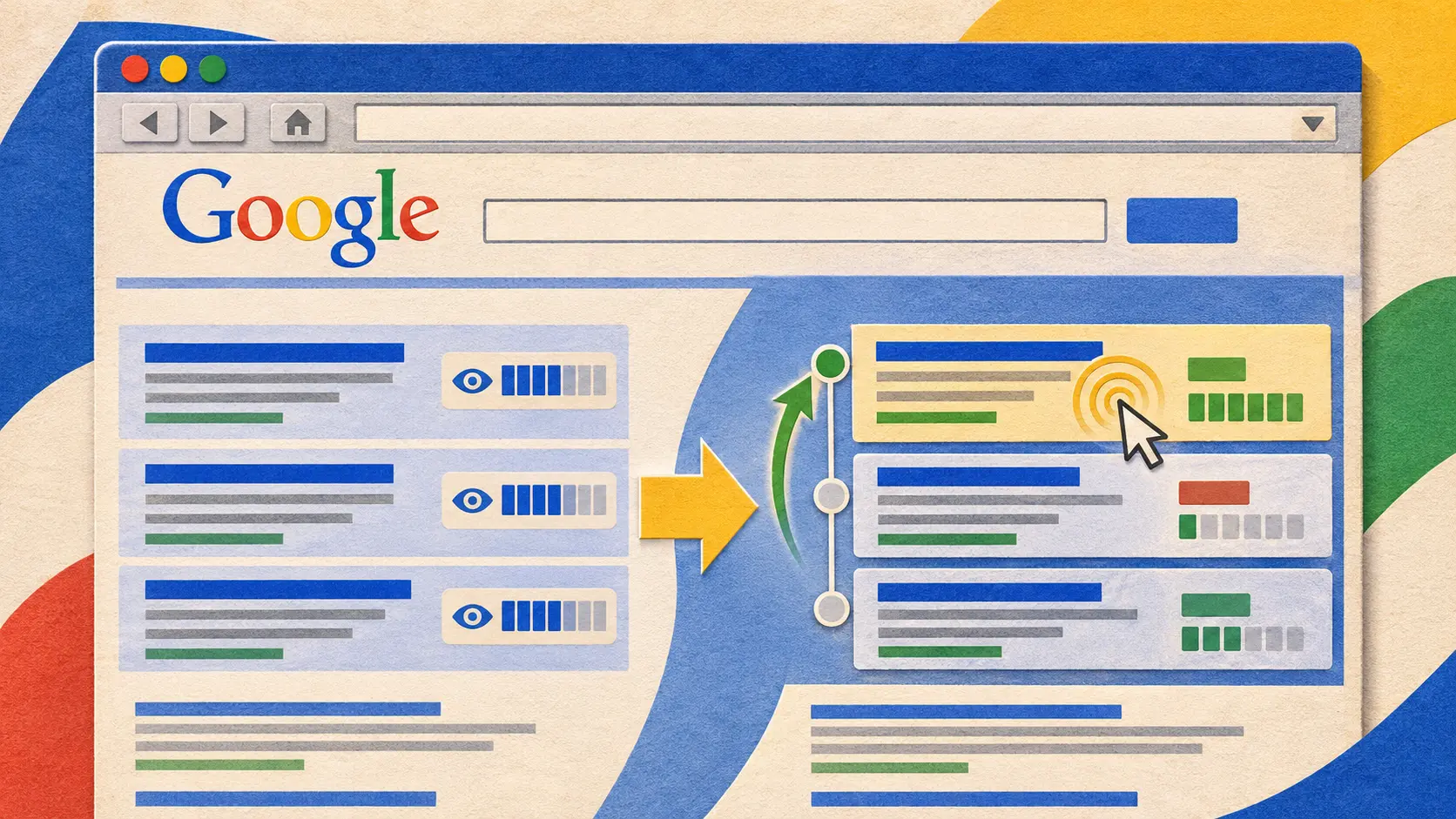
Summary
- Amazon's March 1997 IPO filing said its Associates program had more than 4,800 registered members at 31 December 1996. Publishers chose books for their own audiences and linked to Amazon, which handled orders and fulfillment and paid commission on certain orders.
- Amazon's FY1999 filing counted approximately 430,000 websites enrolled by 29 February 2000. That is a count of enrolled sites, not of active sellers, buyers or paid commissions.
- An Amazon Associates operating agreement filed as a 2004 SEC exhibit required special tagged links and defined a qualifying shopping session. Its 24-hour clock, checkout rules and payment conditions show a later documented version of the power Amazon retained over attribution.
A book list that ended at somebody else's counter
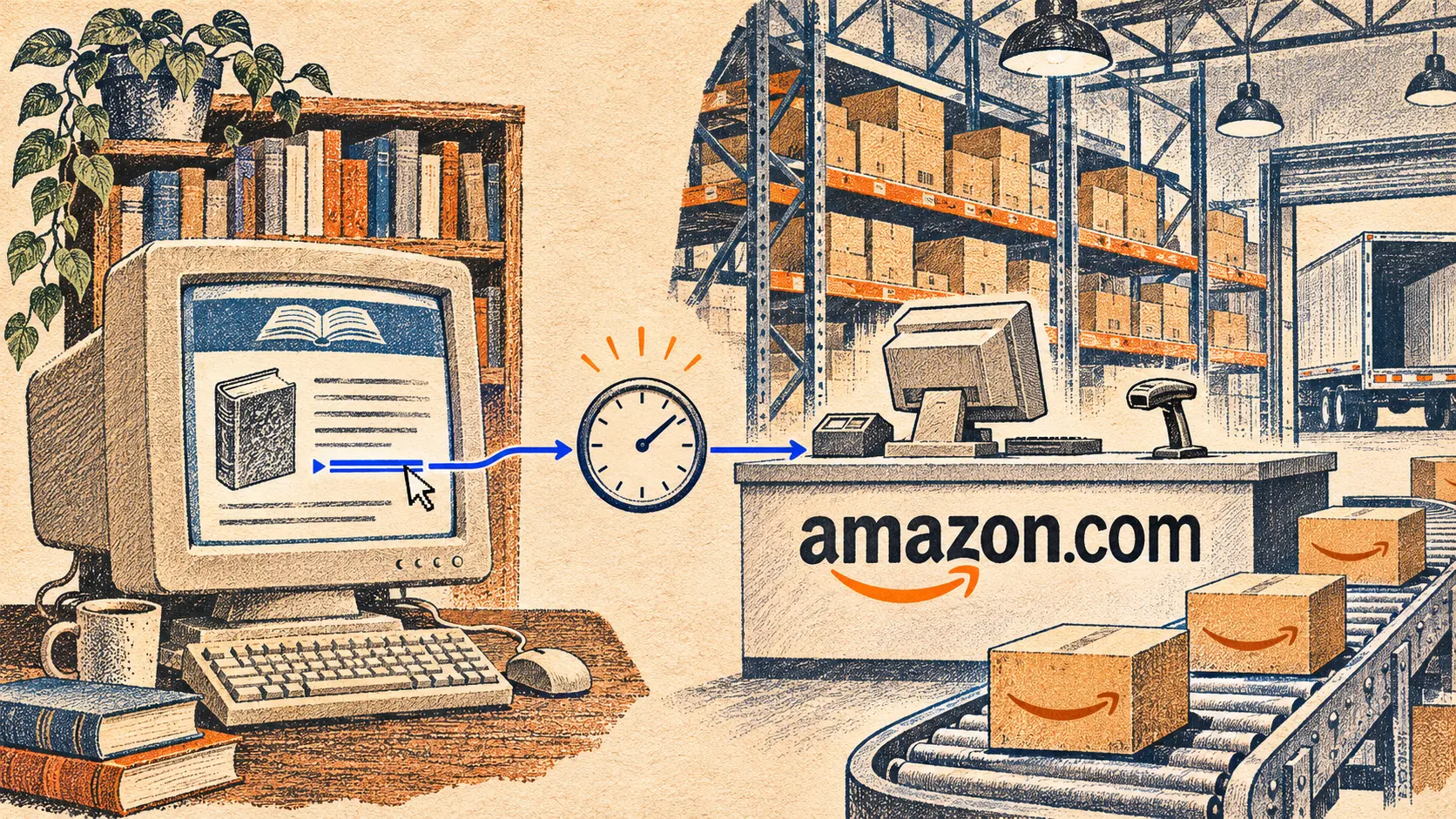
In a registration statement filed with the SEC on 24 March 1997, Amazon described a peculiar way to spread a bookstore. A publisher could recommend books to a specialized readership on its own website and embed a link to Amazon. A reader who followed it left the publisher's page, reached Amazon's catalog and could order there. Amazon handled ordering and fulfillment. The publisher avoided those costs and received a commission for certain orders.
This was a division of labor, not a miniature shop leased to every site. The outside publisher knew its audience and chose the books worth discussing. Amazon owned the catalog, the purchase path and the warehouse obligation. A recommendation could travel across thousands of independent pages; the transaction returned to one merchant. In the filing, more than 4,800 Associates were registered at 31 December 1996. The figure describes membership. It does not say how many sites sent a buyer or earned a dollar.
The scale was already large enough to change the question from “can a bookstore advertise on another page?” to “who receives credit when a recommendation becomes an order?” A banner bought by the thousand would pay the page for exposure. An Associate was promised a commission on certain resulting orders. The publisher had to trust the merchant's record of the journey from its book list to the checkout. That record was the invisible half of the arrangement.
Four hundred thirty thousand enrolled doors
Amazon's FY1999 Form 10-K, filed in March 2000, said approximately 430,000 websites had enrolled in Associates by 29 February 2000. The program now let associated sites make products available to their audiences while Amazon fulfilled the orders. Comparing this figure with the 4,800 registered members in the 1997 filing shows a remarkable expansion of the enrollment channel. It cannot be converted into 430,000 productive storefronts: neither filing supplies a cohort of active links, completed sales or commissions.
The mechanism mattered regardless of the missing conversion ledger. Website owners supplied discovery: a review, a list, a recommendation from someone their visitors already read. Amazon supplied stock information, ordering, payment and delivery. That split let Amazon appear beside a subject-specific audience without owning the page that assembled the audience. It also meant the publisher's advice had to pass through Amazon's commerce system before it became paid work.
There was an asymmetry in the word “Associate.” It suggested a partner, and for a publisher the commission could indeed be useful income. Yet the end customer bought from Amazon, not from the page that made the recommendation. The publisher could lead a reader to a book; it could not close the sale or audit Amazon's private transaction log from its own server. To know whether a link counted, the publisher needed the rules of the merchant's tracking system.
The tag, the clock and the order
A later original document shows those rules in unusually plain detail. An Amazon Associates Operating Agreement filed as an SEC exhibit in 2004 required publishers to use Amazon-provided tagged link formats. Properly formatted “Special Links” were the path by which activity could earn referral fees. A link that omitted the tag could send a real customer and still fail the agreement's accounting test. The tag identified the referral for the company that controlled the checkout.
The exhibited agreement set a qualifying session around the click. The customer had to follow a Special Link and add an eligible product to a cart during a session that ended after 24 hours, upon order, or when another Associate's Special Link was followed. Payment came only after order, payment and shipping. Certain items and routes were excluded. These are the terms of the agreement preserved in the 2004 exhibit; the 1997 filing establishes the early program but does not publish this precise 24-hour rule for 1996.
The same agreement assigned nearly everything after the click to Amazon: order forms, payments, cancellations, returns, customer service and reports on qualifying sales. Amazon could set product prices. It could change the terms by posting a revised agreement; a publisher who disliked the change could leave. The publisher remained responsible for its own page and recommendation, while Amazon decided what counted as a payable sale. The deal turned an outside article or book list into a route to a centralized till.
Even the time boundary had an economic meaning. A reader might discover a title on one site, think about it and later buy it through another route. The exhibited rules paid only when the documented path qualified. The counter was not measuring inspiration or cultural influence. It was measuring a transaction that Amazon's system could attribute under its contract. The distinction is the point: a publisher's work and a merchant's payable event were related, but not identical.
A distributed shelf with one receipt printer
The two early filings and the later contract belong to different dates, and together they show the durable bargain. In late 1996 Amazon had recruited thousands of recommenders. By February 2000 it had enrolled hundreds of thousands of sites. In the operating agreement preserved in 2004, the traceable link and the merchant's checkout rules governed whether any one recommendation generated a fee. The reach was distributed; the sales record stayed with Amazon.
This arrangement was a powerful way to turn independent knowledge into commerce. A specialist could know which book mattered to its readers better than a general storefront could. Amazon could still be the seller of record, set the price, fill the parcel and decide the attribution window. Its early program did not merely borrow traffic from the web. It put a commercial identity tag on the path from somebody else's judgment to its own cash register.
Sources
- Amazon.com March 1997 Form S-1, original SEC submission: more than 4,800 registered Associates at end-1996, outside book recommendations, links, Amazon fulfillment and commission on certain orders.
- Amazon.com FY1999 Form 10-K, original SEC submission: approximately 430,000 enrolled websites at 29 February 2000 and program role in distribution.
- Amazon Associates Operating Agreement, original SEC exhibit filed in 2004: tagged links, qualifying session, payment, customer and rule-change terms at the later documented point.
Member Briefing
Deeper Profile Context
Sign in with the right membership level to unlock the full briefing and source notes.
Only for Strategic Circle
Strategic Circle
Open to all readers. Unlock profile briefings after joining and signing in.
Join Strategic CircleOnly for Leadership Alliance
Leadership Alliance
For qualified IP-asset owners and management; sign in to unlock alliance briefings.
Join Leadership Alliance