

- Humanoid robots are rapidly closing the gap between human-like appearance and behavior, with advancements in AI and robotics offering increasingly lifelike interactions.
- Companies like Aheadform, Ti5Robot, Wisson Technology, Galaxea AI, and EX-Robot are leading the charge in developing robots with near-human capabilities, showing vast potential for applications across industries.
OUR TAKE
Humanoid AI is advancing rapidly, with companies like Aheadform, Ti5Robot, Galaxea AI, and EX-Robot pushing the boundaries of human-robot interaction. As technology continues to improve, the line between human and machine will blur, making humanoid AI not just a technological advancement but a societal inevitability.
–Jasmine Zhang, BTW reporter
The pursuit of creating humanoid robots—machines that look, move, and even “think” like humans—has long captured the imagination of both engineers and the public. While these creations are still far from perfectly mimicking human beings, recent developments have brought us closer than ever before. Companies across the globe are racing to develop robots with the ability to express emotions, perform complex tasks, and even engage in conversations that feel almost natural. But with every step closer, new challenges arise. So, how close are we really to perfecting humanoid AI?
The humanoid revolution: Why we crave human-like AI
The fascination with human-like robots is deeply rooted in culture and media, from sci-fi films like Blade Runner to popular TV shows such as Westworld. There’s a growing desire to create machines that can interact with humans on a personal level, responding not just with pre-programmed commands but with emotion and adaptability. The appeal of humanoid robots is also practical—machines that can mimic human appearance and behavior have the potential to blend seamlessly into environments like homes, hospitals, and workplaces.
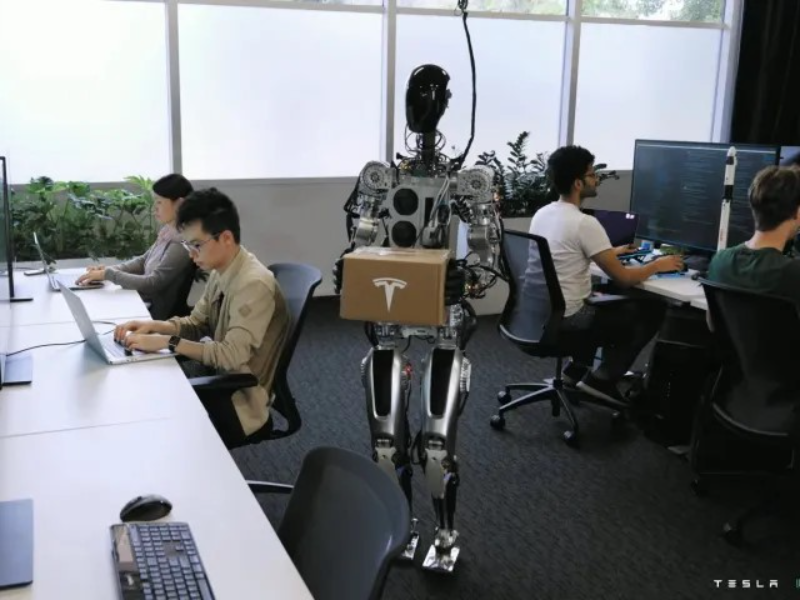
Major tech companies have taken up the challenge. From Tesla’s Optimus to Boston Dynamics’ Atlas, humanoid robots are being developed to assist in tasks that range from industrial work to personal care. The goal? To create robots that not only perform complex tasks but do so in a manner that feels intuitive to humans. Hanson Robotics, creators of Sophia, have focused on creating robots that display emotional intelligence, capable of engaging in meaningful conversations.
Also read: Who invented the humanoid robot?
Also read: Tesla moves toward humanoid robots and self-driving Taxis
From science fiction to reality: Breakthroughs in humanoid AI
Humanoid AI has seen significant progress in recent years, with several companies making strides in creating robots that closely mimic human appearance, behavior, and movement. Below, we explore some of the leading companies in this space and their innovations.
Aheadform: The ultra-realistic humanoid
“Our aim is not just to create robots that look human, but robots that understand human emotion and can respond in meaningful ways.”
Yuhang Hu, Founder of Aheadform
One of the leaders in hyper-realistic humanoid robotics is Aheadform, a company founded by Yuhang Hu, a Columbia University PhD. Aheadform’s robots are renowned for their ultra-realistic appearance, incorporating bionic skin and precise facial expressions that replicate human emotions. This level of realism is achieved through a combination of advanced AI, robotics, and material science, enabling their robots to engage in detailed facial expressions and gestures that feel natural to the observer.

The core technology behind the robot lies in its ability to predict and mirror human facial expressions in real-time. The robot utilises 26 actuators to control a wide range of facial movements and combines this hardware with two AI models: one that anticipates subtle changes in human facial expressions and another that translates those predictions into motor commands for the robot’s face. By training itself through self-modeling and observing human facial expressions frame-by-frame, the robot can synchronise its responses, creating more lifelike and natural interactions with humans.
While Aheadform’s robots excel in mimicking human appearance, there’s still a gap between the emotional depth these machines can offer and that of real humans. Their AI models are designed to recognise and respond to basic emotions, but the complexity of human emotions—such as empathy or spontaneous humor—is still beyond their reach. However, the potential applications for these robots are vast. In entertainment, for example, Aheadform’s robots could be integrated into the interactive otome game market, where emotional engagement with characters is a key aspect of gameplay.
Their lifelike appearance and ability to simulate emotional responses could provide players with a more immersive experience.

Beyond entertainment, Aheadform envisions their robots in customer service roles, where lifelike interactions with customers could improve satisfaction and engagement. In healthcare, these robots could serve as companions for the elderly, providing not just assistance but emotional support as well.
EX-Robot: Bringing humanoids to public spaces
EX-Robot focuses on creating humanoid robots designed for public-facing roles. Their robots, such as those used in the EX Future Science Museum, are interactive and capable of providing educational content in an engaging way. While these robots are less advanced in terms of movement and emotional intelligence than others mentioned, they excel in providing an approachable, user-friendly experience.
EX-Robot is advancing its research in creating life-like humanoid robots capable of multi-modal interaction. They are focusing on integrating large AI models and algorithms to enable robots to generate real-time conversations and emotional expressions. By enhancing cognitive abilities across sight, sound, touch, and even incorporating factors like temperature, pressure, and distance, EX-Robot’s goal is to equip their robots with human-like decision-making abilities.
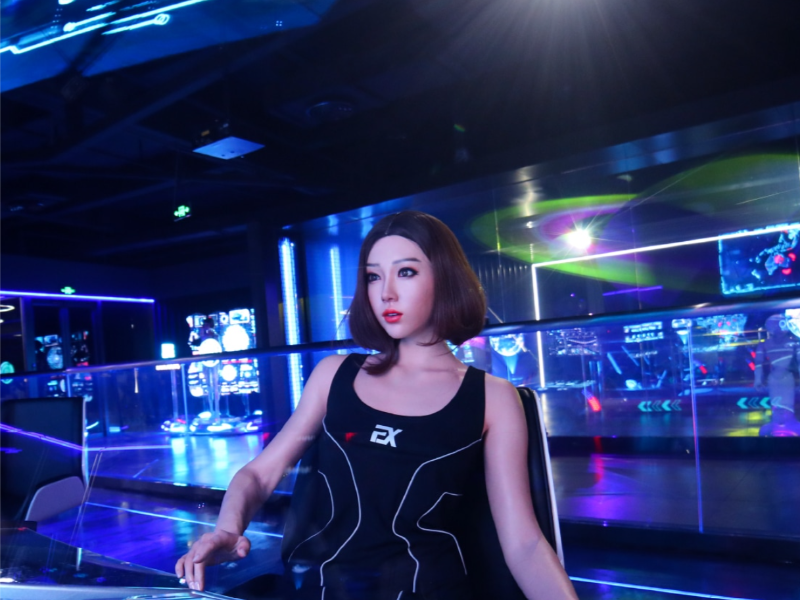
Currently, they have successfully implemented vision, hearing, and touch sensors, with future plans to develop an “electronic nose” for scent detection. Their bionic hand, designed to match human dimensions, enables the robots to interact with tools and entities designed for human use, making them more versatile in real-world applications.
EX-Robot sees a future where their humanoid machines can be used as interactive guides in public spaces like museums, airports, and shopping centres. Their current designs focus on making robots that are easy to use and approachable for the general public, even though they lack the complex emotional or cognitive capabilities of more advanced models.
Ti5Robot: Strength and precision in motion
While some companies focus on the visual aspect of humanoid robots, Ti5Robot has placed its emphasis on movement and strength. Their flagship models, Yao Guang and Mo Di, are designed for industrial and logistics applications. Ti5Robot has developed advanced robotics systems that allow their machines to perform high-torque tasks with fluid motion, closely replicating human strength and agility. These robots feature 7 degrees of freedom in their arms, along with high-torque leg joints, enabling them to move with remarkable precision.
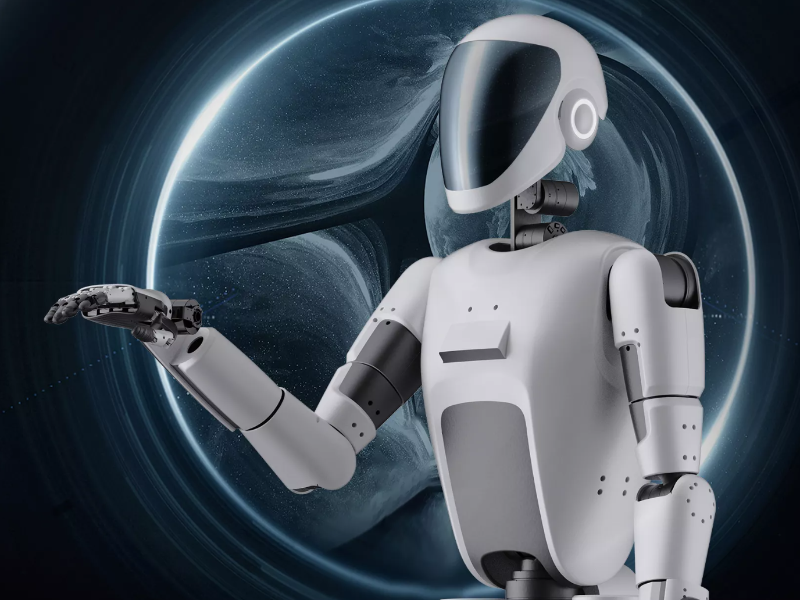
However, despite their advanced mechanical capabilities, Ti5Robot’s robots still lack the emotional and cognitive intelligence that would allow them to interact with humans beyond performing physical tasks. Current applications include lifting heavy loads, assembling products, and assisting in environments where human access is limited, such as hazardous environments or warehouses. In the future, Ti5Robot aims to integrate more advanced AI into their robots, allowing them to perform tasks that require decision-making and problem-solving, such as in healthcare or disaster relief.
Galaxea AI: Merging dexterity with intelligence
Galaxea AI has taken a different approach to humanoid robots, focusing on combining human-like dexterity with intelligent systems. Their R1 robot is designed to operate in a variety of environments, with dual lightweight arms that provide up to 14 degrees of freedom. These robots are capable of handling complex tasks that require fine motor skills, such as assembling delicate components or operating in environments that require a high level of precision.
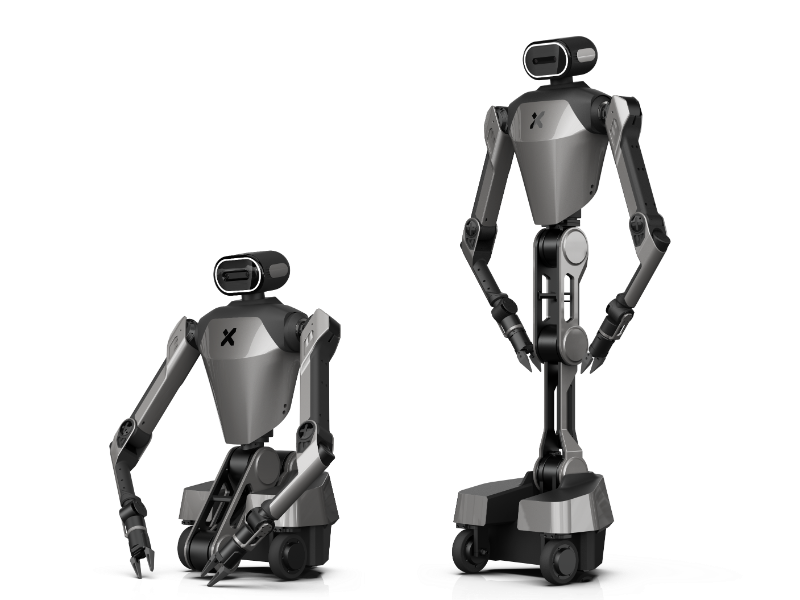
However, while Galaxea’s robots excel in mechanical tasks, they still lack the emotional intelligence needed for social interactions. Their potential applications include industries such as hospitality and retail, where robots like the R1 could be used to perform repetitive tasks like restocking shelves or delivering items to customers. In the future, Galaxea aims to enhance the social capabilities of their robots, allowing them to interact more naturally with humans.
Pop Quiz
Which company focuses on creating ultra-realistic robots with bionic skin and emotional expressions?
- A. Galaxea AI
- B. Aheadform
- C. Wisson Technology
- D. EX-Robot
The correct answer is at the bottom of the article.
The uncanny valley: Where humans meet robots—and feel uncomfortable
One of the most significant challenges in humanoid robotics is the Uncanny Valley effect. As robots become more human-like in appearance, people expect their behavior to match, but when it falls short—whether in facial expressions, body language, or emotional responses—it can create feelings of discomfort or even fear.
The Uncanny Valley is a major obstacle for companies like Aheadform, which aim to create hyper-realistic robots. Their robots’ appearances are so lifelike that even slight imperfections in movement or facial expressions can break the illusion, making users feel uneasy. Wisson Technology, on the other hand, avoids the Uncanny Valley by designing robots that look mechanical rather than human, thus sidestepping the issue entirely.
Research into the Uncanny Valley suggests that while people may prefer robots that are less human-like, many companies are still pushing the boundaries of humanoid design in the hopes of overcoming this psychological barrier. As robots become more integrated into daily life, their appearance and behavior will need to align more closely with human expectations.
“This phenomenon can be both an advantage and a drawback… but it will not stop the development of human-like robots. What matters more is creating robots that are smart and useful—users will abandon robots if they are not.”
Professor Astrid Rosenthal-von der Pütten
The future is (almost) human: Why humanoid AI won’t stop evolving
Despite the challenges posed by the Uncanny Valley and the complexities of replicating human emotions and interactions, the development of humanoid AI shows no signs of slowing down. This progression is driven by several factors, both technological and societal. First, the demand for robots that can seamlessly integrate into human environments, such as homes, hospitals, and workplaces, continues to grow. Humanoid robots have the potential to handle tasks that require human-like dexterity and decision-making, making them indispensable in sectors like healthcare, retail, and service industries.
Moreover, advancements in AI algorithms and multi-modal sensory systems are pushing the boundaries of what humanoid robots can achieve. Companies like Aheadform, Ti5Robot, and Wisson Technology are leading this charge by developing robots that can see, hear, and touch with increasing precision. As robots become better at interpreting human cues—like facial expressions, tone of voice, and even touch—they will be able to interact with people in more natural and intuitive ways.
As technology continues to improve, the line between human and machine will blur, making humanoid AI not just a technological advancement but a societal inevitability.
The correct answer is B, Aheadform.