Summary
- LACNIC presents IPv4 as a waiting list on its own front page, next to IPv6 deployment, transfers and legacy-resource management.
- NIC.br distributes IPv4, IPv6 and ASN inside Brazil and reports 60% of internet users with IPv6 enabled — a user share, not a provider, address or traffic share.
The most informative page in Brazil's address market is a menu. LACNIC's own front page puts five items in a row: a waiting list for receiving IPv4 addresses, IPv6 deployment, IP address transfers, legacy resource management, and allocation statistics https://www.lacnic.net/. Read that list as a mechanism rather than a navigation bar. A registry that still had stock would sell allocation as a service. This one publishes the queue as a headline alongside the alternative — deploy IPv6 — and the residual channels — transfer what exists, manage what is legacy.
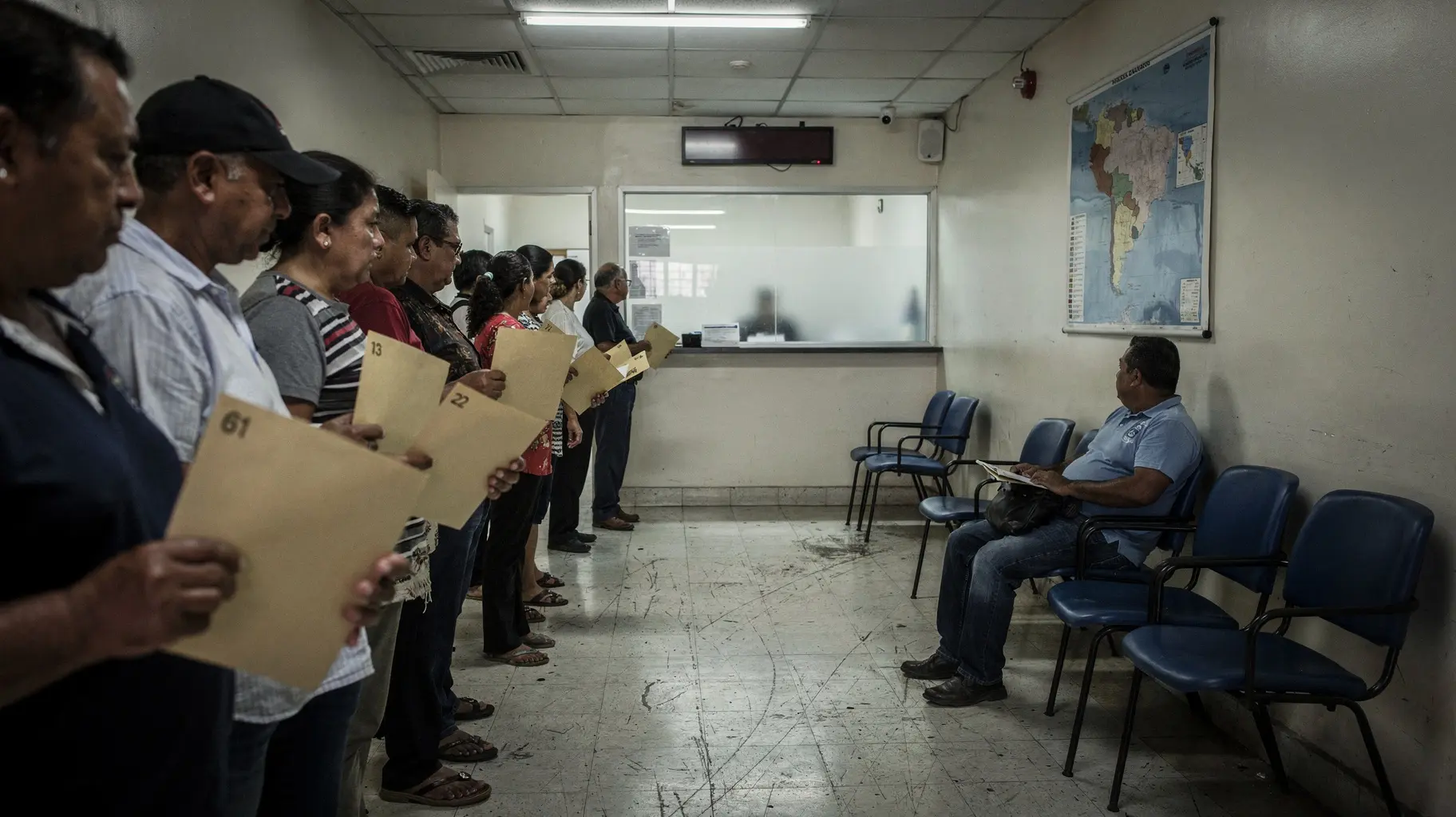
LACNIC states that free IPv4 addresses in its main stock are exhausted and that allocation now proceeds from a waiting list fed by returned or recovered blocks, under policies the community sets. That is a precise and narrow claim, and its narrowness is the point: the record documents queue access, not a price.
Nothing in it says what a block costs, how long the wait runs, or whether the wait is a permanent condition or a slow week. Scarcity that manifests as an order of service is still scarcity. It is simply scarcity that has not yet been priced on an invoice a small operator can hold.
Brazil adds a second institution, and conflating the two is the standard error in this story. NIC.br states that, in addition to registering and maintaining names under .br, it performs the distribution of IPv4 and IPv6 addresses and of Autonomous System Numbers in the country https://www.nic.br/. LACNIC is the regional registry for Latin America and the Caribbean. NIC.br and its Registro.br arm run national distribution and the country-code registry. The same page carries the number that gets quoted everywhere: NIC.br reports that Brazil reached a mark of 60% of internet users with IPv6 enabled. Keep the scope tied to the claim. That is 60% of users, not of providers, not of addresses, not of traffic. A country can be majority IPv6 at the eyeball and still need IPv4 for the parts that carry the bill — CGNAT pools, corporate tails, hosting, monitoring, peering sessions, the legacy gear nobody budgeted to replace.
The transition itself has an address. ipv6.br is an initiative of NIC.br and CGI.br offering technical guides, training courses, connectivity test tools, subnet calculators and infrastructure best practice for the IPv4-to-IPv6 move https://ipv6.br/. What that establishes is a capability channel: someone built a curriculum. What it does not establish is uptake, migration cost, or substitution of engineering hours for address purchases. Publishing a calculator is not evidence that the arithmetic was done.
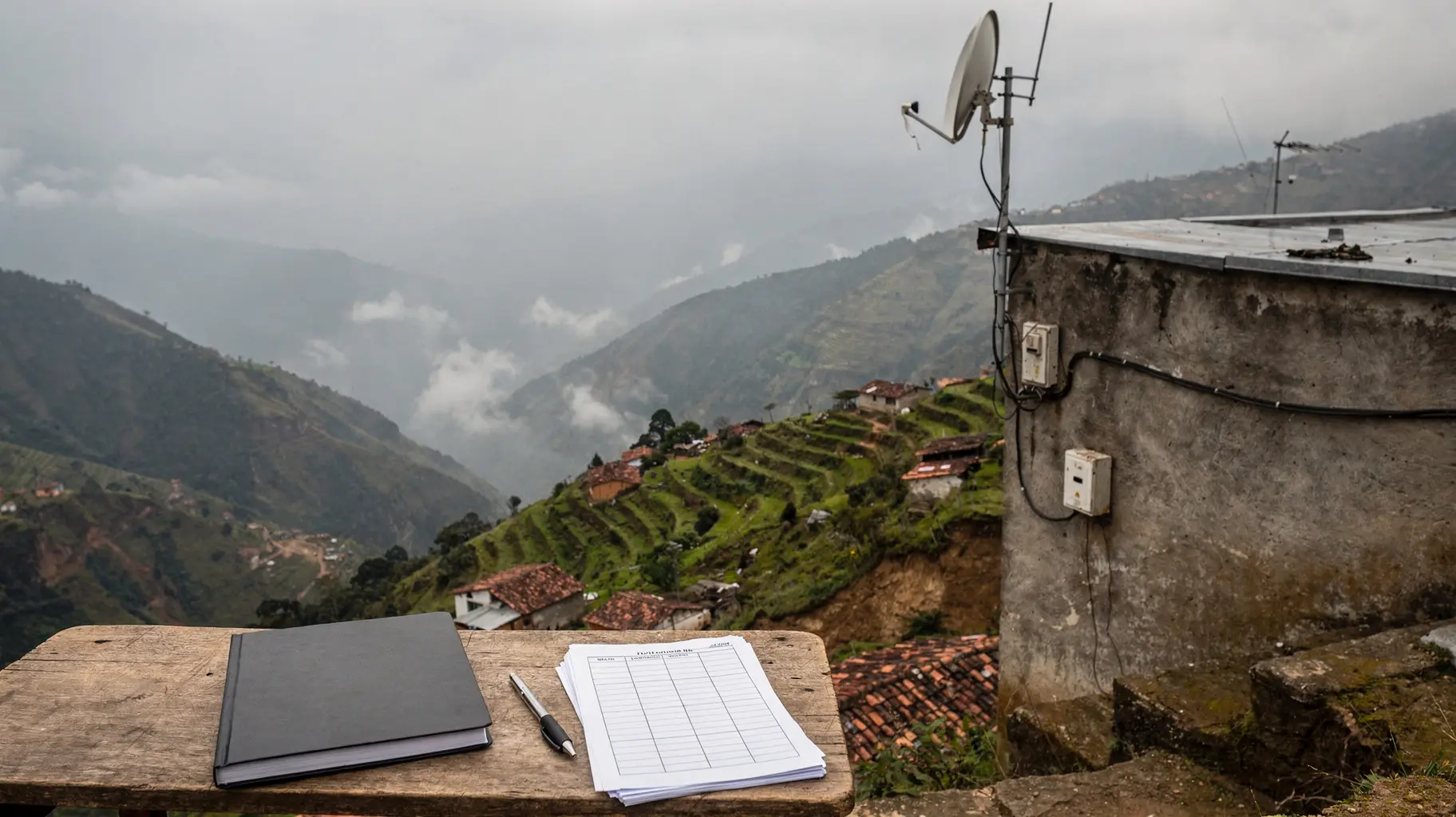
Now the market being adjusted. Anatel holds the sector data, including fixed broadband, and the Brazilian ecosystem is composed largely of Prestadores de Pequeno Porte — thousands of companies licensed to operate at regional and local level https://www.gov.br/anatel/. Thousands is the regulator's characterisation of licensed providers, not an association's membership count, and the distinction matters. A population of that shape has no procurement department, no treasury function that can warehouse speculative inventory, and no way to hedge a rationed input. For an operator with two engineers, a queue is not a trading strategy. It is a planning constraint that lands in the same calendar as the fibre build.
The association layer is where this story would normally acquire a protagonist, and here the record stops. Abrint is published as the Associação Brasileira de Provedores de Internet e Telecomunicações https://www.abrint.org.br/. Its own institutional pages could not be read in repeated attempts, so this article asserts no membership figure, no programme terms and no dated position on the queue or on IPv6. The gap is worth stating plainly because Abrint is precisely the institution that would convert thousands of small licensees into one counterparty on allocation policy. Missing material is an evidence limit. It is not proof that the association has nothing to say.
Which brings the finding into focus, and the finding is negative. Across the entire retained record there is no IPv4 price, no transfer price, no allocation volume and no waiting-list term. The honest description of how address scarcity reaches a Brazilian regional provider today is therefore administrative: queue position at a registry that holds no free stock, plus a transition obligation administered domestically by a body that publishes guides rather than allocations.
Latent capital scarcity is a defensible reading of that arrangement. It is not an observation. If a price exists, it lives in a market this record never touched.
The falsifiable tests are ordinary and checkable. Persistent long waits, unmet applications and thin return volumes would make the queue a structural condition and push the economics toward the balance sheet. Prompt service against steady returns would make it a timing problem dressed as scarcity. Visible transfer prices with real volume would settle the question that matters to a chief executive deciding whether to buy capacity or build around it.
Until one of those appears, the binding constraint on Brazil's regional providers is not a number on an invoice. It is where they stand in line, and how many engineering hours they can spend making the line matter less. That is a capital story with the capital still implicit — and it is the version the evidence actually supports.
Member Briefing
Deeper Trend Context
Sign in with the right membership level to unlock the full briefing and source notes.
Strategic Circle
A daily briefing in your language, built from changes we have verified.
Join for USD 20/monthCancel anytime.
Public reporting stays free. Member research, the daily briefing and the forum need a membership.