Summary
- 1 Verge Information Technology (Beijing) Co., Ltd. was the historical legal name of the PRC entity now identified in Hong Kong-listed-company disclosures as Youku Information Technology (Beijing) Co., Ltd. The name bridge is explicit, but the exact effective date of the rename is not established by the materials cited here. [S09]
- Youku's 2010-2015 SEC filings described 1 Verge Information as the website operator and Internet content provider through which Youku conducted online-video operations in China. They also described historical licenses held by the entity. Those dated disclosures do not establish that the same licenses remain current today. [S01][S02][S04][S05][S06]
- The entity was a variable interest entity, or consolidated affiliated entity, controlled through agreements rather than direct equity ownership by the offshore issuer or its wholly foreign-owned enterprise. Services, voting authority, equity pledges, purchase options, loans, trademark and domain arrangements each performed a different control function. [S01][S03][S05][S06]
- Public documents demonstrate operating roles in online video, advertising, value-added telecommunications, content-rights acquisition, entertainment ventures, artist cooperation, and later film and television production relationships. They do not disclose a company-specific reliability benchmark, current architecture, customer production result, revenue, user count, or performance outcome. [S07][S08][S10][S11][S12]
- The most important costs are structural: supervising a legally separate operator, maintaining licenses and contracts, integrating technical and business responsibilities across entities, handling regulatory and content exceptions, preserving continuity through organizational change, and managing dependencies that the operating entity could not freely replace. The filings themselves warned that contractual control might be less effective than direct ownership and that enforcement could be costly and uncertain. [S02][S03][S04][S05][S06]
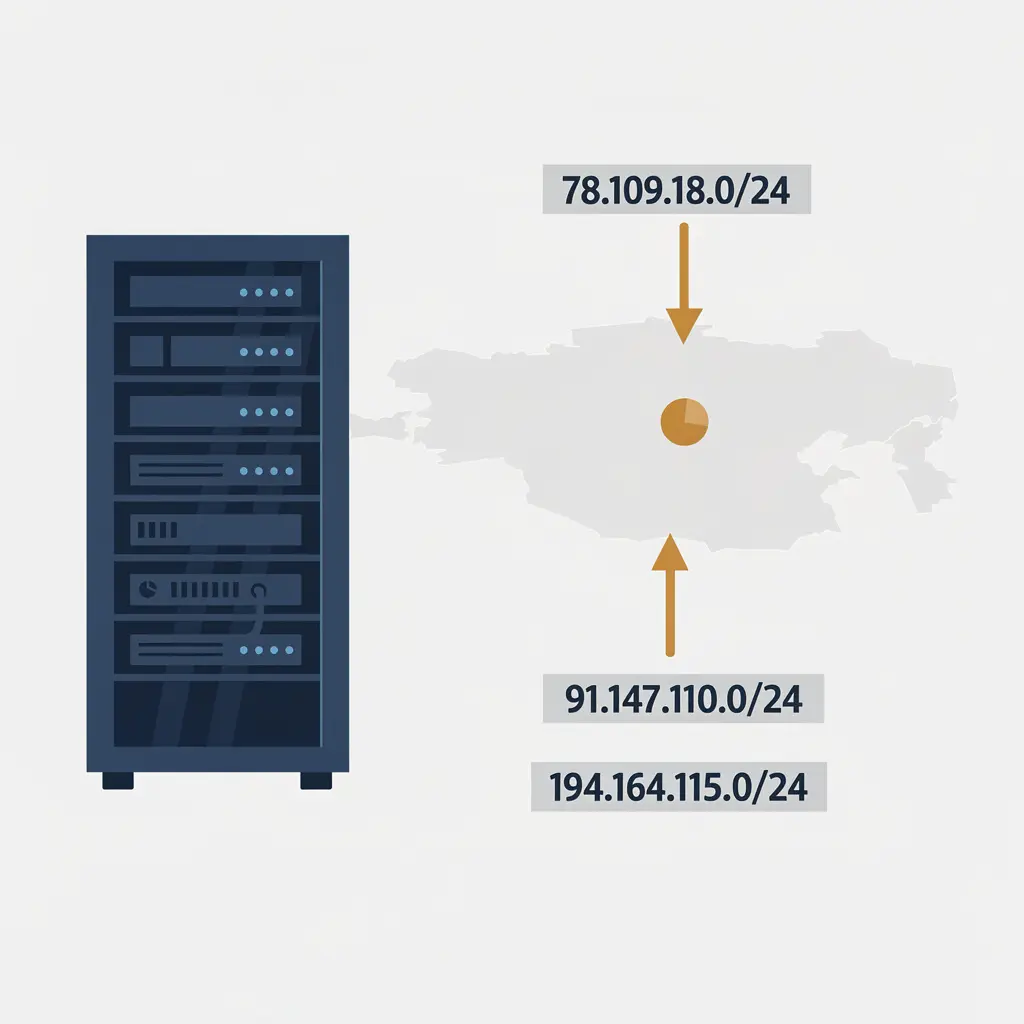
- APNIC's record for AS131233 associates the former company name with the registry label YOUKU-AS-AP and an Alibaba abuse contact. It is evidence of a network-resource registration, not evidence that the autonomous system currently announces routes, carries traffic, hosts Youku services, or achieves any level of network performance. [S13]
Identity comes before interpretation
The name "1 Verge Information Technology" is easy to misread because several similarly named companies appeared in Youku's historical corporate structure. The company examined here is 1 Verge Information Technology (Beijing) Co., Ltd., called 1Verge Information in Youku's SEC filings. It was not 1Verge Internet Technology (Beijing) Co., Ltd., the wholly foreign-owned enterprise that entered into contractual arrangements with it. It was not 1Verge Inc., the Cayman Islands company that later changed its name to Youku.com Inc. It was also not Youku.com Inc., Youku Tudou Inc., Beijing Youku Technology Co., Ltd., or Alibaba Group Holding Limited. [S01][S03][S04]
That separation is not a naming technicality. The entities had different legal positions and different duties. The offshore issuer raised capital and reported consolidated results. 1Verge Internet supplied technical and consulting services and held contractual rights. 1Verge Information was the domestically owned operating company through which the Youku website and regulated activities were conducted. When those roles are merged into one generic "Youku" label, it becomes impossible to explain who held a license, who supplied a service, who had voting authority, or why a contract existed. [S01][S02][S03]
The historical and current names can be connected without guesswork. Alibaba Pictures' annual report for the period ended March 31, 2018 identifies Youku Information Technology (Beijing) Co., Ltd. as formerly known as 1 Verge Information Technology (Beijing) Co., Ltd. and describes it as a consolidated entity of Alibaba Group Holding. [S09] YH Entertainment's later disclosures use the Youku Information Technology name, identify the company as a consolidated affiliated entity in the Youku structure, say it was established in the PRC on February 24, 2006, and describe its principal activity as operation of an online-video platform.
[S10][S11] A 2025 Damai Entertainment announcement again defines Youku Information as a PRC limited-liability company and a consolidated entity of Alibaba Holding. [S12]
These documents establish continuity across the old and new names. They do not provide a primary company-registry notice that fixes the legal effective date of the change. The responsible formulation is therefore that the company formerly known as 1 Verge Information Technology is identified in later disclosures as Youku Information Technology. It would be stronger than the evidence to give a precise rename date or to assume that every public registry changed at the same time.
The distinction between a consolidated entity and a directly owned subsidiary matters just as much. Consolidation can result from contractual control. It does not, by itself, prove direct equity ownership. The SEC filings were explicit that the offshore company did not hold equity interests in its consolidated affiliated entities and relied on contracts to exercise control and obtain economic benefits. [S01][S02] Later Hong Kong disclosures continued to use "consolidated entity" or "consolidated affiliated entity" language.
[S07][S09][S10][S11][S12] Those descriptions support a continuing group relationship, but they should not be rewritten as a simple parent-subsidiary equity chain unless a specific source establishes that chain.
A domestic operating entity built for a regulated perimeter
Youku's 2010 registration statement describes 1Verge Information as a PRC company established on February 24, 2006. In a corporate-structure table, its activities were listed as online-video sharing and distribution, online advertising, and mobile value-added services. The same filing said Youku launched its website in December 2006 and conducted online-video operations in China primarily through 1Verge Information because PRC rules limited foreign ownership in value-added telecommunications. [S01]
The operating perimeter was not merely administrative. The filing described 1Verge Information as Youku's website operator and Internet content provider and said it held permits from telecommunications and broadcast-media authorities, along with ancillary permissions needed for online-video operations. [S01] The final prospectus repeated the licensed operating role and explained that the business depended on contractual arrangements because the offshore issuer could not directly occupy the same regulated position. [S02]
Later filings added date-specific detail. Youku Tudou's 2012 Form 20-F, filed in 2013, said 1Verge Information, as the ICP operator of youku.com, held a value-added telecommunications business operating license and an ICP license. It also said the entity had obtained an Internet audio/video program transmission license on July 8, 2008, which was upgraded in 2009 and again in 2010, with the disclosed upgraded term running from December 15, 2010 to December 15, 2013. [S04]
Those facts describe historical capability. They show that the entity was assigned the licensed role needed to operate the website and related services during the periods covered by the filings. They do not prove that a 2010-2013 license remains valid, that a successor license has identical scope, or that every permission later migrated without change. Current licensing would require current regulator evidence specific to the entity and activity. No such conclusion should be drawn from an old annual report.
The filings also explain why the holder's legal identity mattered. The regulatory discussion said the holder of a value-added telecommunications license or its shareholders had to own relevant domain names and trademarks, possess necessary facilities for approved operations, and maintain network and Internet security. [S04] Yet the contractual documents also described 1Verge Internet licensing trademarks and domain names to 1Verge Information.
[S01][S03] That combination reveals a continuing coordination burden: legal requirements, registered rights, facilities, technical services, and day-to-day operation had to remain aligned across separate companies.
Capability at this layer was therefore institutional as well as technical. Operating an online-video platform required a domestic company able to hold permissions, make regulated representations, maintain the website, participate in content controls, contract for rights, and connect those duties to the wider Youku organization. [S01][S02][S04][S07] The filings demonstrate that such a role was documented. They do not disclose whether the platform met a particular availability target, how often regulatory exceptions occurred, or how quickly an operational incident was resolved.
That is the first critical evidence boundary. A license establishes authorization within a defined period and scope. It is not a reliability certificate. A corporate role establishes responsibility. It is not proof that every responsibility was performed without error. A regulated operating perimeter can support a service while simultaneously creating dependencies: renewal dates, ownership requirements, content duties, security obligations, facility requirements, and regulator interpretations can all constrain how the technology is changed.
Contractual control was a system of different mechanisms
Calling 1Verge Information a VIE can conceal more than it explains. The SEC materials describe a group of agreements, each aimed at a different legal or economic function. The structure did not rely on one master promise. It combined operating instructions, voting authority, security interests, purchase options, financing, technical services, and intellectual-property licenses. [S01][S03][S05][S06]
The business-operations agreement addressed management. The 2010 filing said 1Verge Information had to appoint people designated by 1Verge Internet as directors or executive director, general manager, chief financial officer, and other senior officers. It also had to accept proposals from 1Verge Internet concerning employment, daily business, and financial management. Transactions that could materially affect assets, obligations, rights, or operations required prior written consent. [S01]
The power of attorney addressed shareholder voting. The historical shareholders irrevocably appointed the person designated by 1Verge Internet to vote on matters requiring shareholder approval. [S01][S03] This created an avenue for directing formal corporate decisions without transferring the shares. It also created an operational dependency: the authority had to remain valid, properly documented, understood by the relevant parties, and usable when a decision was required.
The equity pledge addressed security and enforcement. The shareholders pledged their equity interests to 1Verge Internet to secure performance of obligations under the loan, service, trademark, domain, and equity-option arrangements. The 2011 Form 20-F said the pledges had been registered with the competent local branch of the State Administration for Industry and Commerce. [S03] A registered pledge strengthened the contractual position, but it was still an enforcement mechanism rather than ordinary direct ownership.
The equity-option agreements addressed a possible future transfer. They gave 1Verge Internet or designated representatives an option to acquire all or part of the shareholders' equity when and to the extent permitted by PRC law, at the lowest price then allowed, linked to cancellation of loans. [S01][S03][S04] The existence of an option did not mean that the equity had already been acquired. The filings tied exercise to regulatory conditions and made clear that foreign-investment restrictions were central to the decision.
The loan agreements connected financing to that possible transfer. The 2011 filing described interest-free loans in several tranches totaling RMB20 million to 1Verge Information's shareholders for initial capitalization and later financial requirements. Repayment was to come from proceeds of a sale of the equity to 1Verge Internet or its designees. [S03] The 2012 Form 20-F and the later annual-report materials described amendments and extensions to these arrangements. [S04][S05][S06] This was not ordinary customer financing. It was part of the control framework and capital structure.
The exclusive technical and consulting services agreement addressed day-to-day technical dependence and the transfer of economic benefits. The 2010 filing said 1Verge Internet had the exclusive right to provide services that included maintenance of the machine room and website, maintenance of the office network, and integrated website security. 1Verge Information could not hire another provider for covered services without prior written consent, and intellectual property resulting from the agreement belonged exclusively to 1Verge Internet. The service fee followed a formula that 1Verge Internet could adjust at its discretion. [S01]
The 2014 annual-report materials described the services agreement as a ten-year arrangement with automatic extension, limited termination rights for 1Verge Information, and a 2012 amendment allowing 1Verge Internet to transfer rights or obligations to a third party after informing 1Verge Information. [S05][S06] These terms demonstrate a strong documented control capability. They also make the dependency unusually visible. The operator responsible for the licensed surface could not freely substitute a technical-services provider for the covered work.
Finally, trademark and domain-name licenses addressed rights needed by the operating company. The 2010 filing described non-exclusive, non-transferable licenses without sublicense rights and said the parties would review the agreements at three-month intervals to decide whether amendments were needed. [S01][S02] That review cadence is a small but revealing maintenance obligation. The legal ability to use a brand or domain could not be treated as a permanent background fact; it was governed by documents that needed continuing attention.
Together, these agreements explain how an offshore group could direct and consolidate a domestically owned operator. They also explain why "controlled" is not synonymous with "owned." Control had to be assembled and maintained through multiple contractual paths. A missed renewal, ineffective authorization, unregistered pledge, disputed fee, inconsistent instruction, or regulatory change could affect a different part of the structure.
The structure also complicates exception handling. A technology outage might require operational action by 1Verge Information and technical action by 1Verge Internet. A content issue could involve the licensed website operator, a rights counterparty, and group management. A governance decision might depend on shareholder voting authority. A financing need might engage the loan and option arrangements. The public documents do not reveal how often such cases arose or how they were handled. They do show why clear escalation, records, and role boundaries would be necessary.
Control creates supervision and dependency costs
The SEC prospectus did not portray contractual control as equivalent to direct ownership. It warned that the arrangements might be less effective, that the consolidated affiliated entities or their shareholders might fail to follow instructions, and that legal remedies such as specific performance or injunctive relief might not be effective. [S02] The later Form 20-F repeated that enforcement could require substantial cost and resources and could be time-consuming. [S03][S04][S05][S06]
This is direct evidence of contractual-control risk, not an inference from the VIE label. The filings also identified possible conflicts involving individual shareholders, uncertainty in the PRC legal system, regulatory discretion over whether the arrangements complied with licensing and other requirements, and potential tax scrutiny if related-party arrangements were not treated as arm's-length. [S02][S03] None of these warnings proves that a breach, adverse ruling, or tax adjustment occurred. They define failure modes the issuer considered material enough to disclose.
Supervision cost begins with keeping the documents coherent. The business-operations agreement, powers of attorney, equity pledges, options, loans, service terms, and intellectual-property licenses had different parties, durations, triggers, and remedies. Amendments in 2010 and 2012 show that the framework was not static. [S01][S04][S05][S06] Someone had to track the operative version, confirm signatures and registrations, monitor expiration and extension terms, and ensure that daily behavior remained consistent with the contractual allocation.
Supervision also had a human layer. The operating company had formal shareholders and managers, while the contractual framework directed voting and management decisions. That means control depended not only on text but on people acting under the text. A disagreement, departure, incapacity, conflict, or misunderstanding could become an exception requiring legal and operational coordination. The historical risk disclosures explicitly noted that shareholders might not act in the issuer's interests. [S02][S03][S05][S06]
Dependency cost appears most clearly in the exclusive services agreement. The same arrangement that gave 1Verge Internet control over technical and consulting services restricted 1Verge Information's ability to engage another provider. [S01][S04][S06] Exclusivity can create consistency and concentrate knowledge, but it can also narrow substitution options. If a covered service needs urgent repair, the operator's response depends on the designated provider's capacity, access, and priorities. If rights or obligations are assigned, operational knowledge and accountability must follow the assignment.
The filings do not state that these dependencies caused an outage or weakened service. They show that the dependency existed by design. Evaluating it requires questions that public filings do not answer: Which tasks were covered by exclusivity? What response obligations existed? How were changes approved? Could the operator act directly in an emergency? How were access credentials and system knowledge maintained? What continuity measures applied if personnel or contractors changed?
Contractual control also adds a translation cost between legal authority and technical action. A management proposal does not patch a server. A power of attorney does not resolve a content-rights dispute. An equity pledge does not restore a website. Each legal mechanism must connect to operational procedures, technical access, accountable people, and records of action. A structure can be legally comprehensive while still depending on ordinary maintenance work.
Operating capability went beyond holding licenses
The early filings place 1Verge Information at the center of the Youku operating surface: website operator, Internet content provider, holder of disclosed permissions, and participant in online video, advertising, and mobile value-added services. [S01][S02][S04] A 2017 Alibaba Pictures announcement later described the company as principally engaged in online-video services, online advertising, and value-added telecommunications on the Youku platform. [S07] YH Entertainment's 2024 announcement described the current-name company as principally engaged in operation of an online-video platform. [S11]
These descriptions span different reporting contexts and dates, but they support continuity in the broad operating role. The entity was not presented merely as a passive rights holder. It appeared as the company through which platform activity and related transactions were conducted.
The boundaries of that capability remain important. "Operation of an online-video platform" is an organizational role, not a technical architecture. It does not reveal where applications ran, which company employed every engineer, how traffic was routed, which software components were used, or how operational responsibility was divided in every period. The technical-services agreements show that 1Verge Internet supplied major maintenance and security services, so it would be especially misleading to attribute every technical capability directly to 1Verge Information. [S01][S03][S06]
The same caution applies to reliability. A company can hold the operator role and still rely on other entities, networks, vendors, content suppliers, regulators, and staff. None of the cited documents publishes an availability history, latency distribution, failure rate, recovery time, capacity test, security assessment, or independent service benchmark for 1Verge Information. The record supports capability and responsibility, not a quantified quality score.
Customer production outcomes are even less visible. The materials do not identify external customers using a defined product and then measure their results. Platform users, advertisers, rights sellers, artists, and production partners occupy different relationships. A connected transaction shows that parties contracted; it does not show that an end user received a better experience or that a partner earned a particular return.
This three-part distinction keeps the profile accurate. Documented capability includes operating a regulated platform, contracting for content, participating in ventures, and maintaining group relationships. Reliability evidence would show how consistently those functions worked under specified conditions. Customer production outcomes would show what a named counterparty or user achieved because of the service. The first category is well represented. The second and third are not publicly established by these materials.
Content rights turned platform operation into transaction work
Online-video operation depends on more than software and licenses. It also depends on rights, delivery, attribution, payment, and the ability to handle content-specific conditions. Two Alibaba Pictures announcements from 2017 show 1Verge Information acting in that commercial and operational layer. [S07][S08]
In August 2017, Alibaba Pictures disclosed two joint-venture arrangements with Zhejiang Dongyang. Under the variety-show agreement, Zhejiang Dongyang was to contribute RMB19.89 million and 1 Verge Information RMB19.11 million, for 51% and 49% interests respectively, to support variety-show production and distribution. Under the talent-agency agreement, Zhejiang Dongyang was to contribute RMB15 million and 1 Verge Information RMB35 million, for 30% and 70% interests respectively. [S07] The later annual report recorded subsequent establishment and restructuring details, including changes in the talent-agency venture's ownership. [S09]
These are documented corporate actions, but the committed amounts should not be confused with revenue, profit, or audience response. A capital commitment says what a party agreed to invest under the disclosed terms. It does not establish how efficiently the venture operated or whether content succeeded. The announcement itself described strategic expectations; those expectations are not measured production outcomes.
A separate August 2017 announcement concerned online dissemination rights for a 30-episode drama. It stated a tax-inclusive consideration of RMB23.1 million, divided into three cash installments: 20% after the agreement, 50% after receipt of all episode records, and 30% after the first complete broadcast on 1 Verge Information's platform. The agreement also gave the seller a right to repurchase the online dissemination rights for RMB1 after the tenth anniversary of first broadcast. [S08]
The payment milestones reveal integration work at the content boundary. "Receipt" had to be confirmed. A complete set of episode records had to be delivered. First complete broadcast had to be identifiable. Rights, files, schedules, platform readiness, and finance therefore had to agree on state. A failure in any one layer could delay a milestone or create a dispute: incomplete media, mismatched episode identifiers, delivery-format problems, rights metadata errors, scheduling changes, or uncertainty over whether a qualifying broadcast occurred.
These are analytical failure categories, not reported incidents. The announcement does not say that delivery failed or that payment was disputed. Its terms show which operational facts mattered to payment. That is valuable because it makes exception handling concrete. When a contract ties money to digital delivery and broadcast events, evidence about those events becomes part of the product operation.
The same announcement described a three-year business-cooperation agreement covering distribution, advertising opportunities, and attribution rights, with a stated maximum annual transaction amount and revenue-sharing percentages under specified conditions. [S08] Again, the structure demonstrates commercial capability and the need for accounting rules. It does not establish actual revenue, profitability, viewing levels, advertising effectiveness, or customer satisfaction.
Later disclosures show continuity and change
The 2018 Alibaba Pictures annual report supplies the explicit bridge from the old legal name to Youku Information Technology. It also reports the 2017 transactions under the new name, which helps connect the historical operator to later group activity. [S09] The evidence supports continuity of the legal entity across a rename, but it also shows that the entity's relationships evolved through investments, transfers, and revised venture governance.
YH Entertainment's 2022 annual report describes a business-cooperation framework involving Youku Information Technology and artist-engagement services. It reported aggregate fees of approximately RMB37.3 million for 2022 and described pricing by reference to factors such as promotion form and period, artist popularity, comparable engagement rates, quality and impact, workload, and duration. [S10] Those are counterparty-reported transaction facts. They are not the company's revenue and do not prove a platform outcome.
YH Entertainment's May 2024 announcement supplies a longer historical series for that cooperation: RMB62.3 million in 2021, RMB37.3 million in 2022, RMB17.8 million in 2023, and RMB2.94 million for the first three months of 2024. It set a proposed cap of RMB22 million for the period from May 3 to December 31, 2024. [S11] Actual historical transaction amounts and a future cap are different categories. The cap is a governance ceiling based on expectations, not evidence that the full amount would be spent.
The announcement also said the framework could be renewed for no more than three years subject to negotiation and applicable rules. [S11] That qualification illustrates ongoing maintenance at a commercial boundary. Even a long relationship requires renegotiation, pricing review, internal controls, and compliance with connected-transaction requirements. The service does not continue merely because the technology platform remains available.
A 2025 Damai Entertainment announcement referred to a March 31, 2025 framework agreement with Youku Information for equipment rental and production services relating to films and television dramas. It also described related rental and commissioned-service arrangements elsewhere in the Alibaba entertainment structure and the aggregation of annual caps for connected-transaction reporting. [S12] The source confirms a current-name group relationship and a production-services context. It does not establish that 1 Verge Information owned facilities, directly performed every service, or achieved a particular production result.
Taken together, the 2017-2025 disclosures show a company whose documented role expanded beyond the earliest description of a licensed website operator. It appeared in content acquisition, joint ventures, artist engagement, equipment rental, and production-service relationships. [S07][S08][S09][S10][S11][S12] This is evidence of operational breadth. Breadth also increases the number of interfaces that must be supervised: rights, artists, production teams, affiliated companies, payment conditions, annual caps, and platform schedules.
Migration is an organizational problem before it is a technical one
The public record contains several kinds of change: a legal-name transition, movement from the pre-merger Youku structure into Youku Tudou, later incorporation into Alibaba's entertainment ecosystem, amendments to the VIE agreements, and evolving connected transactions. [S04][S05][S06][S07][S09][S12] None of these documents supplies a system-migration plan. They nevertheless show why migration cannot be reduced to copying data or changing a logo.
A legal-name change requires contracts, licenses, invoices, bank details, registries, counterparties, network records, certificates, and internal systems to identify the same entity consistently. APNIC still presents the former English name in the AS131233 registrant record while later listed-company disclosures use Youku Information Technology. [S09][S11][S12][S13] That mismatch is not proof of an error. It is an example of how public records can update at different times and preserve historical labels.
Contract amendments create another migration surface. When a services agreement changes assignment rights or a loan term changes, legal records and operational practice must move together. [S04][S05][S06] A team that follows an outdated agreement could apply the wrong approval route or misunderstand who may direct work. Conversely, a legal amendment that is not translated into access, escalation, and documentation may have little practical effect.
Business migration also affects counterparties. A rights seller or artist-management company needs to know which legal entity signs, which platform receives material, how acceptance is confirmed, what invoice details apply, and who resolves an exception. The 2017 dissemination-rights milestones demonstrate how identity, delivery, broadcast, and payment meet. [S08] Later connected-transaction frameworks add pricing policies, caps, annual review, and renewal requirements. [S10][S11][S12]
Maintenance during migration must cover both ordinary and exceptional cases. Ordinary work includes updating names, permissions, templates, contact points, and reporting categories. Exceptional work includes a document using an old name, a registry retaining a historical address, a counterparty submitting to the wrong entity, or a system recognizing one identifier but not another. No source quantifies these events. The documentary history shows why they are plausible control problems that an evaluator should test.
The greatest migration risk is not necessarily a dramatic outage. It can be silent inconsistency. A service continues, but an agreement points to an old party; a payment is posted under a former name; a rights record does not follow a new identifier; an abuse report reaches an outdated contact; or a team assumes that consolidation equals direct ownership. Silent inconsistency can persist because each individual system appears functional.
Maintenance and exception handling are part of the product
The technical-services agreement expressly mentioned maintenance of the machine room, website, office network, and integrated security services. [S01][S03] This is unusually direct evidence that maintenance was part of the organizational design. It also shows that the licensed operator and the technical provider were separate participants.
Maintenance has at least three dimensions here. The first is technical: websites, networks, facilities, security controls, and access have to be kept operational. The second is contractual: terms, fees, powers, pledges, licenses, and renewal dates have to remain effective and aligned. The third is regulatory: the licensed activity must continue to fit applicable ownership, facility, content, and security requirements. [S01][S02][S03][S04]
An exception can cross all three. Suppose a platform change affects where a service is hosted. That is a technical change, but historical regulatory language linked approved operations to facilities and license coverage. [S04] It may also engage the exclusive service provider and require management approval. The sources do not describe such an event. They show why a change-control process would need legal and operational review, not just a deployment decision.
Content creates its own exception path. The platform role required handling rights and regulated material. [S01][S02][S04][S08] A missing file can look like a technical fault, a delivery failure, a scheduling issue, or a rights problem depending on context. Effective handling requires evidence about what was delivered, what was accepted, what could legally be shown, and which contractual milestone was reached.
Connected transactions add financial exceptions. Historical amounts, future caps, pricing policies, and related-party status must be distinguished. [S10][S11][S12] A cap is not an invoice. An approved framework is not a completed service. A forecast is not an outcome. Systems and reviewers must preserve those distinctions to avoid misreporting.
The public documents do not reveal staffing, support hours, ticket volumes, incident categories, escalation times, change-failure rates, or maintenance cost. They should not be used to invent such figures. Their contribution is more basic and more defensible: they identify maintenance domains and contractual interfaces where exceptions would need accountable handling.
Reliability evidence is limited
Reliability means repeatable performance under defined conditions. For an online-video operator, useful evidence might include scoped availability, playback-failure rates, content-processing accuracy, security-event handling, recovery time, change-failure rates, or successful completion of contract-linked delivery milestones. None of the 13 cited sources provides an independent, company-specific benchmark of that kind.
SEC filings are valuable because they describe structure, permissions, agreements, and risks in detail. They are not product test reports. Hong Kong exchange disclosures are valuable because they document transactions, counterparties, terms, and group relationships. They are not platform reliability studies. APNIC is authoritative for the registry fields it publishes. It is not a traffic monitor. [S01][S02][S03][S04][S05][S06][S07][S08][S09][S10][S11][S12][S13]
Some documented arrangements may support reliability. Exclusive technical services can concentrate responsibility. Periodic review of intellectual-property licenses can reduce ambiguity. Management controls can clarify authority. A registered equity pledge can strengthen contractual enforcement. Connected-transaction review can discipline pricing and approvals. None of these mechanisms guarantees technical availability or correct operation.
The filings also identify reasons reliability could be hard to sustain: contractual control might not be as effective as ownership, shareholders might not follow instructions, legal remedies could be uncertain, regulatory interpretations could change, and dependencies could require restructuring. [S02][S03][S04][S05][S06] These are disclosed risk categories, not evidence that service failed. They show why reliability assessment must include governance and legal dependencies as well as software.
A buyer, partner, or analyst would need current, scoped evidence to go further. That could include the exact contracting entity, current licenses, responsibility matrices, maintenance and support terms, change procedures, incident definitions, continuity arrangements, security controls, and measured results for the relevant service. Without those materials, a general reliability conclusion would be speculation.
Customer production outcomes are not established
The transaction record is substantial, but transaction evidence is not customer-outcome evidence. The 2017 joint ventures show planned capital and ownership. [S07] The dissemination-rights agreement shows a price, installment conditions, and cooperation terms. [S08] The YH Entertainment disclosures show artist-service fees and pricing factors. [S10][S11] The 2025 announcement shows production-related service frameworks. [S12]
None demonstrates that a named external customer achieved higher revenue, lower cost, better audience engagement, faster production, improved reliability, or another measured result because of 1 Verge Information's technology. It would be equally unsupported to assign Youku group user counts, advertising revenue, viewing traffic, or market share to this legal entity. Group figures describe a wider business and may combine services, assets, and entities.
Outcomes also require a baseline and a causal link. A drama can be delivered and broadcast without proving commercial success. An artist can participate in a promotion without proving that the platform caused a measurable gain. A venture can be formed without proving that it met its strategic purpose. The available disclosures do not provide the methods needed to make those claims.
The absence of public outcome evidence is not a finding that outcomes were poor. It is a limit on what can be reported. The company's documented record is strongest on operating role and contractual relationships. Reliability and outcome claims require a different kind of evidence.
AS131233 is a registry fact, not a performance claim
APNIC's RDAP record for AS131233 lists the name YOUKU-AS-AP, identifies 1 Verge Information Technology (Beijing) Co. Ltd. as the registrant, and shows a Beijing address associated with the historical Youku disclosures. It also includes an Alibaba abuse contact. [S13] Those fields independently connect the former name to a network-resource and the later group context.
The record does not show that AS131233 is currently originating routes. It does not disclose traffic volume, uptime, peering, facilities, server count, security quality, or which applications use the resource. A registry update or validated abuse address confirms administration of contact information, not network performance.
This is another instance of evidence layers. Registration supports identity and administrative association. Routing data would be needed to establish current announcement behavior. Operational measurements would be needed to establish reliability. Application evidence would be needed to link the autonomous system to a particular production service. The APNIC record should not be made to answer questions outside its scope.
The cost map is wider than the platform
The documentary record supports a qualitative cost map even though it does not provide a total-cost study.
Supervision cost includes managing formal authority across separate legal entities. The business-operations agreement, powers of attorney, equity pledges, options, loans, and service agreements had to remain effective and consistent. [S01][S03][S05][S06] The failure mode is not only breach. It includes ambiguity about which person or document has authority, an outdated amendment, or a decision made without the required consent.
Integration cost includes connecting the licensed operator to the technical provider, rights counterparties, group companies, financial processes, and regulators. The rights-transfer milestones show integration around files, acceptance, broadcast, and payment. [S08] The failure mode can be a mismatch in identifiers, format, timing, responsibility, or evidence.
Maintenance cost includes website, machine-room, network, security, contractual, licensing, and reporting work. [S01][S03][S04] The failure mode can be an unreviewed change, expired term, inconsistent registry, unavailable specialist, or dependency that cannot be substituted quickly.
Exception-handling cost includes investigating content, delivery, payment, authority, rights, and regulatory questions that do not follow the normal path. It requires gathering facts from more than one organization. The failure mode is slow or incorrect routing: a legal issue treated as a technical ticket, a delivery issue treated as a rights dispute, or a payment condition evaluated without platform evidence.
Migration cost includes preserving entity identity and obligations through renames, mergers, group transitions, contract amendments, and evolving business relationships. [S04][S05][S06][S09][S11][S12][S13] The failure mode is silent divergence between legal records, operational systems, contracts, and public registries.
Contractual-control cost includes monitoring obligations and retaining the ability to enforce them. The filings warned that enforcement could consume substantial time and resources and that legal remedies might not be fully effective. [S02][S03][S04][S05][S06] The failure mode is a gap between contractual entitlement and practical control.
Dependency cost includes reliance on the exclusive technical-services provider, individual shareholders, designated voting representatives, permissions, content suppliers, and group counterparties. [S01][S02][S03][S08] The failure mode is concentration: when a critical participant cannot act, the operating entity may have limited alternatives.
These costs are not evidence that the structure was unsuccessful. They are work created by the structure. Some may have been justified by regulatory constraints or by the benefits of centralized expertise. The sources do not quantify labor, spending, or return. A credible economic assessment would need current contracts, staffing, incident records, service measures, and comparable alternatives.
A disciplined view of 1 Verge Information Technology
The company formerly known as 1 Verge Information Technology was a consequential operating entity in Youku's history. SEC filings place it inside the regulated perimeter of online video and value-added telecommunications. They document a layered contractual framework that gave other Youku entities management authority, voting control, security interests, purchase options, economic rights, and technical-service exclusivity without direct equity ownership. [S01][S02][S03][S04][S05][S06]
Later exchange disclosures connect the old name to Youku Information Technology and show the entity participating in content rights, joint ventures, artist engagement, equipment rental, and production-service relationships within the Alibaba entertainment context. [S07][S08][S09][S10][S11][S12] APNIC independently preserves the old name in a network-resource registry. [S13]
That record supports a strong capability conclusion: the entity had a documented operating role and the legal-commercial machinery to participate in a complex online-video business. It does not support claims about current licenses, architecture, AI, users, revenue, customers, market share, network traffic, uptime, benchmarks, or production outcomes.
The most useful insight is therefore not a feature claim. It is that the technology depended on maintained relationships. Licenses had to align with the operating company. Technical work crossed an exclusive service boundary. Content rights linked files and broadcasts to payment. Control depended on agreements and people. Later business frameworks required pricing, caps, review, and renewal. A rename and group transition had to preserve identity across systems and registries.
Reliability in such an environment is not simply whether software runs. It is whether legal authority, technical responsibility, content rights, operational evidence, and exception handling remain synchronized when conditions change. The public materials show the architecture of that responsibility. They do not measure its results.
Sources
- [S01] Youku.com Inc., Form F-1, filed November 15, 2010: https://www.sec.gov/Archives/edgar/data/1442596/000119312510260191/df1.htm
- [S02] Youku.com Inc., final prospectus on Form 424B4, filed December 8, 2010: https://www.sec.gov/Archives/edgar/data/1442596/000119312510276426/d424b4.htm
- [S03] Youku.com Inc., 2011 annual report on Form 20-F: https://www.sec.gov/Archives/edgar/data/1442596/000119312511162665/d20f.htm
- [S04] Youku Tudou Inc., 2012 annual report on Form 20-F, filed in 2013: https://www.sec.gov/Archives/edgar/data/1442596/000110465913033581/a13-8872_120f.htm
- [S05] Youku Tudou Inc., 2014 annual report on Form 20-F, filed in 2015: https://www.sec.gov/Archives/edgar/data/1442596/000110465915030850/a15-2907_120f.htm
- [S06] Youku Tudou Inc., annual report and contractual exhibits: https://media.corporate-ir.net/media_files/IROL/24/241246/YoukuTudouInc.pdf
- [S07] Alibaba Pictures Group Limited, connected-transaction announcement, August 9, 2017: https://www1.hkexnews.hk/listedco/listconews/sehk/2017/0809/ltn20170809755.pdf
- [S08] Alibaba Pictures Group Limited, online-dissemination-rights announcement, August 17, 2017: https://www.hkexnews.hk/listedco/listconews/sehk/2017/0817/LTN201708171053.pdf
- [S09] Alibaba Pictures Group Limited, annual report for the period ended March 31, 2018: https://www1.hkexnews.hk/listedco/listconews/sehk/2018/0727/ltn20180727864.pdf
- [S10] YH Entertainment Group, 2022 annual report: https://www.hkexnews.hk/listedco/listconews/sehk/2023/0424/2023042400753.pdf
- [S11] YH Entertainment Group, business-cooperation framework announcement, May 3, 2024: https://www.hkexnews.hk/listedco/listconews/sehk/2024/0503/2024050301813.pdf
- [S12] Damai Entertainment Holdings Limited, continuing-connected-transaction announcement, June 24, 2025: https://www1.hkexnews.hk/listedco/listconews/sehk/2025/0624/2025062400874.pdf
- [S13] APNIC, RDAP record for AS131233 / YOUKU-AS-AP: https://rdap.apnic.net/autnum/131233