
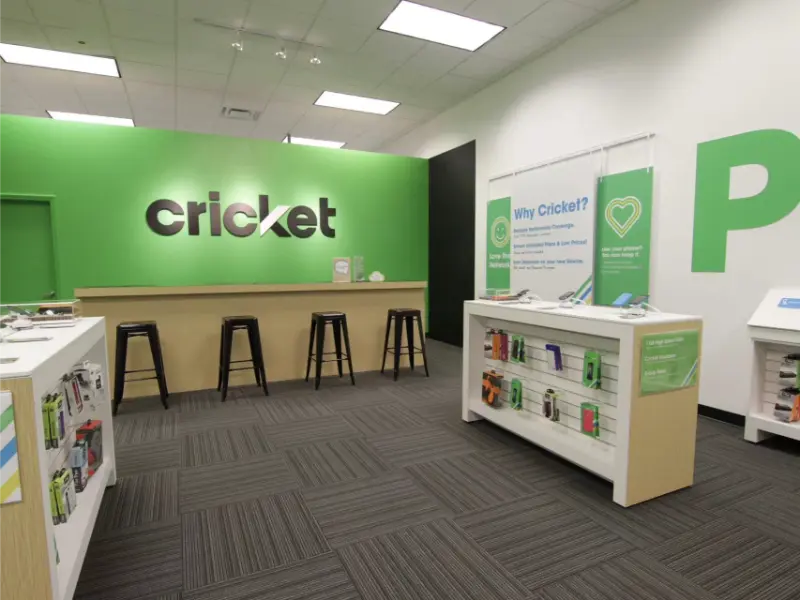
- Cricket Wireless, owned by AT&T since 2014, caters to budget-conscious consumers with affordable, no-contract prepaid plans while utilising AT&T’s extensive network.
- This acquisition allows AT&T to broaden its market reach, providing both premium and cost-effective options without diluting its core brand.
By utilising its current network infrastructure, AT&T’s acquisition of Cricket Wireless enables it to provide a wide range of wireless services, from high-end to low-cost options. AT&T is able to maximise revenue across various market segments and serve a larger audience thanks to this strategic move.
Introduction of Cricket Wireless
AT&T manages Cricket Wireless, a mobile virtual network operator (MVNO) about operations all over the Americas. Cricket launched in 1999 and immediately acquired attention by providing inexpensive no-contract cellphone services, especially to consumers on a limited budget. Cricket Wireless continues to be a subsidiary of AT&T since the former’s 2014 acquiring of the company. This means giving its customer base access to AT&T’s strong nationwide network, including wide 4G LTE and 5G coverage.
Cricket Wireless is well-known for having plenty of prepaid plan options, simple pricing, and no annual contracts. Individuals, families, and those who want unlimited data at a lower cost than traditional carriers are all going to benefit from the company’s plans. Cricket’s plans are less expensive than AT&T’s, although they often include trade-offs, like data speed boundaries and fewer premium features.
Customers who look for quality service without the exorbitant prices associated with major carriers are drawn to Cricket Wireless, that’s has established a niche in the cutthroat wireless market by emphasise coverage, value, and simplicity.
Also read: Does a firewall protect against DDoS attacks?
Introduction of AT&T
One of the largest communications companies in the world, AT&T Inc. had a long history that start with the invention of the telephone in the late 1800s. The multinational conglomerate AT&T, and that has its head office in Dallas, Texas, offers many kinds of services, like digital television, broadband, wireless communications, and international business services.
From the installation of 5G infrastructure to the deployment of fibre optic networks, AT&T has a reputation for its originality and investment in advanced technology. Broadband internet, digital television via its DIRECTV and U-verse brands, mobile and fixed-line phone services, and innovative commercial solutions are only a few examples of the services the company offer.
Also read: Jelly batteries: Bizarre stretchy power inspired by nature
Strategic acquisition of AT&T
The planned purchase of Cricket Wireless by AT&T aims at establishing a wider market for wireless services, particular among consumers on restricted funds looking for budget-friendly, no-contract options. By purchasing Cricket in 2014, AT&T expanded its market share in the prepaid category, and that has been growing and attracts people who appreciate reasonable rates and easy service packages. By means of this acquisition, AT&T had the chance grow its range of offerings and reach audiences that could have not instead chosen its more costly, feature-rich postpaid plans.
AT&T is able to serve a greater range of customers with Cricket Wireless, which involves those who want basic, accurate wireless connectivity at a lower cost as well as those which want premium services.
Additionally, AT&T might optimise the ideal use of the present network infrastructure by owning Cricket Wireless. Even among the customers who pay less for their wireless services, AT&T makes certain that its network capacity is optimally utilised by maintaining Cricket as a Mobile Virtual Network Operator (MVNO) on its network. This reinforces AT&T’s competitive position against other MVNOs and prepaid carriers in besides facilitating it gain profit from an established niche.
Cricket allowed AT&T to maintain its position as a major telecommunications provider across a number of market segments through providing competitive pricing and drawing in consumers with limited budgets without deteriorating its core brand.