

Who is R.J.
- Rivian's management strategy runs on sustainability, innovation and speed — deliberately flat, deliberately unglamorous, and built to move faster than a legacy automaker's approval chain.
- Rivian backs environmental conservation, education, community development and humanitarian aid through structured philanthropy.
- Rivian's social impact programmes concentrate on sustainability, mobility access and community resilience, working through local partners rather than broadcast charity.
R.J. Scaringe did not set out to build a truck. He set out to fix a problem — and the truck was simply what the problem turned out to need. Scaringe founded Rivian in 2009 under the forgettable name Mainstream Motors, carrying an unfashionable thesis: the fastest way to cut transport emissions was not a boutique sports car for enthusiasts, but the vehicles Americans actually buy — pickups and SUVs — made better than the petrol ones they replace. Sixteen years later, the R1T and R1S are the proof of concept, Rivian is a publicly traded manufacturer with a plant in Normal, Illinois, and Scaringe, an MIT-trained engineer from Florida, has become the rare founder who survived his own hype cycle. The company's electric vehicles have done the arguing for him.
From a Florida driveway to MIT's engine labs
R.J. Scaringe was born in 1983 in Melbourne, Florida, into a family that treated engineering as a respectable way to spend a life. He was the kid who took things apart and, more usefully, put them back together. He took a bachelor's degree in mechanical engineering from Rensselaer Polytechnic Institute, then went to the Massachusetts Institute of Technology for a doctorate in mechanical engineering, working in the Sloan Automotive Laboratory on the unglamorous physics of how engines burn fuel.
That detail matters more than it looks. Most automotive founders arrive from the marketing department or the family fortune. Scaringe arrived from the test bench — a man who had spent years measuring what a combustion engine wastes, and who concluded that the waste was structural rather than fixable. His mentors and the environmental researchers around him pushed the same conclusion: build the technology for a greener future, or spend a career optimising a dead end.
2009: the quiet founding of Rivian
He founded the company in 2009, and for its first several years it was less a carmaker than a well-dressed secret. Mainstream Motors became Rivian Automotive in 2011. The headquarters sat in Plymouth, Michigan — later Irvine, California — and the strategy was almost perversely patient: design a vehicle architecture first, raise capital second, tell the world third. Under his leadership, Rivian has hit milestone after milestone on that sequence, launching the R1T pickup and the R1S SUV to critical acclaim for design and genuine off-road capability rather than for a spec sheet and a promise.
The turning points came in a cluster. Amazon ordered 100,000 electric delivery vans and invested. Ford bought in, then sold its stake in 2023. In November 2021, Rivian went public in one of the largest IPOs of the year, raising roughly $12 billion and briefly valuing a company that had delivered almost no vehicles above most of the incumbents it was trying to disrupt. Scaringe's task since has been the least glamorous and most difficult one in the industry: convert a spectacular valuation into a functioning factory.
The skateboard platform: how Rivian's engineering actually works
A skateboard platform is not a marketing metaphor. It is a flat slab containing the battery pack, the drive units and the suspension mounting points, with the body dropped on top like a shell. Rivian's version carries quad-motor configurations, adaptive air suspension and the kind of articulation that lets a two-and-a-half-tonne pickup crawl over terrain that would embarrass a hiking boot. Because the architecture is modular, one platform can spawn a pickup, an SUV and a delivery van — which is precisely why the Amazon fleet exists at all.
The sustainability claims extend past the product into the plant: renewable energy contracts, recycling loops, and a stated push toward carbon neutrality that investors now audit rather than applaud. Rivian's arrival also changed the competitive weather. Legacy manufacturers accelerated their own electric truck programmes, and the segment that was supposed to be the last to electrify — big, heavy, profit-dense pickups — became the one everybody had to enter.
Leadership style: flat teams, long horizons
He's a helpful, thoughtful leader with a vision to deliver everything we love about driving in vehicles that also tackle the challenges of environmental responsibility.
Edward Loh, writer for Automotive Forum
Scaringe runs Rivian the way an engineer runs a lab: hands-on, allergic to hierarchy, and relentlessly interested in the person who disagrees with him. He is known for soliciting the dissenting view in the room, for data-driven decisions, and for a flat organisational structure that trades the comfort of clear rank for the speed of clear ownership. Empathy and resilience get mentioned a lot in profiles of him; so does a stubbornness that reads as calm until you notice it has not moved.
Under him, Rivian has invested in training, professional development and internal promotion, on the theory that a company asking its staff to reinvent the automobile should probably offer them a route to reinventing themselves. Transparency, feedback and recognition are the stated operating values. Whether any of that survives contact with a quarterly earnings call is the perennial test of every founder-led company — but the culture was built before the pressure arrived, which is the only time culture is ever really built.
Also read: Polestar Day reveals electrifying future with Polestar 3 electric vehicle
Philanthropy and social impact
Rivian's philanthropic footprint runs through environmental conservation, education, community development and humanitarian aid: reforestation campaigns, wildlife protection, sustainable land management, STEM scholarships and mentorship for students in sustainable technology and environmental science. Community programmes lean on job creation, skills training and infrastructure, and the company routes disaster relief, healthcare and social services support through existing organisations rather than building its own.
The social impact agenda is narrower and more credible than most corporate mission statements: environmental sustainability, mobility access and community resilience. Rivian works with local partners, NGOs and government agencies on systemic issues, and its community empowerment efforts — with local businesses, indigenous groups and community organisations — are framed around dialogue and shared decision-making rather than a cheque and a photograph.
Also read: Is the electric vehicle charging station business profitable?
What comes next for Rivian — and for Scaringe
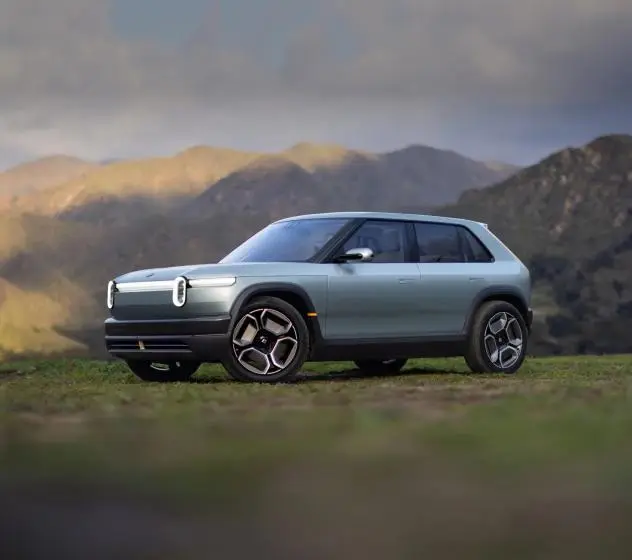
The next act is the R2, a smaller, cheaper platform aimed at roughly the $45,000 mark, which is the price at which electric vehicles stop being a statement and start being a purchase. Battery chemistry, range and cost per kilowatt-hour are the battleground now, and Rivian's roadmap is built around getting the same architecture into more garages at a lower price rather than chasing the top of the market it already owns.
Scaringe's influence on the industry is easiest to see in what his rivals stopped saying. A decade ago, electric trucks were a novelty argued about at conferences. Today they are a product line with waiting lists, and the argument has moved on to charging curves and gross margins. That shift is the measure of the man: not a slogan, not a personality cult, but a company that made the sensible thing to do also the desirable thing to buy.
Which is the whole Scaringe method in one line. He never sold the future. He sold a better truck, and let the future arrive on its own schedule.
Member Briefing
Read the full trend briefing
Members read the full briefing with the source notes behind every finding.
Strategic Circle
A daily briefing in your language, built from changes we have verified.
Join for USD 20/monthCancel anytime.
Members also get the full research library, a daily briefing on the networks they follow and the private forum.




