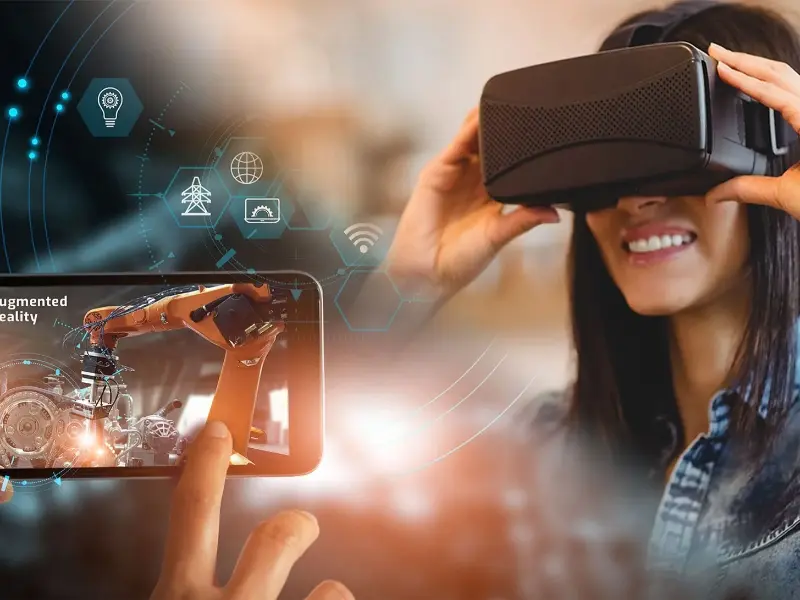
- AR overlays digital content onto the real world, enhancing perception, while VR transports users to entirely virtual environments, shutting out the physical world.
- AR experiences can be accessed using smartphones or AR glasses, maintaining awareness of the physical surroundings, while VR requires dedicated headsets for a fully immersive experience.
- AR finds applications in gaming, advertising, and navigation, enhancing real-world experiences, whereas VR is used in gaming, simulations, training, and therapy, offering fully immersive virtual environments.
Terms like Augmented Reality (AR) and Virtual Reality (VR) are becoming increasingly common in today’s fast-paced technological landscape. But what exactly sets these two immersive technologies apart? Are they simply different sides of the same coin, or do they offer distinct experiences? Let’s dive into the world of AR and VR to uncover their differences and unique capabilities.
Augmented Reality (AR)
Augmented Reality (AR) overlays digital information onto the real world, enhancing our perception of reality. Unlike Virtual Reality, AR doesn’t create a fully immersive digital environment but instead supplements the real world with computer-generated elements. This can include anything from graphics and text to 3D models and animations.
One of the most well-known examples of AR technology is the wildly popular mobile game Pokémon GO, where players use their smartphones to capture virtual creatures overlaid onto real-world locations. Similarly, AR glasses like Microsoft’s HoloLens and Google Glass project digital content onto the user’s field of view, allowing for interactive experiences while maintaining awareness of the physical environment.
AR technology is being adopted across various industries, from gaming and entertainment to education, healthcare, and retail. For instance, AR apps enable users to visualise furniture in their homes before making a purchase, or assist technicians by overlaying instructions onto machinery during maintenance tasks.
Also read: Google and HP to launch 3D video conferencing platform Project Starline
Virtual Reality (VR)
Virtual Reality (VR), on the other hand, immerses users in a completely digital environment, shutting out the physical world. By wearing a VR headset, users are transported to simulated worlds where they can interact with virtual entities and environments in a way that feels incredibly real.
VR technology creates a sense of presence, making users feel as though they’ve been transported to another place entirely. Whether it’s exploring distant planets, diving into the depths of the ocean, or experiencing a thrilling roller coaster ride, VR offers limitless possibilities for immersive experiences.
Gaming has been one of the primary drivers of VR technology, with platforms like the Oculus Rift, HTC Vive, and PlayStation VR delivering captivating gaming experiences that blur the line between reality and fantasy. Beyond entertainment, VR is also being utilised for training simulations, architectural visualisation, therapy, and even virtual tourism.
Also read: Different types of Virtual Reality (VR) technology
Key differences between AR and VR
While both AR and VR technologies offer immersive experiences, they differ significantly in their approach and applications/
Interaction with reality
AR enhances the real world by overlaying digital content onto it, allowing users to interact with both physical and virtual elements simultaneously. VR, on the other hand, creates a fully immersive digital environment, completely replacing the real world with a virtual one.
Level of immersion
VR provides a deeper level of immersion by blocking out the physical world and transporting users to a virtual environment. AR maintains a connection to reality, with digital content seamlessly integrated into the user’s surroundings.
Use cases
AR is well-suited for applications where users need to interact with their physical environment while accessing digital information, such as navigation, education, and retail. VR excels in situations where users can benefit from being fully immersed in a virtual environment, such as gaming, training simulations, and virtual tourism.
Hardware requirements
AR experiences can be accessed through smartphones, tablets, and AR glasses, which overlay digital content onto the user’s field of view. VR requires specialised hardware such as VR headsets and controllers to create immersive experiences.
While AR and VR technologies share the common goal of providing immersive experiences, they offer distinct approaches and cater to different use cases. Whether you’re exploring the real world augmented with digital enhancements or immersing yourself in a virtual realm, both AR and VR have the power to transform how we interact with technology and perceive the world around us. As these technologies continue to evolve, the boundaries between the physical and digital realms will continue to blur, opening up new possibilities for innovation and exploration.