

- The core trick: a standard, low-power Bluetooth chip talks directly to a satellite — no cellular tower, no gateway, no custom silicon required.
- The consequence: IoT devices can report from the Outback, the open ocean or a mountain ridge with zero bars of mobile signal.
- The market shift: coverage stops being a real-estate problem (where you can afford to build towers) and becomes a chip problem (what you can afford to embed).
Hubble Network did something the wireless industry had quietly filed under "physically implausible": it connected an ordinary Bluetooth chip to a satellite in orbit. No cellular tower. No gateway. No exotic silicon. Just a standard low-power radio, an unusually long reach, and a link budget that engineers spent years insisting could never close. The result is direct-to-satellite IoT connectivity — the missing piece that lets a soil sensor in the Outback or a shipping container in the South Atlantic report home without a single bar of signal.
How Hubble Network Connects Bluetooth to Satellites
Bluetooth was designed as a short-range courtesy: a few metres between your phone and your earbuds, a handful of milliwatts, and a signal that politely dies at the edge of the room. Hubble Network's achievement was to prove that the same class of radio can be heard from orbit. By establishing a direct Bluetooth connection to a satellite, the company became the first to pull off the trick — and in doing so, it bypassed the terrestrial infrastructure that has always been IoT's most expensive assumption.
That assumption is simple and brutal: to connect a device, someone must first build a network near it. Towers, backhaul, power, permits, maintenance crews. Which is why IoT coverage has always followed the money — dense cities first, everything else eventually, and genuinely remote places never. Hubble Network's approach flips the order. The satellite is already overhead; the device just has to be loud enough, in the right way, at the right moment.
Why Terrestrial IoT Runs Out of Road
One of the persistent headaches in IoT deployment is reliable connectivity across wildly different environments. A fleet telematics unit in Rotterdam has an easy life. A methane monitor on a pipeline in northern Alberta does not. Hubble Network's solution addresses that gap by giving devices a path to stay connected regardless of geography or local network coverage — and it opens up applications in agriculture, transportation, and environmental monitoring that previously required either a very expensive private network or a very patient field technician.
By leaning on satellite technology, Hubble Network delivers global reach without asking the customer to negotiate with a dozen regional carriers. That matters more than it sounds. IoT projects die in the procurement stage far more often than they die in the field, and every additional jurisdiction is another contract, another SIM estate, another billing relationship to reconcile. One sky, one network, one invoice is a genuinely different commercial proposition.
The successful integration of Bluetooth devices with satellite connectivity also signals where the company intends to compete: not against Wi-Fi or 5G in the places they already work, but in the vast, unglamorous, unserved middle where the economics of a cell tower never made sense.
Also read: CMC Networks satellites respond to African subsea cable damage
Implications for IoT Devices
The first implication is the obvious one: devices keep working where traditional networks are thin, absent, or freshly destroyed. Satellite communication lets IoT hardware operate in geographically hostile environments — deserts, oceans, tundra, disaster zones — enabling data collection, monitoring, and control in places that were previously inaccessible or simply not worth wiring.
The second is scope. When connectivity stops being a constraint, the addressable market for IoT stops being a map of tower coverage. Agriculture gets soil and livestock telemetry at the scale of a farm rather than a paddock. Transportation gets asset tracking across borders and oceans without roaming agreements. Environmental monitoring gets sensors where the environment actually is, rather than where the road happens to run.
The third is behaviour. Devices that can talk in real time can also coordinate in real time — quicker decisions, tighter automation, less guesswork baked into firmware. That is the difference between a sensor network that reports history and one that changes outcomes.
Also read: How can IoT devices minimise downtime in a manufacturing plant?
And the fourth is scale. A global satellite footprint means a deployment is no longer capped by how many regions you can negotiate your way into. Add devices, add continents, keep the same architecture — the network does not need to be rebuilt each time the business grows a border.
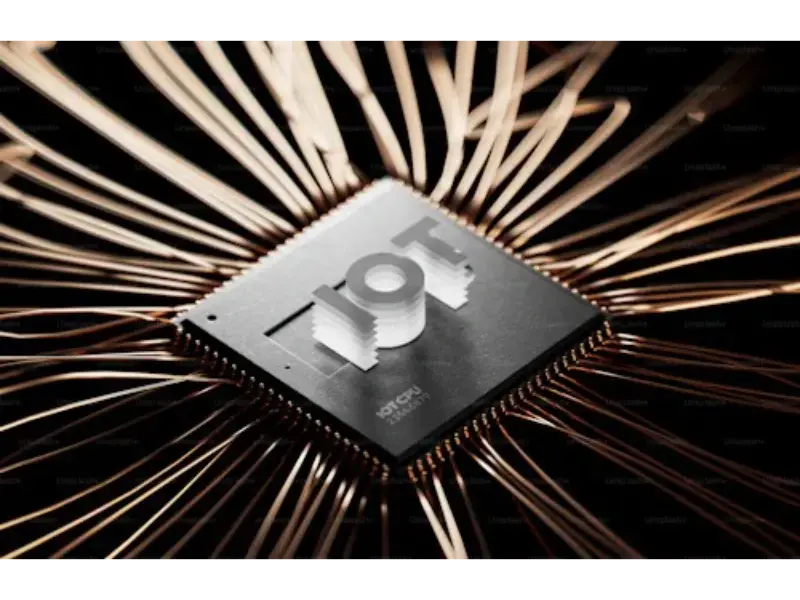
Industry Recognition: TechCrunch and Y Combinator
TechCrunch put a spotlight on the milestone, and the coverage captures why it landed: a Bluetooth chip reaching orbit is not an incremental improvement to an existing product, it is a new category of link. Recognition of that kind matters in hardware, where credibility is the currency you spend while waiting for the next funding round.
Y Combinator's backing carries a different signal. The accelerator's endorsement is a bet on the shape of the market rather than the cleverness of the demo — on the thesis that the next billion connected devices will not be in places with excellent cellular coverage, because those places are already saturated.
Beyond media and investors, validation from partners and stakeholders across the IoT ecosystem is what converts a technical first into a commercial business. A record-setting connection is a press release. A supply chain that ships modules using it is a market.
For two decades, the IoT industry's answer to a coverage gap was "build more towers." Hubble Network's answer fits on a chip you can buy off the shelf — and it is already several hundred kilometres up.




