
•Water-technology bookings from semiconductor customers reached €343m in the first half, spanning ultrapure-water and wastewater systems in Singapore and the US
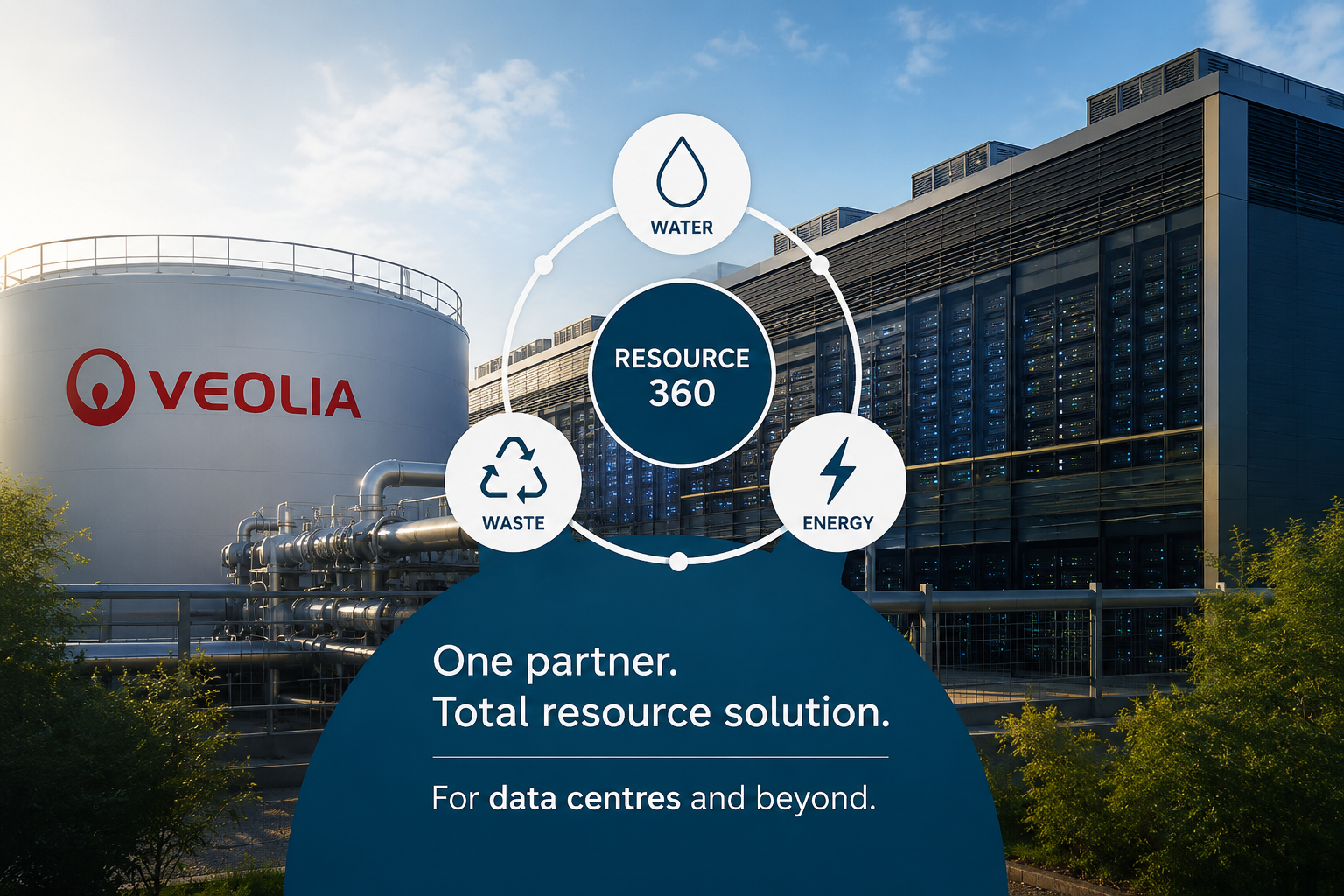
•Its data-centre pitch bundles water, energy and waste into one contract, but no operator has signed the full package yet
The fact
Veolia has maintained its target to generate more than €1 billion in annual revenue from data centres and microelectronics by 2030. The environmental services group repeated the target in its first-half results and reported €343 million of water-technology bookings from semiconductor manufacturers since the beginning of 2026. The contracts include ultrapure-water production and wastewater-reclamation systems in Singapore and the US.
For data centres, Veolia is marketing Data Center Resource 360, which bundles water, energy and waste services. The company said it already works with ten leading operators, which it has not named, across more than 100 facilities. It is also developing a system with Amazon in Mississippi that will treat reclaimed wastewater for data-centre cooling. The system is expected to begin operating in 2027 and replace more than 83 million gallons of potable water each year.
The assessment
Veolia wants data-centre operators to buy water, waste and energy services under one contract instead of appointing separate suppliers. That requires the operator to select Veolia while the site's cooling, water-reuse and energy systems are still being designed, not after construction.
The disclosed figures do not yet show operators buying the full package. The €343 million of bookings came from semiconductor customers, not data-centre operators, while the Amazon project covers reclaimed-water cooling rather than the wider Resource 360 offer. Veolia has not separated data-centre revenue from microelectronics or disclosed a contract combining several services.
The bundling strategy faces competition as well as scepticism. Xylem, Suez and specialist cooling firms are all bidding for data-centre water contracts. Whether operators choose Veolia's integrated offer or pick individual suppliers will depend on whether the bundled price undercuts the sum of separate contracts and whether Veolia can deliver across all three disciplines. For BTW readers, the bigger question is whether water becomes a strategic constraint for AI data centres, as power already has. If it does, the company that controls the water contract controls the relationship.
Until Veolia discloses broader deals, Resource 360 remains a sales proposition rather than proven revenue.
What to watch
Watch for Veolia to report data-centre revenue separately from microelectronics and disclose the value and service scope of Resource 360 contracts. The Amazon system is due to start in 2027; its operating water volumes will show whether reclaimed-water cooling delivers at scale. The broader signal is whether rival data-centre operators follow with integrated water contracts or continue buying cooling, waste and energy from separate suppliers.
Member Briefing
Deeper Profile Context
Sign in with the right membership level to unlock the full briefing and source notes.
Only for Strategic Circle
Strategic Circle
Open to all readers. Unlock profile briefings after joining and signing in.
Join Strategic CircleOnly for Leadership Alliance
Leadership Alliance
For qualified IP-asset owners and management; sign in to unlock alliance briefings.
Join Leadership Alliance