
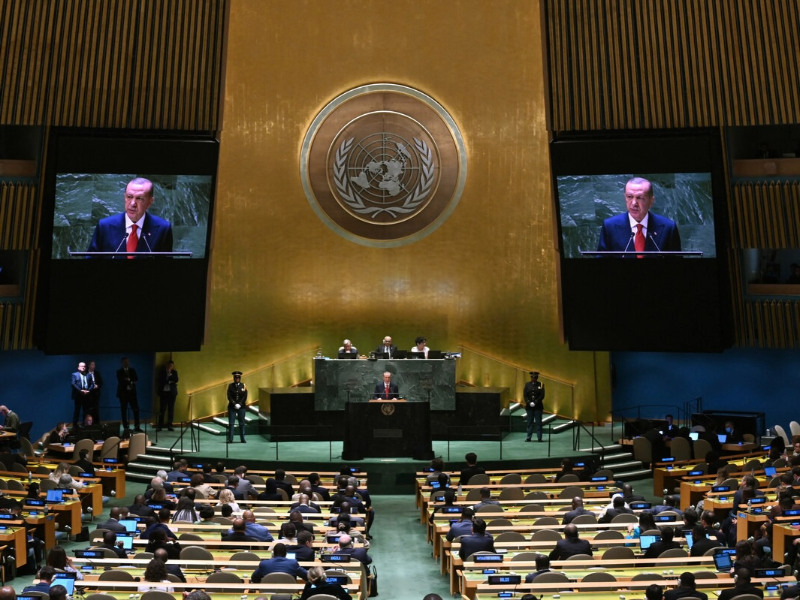
UNGA passes first resolution draft on AI is profiled by BTW Media because published evidence links it to internet infrastructure, governance, operational dependencies, or market visibility.
UNGA passes first resolution draft on AI is tracked as a internet infrastructure institution within the internet infrastructure ecosystem.
UNGA passes first resolution draft on AI has public-source relevance to network operations, governance, dependency mapping, or market structure.
UNGA passes first resolution draft on AI is tracked as a internet infrastructure institution within the internet infrastructure ecosystem.
Public-source signals support medium-impact monitoring for infrastructure visibility and dependency analysis.
UNGA passes first resolution draft on AI is profiled by BTW Media because published evidence links it to internet infrastructure, governance, operational dependencies, or market visibility.
Public-source signals support medium-impact monitoring for infrastructure visibility and dependency analysis.
| 0.90–1.00 | A | High — direct sources |
| 0.75–0.89 | A/B | Strong |
| 0.55–0.74 | B/C | Medium |
| 0.35–0.54 | C/D | Weak–medium |
| 0.10–0.34 | D | Weak signal |
| 0.00–0.09 | D | Internal monitoring |
Several public sources
- The United Nations General Assembly passed its first resolution on artificial intelligence (AI), emphasizing the need for AI to benefit all nations while respecting human rights.
- The resolution aims to bridge the digital gap between developed and developing countries, ensuring equal participation and access to AI technology.
- It highlights the urgent need for global consensus on the governance of AI systems, recognising it as an evolving field requiring further discussion on governance approaches.
The United Nations General Assembly has voted to adopt the first draft resolution on artificial intelligence (AI) to ensure the new technology benefits all nations, respects human rights, and is “safe, reliable, and trustworthy.”
Also read: Chinese AI chatbot Kimi handles 2 million characters, up from 200k
Also read: AI for corner kicks: Google Deepmind teams with Liverpool FC
It will bridge the digital divide between developed and developing countries
The resolution aims to bridge the digital divide between developed and developing countries, ensuring equal footing in AI discussions and enabling developing nations to harness AI technology and capabilities.
Acknowledging the accelerated development and use of AI, the resolution emphasises the urgent need for global consensus on “safe, reliable, and trustworthy AI systems.” It also recognises governance of AI systems as an evolving field, requiring further discussion on possible governance approaches.
The resolution was adopted through consensus without a vote
The draft resolution was proposed by the United States and co-sponsored by China and 122 other countries. Ultimately, the resolution was adopted through consensus without a vote, representing support and recognition from all 193 member states of the United Nations.
US Ambassador to the United Nations Linda Thomas-Greenfield stated, “Today, all 193 member states of the United Nations came together to choose to govern artificial intelligence rather than let it rule us.”
The European Union has already approved AI regulations on March 13, and after completing some final procedures, the new regulations are expected to take effect in May or June.
At A Glance
- Name: UNGA passes first resolution draft on AI
- Type: Internet infrastructure institution
- Base: Asia Pacific
- Profile focus: Institution
What It Does
- Public records support monitoring of its role, services, and key relationships.
Why It Matters
- Public-source signals support medium-impact monitoring for infrastructure visibility and dependency analysis.
- Operational criticality: Medium
- Time horizon: Next quarter
What To Watch
- Monitoring focuses on verified service continuity, governance changes, and relationship signals.
Track verified source updates, role changes, and current public evidence.
Public-source signals support medium-impact monitoring for infrastructure visibility and dependency analysis.
Longer-term relevance depends on verified operating, policy, and relationship changes.
Member Briefing
Deeper Profile Context
Login is required to unlock the full profile briefing and source notes.
Only for Strategy Circle
Strategic Circle Access
Open to all readers. Unlock profile briefings after joining and logging in.
Join Strategic CircleOnly for Leadership Alliance
Leadership Alliance Access
For owners and management of IP-holding companies. Login required to unlock.
Join Leadership Alliance


