
North America Institutional Trends
North America Institutional Trends
Institutional trend intelligence tracks institutional market trends, regulatory pressure, standards activity, public-sector digital policy, governance reform, and infrastructure funding in North America, giving readers a fuller view of the demand shifts, capacity constraints, platform strategies, capital timing, regulatory pressure, and operating assumptions behind the market.

Latest Coverage
Latest from North America Institutional Trends
317 articles

North America Institutional Trends
TTM’s Three Debt Lines Do Not Make Epiq a $1.6 Billion Deal
TTM Technologies has priced one unsecured bond and lined up two secured loans around its proposed $1.1 billion purchase of Epiq Solutions. Adding the three instruments produces $1.6 billion, but not a $1.6 billion acquisition receipt. The commitments can substitute for one…

North America Institutional Trends
U.S. Critical Minerals Is Buying a Restart Sequence, Not a Producing Mine
The McAllister agreements could put an old tantalum mine, a mill, district exploration rights and Nova Resources under one controller. That is useful coordination. It is not current production. The investment case still has to travel through closing, resource definition, mill…

North America Institutional Trends
BetaNova’s Merger Joins Two Platforms Before Its First Trial Does
Sernova and Seraxis can combine a company in November. Combining an implant, a reproducible cell supply, manufacturing, immune protection and clinical evidence will take longer. The public trial records make that gap visible: SR-02’s first study places cells in the omentum and…

North America Institutional Trends
Envestnet’s Vestmark Deal Needs a Workflow Bridge, Not a US$10tn Sum
Envestnet is promising Vestmark’s clients continuity rather than a compulsory move. That makes the acquisition’s hardest test unusually concrete: can positions, restrictions, tax lots, orders and approvals cross the boundary between two live systems without losing their meaning?…

North America Institutional Trends
GE Aerospace's 18x CPP Multiple Already Counts $200 Million of Synergies
GE Aerospace's agreed $11.75 billion purchase of Consolidated Precision Products comes with two valuation denominators. The roughly 26-times multiple describes CPP before integration; the advertised roughly 18 times already adds about $200 million of expected net synergies to…

North America Institutional Trends
Axogen's $200 Million BioCircuit Deal Excludes the Electronics Business
Axogen is not buying every business that presently sits inside BioCircuit Technologies. The $200 million cash merger can close only after BioCircuit sends its electronics research operation to its existing stockholders, taking the assets and liabilities dedicated solely to that…

North America Institutional Trends
Centrus Put Four Future Funding Clocks Inside Its $500 Million Offering
Centrus Energy Corp. priced one equity sale, but it did not create one simple dilution event. The package begins with roughly $500 million of gross funding, places 2,005,513 almost-paid shares behind pre-funded warrants, and gives investors four more ways to buy stock at…

North America Institutional Trends
Ingram Micro’s Buyback Sits Inside Platinum’s Share Sale
Ingram Micro did not raise capital in September’s 13.125 million-share offering. Platinum’s vehicle sold existing stock, the company used cash to take 625,000 of those shares off the market, and public investors received the rest of the firm tranche. Reading the deal properly…

North America Institutional Trends
SUNation’s Merger Amendment Reprices the Closing Gate
The revised SUNation–Suniva agreement does not merely add another shareholder proposal. It lowers one cash threshold, fixes one debt conversion price and gives one creditor vote a protection no other closing condition receives: an explicit ban on waiver.

North America Institutional Trends
Bowman’s Go-Shop Is a Two-Deadline Price Test
The most important date in Bowman Consulting Group’s sale process may not be the one that ends the auction. At 5:00 p.m. Eastern time on 13 September, the company’s right to solicit bidders narrows—but a qualified challenger can keep negotiating. The next date, 28 September…

North America Institutional Trends
Genuine Parts Has Two Command Chains Before It Has Two Balance Sheets
Genuine Parts has named the people who will run its future automotive and industrial companies. That makes the separation feel tangible: one chief executive for GPC, another for Motion, two management benches and two investor days. Yet the legal and financial boundary still lies…

North America Institutional Trends
Enbridge’s C$2.6bn Equity Raise Does Not Equal Its US$2.55bn Tallgrass Cheque
Two numbers arrived from Enbridge on the same day: C$2.6 billion of gross equity proceeds and US$2.55 billion of cash consideration for Tallgrass crude assets. They look almost made for each other. They are not. The currencies differ, one figure is before fees, the financing…

North America Institutional Trends
CooperCompanies Kept CooperSurgical. Its US$1.5bn Buyback Capacity Must Prove Why.
CooperCompanies has finished a sale process without making a sale. The board says bids for CooperSurgical did not serve shareholders, retained the business and raised the group’s repurchase authorization to US$3 billion. About US$1.5 billion remains. That sequence sounds like one…

North America Institutional Trends
Limbach Replaced Its Lender. US$7m of Guarantees Stayed Behind.
Limbach’s old credit facility ended on 9 September, and roughly US$118.1 million of principal was repaid with money from a new PNC facility. Yet the old bank did not disappear from the financing map. About US$7 million of letters of credit remain outstanding and must be backed by…

North America Institutional Trends
WaFd Survives the Merger. EverBank Controls What It Becomes.
The first sentence of this reverse merger says WaFd survives. Nearly every economic sentence that follows points toward EverBank. The listed WaFd shell remains, takes the EverBank name and issues the shares; EverBank’s owners receive 59.175% of the equity, its directors hold…

North America Institutional Trends
John Marshall–Eagle Turns Book-Value Dilution into a Three-Year Test
John Marshall Bancorp is asking its shareholders to accept an immediate subtraction for a future multiplication. On management’s transaction arithmetic, pro forma tangible book value per share falls from $20.23 to $17.32 at closing, while fully phased cost savings are expected to…

North America Institutional Trends
IRT’s Centerspace Merger Makes Index Scale Part of the Asset
Independence Realty Trust is offering 3.800 of its shares for each Centerspace share. The apartments matter, but so does the security built around them: more free float, heavier benchmark weight and, management hopes, cheaper capital. That is the merger’s least physical—and most…

North America Institutional Trends
MediaAlpha Paid US$43m to Retire US$91.4m of Estimated TRA Claims
MediaAlpha’s two tax-agreement buyouts created a US$48.4 million discount against dated liability estimates. That is potentially valuable, but it is not cash the company received: US$43 million actually left the business, one transaction required revolving debt, and about US$32…

North America Institutional Trends
D-Wave’s 110,000 Qubits Belong on Two Scoreboards
D-Wave has attached two large numbers to a new US research award: a 100,000-qubit annealing system and a 10,000-qubit gate-model system meant to produce 100 logical qubits. The tempting arithmetic is also the wrong analysis. These are different machines, different units and…
North America Institutional Trends
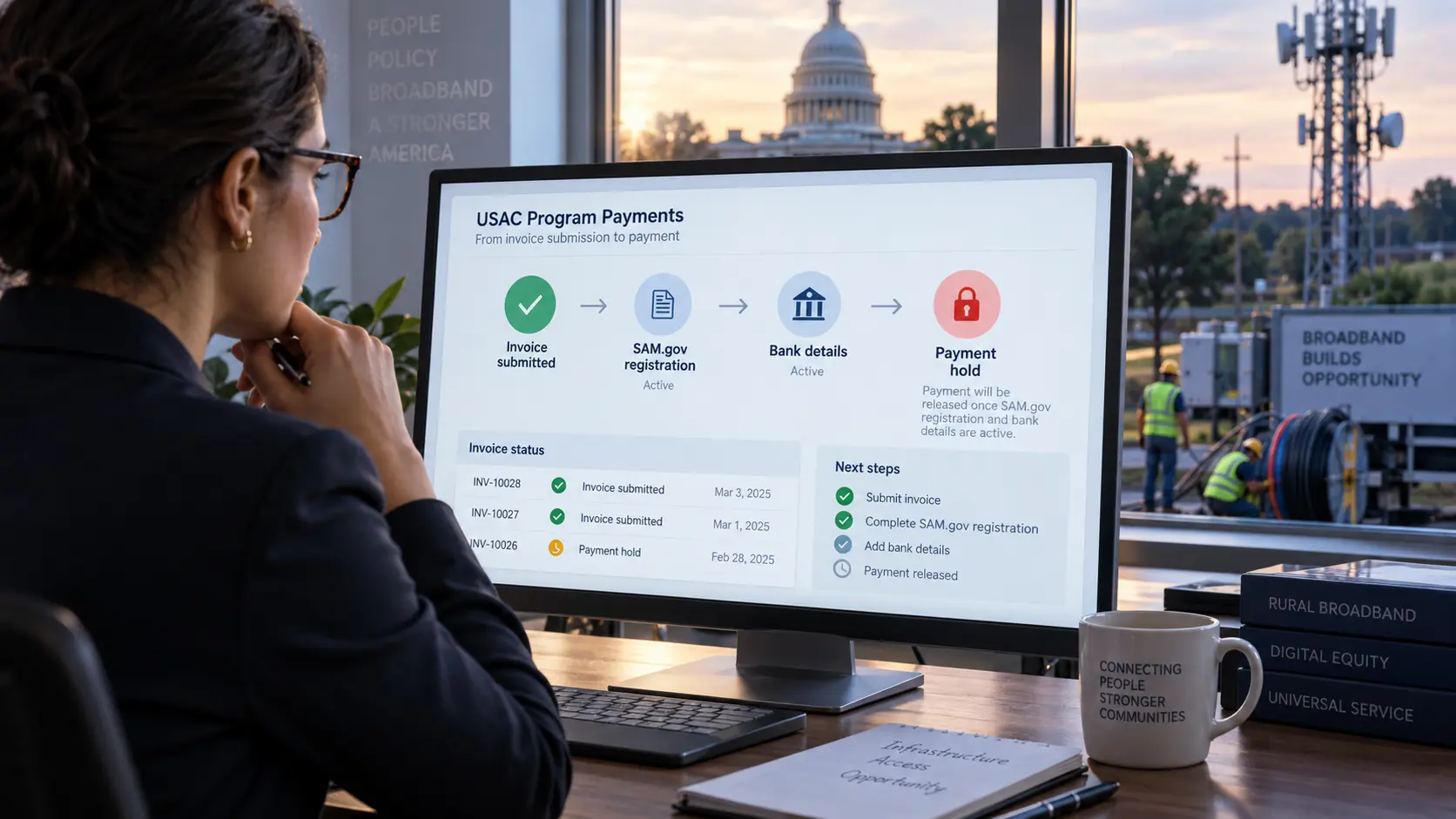
USAC moves USF payments to SAM.gov
USAC will use SAM.gov banking records for USF payments, and incomplete registration will trigger payment holds even when invoices are accepted.