
Europe and Middle East Institutional Trends
Europe and Middle East Institutional Trends
Institutional trend intelligence tracks institutional market trends, regulatory pressure, standards activity, public-sector digital policy, governance reform, and infrastructure funding in Europe and the Middle East, giving readers a fuller view of the demand shifts, capacity constraints, platform strategies, capital timing, regulatory pressure, and operating assumptions behind the market.

Latest Coverage
Latest from Europe and Middle East Institutional Trends
319 articles

Europe and Middle East Institutional Trends
The £50 Question: Britain Keeps Its Register Check, Even for Companies With Nothing to Say
Britain's small-business taskforce found plenty to simplify. The government took 14 of 15 ideas — then kept the yearly Companies House check, £50 and all, for companies that have gone quiet.
Europe and Middle East Institutional Trends
Ofgem Wants a Late Fee for the Grid. Some Transmission Contracts Say £0.
A missed connection date can leave a project paying for an idle site while the network's contractual meter runs at £0 a day. Ofgem wants a sharper bill — and a rule that does not simply reward safer, later dates.

Europe and Middle East Institutional Trends
Britain’s £100m AI Biosecurity Lab Has the Money, the Models and No Referees
Whitehall has named the cash, the model suppliers and the agencies around its new AI Biosecurity Lab. The scientists meant to referee its work remain unnamed — and that is the story.

Europe and Middle East Institutional Trends
Britain's £23m AI Scorekeeper Will Show You the Score, Not the Scorebook
HM Treasury has handed the AI Economics Institute £23 million over three years. Its prospectus lets government policy questions set the agenda and promises the public only selected analysis — the score, not the scorebook.

Europe and Middle East Institutional Trends
Europe's AI Workers Need a Short Course. The Catalogue Offers a Master's
AI is already on the job. A new JRC study finds Europe's training offer leans toward long degrees while the workers who need it most need short, flexible courses.

Europe and Middle East Institutional Trends
The Council of Europe Split AI Accountability in Two. The Signature Line Is Still Blank.
CDNET's two new HUDERIA components do different jobs: one hands affected people a microphone, the other makes sure a named human signs the decision.

Europe and Middle East Institutional Trends
Ofgem's Smart Data Repository: A Consent Door Is Not a Building Permit
Elexon's meter-data store passed the consent test and failed the authority test. Ofgem sent P494 back to find a legal basis it can actually enforce.

Europe and Middle East Institutional
125 GW of Paper Promises: Ofgem Puts a Price on Britain's Grid Queue
Britain's grid queue ballooned from 41 GW to 125 GW in seven months, with roughly 73 GW of it data centres. Ofgem's fix is simple in principle and treacherous in practice: make developers put real money behind their place in line, then prove the project can actually reach…

Europe and Middle East Institutional
FICIX's 0.95 Confidence Score Rests on a Registry Link That Returned 712 Bytes of Nothing
Two documents about Finland's FICIX were pulled inside the same second on 21 October 2026: the operator's front page, which produced a sentence, and the routing-registry entity cited as the record's only evidence, which produced 712 bytes of nothing.
Europe and Middle East Institutional
Seventeen Sites, One Engineering Rota: The Real Math Behind LINX's LON2 Rebuild
LINX rebuilt its LON2 London fabric across seventeen buildings after nearly twenty-five years. Seventeen is a genuine bound on building failure and a poor proxy for platform independence — and the dated notice log that would settle the difference was located on 19 October 2026…

Europe and Middle East Institutional
The French State Bought Alcatel Submarine Networks. The Fleet Came Without a Number.
Nokia sold Alcatel Submarine Networks to the French State, the competition authority cleared it, and both facts sit on the record. What does not sit on the record is the number that decides when your cable actually gets laid: how many ships the company has, and who gets the next…
Europe and Middle East Institutional
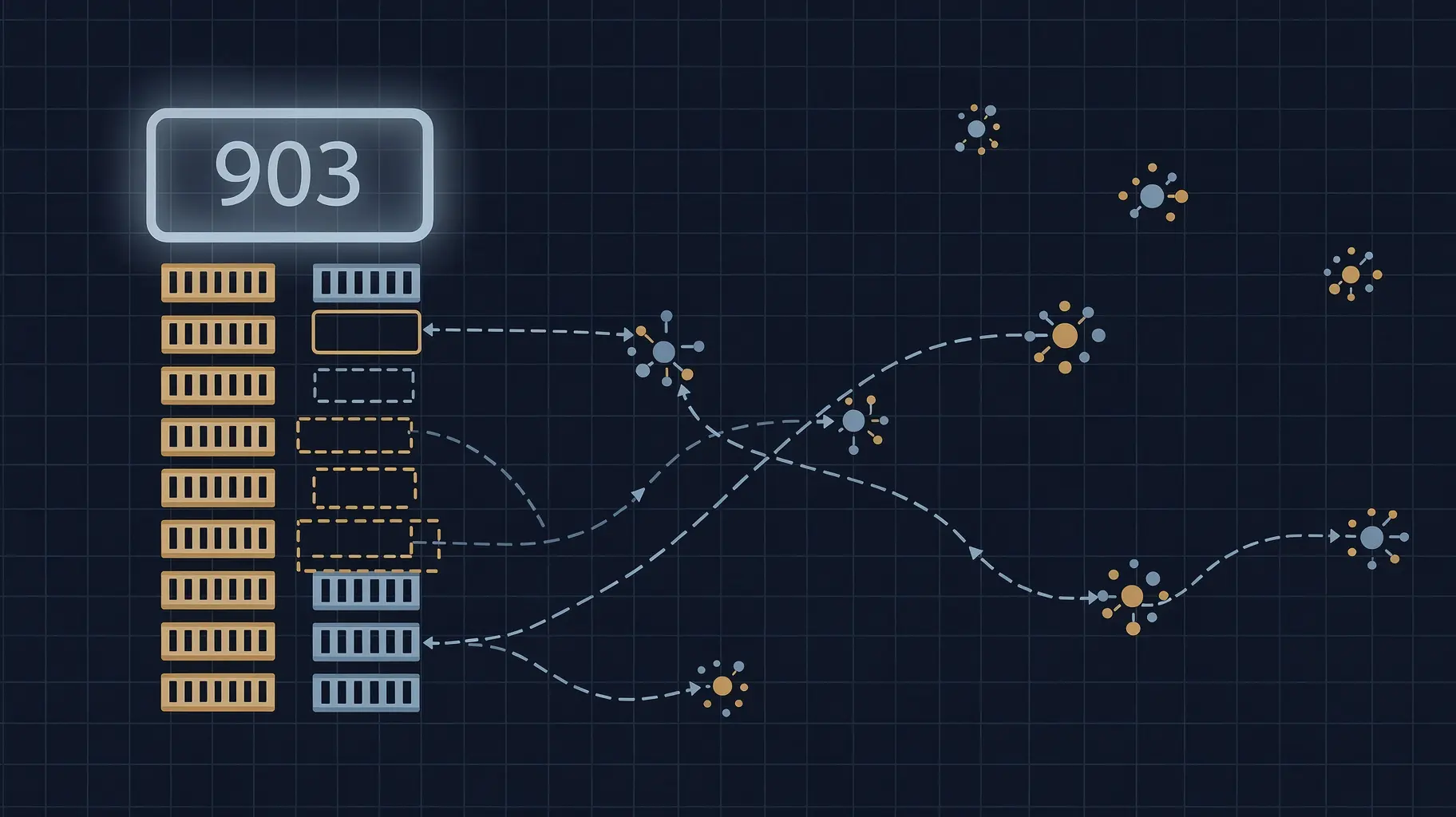
AMS-IX Counts 903 Connected Networks. It Never Says What One Is.
AMS-IX put 903 connected networks on its front page on 18 October 2026 and defined neither the unit nor the port. In a market where that figure gets copied into sales decks and site-selection spreadsheets, the missing definition is the load-bearing fact.

Europe and Middle East Institutional Trends
Europol's Digital Forensics Gap Report: A Catalogue Is Not a Standard
A Commission–Europol gap analysis maps incompatible formats and uneven tool validation across the EU. It recommends shared testing — and leaves the harder question of who owns the standard unanswered.

Europe and Middle East Institutional
SwissIX Counts Eight Datacenters. The Number That Matters Is Behind a Login.
SwissIX says it sits in eight Swiss datacenters and offers 400G ports at three core sites. What it will not say publicly is how much of its capacity lives in each of those eight places — and that split, not the count, is what a redundancy claim is actually made of.

Europe and Middle East Institutional Trends
BEREC and Ofcom Have Each Other's Number. A Shared Rulebook Is Not Included
The BEREC–Ofcom memorandum names its contacts, splits its bills and stops short of a joint decision-maker. The real question is what the desks on either end of the line will do with the answers.

Europe and Middle East Institutional Trends
Eight hours on one rural mast: Ofcom's outage rule is a trigger, not a deadline
Ofcom's proposed eight-hour threshold decides whether a single rural mobile site counts as a reportable incident. It says nothing about when the report is due, or whether anyone has been reconnected.
Europe and Middle East Institutional Trends
Europe's three-day cable repair clock starts at the quay, not the fault
A €40 million EU call would fit repair modules to existing ships within three days of arrival. Getting a suitable vessel to the quay — and keeping that capacity ready for a decade — is the harder promise to keep.

Europe and Middle East Institutional Trends
Microsoft's 5% problem: the buyers who pay the bills have the fewest exits
Most of Microsoft's UK software customers buy in a single product area and generate almost none of the revenue. The 5% who buy everything pay 90% of the bills — and face the hardest exit. That gap is the real lock-in story.

Europe and Middle East Institutional Trends
Ofgem's Asset Register Would Be Run by the DNOs' Own Company. The Regulator Calls the Accountability 'Indirect.'
ElectraLink's EMPRIS holds the delivery edge for Ofgem's proposed Central Asset Register. The catch: the licence duties sit with the DNOs who own it, and the regulator concedes the accountability chain runs indirect.

Europe and Middle East Institutional
RIPE 86: Rotterdam, May 2023 — the Record That Settles the Calendar
RIPE 86 keeps getting filed under the wrong months. It met in Rotterdam, 22–26 May 2023 — and left behind a dated record: 20,000 RPKI certificates, an IXP filtering reform with a hard 1 January 2024 start, and a General Meeting that adopted Charging Scheme 2024 Model D while…