
Telecom AI, automation and partnerships lead FutureNet MENA 2025 dialogue is profiled by BTW Media because published evidence links it to internet infrastructure, governance, operational dependencies, or market visibility.
Telecom AI, automation and partnerships lead FutureNet MENA 2025 dialogue is tracked as a internet infrastructure institution within the internet infrastructure ecosystem.
Telecom AI, automation and partnerships lead FutureNet MENA 2025 dialogue has public-source relevance to network operations, governance, dependency mapping, or market structure.
Telecom AI, automation and partnerships lead FutureNet MENA 2025 dialogue is tracked as a internet infrastructure institution within the internet infrastructure ecosystem.
Public-source signals support medium-impact monitoring for infrastructure visibility and dependency analysis.
Telecom AI, automation and partnerships lead FutureNet MENA 2025 dialogue is profiled by BTW Media because published evidence links it to internet infrastructure, governance, operational dependencies, or market visibility.
Public-source signals support medium-impact monitoring for infrastructure visibility and dependency analysis.
| 0.90–1.00 | A | High — direct sources |
| 0.75–0.89 | A/B | Strong |
| 0.55–0.74 | B/C | Medium |
| 0.35–0.54 | C/D | Weak–medium |
| 0.10–0.34 | D | Weak signal |
| 0.00–0.09 | D | Internal monitoring |
Several public sources
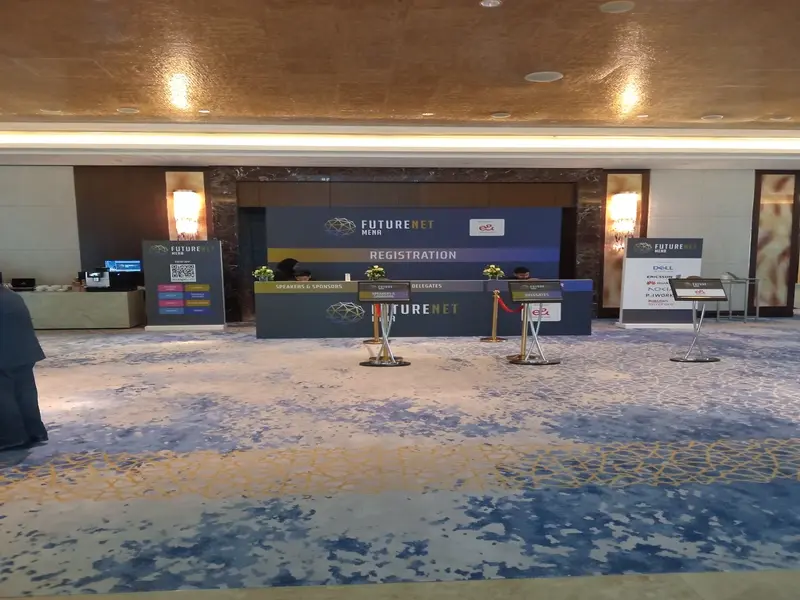
- FutureNet MENA 2025 brings telco leaders together in Dubai to explore AI, automation and digital transformation strategies.
- Operators discuss open networks, GenAI, and B2B monetisation amid growing pressure to innovate faster and smarter.
What happened: Operators, vendors and industry leaders gather in Dubai to map out AI-driven network transformation and new digital growth models
FutureNet Middle East & North Africa 2025 concluded on 28 May at the Conrad Hotel in Dubai, spotlighting telecom AI, network automation, and digital transformation as top strategic imperatives. Over two days, regional and global operators—including Etisalat by e&, stc, Zain, du, and others—joined tech vendors, consultants, and disruptors to debate how to reshape networks and business models in an AI-driven future.
Futurenet 2025 topics focused on enabling autonomous networks, accelerating operations transformation, and rethinking B2B strategies, FutureNet MENA 2025 explored the integration of GenAI, cloud-native architecture, and data monetisation. High-level sessions like “From telco to techco” and “Embracing AI-enabled networks” drove home the urgency of innovation in the Middle East’s telecom ecosystem. Among the keynote themes was the convergence of network and IT domains—pushing operators towards more agile, open, and partner-led service delivery models.
Also Read: FutureNet Middle East & North Africa 2025 in Dubai: Spotlight telecom innovation
Also Read: FutureNet World 2025 ends on a high with AI in focus
Why this is important
As MENA operators face rising data demand and declining traditional revenues, the conversations at FutureNet MENA 2025 offered both strategic direction and technical realism. The emphasis on AI, particularly GenAI in network ops and customer experience, signals a growing maturity in adoption. For instance, stc and e& are already investing in AI-driven platforms to improve agility and lower costs—moves that will likely shape regional benchmarks.
Moreover, sessions exploring B2B growth opportunities underscored the shift from connectivity to digital enablement. Telcos are eyeing industries like logistics, energy, and smart cities with tailored solutions, relying heavily on open APIs, ecosystem partnerships, and vertical expertise. Notably, speakers stressed that automation is no longer optional; it is critical to achieving operational scalability and service innovation in a competitive landscape.
As operators globally race to become techcos, the Middle East’s distinct mix of state-backed ambition and aggressive investment gives it an edge. Platforms like FutureNet MENA help clarify the execution path, providing a forum to align telco transformation with technological possibility.
At A Glance
- Name: Telecom AI, automation and partnerships lead FutureNet MENA 2025 dialogue
- Type: Internet infrastructure institution
- Base: Africa
- Profile focus: Institution
What It Does
- Public records support monitoring of its role, services, and key relationships.
Why It Matters
- Public-source signals support medium-impact monitoring for infrastructure visibility and dependency analysis.
- Operational criticality: Medium
- Time horizon: Next quarter
What To Watch
- Monitoring focuses on verified service continuity, governance changes, and relationship signals.
Track verified source updates, role changes, and current public evidence.
Public-source signals support medium-impact monitoring for infrastructure visibility and dependency analysis.
Longer-term relevance depends on verified operating, policy, and relationship changes.
Member Briefing
Deeper Profile Context
Login is required to unlock the full profile briefing and source notes.
Only for Strategy Circle
Strategic Circle Access
Open to all readers. Unlock profile briefings after joining and logging in.
Join Strategic CircleOnly for Leadership Alliance
Leadership Alliance Access
For owners and management of IP-holding companies. Login required to unlock.
Join Leadership Alliance


