Summary
- What it says: Tech Mahindra and Microsoft are bringing AI and digital twins into telecom operations, highlighting how software intelligence is becoming central to managing increasingly complex 5G networks.
- Main topic: AI infrastructure economics; Telecom spectrum and security
- Context: market / briefing / Global
•Partnership merges Azure AI, cloud and digital twin tech to modernise telecom network operations
•Marks shift to predictive, software-defined network management as operators chase efficiency gains
The fact
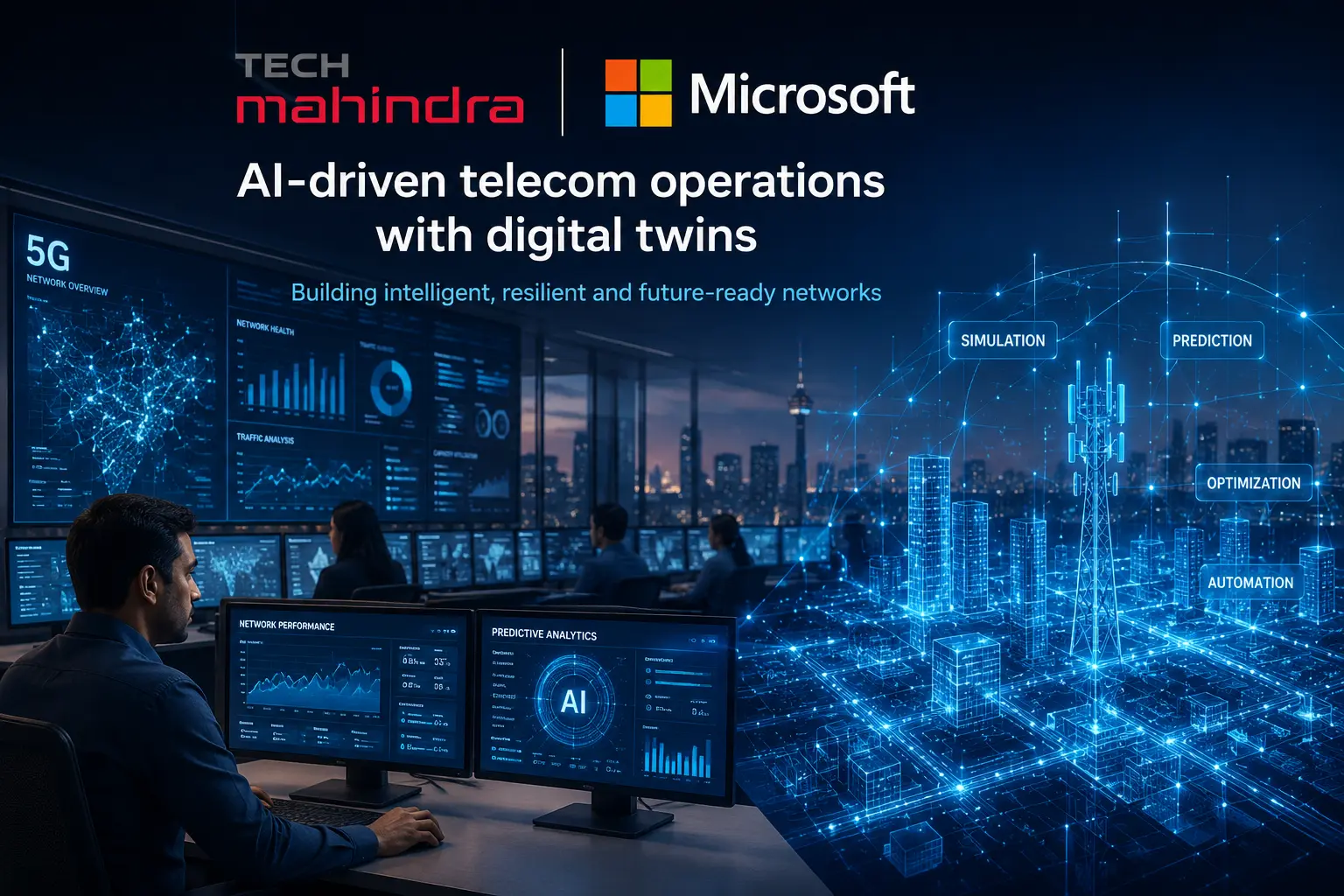
Tech Mahindra and Microsoft have announced a strategic collaboration to help telecommunications operators modernise network operations by combining Microsoft Azure cloud services, artificial intelligence and digital twin technology. The partnership integrates Tech Mahindra's telecom expertise with Microsoft's AI capabilities, including Azure AI Foundry, Azure Digital Twins and Microsoft Copilot technologies, to support network planning, operations and lifecycle management.
According to the companies, digital twins will create virtual representations of telecom infrastructure that allow operators to simulate network behaviour before implementing changes in live environments. Combined with AI-driven analytics, the platform is designed to automate operational processes, identify potential issues earlier and improve network performance while reducing manual intervention.
The initiative targets communications service providers seeking to manage increasingly complex 5G and future network environments. As operators expand cloud-native architectures and introduce AI-enabled services, the partnership aims to improve operational efficiency while accelerating service deployment and network optimisation.
The assessment
The significance of the partnership lies less in the technologies themselves than in how operators will manage networks over the coming decade. Traditional network operations have relied on reactive maintenance and manual engineering decisions. As 5G architectures become more distributed and AI applications place greater demands on performance, that model becomes harder to sustain.
Digital twins allow operators to test configuration changes, predict failures and evaluate performance before deploying to production. Combined with generative AI, these virtual models can evolve from engineering tools into operational decision-support systems, helping network teams prioritise maintenance, automate routine processes and respond faster to service disruptions.
For operators, the commercial value extends beyond efficiency. Faster fault resolution, improved resource utilisation and shorter deployment cycles reduce operating costs while improving customer experience. Predictive operations also protect network availability as AI-driven traffic places growing pressure on infrastructure.
For BTW readers, the implication is clear: competitive advantage is shifting from physical asset ownership towards software-defined operational capability. The quality of operational data and automation may become as strategically important as spectrum or fibre.
What to watch
Watch for commercial deployments among major communications service providers and evidence of measurable operational improvements, such as reduced outage rates or faster service activation. It will also be important to monitor whether other telecom technology vendors expand similar AI and digital twin platforms as operators accelerate network modernisation.