
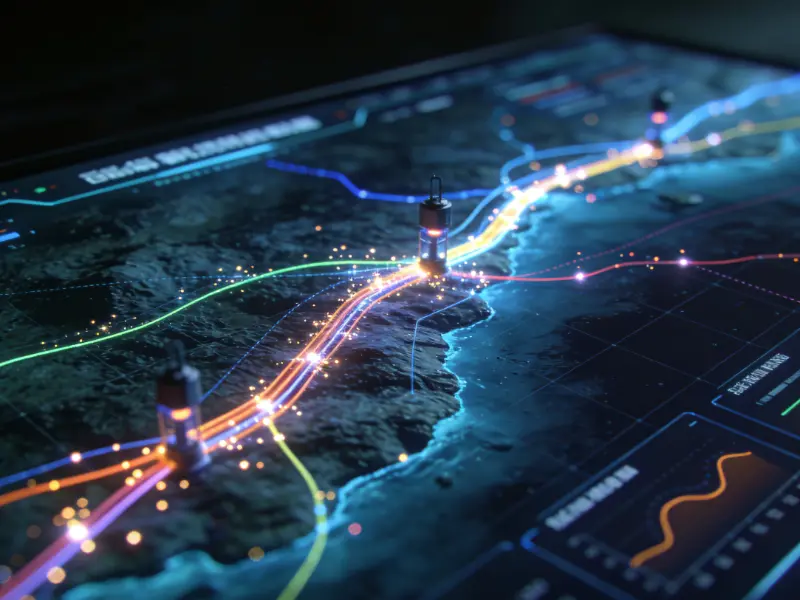
- Tampnet has implemented real-time fibre-optic sensing technology to monitor and protect subsea cable infrastructure.
- The system seeks to improve fault detection and response times, enhancing network reliability for offshore and onshore users.
What happened: Tampnet enhances subsea cable monitoring
Tampnet, the Norwegian offshore connectivity provider, has deployed advanced real-time fibre-optic sensing along its subsea cable routes to improve the resilience and protection of its network. The system, based on distributed acoustic and temperature sensing (DAS/DTS), enables remote, continuous monitoring of environmental and operational conditions along critical fibre infrastructure.
By analysing optical signals reflected along the length of the cable, the sensing technology can detect disturbances such as fishing activity, anchoring or sudden temperature changes that may indicate physical damage or increased strain. This capability allows Tampnet’s network operations team to identify and locate potential issues far more quickly than traditional periodic testing, which can involve time-consuming manual inspection or reactive fault-finding after service degradation.
Tampnet said the deployment covers both new and existing segments of its offshore and onshore network, linking offshore energy platforms, coastal landing stations and terrestrial network points. The provider emphasised that early warning and precise location data will enable rapid response by technicians and maintenance teams, reducing downtime and limiting the scale of outages.
The system also gathers valuable operational data that can be used for predictive maintenance, helping Tampnet to anticipate potential wear points and schedule repairs before faults occur. Fibre-optic sensing technologies are increasingly used in mission-critical networks where continuous availability is essential, such as energy grids, industrial automation and oil and gas operations.
Also Read: Medusa subsea cable lands in Nador, highlighting connectivity gains and autonomy concerns
Also Read: Google announces new subsea cable linking Australia and Thailand
Why it’s important
Subsea and terrestrial fibre cables form the backbone of global communications infrastructure, carrying vast quantities of internet, enterprise and industrial data. Physical disruptions to these cables — whether from human activity, environmental conditions or equipment failure — can cause significant service interruptions for customers and can be costly to fix.
Real-time sensing represents a proactive shift in network operations. Instead of waiting for faults to be reported by users or service layers, operators like Tampnet can see and react to physical conditions as they evolve. This capability is particularly valuable in offshore environments, where access is limited and weather conditions can complicate maintenance.
Moreover, as demand for high-capacity, low-latency connections grows — driven by cloud services, data-intensive applications and industrial digitalisation — operators must ensure that infrastructure is resilient and responsive. Early detection and reduced fault resolution times can improve customer experience and uphold service level agreements.
In broader industry terms, the adoption of real-time fibre sensing aligns with trends towards smarter, more automated network management, where data from the physical layer informs predictive analytics and operational decisions. For critical sectors like energy and marine connectivity, such enhancements are becoming standard practice.