
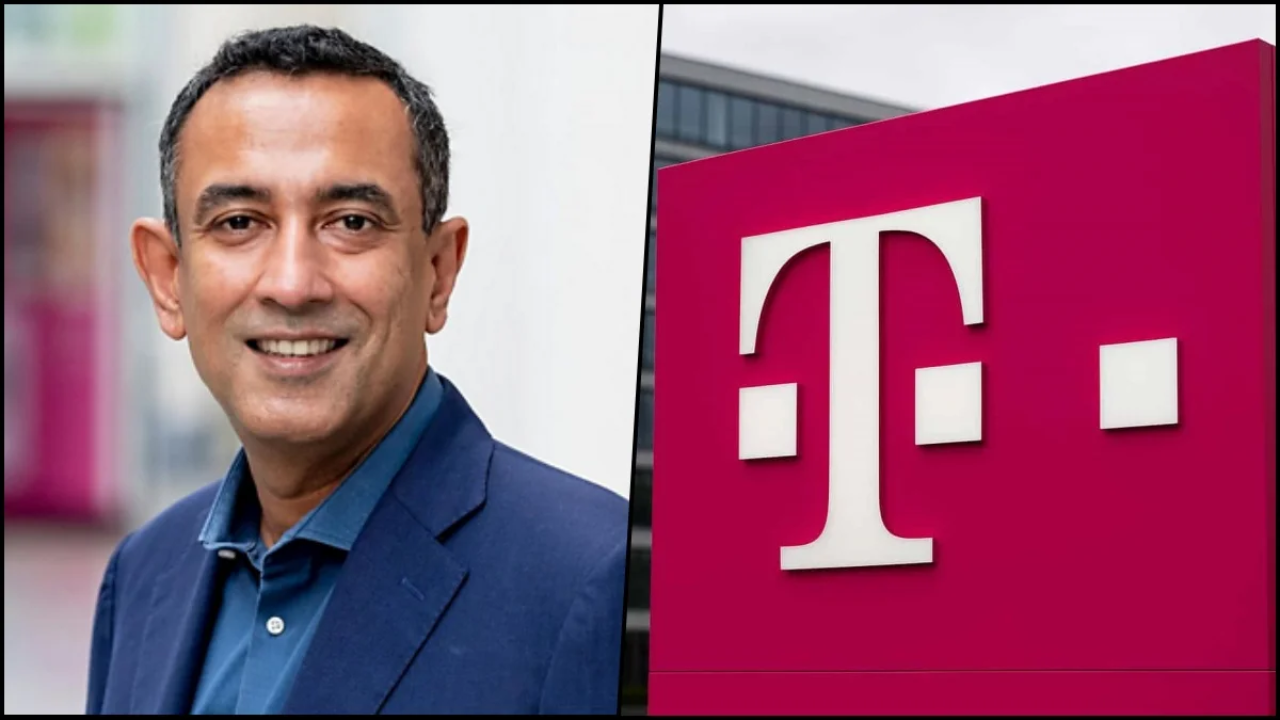
Srini Gopalan named T-Mobile CEO amid competitive pressures is profiled by BTW Media because published evidence links it to internet infrastructure, governance, operational dependencies, or market visibility.
Srini Gopalan named T-Mobile CEO amid competitive pressures is tracked as a internet infrastructure institution within the internet infrastructure ecosystem.
Srini Gopalan named T-Mobile CEO amid competitive pressures has public-source relevance to network operations, governance, dependency mapping, or market structure.
Srini Gopalan named T-Mobile CEO amid competitive pressures is tracked as a internet infrastructure institution within the internet infrastructure ecosystem.
Public-source signals support medium-impact monitoring for infrastructure visibility and dependency analysis.
Srini Gopalan named T-Mobile CEO amid competitive pressures is profiled by BTW Media because published evidence links it to internet infrastructure, governance, operational dependencies, or market visibility.
Public-source signals support medium-impact monitoring for infrastructure visibility and dependency analysis.
| 0.90–1.00 | A | High — direct sources |
| 0.75–0.89 | A/B | Strong |
| 0.55–0.74 | B/C | Medium |
| 0.35–0.54 | C/D | Weak–medium |
| 0.10–0.34 | D | Weak signal |
| 0.00–0.09 | D | Internal monitoring |
Several public sources
- Gopalan moves up from COO to lead T-Mobile on 1 November
- Sievert becomes Vice Chair, focusing on innovation and strategy
What happened: Succession plan executed as T-Mobile seeks growth in saturated US market
T-Mobile has officially appointed Srini Gopalan, its current Chief Operating Officer, as its next Chief Executive Officer starting 1 November 2025. He will succeed Mike Sievert, who will take on the newly created position of Vice Chairman, advising the company on long-term strategy, talent and innovation. The announcement follows a board-approved leadership transition aligned with the company’s growth goals.
Gopalan is a seasoned telecom executive who previously led Deutsche Telekom’s Germany business, where he is credited with accelerating growth in fibre deployment and mobile services. He has also held leadership roles at Vodafone and Airtel, giving him broad experience in both mature and emerging markets. Under his tenure as COO, Gopalan oversaw key expansions in T-Mobile’s networks, services and customer base. The company says the transition will be seamless and aims to maintain momentum in 5G, fixed wireless and broadband segments.
Also Read: Srini Gopalan to become T-Mobile CEO on 1 November 2025
Also Read: Gopalan to replace Sievert as T-Mobile US CEO in six weeks
Why it’s important
This leadership change matters on multiple fronts. Having a successor from within ensures operational continuity in a competitive US wireless market facing slower subscriber growth. Gopalan’s track record in both infrastructure and commercial execution adds credibility to investor confidence and industry stakeholders. His history in expanding fibre and mobile markets aligns with T-Mobile’s strategic push to strengthen its broadband and mobile convergence offerings.
Sievert’s move to Vice Chair ensures he remains involved in guiding technology investments and innovation. That offers stability in governance. As T-Mobile competes with Verizon and AT&T, strong leadership continuity matters for spectrum bidding, network expansion and strategic acquisitions. Given his operational grounding, Gopalan is well placed to steer T-Mobile through shifts in consumer demand and regulatory environments. The transition reinforces that the company is not entering upheaval but evolving deliberately.
At A Glance
- Name: Srini Gopalan named T-Mobile CEO amid competitive pressures
- Type: Internet infrastructure institution
- Base: Europe and Middle East
- Profile focus: Institution
What It Does
- Public records support monitoring of its role, services, and key relationships.
Why It Matters
- Public-source signals support medium-impact monitoring for infrastructure visibility and dependency analysis.
- Operational criticality: Medium
- Time horizon: Next quarter
What To Watch
- Monitoring focuses on verified service continuity, governance changes, and relationship signals.
Track verified source updates, role changes, and current public evidence.
Public-source signals support medium-impact monitoring for infrastructure visibility and dependency analysis.
Longer-term relevance depends on verified operating, policy, and relationship changes.
Member Briefing
Deeper Profile Context
Login is required to unlock the full profile briefing and source notes.
Only for Strategy Circle
Strategic Circle Access
Open to all readers. Unlock profile briefings after joining and logging in.
Join Strategic CircleOnly for Leadership Alliance
Leadership Alliance Access
For owners and management of IP-holding companies. Login required to unlock.
Join Leadership Alliance


