

- Drones, which are autonomously or remotely controlled and equipped with advanced tech, execute varied tasks across sectors, transforming many industries.
- From enhancing military operations and precision agriculture, to revolutionising package delivery, cinematography, and infrastructure inspection, these unmanned aerial vehicles are redefining operational capabilities and exploring new frontiers in the skies.
OUR TAKE
As drones continue to evolve, their applications will expand, impacting more sectors and changing the way we live, work, and play. From the skies above military hotspots to the fields of farms, from bustling city streets to remote wilderness areas, drones are proving that the sky’s limit is only the beginning of their potential.
–Vicky Wu, BTW reporter
Hovering on the horizon, unmanned aerial vehicles (UAVs), more commonly known as drones, are not merely toys for hobbyists or tools for surveillance; they have transcended these roles to transform industries and reshape our world in once science-fictional ways. These aircraft, without a human pilot aboard, are operated either autonomously through onboard computers or controlled remotely from the ground or another vehicle. Their size, complexity, and function vary widely, equipped with an array of technologies including cameras, GPS, and sensors, enabling them to perform various tasks.
From military operations to agricultural advancements, from delivering packages to capturing breathtaking cinematography, drones are soaring to new heights and pushing the boundaries of what’s possible. Here, we explore how drones are making a significant impact across five sectors, showcasing the latest applications that are redefining industries and challenging the very concept of what the sky’s limit truly is.
1. Military operations: The dawn of autonomous warfare
“We’re entering a new era of war where the battlefield is not just on the ground but also in the air, and increasingly in cyberspace. Drones are the vanguard of this transformation.”
General David Petraeus, former Director of the CIA and commander of U.S. forces in Iraq and Afghanistan.
In the dynamic theatre of modern defence, drones have transitioned from mere eyes in the sky to pivotal combatants on the battlefield. Their role has exponentially expanded, serving not only as sentinels but also as offensive and defensive instruments, marking the inception of a new era in warfare where autonomy and AI play a critical part. These sophisticated machines, equipped with advanced sensors, communications gear, and weaponry, have the capability to conduct prolonged surveillance and strike missions with unparalleled precision, thereby reducing the risk to human life and enhancing strategic advantages.
One of the most significant advancements is the deployment of the Autonomous Swarm Intelligence System (ASIS), a advanced technology developed by the United Kingdom’s Ministry of Defence. ASIS comprises a fleet of miniature drones, each no larger than a small bird, that can be released en masse to perform coordinated surveillance and information gathering in hostile environments. These drones utilise advanced swarm algorithms to communicate with each other and operate as a cohesive unit, effectively creating a network of eyes and ears that can adapt to changing conditions on the battlefield.
Another notable application is the integration of the Enhanced Reconnaissance and Strike Drone (ERSD) by the United States Armed Forces. The ERSD is a medium-altitude, long-endurance drone equipped with both passive and active sensors, enabling it to detect, track, and engage targets over vast distances with a high degree of precision. This drone has been instrumental in operations requiring stealth and prolonged surveillance, significantly enhancing situational awareness for commanders on the ground.
Moreover, Israel’s deployment of drones, especially the Hermes 900 by Elbit Systems, showcases its military innovation and tactical acumen. These MALE UAVs, equipped with AI and edge computing, offer real-time data processing for enhanced surveillance and reconnaissance. Capable of long-duration flights and sophisticated payload management, they streamline operations and improve situational awareness. Autonomous functionalities reduce risks, making them indispensable in maintaining national security and border control in a volatile region.
Also read: How to crush an AI interview (and pitfalls to avoid)
2. Agriculture: Sowing the seeds of innovation
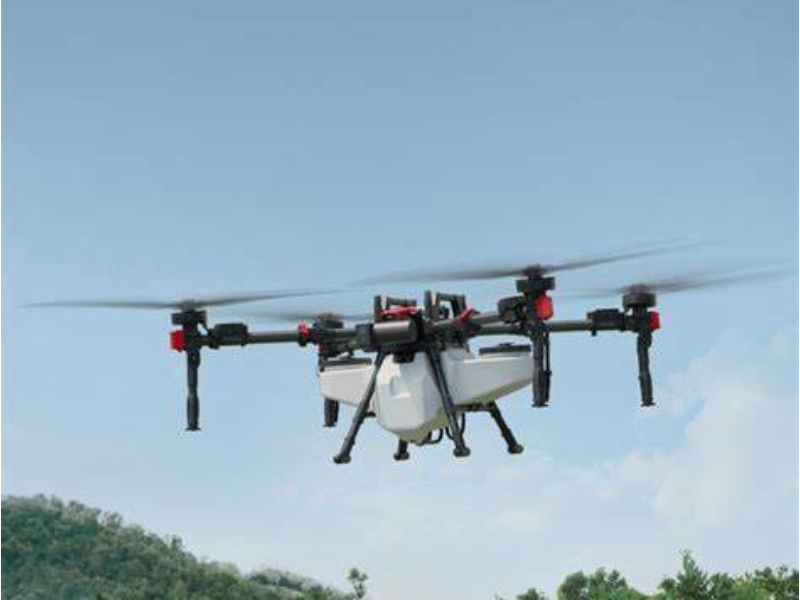
In the verdant expanse of agricultural landscapes, drones have emerged as game-changers, cultivating the future of farming with precision and sustainability. These airborne robots, equipped with an array of sensors and imaging capabilities, are optimising crop yields, conserving resources, and reducing environmental impact, heralding a new era of smart agriculture. By merging traditional farming practices with advanced technology, drones are revolutionising the way we grow food, making the sector more productive, efficient, and environmentally friendly.
One of the most striking examples of this transformation is the DJI Agras T50. This drone is distinguished by its remarkable capacity to manage significant payloads, adeptly spraying liquids or dispersing solid materials over vast expanses. Its advanced dual-rotor coaxial propulsion mechanism empowers the T50 to carry up to 40 litres of liquid for spraying purposes or an impressive 50 kilograms of solids for distribution, all while achieving coverage rates of up to 21 hectares per hour with exceptional efficacy.
XAG, a pioneer in agri-tech, has launched the P150 and JetSeed™, innovative UAVs transforming seed sowing and crop management. XAG P150 is a multi-functional agricultural drone that embodies the latest advancements in precision agriculture. With a remarkable payload capacity of seventy kilograms, the P150 is capable of spraying, sowing, surveying, and transporting goods. Its robust construction, featuring enhanced materials for durability and reduced maintenance costs, positions it as a reliable partner for a variety of agricultural tasks.
Meanwhile, XAG JetSeed™ is designed to spread seeds with incredible speed and accuracy, covering extensive areas swiftly and efficiently. Operable via a user-friendly smartphone interface, the JetSeed™ adapts to various environmental conditions, making it a versatile tool for farmers seeking to maximise their planting efforts.
Also read: Aespa’s merging of AI and reality points to the future of entertainment
3. Delivery services: Airborne logistics
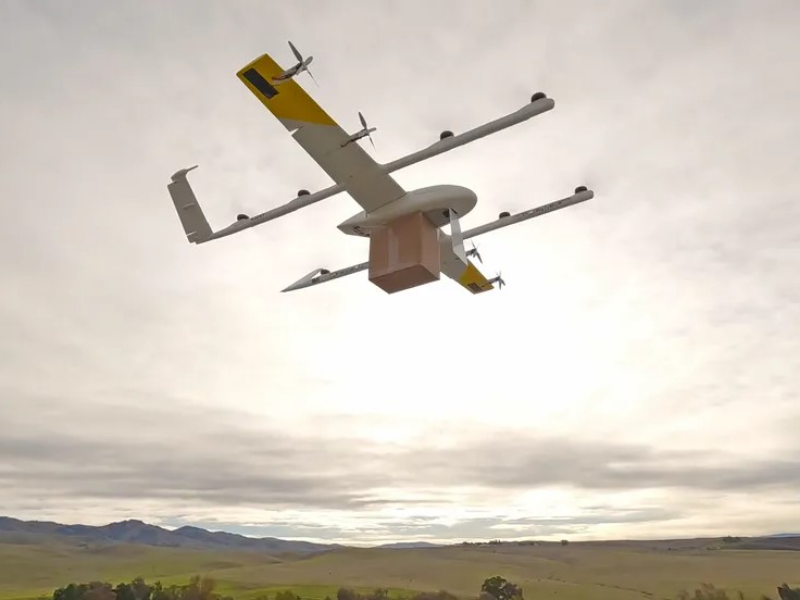
The logistics landscape has undergone a seismic transformation with the advent of drone technology, marking a pivotal evolution in the realm of delivery services. UAVs have emerged as a game-changing solution, offering unprecedented speed, flexibility, and efficiency in the transportation of goods. Their integration into the logistics sector has opened up new avenues for same-day and on-demand delivery, particularly in areas where traditional ground-based delivery methods face logistical challenges or inefficiencies.
One of the most notable advancements in drone delivery services is the Amazon Prime Air mk30, a advanced delivery drone that boasts an impressive range and payload capacity. With the ability to carry packages weighing up to 5 kilograms over distances of 25 kilometres, it ensures swift and efficient last-mile deliveries. Enhanced safety features and improved aerodynamics make this drone a standout choice for reliable package transportation.
Another notable development is the Google Wing Delivery Drone Series 5, which has been deployed in select urban and rural areas. This drone is capable of delivering items up to 3 kilograms and features a vertical take-off and landing (VTOL) capability, making it suitable for densely populated environments. Its advanced navigation system and collision avoidance technology ensure safe and secure deliveries, even in challenging weather conditions.
In addition, the UPS Flight Forward M2E, designed specifically for emergency and medical deliveries, has proven its worth in crisis situations. With a maximum payload of 2.5 kilograms and a range exceeding 30 kilometres, this drone can deliver critical supplies such as blood, vaccines, and medications within minutes rather than hours. Its robust design and advanced communication systems ensure that deliveries are completed swiftly and without interruption.
4. Photography and cinematography: Capturing the unseen
“You have to be very prudent with what you are doing and what sort of tools you are utilizing. Drones have become a wonderful new tool in filmmaking.”
Werner Herzog, a German motion-picture director
The horizons of photography and cinematography have been dramatically expanded by the introduction of drone technology, enabling artists and filmmakers to capture visuals from perspectives previously unattainable. The skies have become a canvas, and drones, the brushes, painting with light and shadow scenes that once lay hidden from terrestrial lenses.
A prime example of this aerial revolution is evident in the film industry, where drones have become indispensable tools for capturing sweeping panoramas and exhilarating action sequences. One standout example is the use of drones in the filming of “Elysium Skies,” a science-fiction thriller that required sweeping vistas of a futuristic metropolis. Drones equipped with state-of-the-art stabilisation technology and high-definition cameras were deployed to capture the intricate details of the city’s skyline, providing a seamless blend of real-world settings with CGI enhancements.
These aerial shots not only added a layer of realism but also facilitated complex camera movements that would have been prohibitively expensive or physically impossible with traditional crane or helicopter shots.
Furthermore, “The Forgotten Coast,” an adventure drama, demonstrated the versatility of drone cinematography by using drones to film intense action sequences set along rugged coastlines. The drones were able to follow the actors as they navigated treacherous cliffs and crashing waves, delivering heart-stopping visuals that would have been too dangerous for human operators. The footage captured by the drones added an element of thrill and realism to the action scenes, immersing the audience in the story’s perilous setting.
Professional photographers have also seized upon the opportunities presented by drones, particularly models like the DJI Mavic 3, which have become synonymous with aerial photography. The Mavic 3’s compact size, coupled with its high-quality camera and advanced stabilisation features, makes it an ideal choice for capturing images in remote and challenging environments. Photographers employed drones to document the aftermath of natural disasters, such as the volcanic eruption in Iceland, providing a unique perspective on the scale and impact of such events.
Pop quiz
Which of the following films used drone technology to capture sweeping vistas and detailed cityscapes, blending real-world settings with CGI to create a futuristic metropolis?
A. The Forgotten Coast
B. Elysium Skies
C. Skyline Dreams
D. Urban Legends: Future City
The correct answer is at the bottom of the article.
5. Construction: Pioneering precision, efficiency, and sustainability
“On-screen, in the architect’s CAD file, everything looks perfect. But on-site, in the mud and dust, things are different. And the difference between concept and reality is where about $3 trillion of that $8 trillion gets lost, in a cascade of change orders, rework, and schedule slips. Drones are meant to close that gap.”
Chris Anderson, CEO of 3DR
The construction industry, ever evolving to embrace innovation, has found a powerful ally in the form of drones. These agile flying machines have transformed the way construction sites are surveyed, monitored, and managed, ushering in a new era of efficiency and safety.
One such innovative application is the SkyEye Sentinel X6 by the British construction firm, BuildSmart Innovations, on the expansive redevelopment of the historic Riverfront District in Bristol. This state-of-the-art drone is equipped with high-resolution cameras and advanced LiDAR scanning technology, enabling it to create detailed 3D models of the construction site. These models are crucial for accurate volume calculations, progress tracking, and safety inspections, all of which can be conducted with minimal disruption to ongoing work.
The drone’s autonomous flight capabilities allow it to cover large areas swiftly and repeatedly, providing up-to-date data essential for project managers to make informed decisions regarding scheduling, resource allocation, and quality control.
Besides, another pioneering instance is the deployment of the LoadLifter XL by the infrastructure giant, ConnectBuild, during the construction of the CrossCountry Rail Link. This heavy-lift drone has been instrumental in delivering materials to hard-to-reach areas of the construction site, particularly in the tunneling sections. With a lifting capacity of up to 200 kilograms, the LoadLifter XL can transport items such as concrete blocks, piping, and equipment directly to where they are needed, reducing the reliance on cranes and other heavy machinery in confined spaces.
This not only enhances safety by minimising the presence of workers in potentially hazardous zones but also improves logistics efficiency, as materials can be delivered precisely when and where they are required, without causing delays due to traffic congestion or lengthy waiting times. The drone’s precision landing system ensures that deliveries are made accurately and safely, even in challenging environmental conditions. These applications demonstrate how drones are revolutionising construction practices, contributing to cost savings, increased productivity, and improved safety protocols.
The correct answer is B. Elysium Skies