Summary
- Signed ECH retries would give configuration-signing keys a distinct privacy role.
- Operators should separate responsibility for recovery from responsibility for privacy-changing instructions.
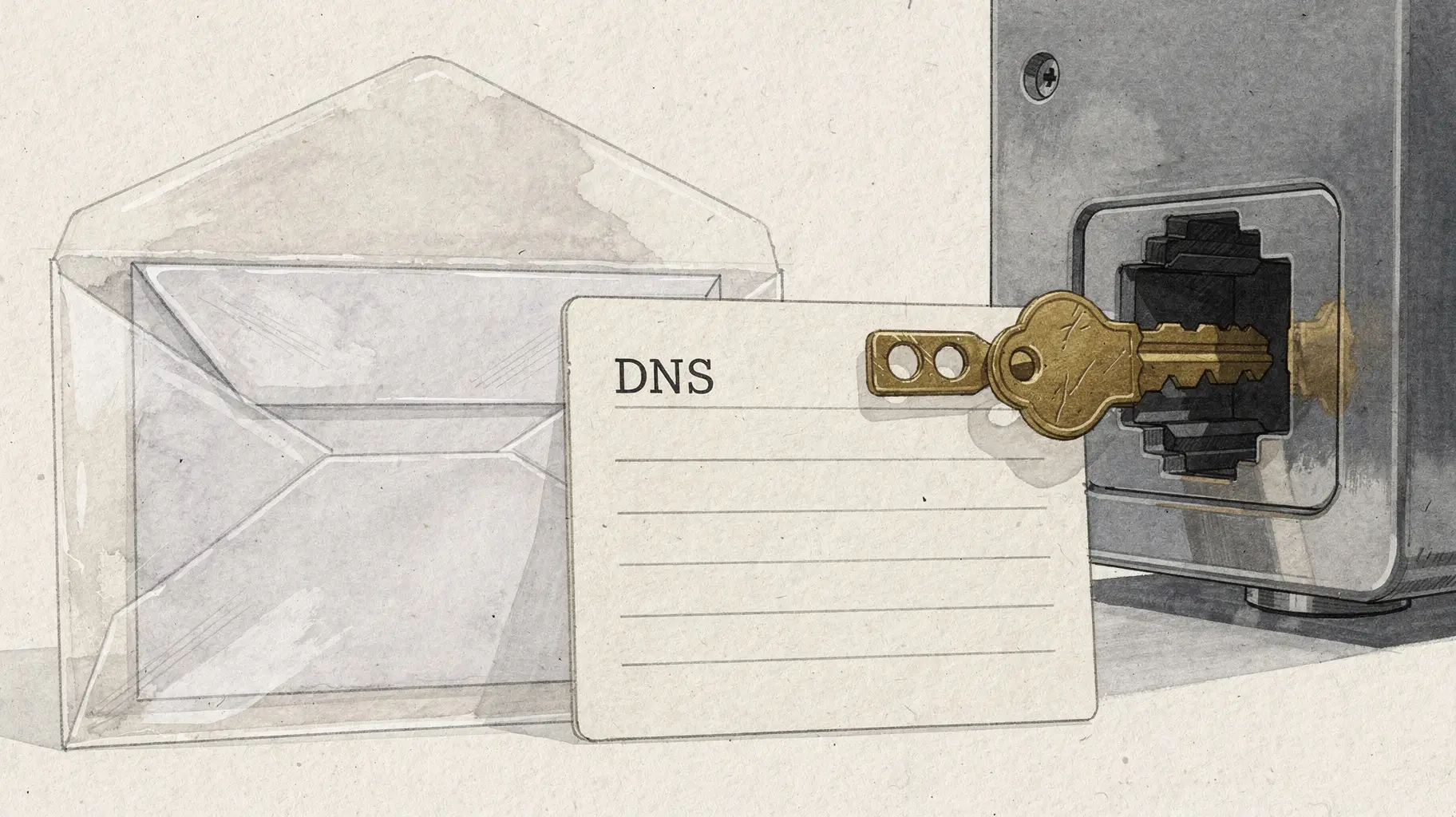
A spare key is rarely just a convenience. In a proposal for Encrypted ClientHello, it would carry authority over how a connection recovers when its first attempt fails.
ECH hides the inner TLS greeting. DNS can supply its configuration. Today's ECH specification authenticates retries through the public-name certificate. Signed updates propose a different trust anchor: keys authorized by the initial configuration. A signed instruction can also disable ECH on the retry.
That makes signing authority an operational responsibility worth naming. A dashboard showing successful connections would not answer who authorized a privacy-changing instruction.
Availability and privacy need separate evidence, even when the same team operates both.
The individual draft is dated 6 July 2026, not an approved standard or a deployment announcement. Initial DNS delivery and origin authentication remain separate concerns. The useful question for operators is already clear: who owns the spare key, and who can explain its use?
Member Briefing
Deeper Profile Context
Sign in with the right membership level to unlock the full briefing and source notes.
Only for Strategic Circle
Strategic Circle
Open to all readers. Unlock profile briefings after joining and signing in.
Join Strategic CircleOnly for Leadership Alliance
Leadership Alliance
For qualified IP-asset owners and management; sign in to unlock alliance briefings.
Join Leadership Alliance