- SASE addresses the challenges of securing remote workforces, cloud applications, and distributed network environments.
- SASE offers several significant benefits that make it a compelling choice for modern enterprises.
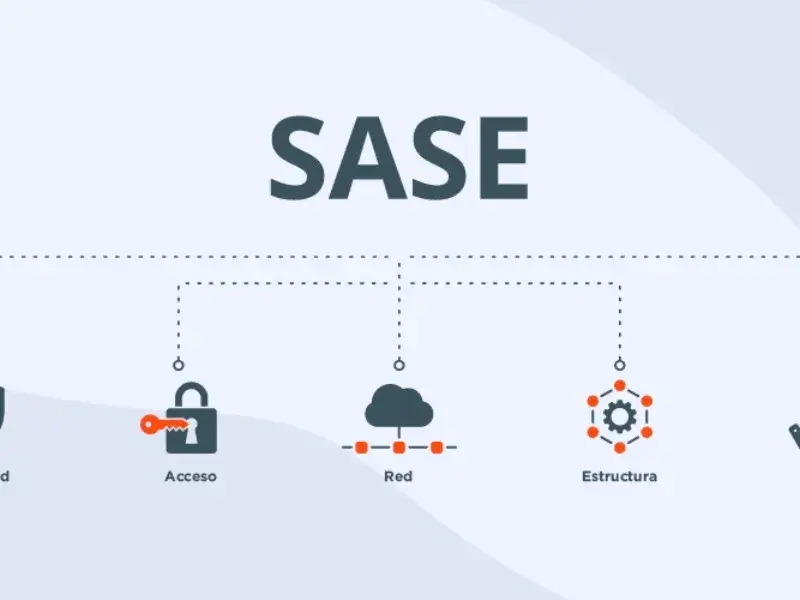
Secure Access Service Edge (SASE) is an emerging framework that redefines the way network security and connectivity are managed in the digital era. Coined by Gartner in 2019, SASE integrates wide-area networking (WAN) and network security services into a single, cloud-native service model. This approach addresses the challenges of securing remote workforces, cloud applications, and distributed network environments.
Core components of SASE
SASE combines several key components into a unified service. These include Software-Defined Wide Area Networking (SD-WAN), secure web gateways (SWG), cloud access security brokers (CASB), firewall as a service (FWaaS), and zero-trust network access (ZTNA). Together, these components provide comprehensive security and optimised network performance.
Software-Defined Wide Area Networking (SD-WAN)
SD-WAN is central to SASE, offering intelligent, application-aware routing across the WAN. It enhances performance by steering traffic over the most efficient path, whether that is MPLS, broadband, or LTE. This ensures optimal application performance and user experience, especially for cloud-based applications.
Secure Web Gateways (SWG) and Cloud Access Security Brokers (CASB)
SWGs protect users from web-based threats by inspecting web traffic for malicious content and enforcing security policies. CASBs provide visibility and control over cloud service usage, ensuring compliance with security policies and protecting sensitive data in cloud environments. Both SWGs and CASBs are essential for safeguarding remote and mobile users accessing cloud applications.
FWaaS delivers firewall capabilities from the cloud, providing scalable and flexible security without the need for on-premises hardware. It offers comprehensive protection against threats and enforces security policies across the entire network, regardless of user location.
Zero-Trust Network Access (ZTNA)
ZTNA is a key principle of SASE, ensuring that no user or device is trusted by default. It requires continuous verification of user identities and device health before granting access to applications and data. This minimises the risk of unauthorised access and lateral movement within the network.
Also read: What is cloud backup and what are its benefits?
Also read: Mission Cloud launches ‘AI Foundation’ to optimise AWS solutions
Benefits of SASE
SASE offers several significant benefits that make it a compelling choice for modern enterprises. By converging networking and security functions into a single service, SASE simplifies management and reduces complexity. This convergence leads to cost savings and operational efficiency, as organisations no longer need to manage multiple disparate solutions.
Enhanced security is another major benefit of SASE. With its integrated approach, SASE provides consistent security policies and protections across all users, devices, and locations. This holistic view of the network helps detect and respond to threats more effectively.
SASE also improves performance and user experience. By leveraging SD-WAN and other cloud-native technologies, SASE ensures optimal routing and minimises latency, delivering a better experience for users accessing cloud applications and services.
Why SASE Is important
The shift to remote work, the proliferation of cloud applications, and the increasing sophistication of cyber threats have all driven the need for a new approach to network security and connectivity. Traditional perimeter-based security models are no longer adequate for protecting modern, distributed networks.
SASE addresses these challenges by providing a flexible, scalable, and secure framework that adapts to the evolving needs of today’s digital enterprises. It supports the growing trend of remote and hybrid work environments, ensuring secure and reliable access to applications and data from any location.
SASE represents a significant evolution in network security and connectivity. By integrating key networking and security functions into a unified, cloud-native service, SASE offers enhanced security, improved performance, and simplified management. As organisations continue to navigate the complexities of the digital landscape, SASE provides a robust solution for ensuring secure and efficient network operations.