Summary
- Rogers' own published account attributes the 8 July 2022 outage to a maintenance update in the core network that caused some routers to malfunction.
- Ottawa's answer was a Telecommunications Reliability Agenda built on carrier commitments, including a Memorandum of Understanding on mutual assistance with emergency roaming.
- The federal and regulatory material reviewed for this briefing displays the commitment. It does not display the drill result, the measured threshold or the named independent verifier that would make the commitment auditable.
Rogers published its own account of the night, and the attribution is worth the attention. The operator's published message from chief executive Tony Staffieri attributes the outage to a maintenance update in the core network that caused some routers to malfunction (Rogers — a message from Tony Staffieri). A change went in. Machines responsible for carrying traffic stopped behaving. Service went with them.
That sequence matters less for what it says about one company than for what it implies about the architecture of assurance. A monitoring path that lives inside the operator whose core network is being changed shares the fate of that core. The check and the failure ride the same routers, draw on the same configuration, and are supervised by the same organisation on the same night. This is an argument about structure rather than a finding about Rogers' specific monitoring design, which this review did not inspect — but the structure is not a Rogers peculiarity.
It is the shape of a single-operator control plane, and it explains why the remedy that followed is so interesting: Canada did not chase the control inward. It went outward, to the competitors.
In September 2022 the federal government announced measures to improve telecommunications reliability following the outage, and the federal record describes a Telecommunications Reliability Agenda built on commitments from carriers (ISED — new measures to improve telecommunications reliability). The same federal record describes a Memorandum of Understanding on Telecommunications Reliability under which signatories commit to mutual assistance during outages, including emergency roaming so that customers can reach emergency services (ISED — Memorandum of Understanding on Telecommunications Reliability).
The regulator moved on a parallel track. The CRTC opened a proceeding examining the resilience and reliability of telecommunications networks with a specific focus on 9-1-1 following the 8 July 2022 outage (Telecom Notice of Consultation CRTC 2022-266). A parallel policy page, identified as Telecom Regulatory Policy CRTC 2022-218, is part of the same post-outage record (Telecom Regulatory Policy CRTC 2022-218).
What the federal pages give is the shape of the bargain, not its terms: no clause text, no activation threshold, no deadline and no test protocol is quoted on them, which limits what can responsibly be said about how the instrument operates. That limitation belongs here, next to the description it constrains.
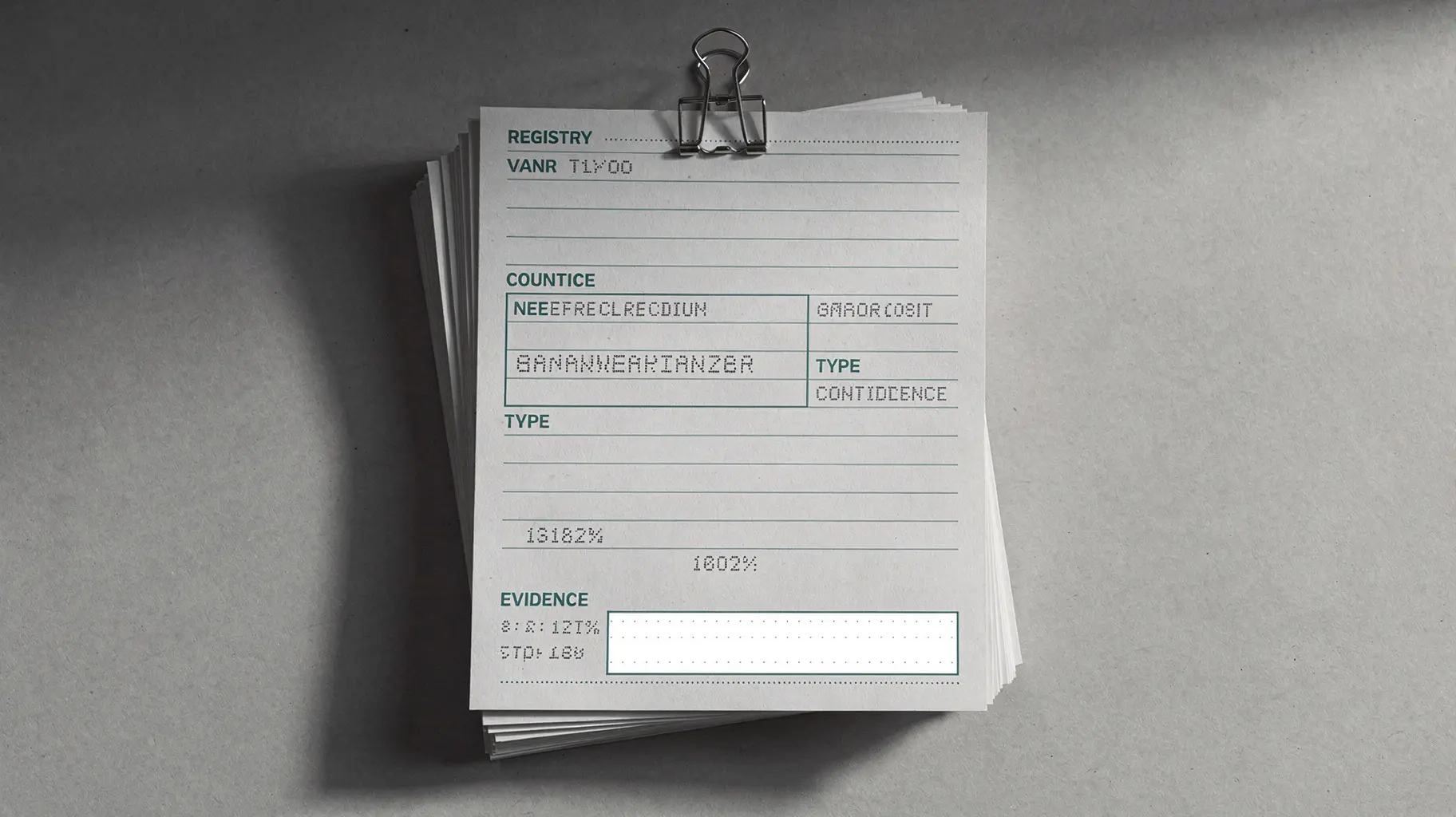
So here is the test I would apply to any assurance regime, and it is a test I am proposing rather than a standard anyone has enacted. Four elements separate a control from an announcement. Written activation triggers, so that someone other than the failing carrier decides when help begins. A measured performance threshold, so that "assistance" carries a number and a clock. Scheduled drills with retained results, so the mechanism is exercised while the outcome is still cheap. A named independent verifier that publishes attestations, so the evidence does not come from the party being tested.
Emergency roaming is, in principle, the strongest of these mechanisms, because it does the one thing an internal control cannot: it moves the call off the broken network entirely. Its weakness is arithmetic and incentive. A promise to carry a rival's emergency traffic presumes that the rival has capacity to spare at the exact moment a national network has failed, and the same compact that makes carriers each other's backup leaves them each other's competitors for the other three hundred and sixty-four days. Reserve capacity held for a competitor's customers is cost without revenue attached.
That is the sort of commitment that either gets tested on a schedule or quietly decays into a line in a communiqué.
Across the federal and regulatory material read for this briefing — the Rogers statement, the September 2022 ISED announcement, the ISED memorandum page, CRTC notice 2022-266 and CRTC policy 2022-218, whose text could not be retrieved for this review — no retained record displayed a published test result, a measured compliance threshold or a named independent verifier for the cross-carrier emergency roaming commitment. That is a statement about the pages read here on 11 November 2026, not a claim about what may exist in filings that were not retrieved.
The classification would change the day any one of four documents appears: a drill report with dates, participating carriers and outcomes; a published threshold stating how quickly assistance must be active; an attestation signed by someone who is not a signatory; or a documented activation during a real outage. Any one of those moves this from a promise on paper to a control on record. Until then, the accurate description of Canada's post-outage architecture is a formal commitment with no visible proof of exercise.
Rogers' routers failed in the most ordinary way imaginable: a change, applied, that took out the machines carrying the load. Every operator is one maintenance window away from repeating it. The instinct that produced the mutual-assistance compact is right, and the proof it has offered so far is not. Promises are plans. Drills are controls. Canada has published the plan.
Member Briefing
Deeper Trend Context
Sign in with the right membership level to unlock the full briefing and source notes.
Strategic Circle
A daily briefing in your language, built from changes we have verified.
Join for USD 20/monthCancel anytime.
Public reporting stays free. Member research, the daily briefing and the forum need a membership.