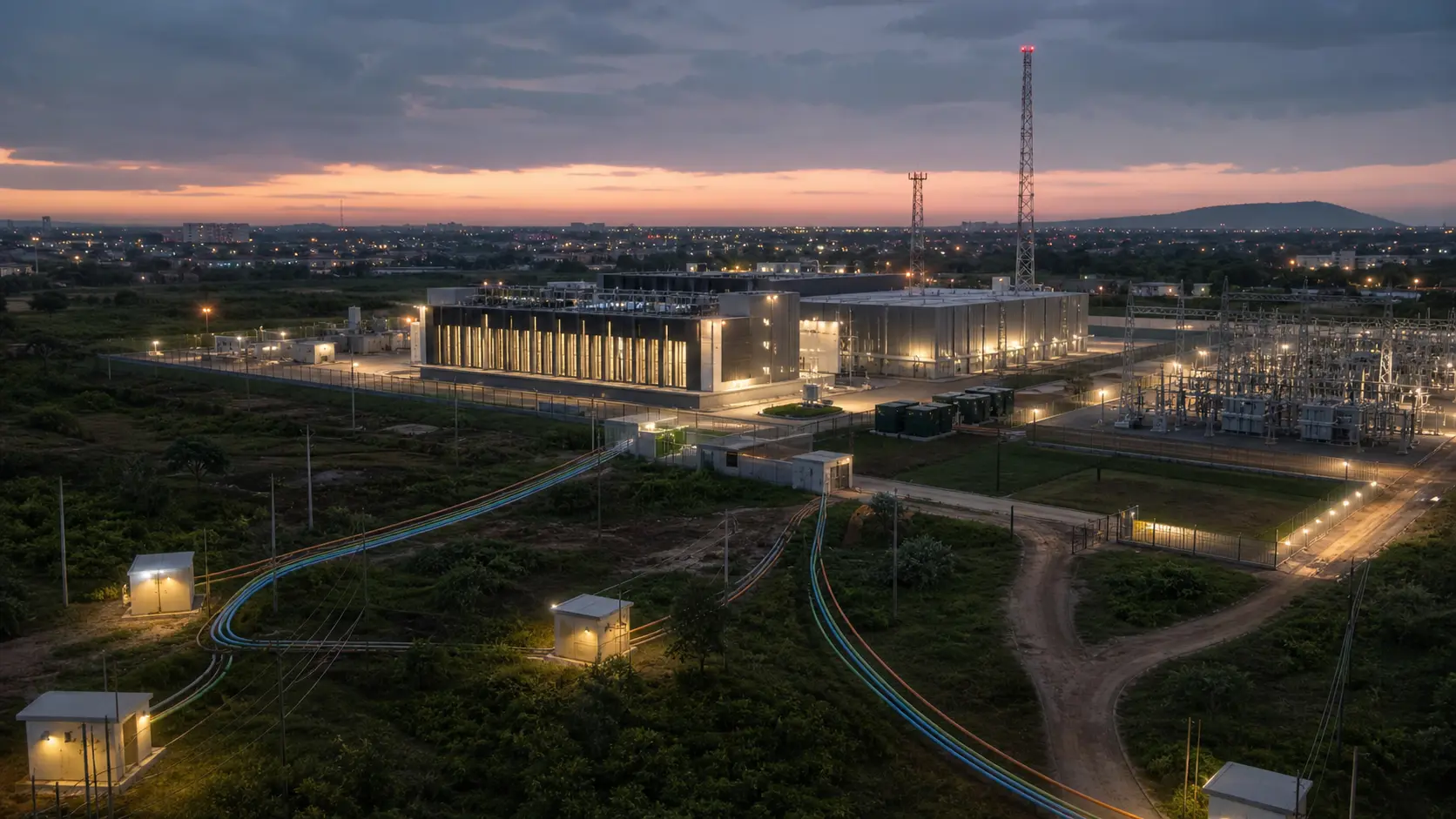
A modular data centre in Côte d'Ivoire went from first drawing to live facility in eight months. The going rate for the same brief in this industry is 24 to 30 months. That gap — roughly two years of a market's digital life — is the actual story here, and it has almost nothing to do with pouring concrete.
The thesis worth remembering: in African data-centre build-outs, the binding constraint is no longer engineering ambition. It is delivery speed, and delivery speed is a partnership problem before it is a construction one.
What BTS actually built in Côte d'Ivoire
Javier Mariscal, vice-president for Africa and the Middle East at BTS, told Capacity Media that demand for digital infrastructure looks broadly the same wherever you go — people want compute, connectivity and uptime. What changes is the terrain you deliver it across: logistics chains, energy supply, and regulatory regimes differ sharply from market to market. BTS's answer is to adapt the delivery model per country rather than ship one template and hope.
The Côte d'Ivoire facility is the proof point. Eight months, design to ready. Mariscal's comparison to the 24-to-30-month norm is the number that should make procurement teams sit up, because that norm is not laziness — it is what conventional builds genuinely cost in time.
Why 24 to 30 months is the industry's honest baseline
A traditional data centre is a construction project wearing a technology badge. You need land, permits, civil works, a weatherproof shell, power provisioning robust enough for continuous load, cooling plant, fire suppression, security layers, and then the imported electrical and IT gear that has to clear customs without sitting in a container yard for a quarter.
Every one of those steps is a queue. Stack the queues and two years evaporates before a single rack is energised. That is the machine BTS is trying to bypass.
The modular shortcut: ARPA's rugged hardware, ST Digital's cloud layer
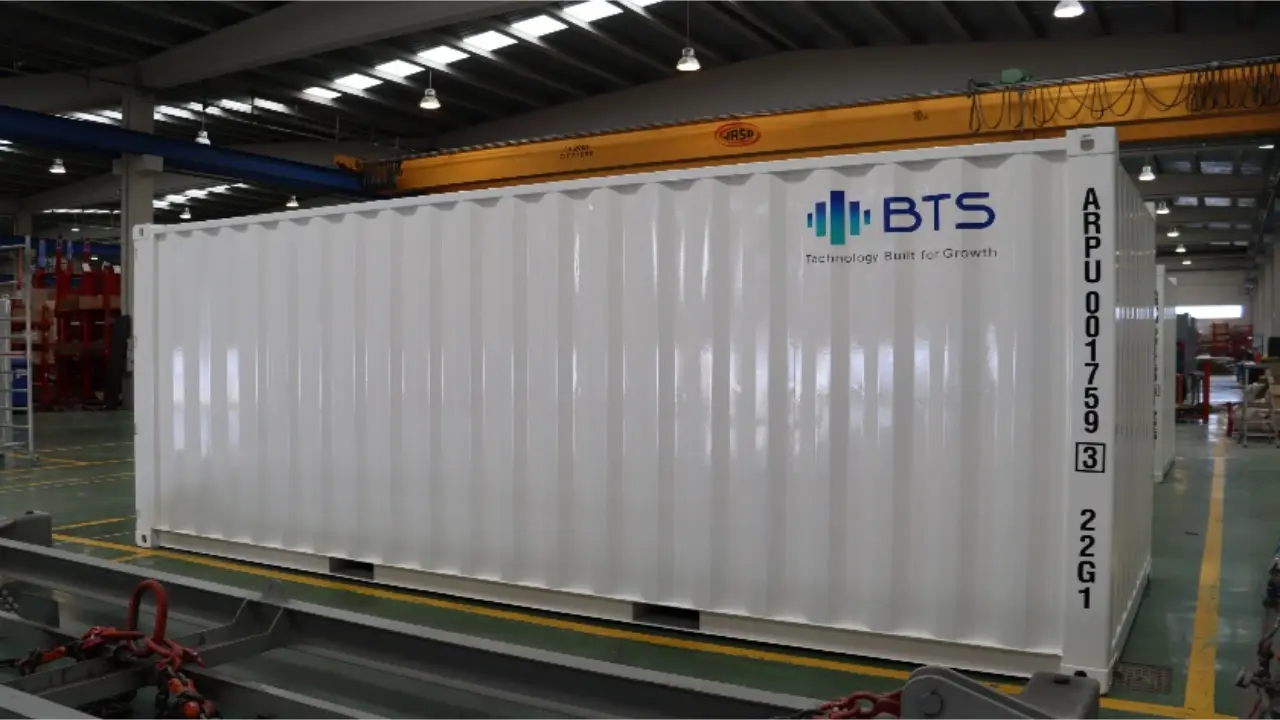
BTS's method is to move as much of the build as possible off-site and into factories where work is repeatable, then assemble on the ground. Spanish engineering firm ARPA supplies ruggedised modular equipment engineered for hard conditions — heat, dust, imperfect power quality — which is precisely the specification that matters outside a temperate data-centre corridor.
ST Digital, a cloud services provider, sits on the other side of the equation, working alongside BTS with shared delivery targets so that the facility arrives with a services layer ready to consume it. Prefabrication explains the speed of the box. The partnership explains why the box is useful the day it lands.
Nairobi office: proximity treated as a product
BTS has also opened a regional office in Nairobi, Kenya, extending its reach into East Africa. Read that as a statement about the operating model rather than a ribbon-cutting. Modular delivery compresses the build; it does not compress the years of relationship, spares logistics, and on-the-ground engineering judgement that keep a site running afterwards.
An office in Nairobi is how a vendor shortens the distance between a fault and a fix — and how it learns, market by market, which local constraints will break the next deployment.
The honest caveats: modular is not magic
Speed of assembly does not create electrons. A modular facility still needs a grid or a generation strategy that can carry continuous load, fibre that reaches the site, and technicians who can maintain cooling and power trains in local conditions. Nor does prefabrication repeal import duties or customs friction — it just gives you a smaller, better-packed set of things to clear.
And the eight-month figure deserves scrutiny as a repeatable process, not a one-off sprint. The interesting question for 2026 is whether BTS can run the same playbook in the next three markets without the timeline creeping back toward the industry's two-year gravity.
Why this matters for Africa's cloud and edge build-out
Latency is geography, and geography is stubborn. Every market that waits two extra years for local capacity serves its users from another country's racks — paying transit costs, absorbing round-trip delays, and ceding control of where the data actually sits. Cutting the build cycle from 30 months to eight does not just save a vendor's schedule; it pulls forward the moment a region can host its own workloads.
That is the real competitive claim: not that modular beats bricks, but that delivery speed is now the scarce input in African digital infrastructure — and whoever industrialises speed gets to set the timetable everyone else builds against.
Also read: Lyca shifts focus abroad amid UK downsizing
Also read: Emitel expands mobile network with Orange Polska
Eight months is not a miracle. It is a supply chain with the queues removed — and in a market that has spent two decades waiting on the concrete to cure, that is close enough to feel like one.