
Summary
- Quantum Solutions says roughly 1MW site-capacity units helped drive a change from a plan for up to 32 GPU servers to a planned configuration of about 128 across roughly 2MW.
- A new $60.99m purchase contract is signed, but its $8.3m first payment had not been made as of September 9. The earlier Rubin Tech procurement plan never became a GPU purchase agreement.
The smallest purchasable unit can set the scale
A datacentre operator does not necessarily sell capacity in the exact increments a new computing business initially wants. Quantum Solutions' September 9 disclosure shows how that mismatch can enlarge an equipment plan before it proves anything about customer demand.
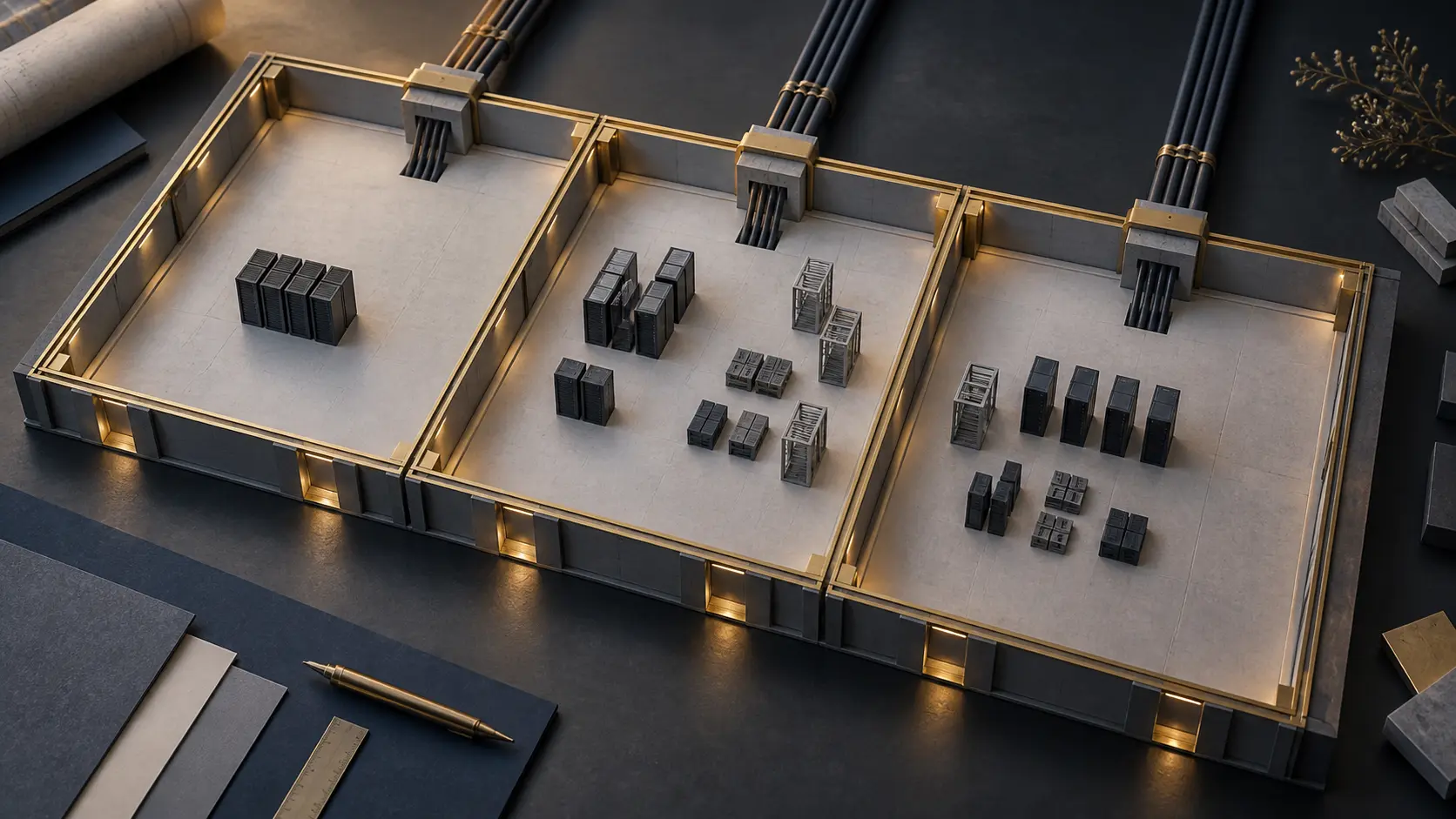
The company explains that discussions about an Osaka site identified roughly 1MW as a provision unit. Under its planned configuration, each could accommodate about 64 latest-generation GPU servers. Installing only the previously envisaged maximum of 32 could leave paid-for facility capacity poorly used. It is now preparing and negotiating for roughly 2MW and considers about 128 servers an economical configuration. These are planned servers, not a count of installed GPUs or a general conversion rule for all datacentres.
The clarification also changes how the old supplier arrangement should be understood. Quantum Solutions says neither it nor its subsidiary signed a GPU purchase agreement with Rubin Tech, and no GPU prepayment was made. The old purchase was a plan, not a completed transaction being unwound. A separate loan relationship should not be mistaken for payment for machines.
A signed order still has conditions
A September 7 filing records the new purchase from an unnamed AI-infrastructure supplier in Japan's Kanto region. The contract totals $60,985,056 for GPU servers and related equipment intended for Osaka. It envisages an $8.3m initial payment from company funds. Financing for the remainder was still under consideration in that filing, including shareholder borrowing and customer prepayments; the terms were not then final.
The same filing makes payment conditional on completing credit and compliance checks. It says a refreshed supplier credit report is expected around September 10 and warns of cancellation or delivery delays. An expected report is not a completed review. Consequently, “unpaid” cannot automatically be rewritten as “overdue” or supplier failure.
The September 9 update says the first payment has not yet been made. It moves the intended use of ¥475m of share proceeds from August to September while keeping the broad AI-datacentre purpose unchanged. Those funds remain in the company's bank account. Its separate plan for ¥985m of warrant-exercise proceeds is largely contingent on money not yet raised, rather than cash whose spending has simply slipped.
For the market, the important tension is between using a site efficiently and financing the equipment needed to do so. More machines may spread a facility commitment over a larger installation. They also require more capital and, eventually, paying workloads. The disclosure supplies the capacity-unit rationale; it does not disclose customer orders that validate the whole planned configuration.
Sources and limits
The September 9 issuer disclosure explains the revised plan and payment status. The September 7 issuer filing sets out the signed purchase and conditions. The company's September 7 press release, posted September 8 corroborates the purchase announcement. Both filings are Japanese originals hosted in public archives; the financing description above is dated to the relevant filing, not presented as a complete current funding balance.
Member Briefing
Deeper Profile Context
Sign in with the right membership level to unlock the full briefing and source notes.
Only for Strategic Circle
Strategic Circle
Open to all readers. Unlock profile briefings after joining and signing in.
Join Strategic CircleOnly for Leadership Alliance
Leadership Alliance
For qualified IP-asset owners and management; sign in to unlock alliance briefings.
Join Leadership Alliance